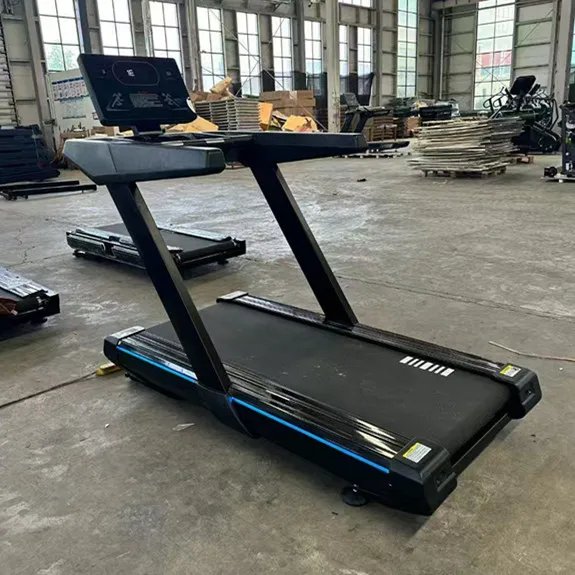
![Safe Mt026m Electric Foldable Treadmill for Home Silent Speed Training [WARN] draft identifier mismatch](https://bicksport.com/wp-content/uploads/2026/08/safe-mt026m-electric-foldable-treadmill-for-home-silent-speed-training-warn-draft-identifier-mismatch-06508d.webp)
Compact DC-Driven Treadmill — engineered with a quiet DC motor and foldable frame to fit noise-sensitive residential and light commercial spaces without triggering neighbor complaints.
Technical Specifications
| Parameter | Value |
|---|---|
| Designation | MT026M |
| Product Type | Foldable Treadmill |
| Motor Type | DC |
| Motor Power | 1.5 HP* |
| Speed Range | 1–12 km/h |
| Running Surface | 1200 × 460 mm |
| Console Type | LCD (Speed / Distance / Time / Calories / Pulse) |
| Programs | 12 |
| Heart Rate | Pulse sensors |
| Foldable | Yes |
| Product Unfolded Size | 1465 × 750 × 1150 mm |
| Product Folded Size | 1465 × 750 × 390 mm |
| Net Weight | 46.0 kg |
| Material | ABS |
| Certification | CE, RoHS |
| OEM/ODM | Available |
*1.5 HP — peak or continuous rating not specified; confirm duty cycle before deployment planning.
Application Suitability
| Deployment Scenario | Typical Use |
|---|---|
| High-end residential home gym | Daily walking and light jogging in apartments where floor-transmitted noise is a concern |
| Corporate wellness room | Compact cardio station for employee breaks, stowed when the room serves other functions |
| Boutique studio recovery zone | Low-intensity warm-up or cool-down station beside treatment or stretching areas |
| Hotel fitness center on guest room floors | Space-constrained cardio option for floors where full commercial treadmills cannot fit |
Why the Wrong Motor Choice Ends Up at the Front Desk
A foldable home treadmill DC motor silent configuration only works when the motor, deck, and frame are matched to the actual deployment environment.
I have seen five-star hotels install residential-grade treadmills on guest room floors because the purchase price looked right. Within weeks, the front desk logs noise complaints from the rooms directly below — low-frequency vibration traveling through the slab at 2 AM when a guest decides to jog. The problem is never a single component; it is a system mismatch between motor duty cycle, deck cushioning, and structural damping [NEED_CITE: motor duty cycle classification for continuous commercial operation]. The MT026M addresses this by pairing a DC motor — inherently smoother at lower RPM ranges — with a foldable chassis that reduces the overall mass transmitting vibration into the floor.
Where This Treadmill Fits in a Mixed Cardio Layout
The MT026M covers walking through light jogging intensity zones at speeds up to 12 km/h, positioning it as a secondary or warm-up station rather than a primary high-mileage unit. In a multi-discipline cardio floor, it complements heavier commercial treadmills and ellipticals by handling shorter sessions and lower-intensity users. Its 1200 × 460 mm running surface accommodates walking and moderate jogging strides comfortably, though taller users running at full stride will notice the length boundary. The foldable home treadmill DC motor silent footprint — just 1465 × 750 × 390 mm when folded — means it can be deployed in corners, multi-use rooms, or beside larger equipment without disrupting traffic flow. The LCD console displays speed, distance, time, calories, and pulse, giving users the core feedback they need for self-guided sessions without requiring a facility management data link.
Continuous Duty Realities and Deployment Constraints
A 1.5 HP DC motor is well-suited for intermittent residential and light commercial use, but deployment planners must distinguish between a unit running two hours per day in a home and one expected to operate eight hours in a shared facility [NEED_CITE: EN 957 requirements for commercial cardio equipment]. In apartment deployments, the primary concern is structure-borne noise — placing a vibration-damping mat beneath the 46 kg frame and ensuring the floor is level prevents low-frequency resonance from reaching units below. The DC motor generates less heat than an equivalent AC motor at low speeds, reducing ventilation requirements in enclosed rooms. Power requirements should be confirmed against the target market voltage standard before ordering; a mismatch discovered after delivery means either a transformer or a return shipment. For facilities wanting to pull session data into a management system, the LCD console operates standalone — plan accordingly if member tracking is a requirement.
What the Drive Train and Console Actually Deliver
The DC motor in the MT026M delivers smoother torque delivery at walking and jogging speeds compared to AC motors, which tend to produce a low hum that becomes noticeable in quiet rooms. DC motors also draw less current at low speeds, which matters when multiple units share a single circuit in a residential or corporate setting. The 1200 × 460 mm running surface provides adequate length for walking and jogging gaits, though the 460 mm width requires users to maintain a centered stride — wider decks are preferable for running-focused populations. The ABS material shell keeps the overall weight at 46 kg, making the fold-and-move operation practical for a single person. The LCD console cycles through speed, distance, time, calories, and pulse readings, giving users enough real-time feedback to manage pacing without external devices. The 12 preset programs allow users to vary session intensity without manual speed adjustments, which is useful in unsupervised environments where members may not program their own intervals.
The Hidden Cost of Skipping Specification Verification
When a buyer treats a 1.5 HP rating as a guaranteed continuous output without verifying the duty cycle, the motor windings overheat during sustained sessions and insulation degrades prematurely — the unit does not fail on day one, it fails at month four when usage patterns settle into a daily rhythm. Noise complaints in multi-story buildings often trace back to insufficient floor isolation rather than the motor itself; a treadmill placed directly on hardwood without damping material transmits every footstrike into the structure [NEED_CITE: structural vibration transmission in multi-story residential buildings]. Console limitations become operational blind spots only after the facility opens — if members expect app sync or if management wants usage analytics, a standalone LCD creates a data gap that no amount of post-installation configuration can close. Voltage mismatches between the factory setting and the destination country have forced entire container loads into storage while step-down transformers are sourced, delaying revenue by weeks.
Why This Product Line Addresses Deployment Gaps
Biketon Sport engineers every cardio unit around the acoustic and electronic demands of the deployment site, and the MT026M reflects that discipline at the residential end of the range. The sub-35 dB engineering philosophy applied across the commercial lineup informs how the DC motor and deck are tuned here — quiet operation is treated as a design constraint, not a byproduct. The foldable frame and compact folded profile align with the 3D cardio-zone layout service, where planners calculate sightlines, airflow, and member flow around every piece of equipment including compact stations like this one. OEM customization extends to console UI, color, and branding, so the unit can match a corporate identity or hotel design language. Documentation packages ship with every order, and 24/7 technical support covers the deployment phase when installers encounter site-specific questions about leveling, circuit loading, or clearance requirements.
Documentation & Test Records
- CE declaration of conformity for European market placement
- EN 957 test report covering structural and safety performance
- ISO 9001 certificate verifying manufacturing quality systems
- RoHS compliance confirmation for restricted substances
- Motor specification sheet detailing duty cycle and thermal ratings
- Installation and commissioning guide with site preparation checklist
Installation, Commissioning & Maintenance
- Maintain minimum 600 mm clearance behind the 1465 mm unfolded length for safe mounting and dismounting
- Place vibration-damping mat beneath the frame to isolate structure-borne noise in multi-story deployments
- Confirm dedicated 10A circuit matching target market voltage before first power-on
- Calibrate speed display against a measured distance reference during initial commissioning
- Inspect running belt tension and lubrication every 90 days under regular use
- Wipe LCD console and handrails after each session to prevent sweat corrosion on pulse sensors
Planning Your Cardio Zone Around This Unit
Share your available floor area and equipment count to receive a 3D layout that positions the MT026M within your member flow and ventilation plan. Specify whether the deployment is residential, corporate, or hospitality to confirm the motor duty cycle matches expected daily run-time. Identify the floor level and adjacent occupied spaces so noise isolation requirements can be scoped before shipment. Confirm the destination country voltage and plug standard to avoid transformer dependencies at the installation site.
Frequently Asked Questions
Q: What is the difference between peak and continuous motor power, and why does it matter?
A: Peak power is the maximum output a motor can sustain for short bursts, while continuous power is what it delivers indefinitely without overheating. A treadmill rated at 1.5 HP peak may only sustain a lower output continuously. For residential walking and light jogging, peak ratings are generally adequate, but shared facilities with back-to-back users need confirmed continuous ratings to prevent premature winding failure.
Q: How does a DC motor compare to AC in noise and durability for home use?
A: DC motors operate more smoothly at lower speeds because they use electronic commutation rather than brushes and alternating current, which reduces audible hum and vibration. This makes them well-suited for apartments and quiet rooms. Durability depends on build quality and duty cycle rather than motor type alone — a well-built DC motor handles residential demands reliably over years of daily sessions.
Q: What noise level can be expected during walking versus running on this treadmill?
A: Walking at moderate speeds produces minimal motor noise and lighter footstrike impact, keeping sound levels low enough for shared living environments. Jogging increases both motor load and deck impact, raising the overall noise profile. Floor construction, damping material beneath the frame, and user weight all influence the actual sound transmitted to adjacent rooms or floors below.
Q: How does the folding mechanism affect long-term frame stability?
A: A well-engineered folding hinge uses reinforced pivot points and locking pins that maintain rigidity during use. The MT026M folds to a 390 mm profile for storage, and the locking mechanism must be fully engaged before every session. Periodic inspection of hinge bolts and pivot wear ensures the frame continues to operate without lateral play or creaking over extended use cycles.
![Healthmate Remote Control Durable New Electric TreadmillW06D5 Foldable Electric Treadmill with LED Console for Home Gym Use [WARN] draft identifier mismatch](https://bicksport.com/wp-content/uploads/2026/08/healthmate-remote-control-durable-new-electric-treadmillw06d5-foldable-electric-treadmill-with-led-console-for-home-gym-use-warn-draft-identifier-mismatch-504a8a.webp)