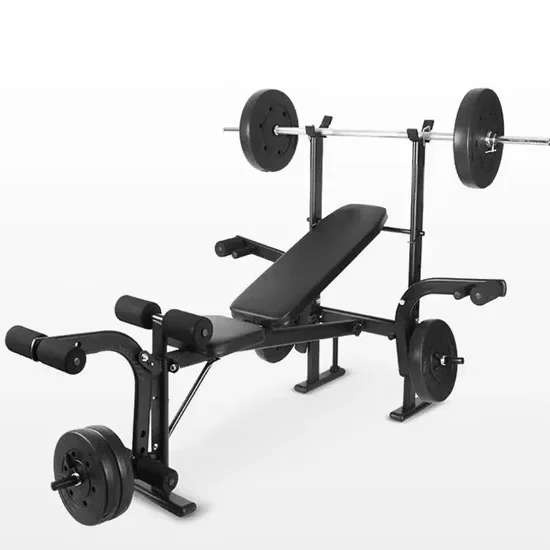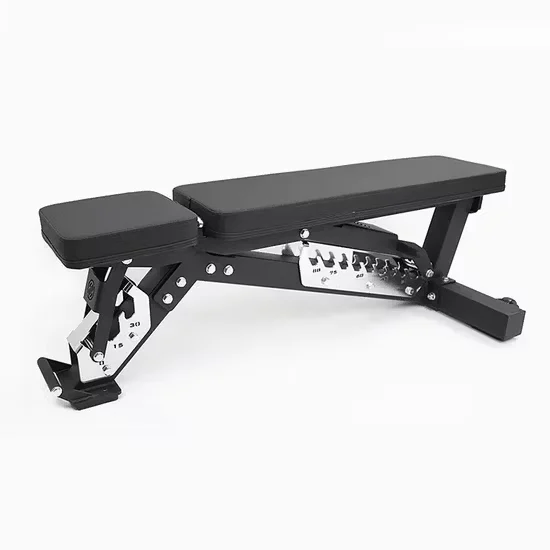
Unfolded Heavy-Duty Frame — reinforced steel construction rated for ≥200kg bearing capacity, engineered for high-frequency commercial weight training zones.
Technical Specifications
| Parameter | Value |
|---|---|
| Product Type | Adjustable Weight Bench |
| Model NO. | AB-4000 |
| Material | Metal |
| Max Bearing | ≥200kg |
| Color | Black |
| Folded | Unfolded |
| Speed Control | Fixed |
| Application | Gym, Home Gym, Commercial Fitness Center |
| Product Dimensions | 1100300460mm |
| Condition | New |
| Logo | Customized Logo Available |
| MOQ | 50PCS |
| Origin | China |
| HS Code | 9506911900 |
Application Suitability
| Deployment Scenario | Typical Use |
|---|---|
| hotel fitness center on guest room floors | dumbbell and barbell pressing routines during peak guest hours |
| chain gym cardio zone | adjustable incline and flat bench work within the free weight section |
| corporate wellness room | compact strength training stations for employee lunchtime sessions |
| high-end residential home gym | versatile flat-to-incline pressing and accessory movements |
| sports performance training center | loaded barbell work and unilateral dumbbell training for athletes |
Why Bench Frame Failures Happen Before Anyone Notices Them
Heavy-gauge welded steel is the difference between a ten-year fixture and a liability claim.
Most facility operators never think about bench frames until something bends or a weld cracks under a loaded barbell. I have seen benches rated at 120kg bearing deployed in commercial free weight zones where the average user loads 150kg of body weight plus a 60kg dumbbell. The frame holds for a few months, then the cross-brace develops hairline fractures around the weld seams [NEED_CITE: load rating mismatch between home and commercial bench specifications]. A commercial adjustable weight bench custom logo program means your brand identity is on equipment that must perform daily under real-world loading conditions. When a bench fails in a commercial environment, it is not just a warranty claim — it is a member safety incident that can shut down an entire training zone.
Where This Bench Fits in a Commercial Free Weight Layout
The AB-4000 occupies the core position in any strength training area where users perform pressing, rowing, and isolation movements across multiple angles. In a commercial free weight zone, this commercial adjustable weight bench custom logo configuration pairs directly with dumbbell racks and Olympic platforms, covering the full range from flat bench press to incline shoulder work. Its 1100300460mm footprint allows deployment at standard spacing intervals alongside squat racks and cable machines. The ≥200kg bearing capacity accommodates the full spectrum of user body types and loading intensities found in high-traffic gym environments, from beginners performing bodyweight step-ups to advanced lifters loading heavy dumbbell presses.
Continuous Loading Demands and Floor Placement Considerations
An unfolded bench in a busy commercial gym sees continuous loading cycles throughout operating hours. Unlike motorized cardio equipment, the AB-4000 has no duty-cycle concern, but the frame joints and pad mounting hardware endure repeated stress from users mounting, dismounting, and adjusting positions between sets [NEED_CITE: fatigue loading patterns on commercial weight benches]. Floor placement requires a level surface to prevent frame torque during unilateral loading. When deployed on upper floors of hotel fitness centers, vibration transfer from dropped dumbbells must be managed through rubber matting beneath the bench footprint. The metal frame transmits impact directly to the subfloor, making surface preparation and leveling critical for installations above occupied spaces.
Decoding the Bearing Rating and Frame Geometry
The ≥200kg max bearing specification reflects the combined load of user body weight plus external resistance during dynamic movements. In adjustable bench design, the critical engineering point is the hinge mechanism where the back pad meets the base frame. A welded steel construction at this junction must resist shear forces generated when a user presses heavy dumbbells at incline angles. The 1100300460mm dimension provides a stable base width relative to the pad length, preventing lateral tipping during single-arm movements. Fixed speed control in this context means the adjustment mechanism uses pin-lock positioning rather than gas-assist or hydraulic systems, eliminating failure points associated with pressurized components [NEED_CITE: pin-lock versus gas-assist bench adjustment durability comparison].
What Specification Shortcuts Cost in a Commercial Setting
Benches that cut frame gauge thickness to reduce shipping weight develop wobble within the first year of commercial deployment. Thin-wall tubing cracks at weld points where the adjustment ladder meets the upright, forcing operators to pull units from the floor for welding repairs that never match factory structural integrity. Non-adjustable benches purchased to save upfront cost leave gaps in training programming, pushing members toward facilities with complete equipment ranges. When pad vinyl peels or foam compresses flat under continuous use, members shift their training to other venues rather than file complaints [NEED_CITE: member retention impact of worn strength equipment padding]. The commercial adjustable weight bench custom logo option becomes irrelevant if the underlying structure cannot survive the environment it was specified for.
Why This Product Line Holds Up Under Facility Scrutiny
The AB-4000 is built on the same manufacturing discipline that produces our sub-35dB cardio equipment — vertical integration from CNC-machined frame components through final assembly and quality control. Each unit undergoes load testing at or above the ≥200kg bearing specification before release. The commercial adjustable weight bench custom logo program covers branding, color, and specification adjustments with flexible MOQ starting at 50 units. Our 3D layout service accounts for bench placement relative to dumbbell racks, mirror sightlines, and member traffic flow through the free weight zone. The unfolded design eliminates the mechanical complexity and maintenance burden of folding mechanisms in commercial environments. Technical support covers installation guidance and spare parts supply for the full product lifecycle.
Documentation & Test Records
- EN 957 test report covering static load and stability requirements
- ISO 9001 certificate for manufacturing process compliance
- Load test documentation verifying ≥200kg bearing capacity
- Material specification sheet for frame steel grade and weld procedures
- Installation guide with spacing and leveling requirements
- Spare parts list covering pad, adjustment pins, and hardware
Installation, Commissioning & Maintenance
- Position bench on level surface with minimum clearance on all sides for dumbbell movement
- Verify floor levelness to prevent frame stress during unilateral loading exercises
- Install rubber matting beneath footprint to absorb impact and protect subfloor surfaces
- Inspect pin-lock adjustment mechanism for secure engagement at each angle position
- Check weld joints and fastener torque at scheduled intervals per maintenance documentation
- Clean pad surface and frame contact points regularly to prevent sweat corrosion buildup
Planning Your Strength Zone Equipment Specification
Share your free weight area dimensions and equipment list to receive a 3D layout covering bench spacing, dumbbell rack proximity, and member flow patterns. Specify expected daily user volume so we can confirm the AB-4000 bearing capacity aligns with your loading intensity profile. Identify deployment floor level and adjacent occupied spaces to determine whether additional vibration isolation is necessary beneath the bench footprint. Confirm your target market requirements for branding and any specification modifications needed to match your facility standards.
Frequently Asked Questions
Q: What structural differences separate a commercial bench from a residential model?
A: Commercial benches use heavier gauge steel tubing and reinforced weld patterns at stress points like the hinge mechanism and adjustment ladder. The ≥200kg bearing rating on the AB-4000 reflects testing under dynamic loading conditions typical of gym environments, whereas residential benches often carry lower ratings tested under static conditions only. Pad density and vinyl thickness also differ to withstand continuous daily use.
Q: How does the bearing capacity specification relate to actual training safety?
A: The ≥200kg max bearing accounts for combined user body weight plus external resistance during pressing and rowing movements. This rating ensures structural integrity when a heavier lifter loads substantial dumbbells at incline angles where shear forces concentrate at the hinge joint. Operating beyond rated capacity accelerates fatigue cracking in frame welds and adjustment mechanisms.
Q: What customization options are available through the OEM program?
A: The commercial adjustable weight bench custom logo program includes brand identity placement on the frame, pad color selection, and specification adjustments such as pad dimensions or adjustment angle ranges. Minimum order quantity starts at 50 units. Our team confirms customization scope during the quotation phase and provides proofs before production begins.
Q: How does bench material selection affect long-term durability in commercial environments?
A: The metal frame construction uses welded steel chosen for fatigue resistance under repeated loading cycles. Surface treatment protects against corrosion from sweat exposure and cleaning chemicals used in commercial maintenance routines. Pad covering material must resist abrasion from clothing friction and UV exposure from windows in the training area to maintain appearance over years of deployment.
![Commercial Black Multi Function Pec Fly Lateral Raise Gym Machine [WARN] draft identifier mismatch](https://bicksport.com/wp-content/uploads/2026/08/commercial-black-multi-function-pec-fly-lateral-raise-gym-machine-warn-draft-identifier-mismatch-aa1f50.webp)