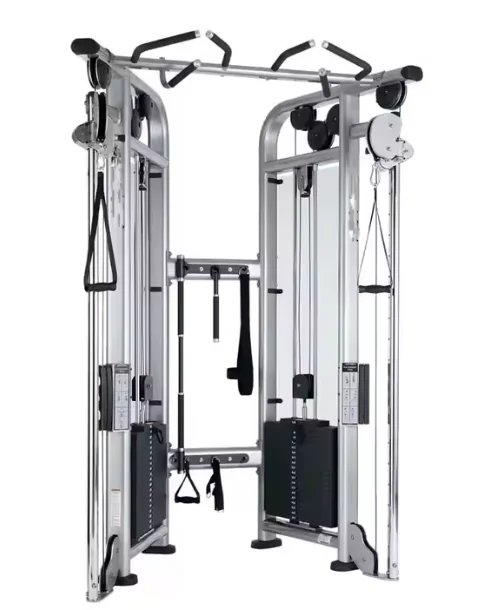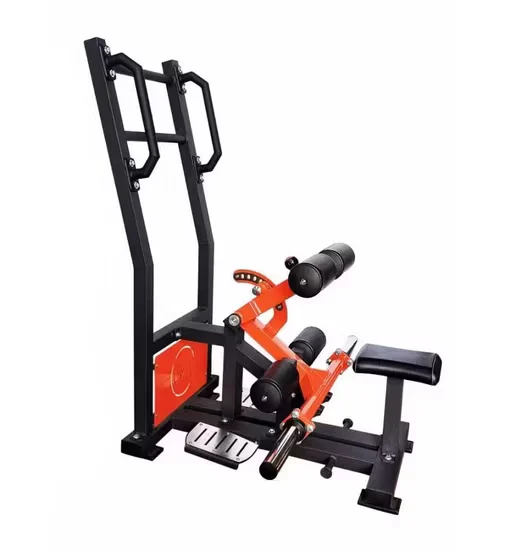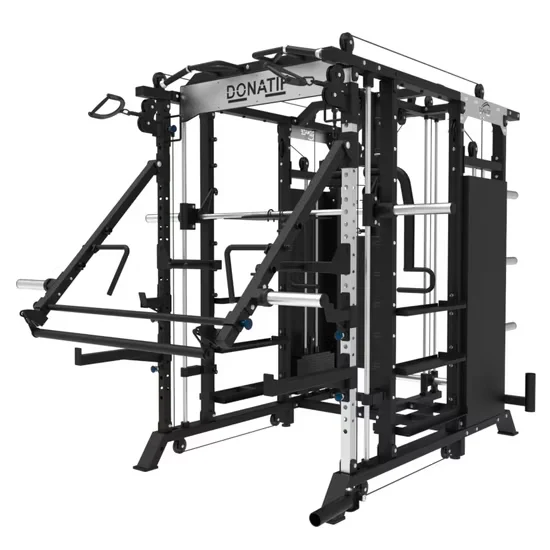
Heavy-Duty Frame Rigidity — 3mm steel tube construction verified through high-frequency compound movement testing across commercial strength training deployments.
Technical Specifications
| Parameter | Value |
|---|---|
| Product Type | Smith Machine / Comprehensive Squat Rack / Cable Crossover All-in-One Power Rack |
| Material | Steel |
| Tube Thickness | 3mm |
| Product Dimensions | 2361 × 2006 × 2234 mm |
| Net Weight | 220 kg |
| Resistance Type | Manual (plate-loaded) |
| Exercise Part | Leg / Arm / Shoulder |
| Cushion Color | Customized (Yellow, Black, Orange, Pink, etc.) |
| Foldable | Unfolded |
| Age Group | Adult |
| Gender | Unisex |
| Appliance | Gymnasium, Home |
| OEM/ODM | Available |
| Certification | CE |
| Power Source | Manual |
Application Suitability
| Deployment Scenario | Typical Use |
|---|---|
| Chain gym strength training zone | Primary compound lifting station for squats, presses, and cable work |
| Corporate wellness center | Space-efficient full-body strength solution for limited floor plans |
| Hotel fitness center | Multi-function station replacing several single-purpose machines |
| High-end residential home gym | Comprehensive rack for dedicated training rooms |
| Sports performance training center | Functional strength and cable-based accessory work |
Why Frame Thickness Decides Whether a Power Rack Survives Its First Year
A 3mm steel tube frame resists deformation under repeated compound loading cycles that collapse lighter-gauge racks within months.
Walk into any facility that spec’d 2mm or thinner frames for their commercial smith machine cable crossover power rack stations, and you will hear the telltale rattle of loosened bolts and shifted welds. The problem is not the welds themselves — it is the tube wall flexing under eccentric loads, fatiguing the joint over hundreds of daily repetitions. I have seen gym owners replace an entire strength zone within eighteen months because the initial procurement focused on price per unit rather than steel gauge [NEED_CITE: structural fatigue in commercial gym racks under high-frequency compound loading].
When a member loads a barbell for heavy squats, the lateral forces transmit through the guide rods into the uprights. Thinner tubes deflect visibly, and that micro-movement accelerates hardware loosening across every connection point.
Positioning Within the Strength Training Floor Plan
This commercial smith machine cable crossover power rack covers guided barbell movements, free squat patterns, and cable-based isolation exercises from a single footprint. In a typical strength zone, it anchors the compound lifting area alongside dedicated plate-loaded machines and dumbbell stations. The 2361 × 2006 mm footprint accommodates users across a wide height range, and the integrated cable system supports standing, kneeling, and seated pulling patterns. Deploy it where ceiling height exceeds 2.3 meters to clear the top crossmember during overhead work.
Continuous Use Demands and Environmental Requirements
A station serving a busy gym floor will see forty or more loading cycles per hour during peak periods. The manual resistance system eliminates motor duty-cycle concerns, but the guide rods, linear bearings, and cable pulleys require periodic inspection aligned with usage intensity. Place the unit on a level rubber-matted surface to isolate vibration transfer to adjacent floors — particularly important when the rack sits above occupied spaces [NEED_CITE: vibration transmission standards for multi-story fitness facilities]. Ensure adequate clearance on all sides for plate loading and cable extension, and confirm that overhead lighting and HVAC ducts do not encroach on the 2234 mm frame height.
Reading the Engineering Behind the Load Path
The 3mm tube thickness governs how the frame handles off-axis forces during asymmetric cable pulls and unilateral barbell work. Thicker steel walls maintain squareness under load, keeping guide rods aligned so the barbell carriage travels without binding. The manual plate-loaded resistance means the user controls the load curve entirely — no magnetic eddy current or pneumatic system introduces maintenance overhead. Cable crossover pulleys mounted at multiple height positions allow resistance vectors from high to low, engaging different muscle groups without requiring separate machines. The cushion color options let facility operators match the upholstery to brand palettes, which matters when the rack sits in a visible position near the entrance or glass-fronted training zones.
What Lighter-Gauge Frames Cost After the Warranty Expires
Facilities that accepted 2mm tube frames to save on initial procurement often face cascading costs: guide rod misalignment causes carriage binding, which accelerates bearing wear, which triggers member complaints about rough bar travel. Cable pulley housings on lighter frames shift under heavy lat pulldown loads, fraying cables prematurely. I have watched a mid-tier gym chain pull an entire rack line from the floor because the uprights developed visible lean after ten months of daily squat cycles [NEED_CITE: long-term structural integrity of commercial power racks under continuous compound loading].
Why This Line Holds Up Where Others Drift
Every frame in our strength series starts from the same 3mm tube specification, so a facility sourcing multiple stations gets consistent rigidity across the entire floor. The Smith Machine / Comprehensive Squat Rack / Cable Crossover All-in-One Power rack design reduces total unit count — one station replaces a standalone smith, a squat rack, and a cable tower, freeing square footage for additional cardio or functional zones. Our OEM capability extends to cushion color and logo application, letting operators unify the visual identity. The 3D layout service we provide accounts for this unit’s 2361 × 2006 mm footprint plus the safety margins needed for plate loading and member circulation, so the floor plan works before the first bolt is tightened. Components are tested for continuous high-frequency operation consistent with commercial environments.
Documentation & Test Records
- CE declaration of conformity for the commercial smith machine cable crossover power rack
- EN 957 test report covering structural load and stability requirements
- ISO 9001 certificate for manufacturing quality management
- Frame load capacity and static stress test record
- Cable pulley system durability and cycle test documentation
- Spare parts list with part numbers and replacement intervals
Installation, Commissioning & Maintenance
- Confirm floor levelness across the 2361 × 2006 mm footprint before anchoring
- Maintain minimum 600 mm clearance on all sides for safe plate loading
- Inspect guide rod alignment and linear bearings after initial 500 use cycles
- Lubricate cable crossover pulleys per the maintenance schedule in the commissioning guide
- Check all fastener torque values quarterly using the specified tightening sequence
- Clean cushion surfaces with pH-neutral solution to prevent upholstery degradation
Planning Your Strength Zone Procurement
Share your facility floor area and target member capacity so we can generate a 3D strength zone layout that positions this rack within safe circulation distances. Specify whether the deployment floor sits above occupied rooms so we can recommend appropriate vibration isolation matting. Confirm the ceiling height at the installation point to verify clearance for the 2234 mm frame. Indicate cushion color preferences and any OEM branding requirements early to align with production lead times.
Frequently Asked Questions
Q: What is the functional difference between the smith machine and the free squat rack on this unit?
A: The smith section uses guided vertical rails for controlled barbell paths, suited for members training without a spotter. The free squat rack section provides open uprights with adjustable J-hooks and safety arms, allowing natural barbell trajectory for experienced lifters. Together they serve both supervised and unsupervised training within one station footprint.
Q: How does tube thickness affect long-term rack stability in a commercial environment?
A: Thicker steel walls resist deflection under heavy and repeated loads, keeping guide rods aligned and bolted joints from loosening prematurely. A 3mm tube maintains frame squareness through thousands of compound lifting cycles, reducing maintenance interventions and preventing the structural drift that lighter-gauge frames develop within their first year of commercial deployment.
Q: How many cable pulley positions does the crossover system provide?
A: The cable crossover system features multiple mounting heights on each upright, enabling high, mid, and low resistance vectors. This range supports exercises from lat pulldowns and cable rows to tricep pushdowns and cable crunches without requiring dedicated single-purpose machines, maximizing training variety within the rack footprint.
Q: What safety clearances are needed around the rack during operation?
A: Allow adequate space on each side for plate loading and for members performing cable exercises with full arm extension. The front area requires clearance for barbell travel during free squat patterns. Our 3D layout service maps these zones against your specific floor plan to ensure safe member circulation between adjacent equipment stations.
Q: What OEM customization options are available for this rack?
A: Cushion colors can be selected from the available range including yellow, black, orange, and pink to match facility branding. Logo application and custom color finishes on the frame are available under our OEM program. Production capacity supports annual volume requirements, and the delivery window allows integration with broader facility fit-out schedules.
![Commercial Smith Machine Squat Rack Power Cage Strength Equipment [WARN] draft identifier mismatch](https://bicksport.com/wp-content/uploads/2026/08/commercial-smith-machine-squat-rack-power-cage-strength-equipment-warn-draft-identifier-mismatch-4dbfde.webp)