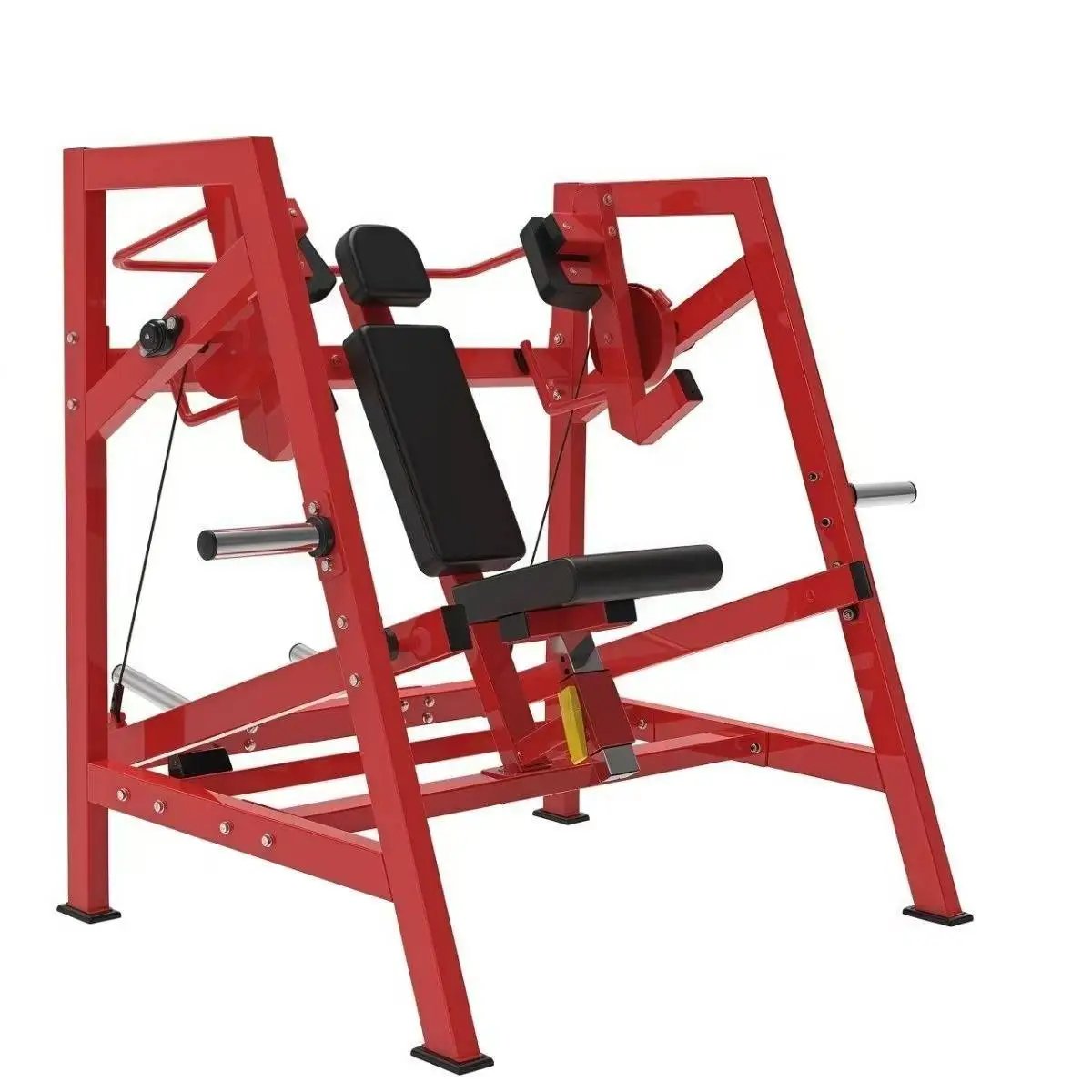
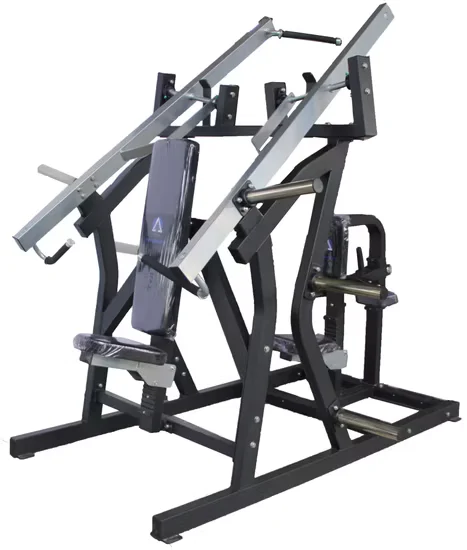
10,000-Hour Structural Endurance — Reinforced steel frame and linear guide rails validated for continuous high-frequency loading without carriage play or frame deflection.
Technical Specifications
| Parameter | Value |
|---|---|
| Product Type | Plate Loaded Leg Press Machine |
| Resistance Type | Plate Loaded (Linear) |
| Frame Material | Steel |
| Guide Rail System | Linear Guide Rail |
| Drive Type | Manual |
| Product Dimensions | 2375 × 1500 × 1475 mm |
| Net Weight | 250 kg |
| Foldable | No |
| Exercise Target | Lower Body |
| User Demographic | Adult, Unisex |
| Certification | ISO 9001, CE |
| Customization | Available (OEM/ODM) |
Application Suitability
| Deployment Scenario | Typical Use |
|---|---|
| Chain gym strength zone | High-frequency lower-body training with progressive plate loading |
| Community fitness center | Multi-user daily access with durable linear rail travel |
| Sports performance training center | Athlete-grade heavy load leg development |
| Corporate wellness facility | Supervised strength sessions for employee fitness programs |
| Hotel fitness center | Quiet manual resistance for multi-floor deployment |
Why Carriage Play Develops Before the Warranty Expires
Linear guide rails eliminate the lateral wobble that bushing-based carriages develop under repeated heavy loads.
Most plate loaded linear leg press machines destined for commercial gyms arrive with bushing-style travel systems that look adequate on paper. After several months of continuous member use, those bushings wear unevenly — the carriage starts to rattle laterally, noise increases, and users report an unstable feel during heavy presses. Facilities end up scheduling premature maintenance or replacing entire units. [NEED_CITE: linear bearing wear rates under continuous commercial loading]
The engineering distinction matters: linear guide rails distribute load across recirculating ball bearings that travel in a sealed channel, maintaining consistent alignment regardless of load magnitude. Bushings rely on surface contact that degrades with friction and heat. In a high-traffic strength zone where the equipment sees back-to-back sessions all day, that difference determines whether the machine operates quietly through its service life or becomes a maintenance liability.
Positioning Within a Strength Zone Equipment Layout
This plate loaded linear leg press machine occupies the heavy compound movement category alongside squat racks and hack squat stations, covering the full lower-body loading spectrum from moderate hypertrophy work to maximal strength sets. It pairs naturally with leg extension and leg curl isolation machines positioned nearby, allowing members to move from compound pressing to targeted quad and hamstring work without crossing the gym floor. The 2375 × 1500 mm footprint requires dedicated floor space with clearance on all sides for plate loading and safe passage, making it best suited for mid-floor placement rather than wall-adjacent positioning. The steel frame and linear guide construction accommodate users across a wide body weight range, supporting training from rehabilitation loads through advanced athletic loading.
Continuous Loading and Deployment Environment Factors
A plate loaded leg press in a commercial gym operates without motor or electrical dependency, which eliminates electrical noise entirely but places all durability demands on the frame, welds, and guide rail hardware. Facilities running this equipment for 12 or more hours daily should ensure the floor is level and reinforced — a 250 kg machine under loaded conditions exerts significant point loads that can shift on inadequate flooring. [NEED_CITE: structural floor loading requirements for heavy strength equipment] Ventilation matters less than with motorized cardio equipment, but adequate airflow around the user zone prevents heat buildup during extended sessions. Because no console or electrical connection is required, deployment flexibility is high — the unit can go on any floor without concern for dedicated circuits or voltage compatibility. Ground-level installation with vibration-dampening pads beneath the frame feet reduces structure-borne noise transmission to rooms below.
How Guide Rail Selection and Frame Gauge Determine Long-Term Performance
The linear guide rail system on this plate loaded linear leg press machine replaces the traditional bushing-and-rod arrangement found on lighter-duty models. Recirculating ball bearings inside the rail housing maintain tight tolerances under load, preventing the lateral drift that causes rattling and uneven wear patterns over time. Frame gauge thickness directly influences vibration dampening — thicker-walled steel sections absorb and dissipate the harmonic energy generated when heavy plates are loaded and released, keeping operation quieter and reducing stress concentrations at weld joints. [NEED_CITE: frame gauge standards for commercial strength equipment] The plate-loaded resistance mechanism introduces zero electrical components, meaning there are no motor brushes to replace, no drive belts to tension, and no electronic sensors to calibrate. The manual resistance model also means load progression is infinitely adjustable — members add or remove plates in small increments rather than being constrained by selectorized weight stack jumps. Weld construction at every frame junction must distribute stress evenly; inconsistent penetration creates weak points that fatigue under cyclical loading.
What Undersized Frames Cost After the First Year
Facilities that select strength equipment based on initial price rather than frame specification frequently encounter a predictable failure sequence. Thin-gauge frames flex under heavy loads, generating audible creaking that members interpret as structural insecurity. Guide rails on undersized units develop play rapidly, producing a knocking sensation during the eccentric phase that discourages continued use. [NEED_CITE: member attrition factors related to equipment perceived stability] Welds that lack full penetration crack under repeated stress cycles, requiring emergency repairs that pull the machine off the floor for days. In chain gym environments where equipment consistency across locations is expected, one facility’s premature failures trigger fleet-wide replacement decisions. The cumulative cost of early replacement, member complaints, and maintenance labor consistently exceeds the price differential between a properly specified frame and a cost-reduced alternative.
Why This Product Line Addresses Commercial Deployment Gaps
Every unit undergoes 10,000-hour durability testing on frame welds, guide rail bearings, and pivot points under simulated continuous loading. The sub-35 dB acoustic performance verified in hotel deployments extends to this plate loaded linear leg press machine — manual resistance eliminates motor noise entirely, leaving only guide rail travel sound that remains well below conversation level. Full OEM and ODM customization covers frame finish, pad color, and spec adjustments to match facility design standards and biomechanical requirements. The six-series cardio and strength family allows a facility to source multiple equipment categories from a single manufacturing line, simplifying procurement and ensuring consistent build quality. [NEED_CITE: EN 957 requirements for commercial strength equipment] A complimentary 3D layout plan addresses this machine’s 2375 × 1500 mm footprint alongside member flow paths, plate storage zones, and sightline considerations for the surrounding strength area. Round-the-clock technical support covers installation guidance, calibration questions, and spare parts identification.
Documentation & Test Records
- CE declaration of conformity covering structural and safety requirements for commercial strength equipment
- EN 957 test report validating mechanical integrity under static and dynamic loading
- ISO 9001 certificate confirming quality management across manufacturing processes
- Frame weld quality inspection records with penetration and stress distribution verification
- Linear guide rail load rating and bearing specification documentation
- Installation and commissioning guide with floor preparation and clearance specifications
Installation, Commissioning & Maintenance
- Allow minimum 2375 × 1500 mm footprint plus 800 mm clearance on all sides for plate loading access and member passage
- Install vibration-dampening pads beneath frame feet to reduce structure-borne noise transmission on multi-story floors
- Verify floor levelness and load-bearing capacity before positioning the 250 kg unit under loaded conditions
- Inspect linear guide rail alignment and carriage travel smoothness during initial commissioning before member use begins
- Schedule periodic guide rail cleaning and lubrication based on facility traffic volume to maintain smooth carriage operation
- Wipe down steel frame and upholstery after each use to prevent sweat corrosion and pad material degradation
Equipment Selection and Deployment Planning
Provide the strength zone floor area and planned equipment count to receive a 3D layout that positions this leg press alongside complementary machines with proper spacing and member flow paths. Specify the anticipated daily usage hours and user profile to confirm the frame and guide rail specification matches the facility’s duty cycle requirements. Indicate deployment floor level and adjacent occupied spaces to verify vibration dampening measures are adequate. State the target market region and any facility-specific branding or color requirements to scope OEM customization options before quotation.
Frequently Asked Questions
Q: How does a linear guide rail differ from a bushing system on a leg press?
A: Linear guide rails use recirculating ball bearings inside a sealed channel, maintaining consistent carriage alignment under heavy loads without developing lateral play. Bushing systems rely on surface friction contact that wears unevenly over time, leading to rattling, noise, and an unstable pressing feel. For commercial environments with continuous daily use, guide rails extend service intervals and preserve smooth travel significantly longer.
Q: What frame construction factors determine durability under commercial loading?
A: Steel gauge thickness, weld penetration quality, and frame geometry all contribute to long-term structural integrity. Thicker-walled sections resist flexing under load and dampen vibration more effectively. Full-penetration welds at every junction distribute stress evenly and prevent fatigue cracking. These factors collectively determine whether a leg press operates quietly for years or requires premature frame repairs.
Q: How does plate loaded resistance compare to selectorized weight stacks for commercial use?
A: Plate loaded systems eliminate mechanical complexity — no cables, pulleys, or selector pins to maintain. Load progression is infinitely adjustable by adding small increment plates, and there are no weight stack limits constraining advanced users. Maintenance requirements are lower since the resistance mechanism involves only plates and horns rather than internal cable routing and pin engagement mechanisms.
Q: What OEM customization is available for facility branding and design integration?
A: Customization covers frame color and finish, upholstery material and pad color, and specification adjustments to align with facility design standards. Frame finish options allow matching existing equipment aesthetics, while pad material selection addresses durability requirements based on usage intensity and cleaning protocols common in different facility environments.
Q: What floor preparation is needed before installing a plate loaded leg press?
A: The installation surface must be level, structurally rated for the combined weight of the machine and loaded plates, and covered with appropriate flooring material. Vibration-dampening pads beneath frame feet reduce transmitted noise on elevated floors. Adequate clearance around the full perimeter ensures safe plate loading and member movement without obstruction.