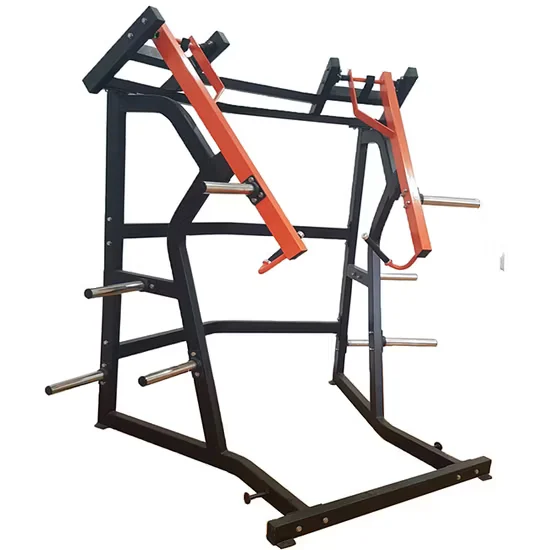
![Osh025 Commercial Abdominal Oblique Crunch Machine Fitness Equipment [WARN] draft identifier mismatch](https://bicksport.com/wp-content/uploads/2026/08/osh025-commercial-abdominal-oblique-crunch-machine-fitness-equipment-warn-draft-identifier-mismatch-04a607.webp)
Acoustic-Optimized Pivot Assembly — Sealed bearing architecture and heavy-gauge steel chassis maintain smooth articulation across thousands of daily repetitions without friction-induced noise or mechanical play.
Technical Specifications
| Parameter | Value |
|---|---|
| Designation | H025 |
| Product Type | Abdominal Oblique Crunch Machine |
| Frame Material | Heavy-Gauge Steel |
| Resistance Type | Selectorized Weight Stack |
| Drive Mechanism | Cam-Driven Pivot with Sealed Bearings |
| Max User Weight | 180 kg |
| Product Dimensions | 1670 × 1100 × 1600 mm |
| Net Weight | 121 kg |
| Certification | ISO 9001, CE |
Application Suitability
| Deployment Scenario | Typical Use |
|---|---|
| International gym chain core-training zone | High-frequency oblique and rotational crunch work during peak hours |
| Corporate wellness and community fitness center | Functional core stabilization for diverse employee and member populations |
| Professional sports training center | Athlete-grade rotational core conditioning with biomechanically controlled range of motion |
| Hotel fitness center | Durable, low-maintenance core station for 24-hour guest access |
| High-end residential home gym | Space-efficient dedicated oblique trainer with commercial durability |
Why Pivot Wear Generates Service Calls Before the First Quarter Ends
Sealed bearing assemblies and cam-driven resistance eliminate the mechanical play that plagues conventional core stations after months of continuous use.
Commercial core-training equipment endures repetitive rotational loading that exposes weak pivot points to accelerated friction and wear. When pivot bearings degrade, the movement path becomes inconsistent, users feel grinding or lateral wobble, and maintenance tickets accumulate faster than the service team can close them [NEED_CITE: commercial gym equipment pivot bearing lifecycle under continuous rotational loading]. I have seen facilities pull entire core stations off the floor within six months because the rotational axis developed enough play to make the movement feel unreliable. The H025 addresses this by pairing a heavy-gauge steel chassis with sealed pivot bearings engineered specifically for the lateral forces generated during oblique crunches. The commercial abdominal oblique crunch machine maintains a consistent movement arc even after thousands of high-intensity repetitions, keeping the training experience predictable and the maintenance schedule manageable.
Positioning Within a Commercial Core-Training Zone
The H025 fills a specific gap that standard crunch benches and cable rotation machines leave open: isolated, controlled oblique engagement through a fixed rotational arc. In a fully equipped core zone, it complements rotary torso machines by offering a different loading angle, and it pairs with back extension stations to balance anterior and posterior core development. The equipment suits medium-to-high traffic deployment near functional training areas where members transition between movement patterns. The handle positioning and pad geometry accommodate users across a wide stature range, from shorter members who need lower pad contact to taller athletes requiring extended grip reach. The commercial abdominal oblique crunch machine delivers targeted resistance through the cam profile rather than relying on gravity-dependent loading, which means the tension curve stays matched to the oblique contraction throughout the full range of motion.
Continuous Operation and Facility Environment Requirements
This station handles the duty cycle of a busy gym floor where members cycle through core work in rapid succession during peak evening hours. The sealed bearing system requires no scheduled lubrication intervals, reducing the maintenance burden on facility technicians who already manage dozens of machines [NEED_CITE: EN 957 durability testing requirements for commercial strength equipment pivot assemblies]. Noise transmission through the frame remains minimal because the cam mechanism operates without metal-on-metal contact points that generate audible clicks or grinding. Floor deployment should account for the 1670 × 1100 mm footprint plus clearance zones on both sides for safe entry, exit, and full rotational movement without encroaching on adjacent equipment lanes. Level flooring is essential; an uneven surface introduces lateral stress on the pivot bearings and accelerates wear on the seal interfaces. The powder-coated finish resists sweat corrosion and standard facility cleaning agents, which matters when equipment sits in high-humidity zones near cardio sections or group exercise rooms.
Cam Profile Engineering and Load Path Analysis
The cam-driven resistance mechanism shapes the load curve so that peak tension aligns with the strongest portion of the oblique contraction, reducing stress on the lumbar spine during the weakest phase of the movement. This differs fundamentally from free-weight oblique exercises where gravity applies constant load regardless of joint angle, often overloading the lower back at end-range rotation. The sealed pivot bearings maintain rotational precision without introducing friction that would alter the intended resistance curve. The heavy-gauge steel frame absorbs lateral forces generated during high-repetition sets, preventing frame flex that could shift the movement path off-axis. Pad foam density is selected to maintain shape under continuous compression from users up to 180 kg, preventing the bottoming-out sensation that causes users to adjust their positioning mid-set. Handle grips use non-slip materials rated for repeated contact with sweaty hands, maintaining secure hold without degrading under facility cleaning protocols.
The Hidden Cost of Underspecified Pivot Hardware
Facilities that select core stations based primarily on price often discover within the first year that lightweight pivot assemblies cannot survive continuous rotational loading. The bearings develop play, the movement path becomes unpredictable, and members stop using the station because it no longer feels safe under load [NEED_CITE: comparative failure rates of commercial versus light-commercial pivot bearing assemblies]. Replacing a degraded pivot assembly requires pulling the equipment off the floor, ordering proprietary parts, and waiting for technician availability — during which time the station occupies space without generating member value. In some cases, operators have replaced entire units rather than attempting repair because the frame welds around the pivot housing also showed fatigue cracking. The H025’s approach to this problem is structural rather than reactive: oversized sealed bearings, reinforced weld joints at every pivot interface, and a frame geometry that distributes rotational forces across multiple load paths instead of concentrating stress at a single point.
Why This Product Line Earns Floor Space
Every unit undergoes durability validation that simulates continuous high-frequency use across the full range of motion, confirming that the pivot bearings and cam assembly maintain specification tolerance through extended operation cycles. The H025 fits into a complete six-series cardio and strength family, allowing facilities to source core training alongside treadmills, ellipticals, and rowing stations from one product line with consistent build quality and finish. The frame footprint and clearance requirements integrate directly into 3D layout planning, where sightlines, member flow, and equipment spacing are modeled before anything ships [NEED_CITE: commercial fitness facility layout planning standards for rotational equipment clearance]. OEM customization covers frame color, pad vinyl, and logo application at flexible minimum order quantities, so the station matches the facility’s visual identity without requiring a separate vendor relationship. Technical support responds around the clock, which matters when a pivot question surfaces during evening peak hours and the maintenance team needs immediate guidance.
Documentation & Test Records
- CE declaration of conformity covering mechanical safety and electromagnetic compatibility
- EN 957 test report validating structural integrity and load-bearing performance
- ISO 9001 certificate confirming manufacturing process control
- Noise level test report documenting acoustic output during loaded operation
- Durability test record for pivot bearing and cam assembly lifecycle
- Spare parts list with bearing specifications and replacement intervals
Installation, Commissioning & Maintenance
- Verify 1670 × 1100 mm footprint plus lateral clearance zones before anchoring to level flooring
- Confirm floor surface is level within tolerance to prevent lateral stress on sealed pivot bearings
- Inspect cam-driven resistance mechanism for smooth articulation through full rotational range during commissioning
- Schedule periodic visual inspection of pad foam compression and vinyl integrity under high-turnover use
- Clean powder-coated steel surfaces with pH-neutral agents to preserve sweat and corrosion resistance
- Verify handle grip fastener torque during routine maintenance to prevent loosening under repetitive loading
Equipment Selection and Deployment Inquiry
Share your core-training zone dimensions and existing equipment list to receive a 3D layout that positions the H025 with correct clearance zones and member flow paths. Specify the expected daily user volume so we can confirm the pivot bearing duty cycle matches your operational intensity. Identify the deployment floor and adjacent occupied spaces to verify that acoustic output meets your facility’s noise transmission requirements. Indicate your target market voltage standards and whether the station needs to interface with existing member tracking or facility management platforms.
Frequently Asked Questions
Q: How does the cam profile affect oblique engagement compared to standard crunch benches?
A: The cam mechanism shapes resistance so peak tension aligns with the strongest contraction phase, unlike gravity-loaded benches that apply constant force regardless of joint angle. This keeps the obliques under meaningful load through the full rotational arc while reducing lumbar spine stress at end-range positions where the core is most vulnerable.
Q: What maintenance is required for the pivot bearing assembly in a 24/7 commercial facility?
A: The sealed bearing design eliminates scheduled lubrication intervals. Maintenance involves periodic visual inspection for seal integrity and checking fastener torque at the pivot housing. Under normal commercial use, the sealed assembly maintains specification tolerance without intervention, reducing technician workload compared to open bearing systems that require regular greasing.
Q: How does the frame weight and footprint contribute to stability during rotational movements?
A: The 121 kg steel chassis provides a low center of gravity that resists lateral shift during loaded rotational crunches. The wide base footprint distributes ground reaction forces, preventing tipping or rocking even when users generate aggressive torque. This stability allows members to train at full intensity without bracing against equipment movement.
Q: Can the pad height and handle grip accommodate users of different statures?
A: The pad geometry and handle positioning are engineered to fit a broad user population without requiring manual adjustment between sets. This design choice reduces transition time in high-traffic environments where multiple members cycle through the station during peak hours, maintaining throughput without sacrificing ergonomic contact.
Q: What clearance zones are recommended for safe deployment on a high-traffic gym floor?
A: Allow lateral clearance on both sides for full rotational movement and safe entry and exit, plus rear clearance for pad access. Position the station away from high-speed cardio traffic lanes to prevent member collisions. Exact spacing depends on adjacent equipment types and overall floor layout geometry.