![H5072 Barbell Rack Integrated Gym Trainer for Commercial Gyms [WARN] draft identifier mismatch](https://bicksport.com/wp-content/uploads/2026/08/h5072-barbell-rack-integrated-gym-trainer-for-commercial-gyms-warn-draft-identifier-mismatch-398826.webp)
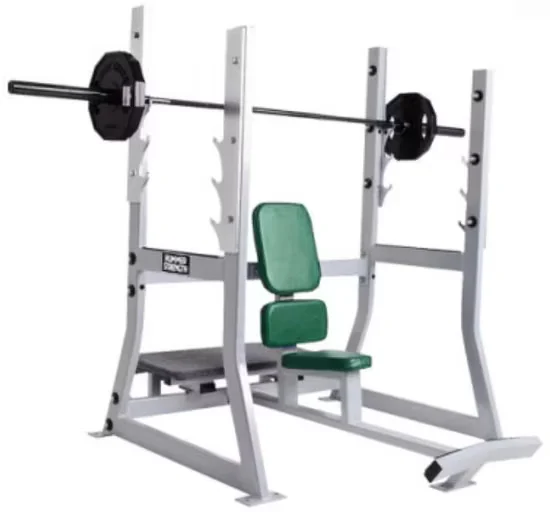
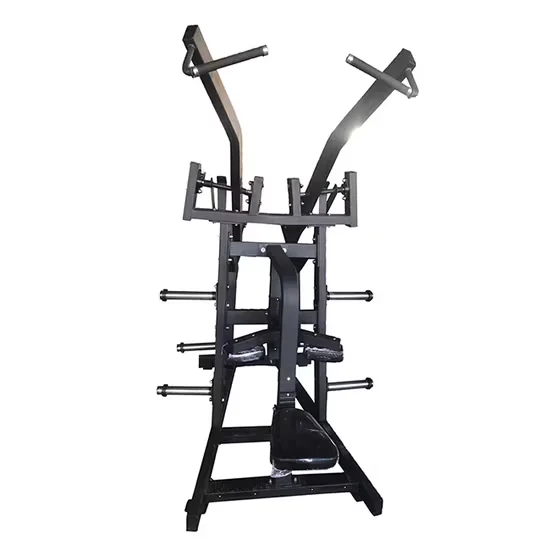
Steel Frame Durability — H5072 barbell rack engineered for high-frequency commercial use with full steel construction and customizable frame configuration.
Technical Specifications
| Parameter | Value |
|---|---|
| Designation | H5072 |
| Product Type | Barbell Rack / Integrated Gym Trainer |
| Material | Steel |
| Product Dimensions | 1000 × 7500 × 1430 mm |
| Net Weight | 50 kg |
| Folded | Unfolded |
| Power Source | Manual |
| Age Group | Adult |
| Gender | Unisex |
| Main Frame Color | Customizable |
| Cushion Color | Customizable |
| Certification | ISO 9001, CE |
Application Suitability
| Deployment Scenario | Typical Use |
|---|---|
| Professional gym and club strength zone | Heavy barbell training, rack pulls, and compound lifts under continuous member use |
| Community fitness center | Multi-user functional training with frequent weight changes throughout operating hours |
| Corporate wellness room | Supervised strength sessions with moderate daily throughput |
| Hotel fitness facility | Compact strength training area shared across guest schedules |
Why Weld Quality Determines Whether a Barbell Rack Survives Its First Year
Frame failure starts at the joint, not the tube.
When a commercial barbell rack integrated gym trainer gets loaded with plates and subjected to repeated racking impacts, stress concentrates at every weld point. I have seen rack uprights develop hairline cracks within months when the welding penetration was shallow or the steel gauge was below what continuous commercial loading demands. The complaints never arrive as maintenance tickets first — they show up as member safety concerns reported to front desk staff, and by then the trust damage is already done [NEED_CITE: structural fatigue patterns in commercial strength equipment frames]. Facility operators replacing cracked frames mid-contract learn quickly that the initial purchase price of a light-gauge rack is the smallest part of its total cost.
Where This Rack Fits in a Commercial Strength Zone
The H5072 serves as an anchor station for barbell-based compound movements — squats, presses, rack pulls, and shrugs — occupying a fixed footprint that defines traffic flow around it. In a mixed cardio and strength layout, this commercial barbell rack integrated gym trainer pairs with plate-loaded machines and free-weight benches to create a continuous training circuit without bottlenecking member movement. It accommodates adult users across a wide body-weight range up to the structural capacity of its steel frame, and the 7500 mm length provides enough rail space for multiple bar positions and attachment points. The manual power source means no electrical routing is needed, simplifying placement anywhere on the gym floor.
Floor Loading and Spatial Clearance for Daily Operation
A fully loaded barbell rack transfers substantial static and dynamic force into the floor structure, making subfloor assessment necessary before installation on elevated levels or suspended slabs. The 1000 mm depth and 7500 mm length require clearance on all sides for safe plate loading and bar removal — typically an additional 800 mm minimum per side for user movement and spotter access. Rubber flooring of adequate thickness beneath the rack absorbs impact vibration and prevents plate bounce from propagating to adjacent equipment zones. Since this unit operates without motors or electronics, ventilation and power circuit planning are not constraints, but floor leveling remains critical to prevent frame racking under asymmetric loads [NEED_CITE: commercial gym flooring specifications for heavy strength equipment].
Reading the Steel Gauge and Weld Specifications
The structural integrity of any barbell rack depends on the wall thickness of its steel tubing and the penetration depth of its welds. Thicker gauge steel resists deformation under eccentric loading — when a barbell is racked on one side first, the torsional force tests every connection point simultaneously. Full-penetration welds at upright-to-base joints distribute this stress across a larger surface area compared to tack welds, which concentrate force at small contact points and initiate crack propagation under repeated cycles. The 50 kg net weight of the H5072 reflects its steel mass, and that mass directly correlates with how much load the frame absorbs before deflection becomes perceptible to the user. Customizable frame and cushion colors allow the rack to match facility branding without compromising the underlying material specification.
The Hidden Cost of Underspecified Strength Equipment
Facilities that install light-duty barbell racks in commercial environments typically discover the mismatch within the first high-traffic quarter. Uprights begin to wobble as bolt holes elongate under repeated bar impacts, cross-members deflect visibly under loaded bars, and weld seams develop surface cracks that members photograph and post online. The replacement cycle — sourcing new racks, scheduling floor closure for removal and installation, absorbing member complaints during the gap — costs several times the price difference between a commercial-grade unit and the lighter alternative that failed [NEED_CITE: equipment replacement frequency in high-traffic commercial gyms]. Operators who specify steel gauge and weld standards upfront avoid this cycle entirely.
Why This Product Line for Your Strength Zone
Every unit undergoes structural load testing that simulates continuous high-frequency racking impacts across the weld points and upright connections. The OEM and ODM capability extends to logo application, frame color matching, and cushion specification, so the rack arrives aligned with your facility visual identity rather than requiring aftermarket modification. Our engineering team provides 3D strength-zone layout planning that accounts for this rack’s 1000 × 7500 mm footprint alongside adjacent equipment spacing, member traffic lanes, and plate storage positioning. The H5072 is part of a complete equipment family, meaning your entire cardio and strength procurement runs through one production pipeline with consistent quality standards. Technical support remains available around the clock for installation questions and maintenance guidance after the rack is on your floor.
Documentation & Test Records
- CE declaration of conformity for H5072 structural and safety compliance
- EN 957 test report covering static and dynamic load verification
- ISO 9001 certificate for manufacturing quality management
- Steel material specification sheet with gauge and grade data
- Weld inspection records for frame joint integrity
- Installation guide with floor anchoring and clearance requirements
Installation, Commissioning & Maintenance
- Verify floor load capacity for the 1000 × 7500 mm footprint before anchoring the H5072 in position
- Maintain minimum 800 mm clearance on all sides for safe bar loading and spotter movement
- Level the base frame on rubber flooring to prevent torsional stress under asymmetric barbell loads
- Inspect all bolt connections and weld seams at 90-day intervals under commercial use frequency
- Clean steel surfaces and cushion contact points weekly to prevent sweat corrosion and material degradation
- Confirm frame color and cushion condition match order specifications upon delivery before installation
Planning Your Strength Equipment Procurement
Share your strength zone dimensions and equipment list to receive a 3D layout that positions the H5072 alongside complementary stations with proper traffic flow and safety spacing. Specify your expected daily member throughput so we can confirm the structural specification matches your usage density. Identify the deployment floor level and adjacent spaces to determine whether additional vibration dampening is required beneath the rack. Let us know your target market and any branding requirements so frame color, cushion color, and logo application are confirmed before production begins.
Frequently Asked Questions
Q: What structural differences separate this commercial barbell rack from home-use models?
A: Commercial racks use thicker steel gauge and full-penetration welds at every load-bearing joint to withstand repeated racking impacts from multiple users throughout operating hours. Home units typically use lighter tubing and spot welds that hold under occasional use but develop fatigue cracks under continuous commercial loading cycles.
Q: How do I specify frame and cushion colors, and is there a minimum order?
A: Provide your RAL or Pantone color references for both the main frame and cushion surfaces during the quotation stage. We produce a color sample for approval before full production begins. Minimum order quantities vary depending on the customization scope and are confirmed during the OEM scoping discussion.
Q: What training movements is the H5072 designed to support?
A: The rack accommodates barbell-based compound exercises including squats, overhead presses, rack pulls, shrugs, and bench press variations when paired with an adjacent bench. The 7500 mm rail length provides multiple bar catch positions and sufficient clearance for full range of motion across these movement patterns.
Q: How long does OEM customization take from design approval to shipment?
A: Once color samples and logo proofs are approved, production proceeds through cutting, welding, finishing, and quality inspection stages. The total lead time depends on order volume and customization complexity, and we confirm the specific timeline during the proforma invoice stage.
Q: How is the rack packaged to prevent damage during shipping?
A: Each H5072 ships in a plywood box designed to protect the welded frame and cushion surfaces from impact and moisture during transit. The packaging secures the rack against shifting inside the container, and we provide handling instructions for warehouse receiving and unpacking.