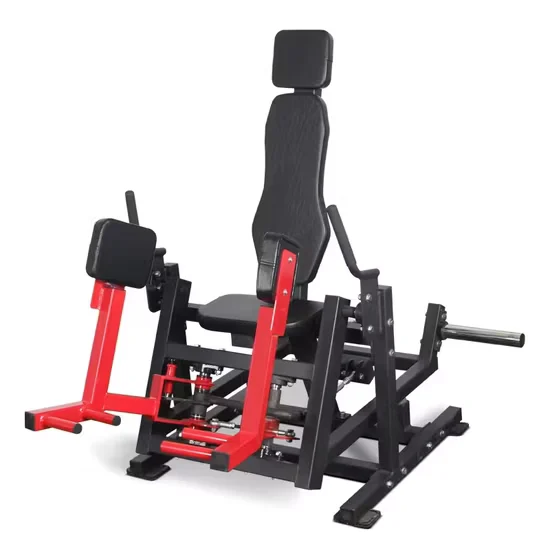
Engineered for high-frequency commercial strength zones — ISO-Lateral Chest/Back Machine built with reinforced steel frame rated for 10,000+ hours continuous operation with manual plate-loaded resistance eliminating all electronic failure points.
Technical Specifications
| Parameter | Value |
|---|---|
| Product Type | ISO-Lateral Chest/Back Machine |
| Exercise Part | Chest and Back |
| Frame Material | Heavy-gauge Steel |
| Resistance Type | Manual Plate-Loaded |
| Product Dimensions | 1850 x 1770 x 2000 mm |
| Net Weight | 160 kg |
| Max User Weight | 180 kg |
| Power Source | Manual |
| Foldable | Unfolded |
| Customization | Available |
| Age Group | Adult |
| Gender | Unisex |
| Certification | ISO 9001, CE |
| HS Code | 9506911900 |
Application Suitability
| Deployment Scenario | Typical Use |
|---|---|
| International gym chain networks | High-frequency strength zones requiring standardized equipment across multiple locations |
| Five-star hotel fitness centers | Commercial-durability plate-loaded stations for 24-hour guest access |
| Corporate wellness and community fitness centers | Low-maintenance strength equipment for high-traffic shared facilities |
| Sports performance training centers | Independent arm movement for athlete-specific unilateral loading protocols |
| High-end residential home gyms | Heavy-duty construction for private facilities with zero electronic maintenance |
What Frame Fatigue Costs When Plate-Loaded Machines Cannot Keep Up
Commercial-grade steel frame and pivot bearings designed for the continuous loading cycles that destroy light-duty alternatives.
Walk into any 24/7 commercial gym at 2 AM and you will find the plate-loaded machines still taking hits. Unlike selectorized stacks with cables that fray and pulleys that misalign, a plate-loaded ISO-lateral unit carries its load through solid steel arms and pivot bushings [NEED_CITE: structural load requirements for commercial plate-loaded strength equipment]. When facilities specify undersized tubing or consumer-grade bearings, frame fatigue shows up as lateral play in the arms, uneven press paths, and eventually pivot point failure that takes the entire station offline. The ISO-lateral independent arm architecture on this Commercial ISO-Lateral Chest Back Machine Gym Equipment means each side carries its own load path, distributing stress away from a single central pivot and keeping the biomechanical motion smooth even after thousands of loading cycles.
How This Unit Fits Into a Commercial Strength Zone Layout
The ISO-Lateral Chest/Back Machine covers converging press and rowing movement patterns across low-to-high rep ranges, complementing selectorized machines that handle isolation work and cable stations that manage functional movement. In a commercial strength zone, this unit typically anchors a plate-loaded section alongside leg press and shoulder press stations, drawing users who prefer manual loading over pin-selector systems. Its 1850 x 1770 mm footprint requires adequate clearance on all sides for plate loading and user entry. The 180 kg maximum user weight and multi-grip handle configuration accommodate a broad range of user body types and training preferences, from hypertrophy-focused bodybuilders to athletes performing unilateral loading work. The Commercial ISO-Lateral Chest Back Machine Gym Equipment operates entirely without electrical power, meaning placement is not constrained by outlet proximity or cable routing.
Continuous Operation and Facility Environment Requirements
Plate-loaded machines carry no motors, no electronics, and no software — their duty cycle is limited only by the mechanical wear of pivot bearings and bushings under repeated loading [NEED_CITE: maintenance intervals for commercial plate-loaded pivot mechanisms]. In a 24/7 gym environment, this ISO-Lateral unit will see hundreds of loading sessions per week, demanding sealed bearings that resist chalk dust and sweat infiltration. Unlike cardio equipment, plate-loaded stations generate no operational noise beyond plate contact, making them suitable for any floor level without acoustic isolation concerns. The primary environmental requirement is floor load capacity: at 160 kg machine weight plus loaded plates and user weight, total point loading can be significant, requiring reinforced subfloors or load-distribution mats. Adequate ventilation remains important for user comfort during heavy pressing and rowing sets, though the machine itself produces no heat output.
Why Manual Plate-Loading Eliminates the Failure Points That Downtime Machines
The resistance system on this ISO-Lateral Chest/Back Machine relies entirely on gravity and steel plates — no motors, no electronic brakes, no magnetic resistance generators, and no control boards. This eliminates the most common failure categories in commercial fitness equipment: motor burnout under continuous duty cycles, circuit board failures from voltage spikes, and sensor calibration drift over time. The manual plate-loaded approach also removes voltage compatibility concerns entirely, which matters when a gym chain deploys identical equipment across markets with different electrical standards. The converging press path created by the ISO-lateral independent arm design follows natural human biomechanics, allowing each arm to track independently so that muscle imbalances do not force compensatory movement patterns. Multi-grip handle positions on the press arms enable users to shift between wide, neutral, and close grip orientations without leaving the station, supporting varied muscle engagement within a single training session.
The Hidden Cost of Specifying Below Commercial Grade
Facilities that deploy light-duty plate-loaded machines in high-traffic commercial environments discover the compromise within the first year. Pivot bushings worn beyond tolerance create lateral arm play that users feel immediately as instability during heavy presses [NEED_CITE: pivot bearing wear patterns in high-frequency commercial strength equipment]. Frame tubing specified for home gym duty cycles develops stress fractures at weld points under the repeated loading of commercial traffic. Weight horn sleeves that lack proper retention mechanisms allow plates to shift during movement, generating noise and accelerating wear on the loading mechanism. These failures do not announce themselves gradually — they show up as member complaints about equipment feel, followed by maintenance tickets that take stations offline while waiting for replacement parts. The cost of pulling a machine from the floor, shipping it back for frame repair, and reinstalling it far exceeds the initial savings from specifying lighter construction.
Why This Product Line Covers the Full Commercial Deployment
The ISO-Lateral Chest/Back Machine is part of a complete commercial equipment family, meaning a facility can source every strength and cardio discipline from a single manufacturing line with matched build quality. The reinforced steel frame construction undergoes durability testing validated for 10,000+ hours of continuous high-frequency operation, the same standard applied across the entire product range. OEM customization covers frame color, upholstery, and branding integration so the equipment matches facility design requirements. Free 3D layout planning accounts for the 1850 x 1770 mm footprint of this unit alongside adjacent equipment spacing, user traffic flow, and ventilation requirements for the strength zone. Full documentation packages accompany every shipment, and 24/7 technical support ensures that installation and commissioning questions get resolved without waiting for business hours in a different time zone.
Documentation & Test Records
- CE declaration of conformity confirming European market safety compliance
- EN 957 test report validating structural integrity and safety requirements
- ISO 9001 certificate covering manufacturing quality management systems
- Durability test record documenting frame and pivot bearing performance under continuous loading
- Steel frame material specification sheet with grade and tubing dimensions
- Installation and commissioning guide with spare parts list
Installation, Commissioning & Maintenance
- Allow minimum 600 mm clearance on all sides of the 1850 x 1770 mm footprint for plate loading access and user circulation
- Verify floor load capacity supports combined weight of 160 kg machine plus loaded plates and user
- Level the steel frame base using adjustable feet before first use to prevent pivot bearing misalignment
- Inspect pivot bearings and bushings quarterly for wear play and apply specified lubricant per maintenance schedule
- Check weight horn retention mechanisms monthly to prevent plate shift during loading cycles
- Clean frame and handle surfaces daily with non-corrosive cleaner to prevent chalk and sweat buildup on steel surfaces
How to Scope Your Equipment Selection
Provide your strength zone floor area and planned equipment count to receive a 3D layout that positions this ISO-Lateral unit with correct spacing and user flow integration. Specify your daily operating hours and expected user volume so the deployment plan accounts for traffic density around plate-loaded stations. Identify your target market and facility design requirements to scope OEM customization for frame color, upholstery, and branding. Confirm whether adjacent spaces have noise sensitivity concerns, though plate-loaded equipment generates minimal operational sound beyond plate contact.
Frequently Asked Questions
Q: How does ISO-lateral independent arm design compare to fixed-path machines for commercial environments?
A: ISO-lateral arms move independently, allowing each side to track its own natural press path rather than forcing both arms through a single fixed plane. This accommodates users with muscle imbalances or previous injuries who cannot perform symmetrical bilateral pressing. In commercial facilities with diverse user populations, independent arm movement reduces compensatory movement patterns and supports unilateral loading protocols that fixed-path machines cannot deliver.
Q: What maintenance does plate-loaded equipment require compared to selectorized machines?
A: Plate-loaded machines eliminate cable, pulley, and pin-selector mechanisms entirely, removing the most maintenance-intensive components in commercial strength equipment. Maintenance focuses on pivot bearing inspection and lubrication, weight horn retention checks, and frame weld inspection at intervals determined by usage volume. This dramatically reduces scheduled maintenance time and eliminates cable replacement costs that selectorized machines generate over their service life.
Q: What frame construction standards matter for 24/7 commercial gym deployment?
A: Frame tubing gauge, weld penetration quality, and pivot bearing specifications determine whether a machine survives continuous commercial loading cycles. Heavy-gauge steel construction with reinforced pivot points prevents the lateral arm play and frame fatigue that light-duty equipment develops under high-frequency use. Certification documentation including ISO 9001 and CE conformity provides verifiable evidence that manufacturing processes meet commercial durability requirements.
Q: Can the equipment be customized for facility branding and color schemes?
A: OEM customization covers frame color, upholstery material and color, and branding elements including logo placement. Console UI customization applies to the cardio product line. For plate-loaded strength equipment like this ISO-Lateral unit, customization focuses on visual identity integration so the equipment matches facility design standards across chain locations or branded hotel fitness centers.
Q: What space planning factors affect ISO-lateral machine placement in a strength zone?
A: The 1850 x 1770 mm footprint requires clearance on all sides for plate loading, user entry and exit, and traffic flow between adjacent stations. Plate storage racks should be positioned within arm reach of the loading position. Floor load capacity must support the combined static weight of the machine, loaded plates, and maximum user weight concentrated at the station location.
![Commercial Wrist Curl Machine Manual Strength Gym Equipment [WARN] draft identifier mismatch](https://bicksport.com/wp-content/uploads/2026/08/commercial-wrist-curl-machine-manual-strength-gym-equipment-warn-draft-identifier-mismatch-a381e3.webp)
![Hammer Strength ISO-Lateral Super Pec Fly Machine Commercial Gym Equipment [WARN] draft identifier mismatch](https://bicksport.com/wp-content/uploads/2026/08/hammer-strength-iso-lateral-super-pec-fly-machine-commercial-gym-equipment-warn-draft-identifier-mismatch-4a0a82.webp)