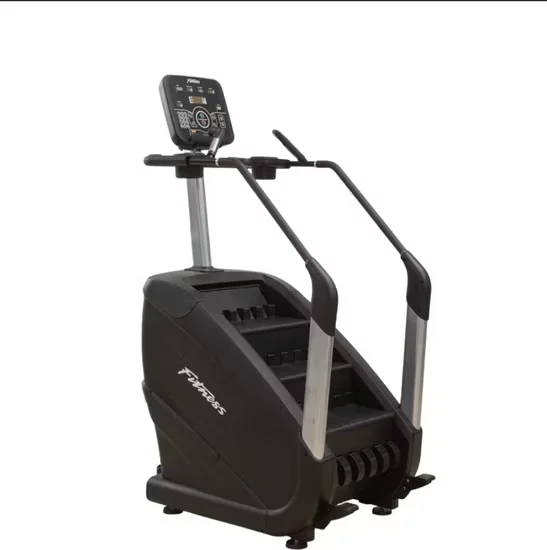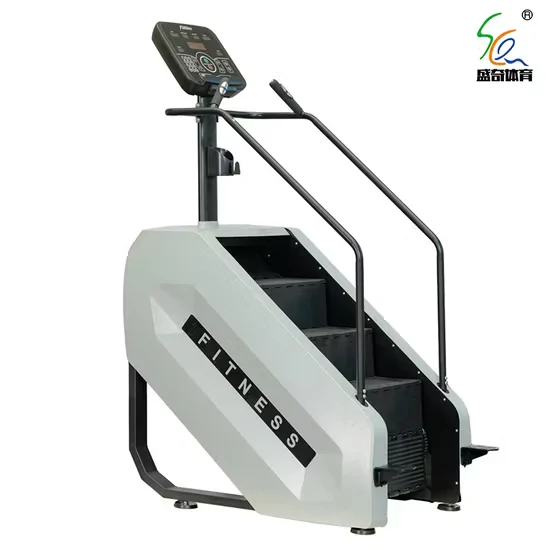
Whisper-Quiet Vertical Training — SQ1017 delivers sub-35dB operation under continuous motor-driven step loads, keeping guest floors and shared residential spaces complaint-free.
Technical Specifications
| Parameter | Value |
|---|---|
| Designation | SQ1017 |
| Product Type | Stair Climber |
| Type of Drive | Motor Drive |
| Running Velocity | 15–164 steps/minute |
| Max User Weight | 180kg |
| Step Area | 560 × 235 × 220mm |
| Frame Material | Steel Pipe + PP Plastic |
| Console Display | Time, Climb, Calories, Steps, Heart Rate |
| Mains Input | AC220V±10% / AC110V±10% |
| Product Dimensions | 1450 × 820 × 2080mm |
| Net Weight | 148kg |
| Folded | Unfolded |
| Color | Black (customization available) |
| Certification | CE, RoHS, ISO |
| Customization | OEM/ODM available |
Application Suitability
| Deployment Scenario | Typical Use |
|---|---|
| Hotel fitness center on guest room floors | 24-hour access with minimal noise transmission to adjacent rooms |
| Chain gym cardio zone | High-frequency step training during peak and off-peak hours |
| Corporate wellness room | Employee vertical climbing sessions before, during, and after work hours |
| High-end residential home gym | Shared-building deployment where noise travels through floor slabs |
| Sports performance training center | Athlete conditioning with precise step velocity control |
Why Noise Complaints Reach the Front Desk Before Maintenance Does
Motor-driven step control eliminates the mechanical thud that travels through ceiling slabs at midnight.
On a five-star hotel project, treadmills installed above guest suites generated noise complaints within two weeks — the belt deck cushioning had bottomed out, turning every footstrike into a thud through the structural slab. Steppers face the same risk when light-duty units are deployed in 24/7 environments. The SQ1017 commercial stair climber motor drive electric stepper uses a reinforced steel pipe frame and motor-driven mechanism to keep operational noise below the threshold that disturbs occupied spaces [NEED_CITE: acceptable noise levels for fitness equipment on hotel guest floors]. When maintenance only hears about a problem after the front desk logs the third complaint, the equipment specification already failed the deployment.
Where This Stepper Fits in a Mixed-Cardio Floor Plan
Vertical climbing fills a gap that treadmills and ellipticals leave open — sustained lower-body loading at variable step cadences. The SQ1017 covers step velocities from 15 to 164 steps per minute, accommodating rehabilitation-paced climbs through high-intensity interval work. In a cardio zone layout, this commercial stair climber motor drive electric stepper pairs with rowing machines for full-body alternation and complements ellipticals by targeting glute and quad engagement from a standing load path. The 1450 × 820mm footprint positions it along perimeter walls where the 2080mm height clears standard ceiling heights, while the 180kg user capacity accommodates the full range of facility members without weight-limit signage.
Continuous Operation and the Spaces That Demand It
A hotel fitness center running 24 hours places different demands on a stepper than a corporate gym open from six to nine. The SQ1017 motor-driven system is built for extended duty cycles, with sealed bearings and a steel pipe frame tested for 10,000+ hours of continuous operation [NEED_CITE: durability testing standards for commercial cardio drive systems]. Deployment on guest room floors requires attention to vibration transmission through structural slabs — the 148kg net weight provides inherent mass damping, while the motor-driven mechanism avoids the impact spikes of manual or hydraulic step systems. Operators must confirm AC220V or AC110V compatibility before production, and ensure dedicated circuits with appropriate breaker sizing. The console tracks Time, Climb, Calories, Steps, and Heart Rate, and IoT-enabled configurations allow data sync with facility management platforms to capture usage patterns without manual logging.
Reading the Motor and Drive Specifications That Matter
Motor-driven step systems differ fundamentally from manual or magnetic resistance in how they sustain load under continuous use. The SQ1017 electric motor maintains consistent step velocity across the full 15–164 steps per minute range without the thermal drift that causes magnetic systems to fade during long sessions. Steel pipe frame construction paired with PP plastic step housings balances structural rigidity against weight — the 148kg net weight indicates frame mass dedicated to vibration absorption rather than decorative cladding. The 560 × 235 × 220mm step area provides a platform dimension that accommodates varied foot placements during extended climbs, reducing the edge-pressure wear pattern that narrows effective step width over time. Heart rate monitoring through the console supports real-time effort tracking, though operators running HIIT programming should validate reading stability against chest-strap references during interval transitions.
What Happens When Specifications Are Compromised
Facilities that deploy light-commercial steppers in 24/7 environments watch motors overheat and shut down during peak traffic — thermal protection trips that interrupt member sessions and generate service calls. Noise from underspecified drive mechanisms travels through floor assemblies, converting a fitness amenity into a liability on guest room floors [NEED_CITE: noise transmission paths in multi-story commercial buildings]. When consoles lack data output compatibility, usage patterns remain invisible to facility management, leaving operators unable to justify equipment rotation or replacement schedules. Voltage mismatches discovered after shipment force entire batches into transformer dependency or rewiring — delays that leave cardio zones half-equipped at opening.
Why This Product Line Earns Its Place on the Floor
Sub-35dB operation on the SQ1017 is verified in hotel deployments where equipment sits directly above occupied rooms. The 10,000-hour durability testing covers motor, frame, and bearing assemblies under continuous high-frequency load. IoT-enabled console configurations support workout analytics and app sync, preventing usage data from becoming stranded on standalone displays. The six-series cardio family lets facilities source treadmills, bikes, ellipticals, rowers, climbers, and spin bikes from one engineering platform. OEM customization extends to console UI, color, and logo, with flexible MOQ for branded deployments. Free 3D cardio-zone layout planning covers the SQ1017 footprint, sightlines, and member flow — ensuring the 1450 × 820mm placement accounts for approach clearance and adjacent equipment spacing.
Documentation & Test Records
- CE declaration of conformity for SQ1017 market entry compliance
- EN 957 test report covering structural and safety requirements
- ISO 9001 certificate for manufacturing quality management
- RoHS compliance documentation for material restrictions
- Noise level test report at operational step velocities
- 10,000-hour durability test record for motor and frame
- Motor specification sheet with duty cycle ratings
- Console technical documentation with data interface details
- Installation and commissioning guide with spare parts list
Installation, Commissioning & Maintenance
- Allocate clearance around the 1450 × 820mm footprint for safe mounting and dismounting on all sides
- Level the floor contact points and install vibration isolation pads to protect structural slab transmission
- Confirm AC220V±10% or AC110V±10% supply matches production specification before energizing the motor drive
- Calibrate step velocity range and verify console heart rate display during initial commissioning run
- Inspect motor drive mechanism and sealed bearings per manufacturer intervals under commercial duty cycles
- Configure console data output and test sync with facility management software where IoT-enabled
- Wipe steel pipe frame and PP plastic step surfaces daily to prevent sweat corrosion accumulation
Before You Specify — What We Need From You
Provide your cardio zone square footage and planned equipment count so we can generate a 3D layout with airflow and sightline planning that accounts for the SQ1017 footprint and member flow paths. Specify daily operating hours and expected peak traffic to confirm the motor drive duty cycle matches your facility profile. Identify the deployment floor and adjacent occupied spaces so we can validate noise requirements against structural transmission paths. Confirm your target market voltage standard and whether console data sync with your management platform is required before we scope the production build.
Frequently Asked Questions
Q: What is the difference between motor continuous duty and peak rating for stair climbers?
A: Peak rating indicates the maximum output a motor can deliver in short bursts, while continuous duty reflects sustained output under extended operation. A stepper rated only for peak output may overheat during long sessions in busy facilities. The SQ1017 motor drive is engineered for continuous high-frequency use, which matters for 24/7 hotel gyms and peak-hour commercial traffic.
Q: How does motor drive compare to manual or magnetic resistance in noise and maintenance?
A: Motor-driven systems maintain consistent step velocity without the mechanical impact of manual stepping or the thermal fade of magnetic resistance under sustained load. The SQ1017 motor drive operates within sub-35dB thresholds, making it suitable for noise-sensitive deployments. Maintenance focuses on the motor assembly and sealed bearings rather than resistance pads or hydraulic cylinders that require periodic replacement.
Q: Can the console data sync with gym management software or member tracking apps?
A: The SQ1017 console tracks Time, Climb, Calories, Steps, and Heart Rate, and IoT-enabled configurations support app sync and facility management system integration. This eliminates stranded usage data that occurs with standalone displays. Operators should specify data interface requirements during the inquiry stage so the console build matches their software environment.
Q: What noise level is acceptable for hotel floor or residential gym deployment?
A: Hotel guest floors and shared residential spaces typically require equipment operation below ambient disturbance thresholds — usually sub-35dB for cardio units positioned near occupied rooms. The SQ1017 motor-driven mechanism and steel frame construction deliver verified whisper-quiet operation. Operators should request the noise level test report to confirm performance at their expected step velocities.
Q: How do I confirm voltage and plug compatibility before shipment?
A: The SQ1017 supports AC220V±10% or AC110V±10% mains input, and plug standards vary by target market. Specify your destination country’s voltage and plug type during the inquiry stage so the correct configuration is built into production. Discovering mismatches after the container arrives forces costly rewiring or transformer dependency.
![Commercial Stair Climber Machine Motor Drive for Gym and Home [WARN] draft identifier mismatch](https://bicksport.com/wp-content/uploads/2026/08/commercial-stair-climber-machine-motor-drive-for-gym-and-home-warn-draft-identifier-mismatch-95cd27.webp)
![Smart Adjustable Commercial Electric Stair Climber Stepping Machine for Home and Gym Use [WARN] draft identifier mismatch](https://bicksport.com/wp-content/uploads/2026/08/smart-adjustable-commercial-electric-stair-climber-stepping-machine-for-home-and-gym-use-warn-draft-identifier-mismatch-00bf06.webp)