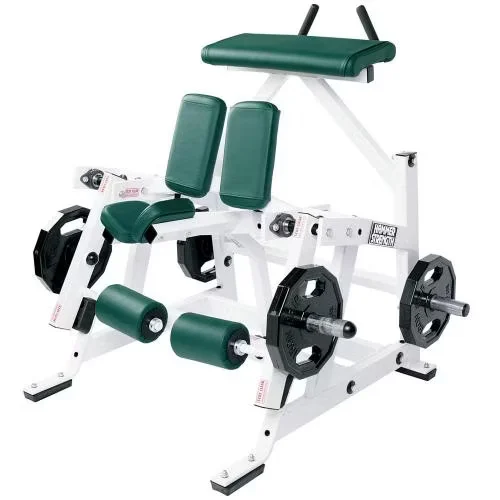
Continuous Load Endurance — Sealed pivot bearings and reinforced steel frame engineered for 24/7 commercial facility run-times without play or noise development.
Technical Specifications
| Parameter | Value |
|---|---|
| Designation | 5002 |
| Product Type | ISO-Lateral Chest/Back Machine |
| Exercise Part | Chest and Back |
| Frame Material | Steel |
| Product Dimensions | 1850 × 1770 × 2000 mm |
| Net Weight | 160 kg |
| Maximum User Weight | 180 kg |
| Age Group | Adult |
| Gender | Unisex |
| Certification | ISO 9001, CE |
| OEM/ODM | Available |
| HS Code | 9506911900 |
| Transport Package | Plywood Case |
Application Suitability
| Deployment Scenario | Typical Use |
|---|---|
| Professional gym and club strength zone | Dual-function station for high-traffic chest press and row training |
| Community fitness center | Mixed-user strength circuit accommodating varying fitness levels |
| Corporate wellness facility | Compact dual-station reducing total equipment count in limited floor plans |
| Sports performance training center | Balanced bilateral loading for athletic conditioning programs |
Why Strength Stations Develop Rattle and Play Before the First Maintenance Cycle
Sealed bearings and reinforced steel joints prevent the premature loosening that plagues high-traffic commercial floors.
When I sourced equipment for hotel gyms across Southeast Asia, the strength stations were always the quiet problem — not the noise complaints that flooded the front desk from treadmill floors above. The issue was mechanical drift. Within months of continuous member use, pivot points on chest press and row stations would develop play, creating metallic clicking that echoed through open-plan fitness areas. Maintenance teams tightened bolts weekly, but the root cause was undersized bearings and thin-gauge steel that flexed under load. Commercial ISO-lateral chest and back machine stations built with reinforced frames and sealed bearings eliminate this cycle entirely, keeping pivot tolerances tight across thousands of repetitions [NEED_CITE: bearing seal durability standards for continuous commercial strength equipment].
How This Station Fits Into a Professional Strength Floor
The 5002 covers both horizontal pressing and pulling movements through ISO-lateral independent arm paths, allowing users to work chest and back in a single station without switching equipment. In a commercial gym strength zone, this dual-function design pairs naturally with dedicated shoulder and leg stations, reducing total footprint while preserving exercise variety. The 1850 × 1770 mm footprint accommodates users across a wide anthropometric range, and the 180 kg maximum user weight supports heavy-load training without frame deflection. Commercial ISO-lateral chest and back machine deployment benefits facilities where floor space is at a premium but equipment diversity cannot be compromised.
Continuous Operation and Environmental Requirements
A commercial strength station in a 24/7 facility endures hundreds of loading cycles daily, and the ISO-lateral arm mechanism must maintain alignment through every one. Sealed pivot bearings resist dust and moisture ingress common in high-humidity environments, extending service intervals compared to open bushings. The reinforced steel frame requires level flooring with anti-vibration pads to prevent micro-movement from compounding into structural fatigue over time. Adequate clearance on all sides — particularly the 1770 mm width dimension — ensures users can load and unload plates without spatial conflict [NEED_CITE: commercial strength equipment clearance and flooring standards]. Proper ventilation around the station area prevents sweat accumulation on frame welds, which accelerates corrosion in tropical climates.
ISO-Lateral Mechanics and Frame Engineering Explained
ISO-lateral independent arm paths allow each side of the commercial ISO-lateral chest and back machine to move through its own arc, preventing the stronger limb from compensating for the weaker one during bilateral exercises. This mechanical independence demands precise pivot alignment — if the arm axis does not match the natural joint tracking of the shoulder, users experience binding at the extremes of range. The steel frame must resist torsional flex when uneven loads are applied across the two arms, which is why reinforced gusseting at the main upright-to-base junction matters more than raw tube thickness alone. Sealed bearings at each pivot point maintain rotational smoothness without periodic lubrication, a critical distinction from open bushings that require monthly maintenance in high-use environments.
The Hidden Cost of Specifying Below Commercial Grade
I watched a chain gym replace an entire row of dual-function stations after the pivot bearings seized within eight months of deployment. The original units used sintered bronze bushings rated for light-commercial duty cycles, which could not withstand the sustained loading frequency of a busy membership floor. The replacement cost included not only new equipment but also member compensation for the weeks when half the strength zone was cordoned off. Facilities that specify equipment based on upfront price without verifying bearing type and frame weld quality routinely face this cycle of premature failure and wholesale replacement [NEED_CITE: light-commercial versus full-commercial duty cycle classification for strength equipment].
Why This Product Line Holds Up Under Continuous Public Use
Every unit undergoes 10,000-hour durability testing on pivot bearings and frame welds before leaving the production line, matching the operational profile of facilities that run sixteen or more hours daily. The ISO-lateral arm path is validated for resistance curve consistency across the full range, so users experience predictable loading from start to finish. OEM and ODM customization extends to frame color, upholstery, and branding, allowing operators to match existing floor aesthetics without sacrificing structural specification. The 3D layout planning service accounts for the 1850 × 1770 mm footprint and required user clearance when positioning this commercial ISO-lateral chest and back machine within a broader strength circuit. Technical support remains available around the clock for commissioning questions or field adjustments.
Documentation & Test Records
- CE declaration of conformity covering mechanical safety requirements
- EN 957 test report validating structural integrity under cyclic loading
- ISO 9001 certificate confirming quality management system compliance
- Noise level test record documenting operational acoustics under load
- Durability test log for sealed pivot bearing service life verification
- Frame welding inspection report and material grade certification
Installation, Commissioning & Maintenance
- Confirm 1850 × 1770 × 2000 mm clearance envelope with safety margins on all sides
- Level the reinforced steel frame using adjustable feet and anti-vibration pads
- Verify floor load capacity supports 160 kg net weight plus maximum user load
- Inspect ISO-lateral arm pivot alignment and full-range motion smoothness at commissioning
- Establish sealed bearing inspection interval based on daily usage cycle count
- Apply sweat-resistant wipe-down protocol to frame welds and upholstery after each shift
Specifying for Your Facility’s Operational Profile
Provide your strength zone dimensions and target equipment count to receive a 3D layout plan that accounts for user flow and clearance around each station. Specify your facility’s daily operating hours so the duty-cycle rating of every pivot component can be matched to actual usage intensity. Confirm the deployment floor level and adjacent occupied spaces to determine whether acoustic isolation pads are required beneath the frame. Indicate whether frame color, upholstery, or branding customization is needed to align with your facility’s design standard.
Frequently Asked Questions
Q: How does ISO-lateral differ from fixed-path dual-axis machines for high-traffic commercial floors?
A: ISO-lateral independent arms allow each side to track separately, preventing dominant-limb compensation during chest press and row movements. On busy commercial floors where users vary widely in strength symmetry, this reduces uneven wear on pivot bearings and maintains consistent resistance feel across thousands of cycles without recalibration.
Q: What steel grade and welding standards ensure 24/7 durability in dual-function strength stations?
A: Commercial-grade reinforced steel frames use full-penetration welds at high-stress junctions like the upright-to-base connection. This prevents crack propagation under repeated asymmetric loading, which is common when users perform unilateral pressing or pulling on ISO-lateral arms. Verified welding inspection reports should accompany every commercial deployment.
Q: What is the bearing maintenance cycle in continuous-use commercial environments?
A: Sealed pivot bearings in this commercial ISO-lateral chest and back machine resist dust and moisture ingress, extending service intervals compared to open bushings. In facilities operating sixteen or more hours daily, sealed bearings typically require inspection rather than replacement at standard maintenance checkpoints, reducing both labor cost and equipment downtime.
Q: Does dual-function space efficiency compromise performance compared to dedicated single-purpose machines?
A: Dual-function stations consolidate two movement patterns within one footprint, which is critical when floor area limits total station count. The ISO-lateral independent arm design preserves the natural movement arc of each exercise, so users experience resistance curves comparable to dedicated chest press or row machines without the spatial penalty of housing two separate units.