
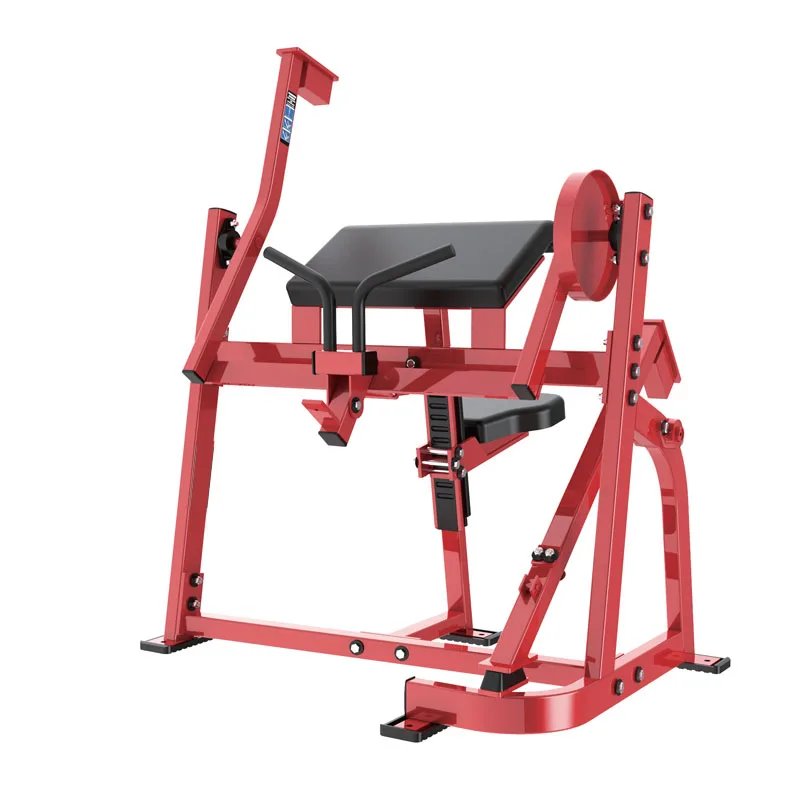
![Popular Gym Equipment Seated Triceps Extension Machine OS-H5077 for Commercial Gyms [WARN] draft identifier mismatch](https://bicksport.com/wp-content/uploads/2026/08/popular-gym-equipment-seated-triceps-extension-machine-os-h5077-for-commercial-gyms-warn-draft-identifier-mismatch-c094c3.webp)
10,000-Hour Endurance — Manual plate-loaded resistance and sealed bearing pivots tested for continuous high-frequency gym operation without structural fatigue.
Technical Specifications
| Parameter | Value |
|---|---|
| Designation | os-h5077 |
| Product Type | Seated Triceps Extension |
| Power Source | Manual |
| Exercise Part | Tricep |
| Resistance Type | Plate-loaded |
| Material | Steel |
| Product Dimensions | 1355 × 1330 × 1410 mm |
| Net Weight | 90 kg |
| Foldable | Unfolded |
| Certification | ISO 9001, CE |
| OEM/ODM | Available |
Application Suitability
| Deployment Scenario | Typical Use |
|---|---|
| Hotel fitness center on guest room floors | 24-hour access strength zone with minimal noise disruption to adjacent rooms |
| Chain gym cardio and strength zone | High-frequency isolation training across multiple locations with uniform equipment standards |
| Corporate wellness room | Compact footprint triceps isolation for time-efficient employee workout circuits |
| High-end residential home gym | Plate-loaded strength training without motor noise in shared living spaces |
| Sports performance training center | Targeted triceps development for athletes requiring biomechanically precise isolation movements |
Why Plate-Loaded Triceps Machines Outlast Selectorized Units in Commercial Facilities
Manual resistance eliminates motor burnout and electrical failure points entirely.
Light-commercial triceps extension machines equipped with weight stack selectors and cable-and-pulley systems generate maintenance calls within months under continuous public facility usage. The cable frays, selector pins bend, and weight stack plates stick — each failure takes the machine offline until parts arrive. I have seen facilities pull entire rows of selectorized upper-body units after a single season of high-frequency rotation. A commercial seated triceps extension machine built on plate-loaded manual resistance removes every one of those failure points, leaving only steel and sealed bearings to maintain. [NEED_CITE: maintenance interval comparison between plate-loaded and selectorized commercial strength equipment]
Positioning Within the Strength Training Zone
This unit fills the isolation-training gap in a commercial floor layout, sitting between compound pressing stations and cable crossover rigs. The commercial seated triceps extension machine targets the triceps through a fixed pivot path, complementing free-weight benches and dip stations where stabilizer muscles share the load. It suits deployment in dedicated machine circuit zones where users rotate through movements with minimal setup time. The seat and pad geometry accommodates a wide anthropometric range, allowing both smaller-framed and larger users to align their elbow joint with the pivot axis without shoulder compensation.
Continuous Operation and Deployment Environment Requirements
Because this unit relies on manual plate loading rather than electrical drive systems, it demands no dedicated circuit, no voltage matching, and no motor cooling clearance. Facilities deploying it on upper hotel floors or beside occupied rooms avoid the low-frequency hum that motorized equipment transmits through concrete slabs. The 1355 × 1330 mm footprint requires standard commercial spacing — roughly 600 mm clearance on the loading side for plate changes and user passage. Floor leveling matters here: an uneven surface shifts the frame load distribution, accelerating bearing wear on the pivot side carrying the heavier plate stack. [NEED_CITE: floor leveling tolerances for commercial plate-loaded strength equipment]
Engineering Behind the Plate-Loaded Pivot System
The sealed bearing pivot mechanism governs how smoothly the lever arm travels through the full extension arc. Inferior bushings create lateral play that users feel as wobble at the handle — a sensation that signals instability and erodes confidence during heavy loading. Commercial-grade sealed bearings eliminate that play while resisting sweat and chalk contamination that degrades open bushings within weeks. The steel frame construction distributes plate load forces across welded joints rather than bolted connections, preventing the loosening that high-frequency use introduces at every fastener point. Plate-loaded manual resistance also delivers a linear force curve that matches the natural strength curve of the triceps through mid-range extension, unlike weight stack systems where cable routing geometry alters perceived resistance at different angles.
The Hidden Cost of Specifying Below Commercial Grade
Facilities that purchase light-commercial triceps machines based on lower unit cost routinely face total replacement expense within eighteen months. The pivot bushings oval out, the frame develops lateral movement, and the seat mounting hardware works loose under repeated loading cycles. Each failure generates a maintenance ticket, pulls the unit from the floor, and frustrates members who find their preferred station occupied by an out-of-order sign. Across a multi-site gym chain, those individual tickets compound into significant annual spend — money that would have been absorbed by specifying commercial-grade sealed bearings and welded steel frames from the start. [NEED_CITE: total cost of ownership for light-commercial versus commercial strength equipment in high-frequency environments]
Why This Product Line Covers the Full Facility Requirement
Every unit in this series undergoes 10,000-hour continuous operation testing on frames and bearing assemblies, matching the duty cycle that 24-hour hotel and gym environments demand. The commercial seated triceps extension machine benefits from the same steel fabrication and welding standards applied across all six cardio and strength series, so a facility sourcing an entire floor from one production line receives consistent build quality. OEM customization extends to pad color, logo placement, and frame finish, allowing gym chains to match corporate branding without sourcing from separate suppliers. Our team provides 3D layout planning that accounts for the 1355 × 1330 mm footprint of this unit alongside adjacent equipment, ensuring proper user clearance and traffic flow. Documentation, spare parts lists, and 24/7 technical support ship with every order.
Documentation & Test Records
- CE declaration of conformity for commercial strength equipment
- EN 957 test report covering structural integrity and safety
- ISO 9001 manufacturing quality management certificate
- Frame and pivot durability test record for continuous commercial cycles
- OEM specification sheet with customization options
- Installation and commissioning guide with spare parts list
Installation, Commissioning & Maintenance
- Position the 1355 × 1330 mm frame on a leveled surface with 600 mm clearance on the plate-loading side for safe operation.
- Anchor the 90 kg steel base using floor bolts or anti-slip pads depending on facility flooring type.
- Inspect sealed bearing pivot mechanism quarterly and wipe clean of chalk residue to maintain smooth lever travel.
- Check all welded joints and seat mounting hardware at six-month intervals under high-frequency rotation schedules.
- Apply UV-stable protectant to pads monthly to prevent surface cracking from sweat and cleaning chemical exposure.
Project Specification and Quotation Guidance
Provide your strength zone square footage and planned equipment list to receive a 3D layout that positions this triceps extension within your circuit flow. Specify average daily usage hours so we can confirm the sealed bearing pivot and frame specifications match your facility’s duty cycle. Indicate deployment floor level and adjacent occupied spaces to verify that plate-loaded manual operation meets your noise transmission requirements. State your OEM branding needs — pad color, frame finish, and logo placement — so the quotation reflects your customization scope.
Frequently Asked Questions
Q: How does plate-loaded resistance compare to selectorized weight stack systems for commercial gym environments?
A: Plate-loaded systems eliminate the cable, selector pin, and weight stack components that generate the majority of maintenance tickets in high-frequency facilities. Users add or remove standard plates directly, which means fewer moving parts to wear and longer intervals between service calls. For 24-hour gym operations, that translates to higher equipment uptime and lower annual maintenance spend across the entire strength zone.
Q: What steel frame construction standards apply to this unit for high-frequency commercial usage?
A: The frame uses commercial-grade welded steel joints rather than bolted connections, distributing plate load forces across the entire structure without fastener loosening. Each welded joint undergoes inspection before finishing, and the completed frame is tested for continuous cyclic loading. This construction standard ensures the unit maintains structural rigidity through years of daily commercial rotation without developing lateral play.
Q: What bearing maintenance is required to keep the pivot mechanism operating smoothly?
A: The sealed bearing pivot requires periodic wiping to remove chalk dust and sweat residue that accumulates on the exterior seal surface. Unlike open bushings that need regular lubrication and replacement, sealed bearings retain their factory grease and resist contamination from typical gym environments. Facilities running high-frequency schedules should inspect the pivot quarterly and replace bearings only when lateral play becomes detectable.
Q: What OEM customization options are available for facility branding integration?
A: Customization covers pad color selection, frame finish options, and logo placement on visible frame surfaces. Console and branding elements are configured during the order scoping stage, allowing gym chains and hotel groups to match corporate identity standards across multiple locations. MOQ flexibility accommodates both single-site deployments and multi-facility rollout programs.


![ISO-Lateral Wide Chest Press Machine Commercial Gym Equipment [WARN] draft identifier mismatch](https://bicksport.com/wp-content/uploads/2026/08/iso-lateral-wide-chest-press-machine-commercial-gym-equipment-warn-draft-identifier-mismatch-fcfab2.webp)