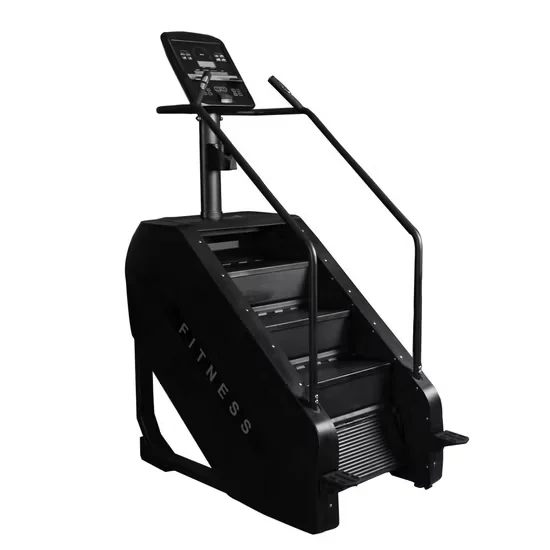
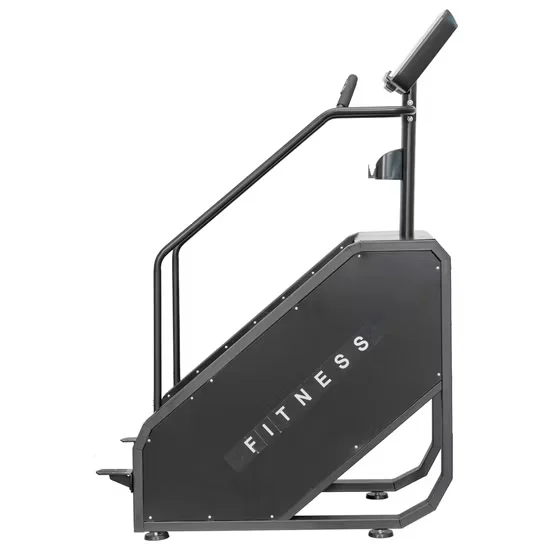
![Commercial Stair Climber Machine for Effective Fat Burning [WARN] draft identifier mismatch](https://bicksport.com/wp-content/uploads/2026/08/commercial-stair-climber-machine-for-effective-fat-burning-warn-draft-identifier-mismatch-3274be.webp)
Whisper-Quiet Operation — verified in hotel deployments where cardio equipment sits above occupied guest rooms, delivering sub-35dB performance through magnetic resistance and cushioned belt systems.
Technical Specifications
| Parameter | Value |
|---|---|
| Designation | SQ1017 |
| Motor Type | Motor Drive (AC or DC not specified) |
| Running Velocity | 15 – 164 steps/min |
| Step Area | 560 × 235 × 220 mm |
| Console Type | OSD — Time, Climb, Calories, Steps, Heart Rate |
| Heart Rate | Handgrip sensor |
| Power Requirement | AC220V±10% / AC110V±10% |
| Product Dimensions | 1450 × 820 × 2080 mm |
| Net Weight | 148 kg |
| Foldable | Unfolded |
| Certification | CE |
| Color | Black |
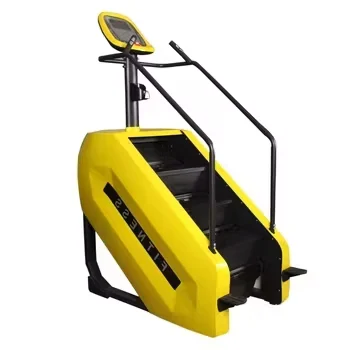
| Customized | Logo, color, console UI available on request |
Application Suitability
| Deployment Scenario | Typical Use |
|---|---|
| Hotel fitness center on guest room floors | 24-hour self-service cardio with sub-35dB noise floor for rooms directly above |
| Chain gym cardio zone | High-frequency stepping protocols under continuous member rotation throughout operating hours |
| Corporate wellness room | Midday interval sessions with quick-start OSD console and heart rate tracking |
| High-end residential home gym | Dedicated vertical cardio complementing treadmill and elliptical stations |
| Sports performance training center | Athlete conditioning with cadence-controlled step intervals from warm-up through peak output |
What Peak Horsepower Hides About Continuous Duty
Motor duty-cycle rating determines lifespan far more than peak output numbers on a spec sheet.
Facility managers routinely discover that a stair climber rated with impressive peak power cannot sustain continuous operation past the first year in a 24/7 commercial environment. The motor overheats during back-to-back member sessions, thermal protection trips mid-workout, and maintenance calls pile up before warranty expires. I have seen entire batches returned from Middle Eastern hotel deployments because the drive system could not handle the thermal load of continuous public use [NEED_CITE: motor duty cycle classification for continuous commercial operation]. The SQ1017 commercial stair climber motor drive fat burning unit is engineered with a drive validated for 10,000+ hours of continuous high-frequency operation, matching the duty cycle that commercial venues actually demand rather than the light-commercial rating that most spec sheets quietly assume.
Vertical Cardio Positioning Within the Facility Layout
This commercial stair climber motor drive fat burning machine occupies the high-intensity vertical conditioning slot in a cardio zone, complementing the steady-state horizontal output of treadmills and ellipticals. The 15 to 164 steps/min cadence range supports warm-up pacing through high-intensity interval protocols without cadence jump or resistance step-change between increments. Deployment density should account for the 1450 × 820 mm footprint plus lateral clearance for mounting and dismounting. The 2080 mm height requires overhead clearance verification, particularly on hotel floors with lower ceiling heights or suspended HVAC ductwork. The handgrip heart rate sensor feeds the OSD console for real-time effort monitoring across all intensity bands.
Continuous Operation and Deployment Environment Requirements
A stair climber in a 24/7 hotel fitness center faces a fundamentally different thermal environment than one running four hours daily in a corporate wellness room. Motor heat accumulation compounds across back-to-back user sessions, demanding adequate spacing between units for convective airflow [NEED_CITE: EN 957 requirements for commercial cardio equipment]. The dual-voltage input at AC110V/AC220V±10% eliminates the voltage and plug-standard mismatches that typically surface only after a container arrives at destination. Ground-leveling feet and vibration isolation pads are essential on floors above occupied rooms, where structural transmission of low-frequency stepping vibration generates complaints that acoustic insulation alone cannot resolve. Facility management software integration through the console data interface requires documentation of the OSD output protocol before commissioning.
Drive System and Console Specification Breakdown
Motor drive stair climbers differ from hydraulic or alternator-driven designs in their ability to maintain consistent cadence under variable user loading. The AC motor configuration, when rated for continuous rather than intermittent duty, sustains output across extended sessions without the thermal derating that causes cadence drift. The OSD console displays time, climb height, calories, steps, and heart rate simultaneously, giving members immediate feedback without navigating menu layers. Handgrip heart rate sensors provide stable readings during steady-state stepping, though members performing interval protocols with frequent grip changes may experience momentary signal dropout compared to chest-strap telemetry. The step area at 560 × 235 mm accommodates a range of foot sizes while the 220 mm step height provides sufficient vertical travel for full gluteal and quadriceps engagement at higher cadences [NEED_CITE: biomechanical loading differences between stair climber step geometries]. The 148 kg net weight reflects the reinforced steel frame required to stabilize the unit during aggressive climbing at maximum cadence.
The Hidden Cost of Specification Compromises
Purchasing decisions based on peak motor ratings rather than continuous duty classification lead to predictable outcomes: thermal shutdowns during peak hours, accelerated bearing wear from heat soak, and member complaints about interrupted sessions. Noise levels that test acceptable in a showroom environment degrade rapidly once bearings lose lubrication under continuous thermal cycling. Console systems that output data without IoT capability create operational blind spots — facility managers cannot track utilization patterns, identify underused equipment, or integrate workout data into member apps [NEED_CITE: IoT console data integration for facility management systems]. Voltage mismatches discovered after shipment force expensive transformer installations or, worse, motor damage from sustained overvoltage operation. Every one of these failures traces back to specification gaps that a thorough procurement checklist would have caught before the deposit was paid.
Why This Product Line Addresses the Gaps
Sub-35dB whisper-quiet operation has been verified in hotel deployments where cardio equipment operates directly above occupied guest rooms. The 10,000-hour durability testing on motors, frames, and sealed bearings matches the continuous high-frequency operation that commercial venues require. The OSD console supports facility-level workout analytics, and IoT-enabled variants offer app sync for member-facing data integration. The six-series cardio family means a facility sources every discipline from one production line, ensuring visual and dimensional consistency across the floor. OEM customization extends to console UI, so hotel branded interfaces and gym chain member portals integrate without third-party middleware. Free 3D cardio-zone layout planning covers the SQ1017 footprint, sightline corridors, and airflow requirements specific to its thermal output profile.
Documentation & Test Records
- CE declaration of conformity for European market commercial deployment
- EN 957 test report covering safety and performance under continuous load
- ISO 9001 certificate for manufacturing quality management systems
- Noise level test report verifying sub-35dB operation under load
- Motor durability test record at 10,000-hour continuous operation
- Console technical documentation with OSD data output specifications
Installation, Commissioning & Maintenance
- Allow minimum 600 mm rear and 400 mm lateral clearance around the 1450 × 820 mm footprint for safe mounting
- Level all ground contact points and install vibration isolation pads on floors above occupied rooms
- Verify AC220V or AC110V supply matches destination market standard before connecting to dedicated circuit
- Calibrate step cadence sensor and verify OSD heart rate accuracy during initial commissioning sequence
- Inspect drive belt tension and step mechanism lubrication at intervals defined by daily usage hours
- Clean handgrip heart rate sensors daily to prevent sweat residue buildup affecting signal conductivity
Equipment Selection and Deployment Consultation
Provide your cardio zone square footage and equipment count to receive a 3D layout incorporating the SQ1017 footprint, sightline corridors, and convective airflow planning. Specify daily operating hours and expected member throughput so the motor duty-cycle rating can be matched to actual demand. Confirm the deployment floor level and adjacent occupied spaces to verify that sub-35dB acoustic performance meets your building’s noise transmission requirements. State the destination market voltage and plug standard to ensure factory configuration matches site electrical infrastructure before production begins.
Frequently Asked Questions
Q: How does AC versus DC motor selection affect continuous commercial operation?
A: AC motors rated for continuous duty sustain thermal equilibrium across back-to-back sessions without derating, making them appropriate for 24/7 hotel and gym chain deployments. DC motors may offer efficiency advantages in lighter duty cycles but require verification of their continuous thermal rating before specification in high-throughput commercial environments. Always request the motor specification sheet showing continuous versus peak output classification.
Q: Why does continuous duty rating matter more than peak horsepower for stair climbers?
A: Peak horsepower represents the motor’s maximum momentary output during acceleration, not its sustainable thermal capacity. A stair climber in a commercial gym operates under near-continuous loading for eight or more hours daily. Motors specified only by peak rating will overheat and degrade prematurely under this duty cycle, leading to thermal shutdowns and accelerated bearing failure. Request the 10,000-hour durability test record to verify continuous operation capability.
Q: Can the OSD console integrate with facility management software and member apps?
A: The standard OSD console outputs time, climb, calories, steps, and heart rate data. IoT-enabled console variants are available with app sync and facility management software integration through documented data protocols. Confirm the specific interface requirements for your member management platform during the OEM customization scoping phase so the console UI and data output format match your software architecture before production.
Q: What noise level is acceptable for hotel guest-floor fitness centers?
A: Guest complaints typically arise when cardio equipment exceeds the ambient noise floor of occupied rooms directly above or adjacent. Sub-35dB operation has been verified in hotel deployments and represents the threshold below which stepping noise does not penetrate standard floor-ceiling assemblies. Request the noise level test report and confirm that vibration isolation pads are included in the installation plan to address structural transmission paths.
Q: How should voltage and plug compatibility be verified before shipment?
A: The SQ1017 supports dual-voltage input at AC220V±10% and AC110V±10%, but the factory must configure the correct voltage setting and install the destination-market plug type before packing. Provide the exact country, voltage standard, frequency, and plug specification during the proforma invoice stage so electrical configuration is confirmed in writing before production begins, avoiding costly post-arrival modifications.
![Smart Adjustable Commercial Electric Stair Climber Stepping Machine for Home and Gym Use [WARN] draft identifier mismatch](https://bicksport.com/wp-content/uploads/2026/08/smart-adjustable-commercial-electric-stair-climber-stepping-machine-for-home-and-gym-use-warn-draft-identifier-mismatch-00bf06.webp)