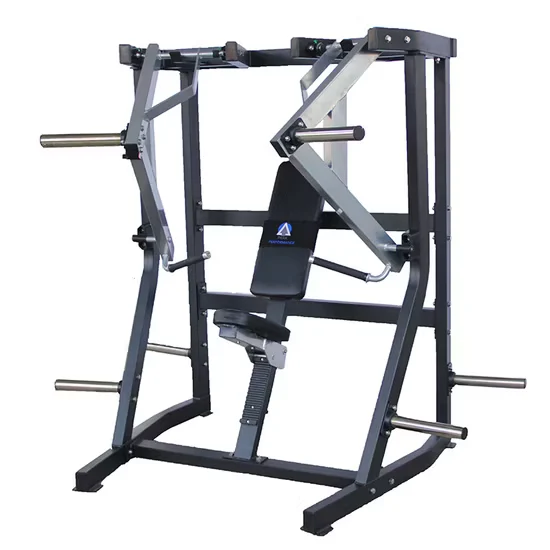
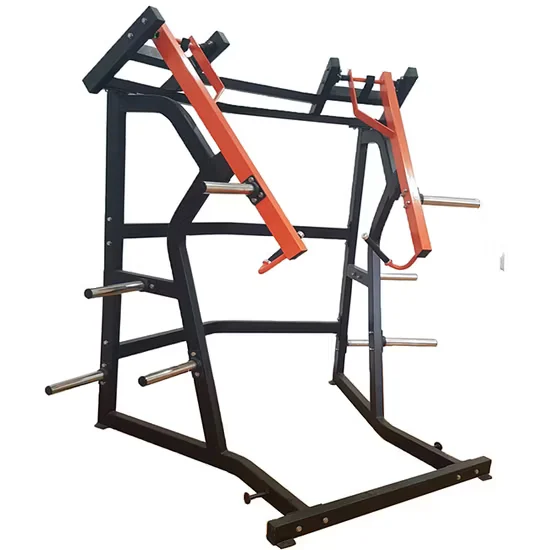
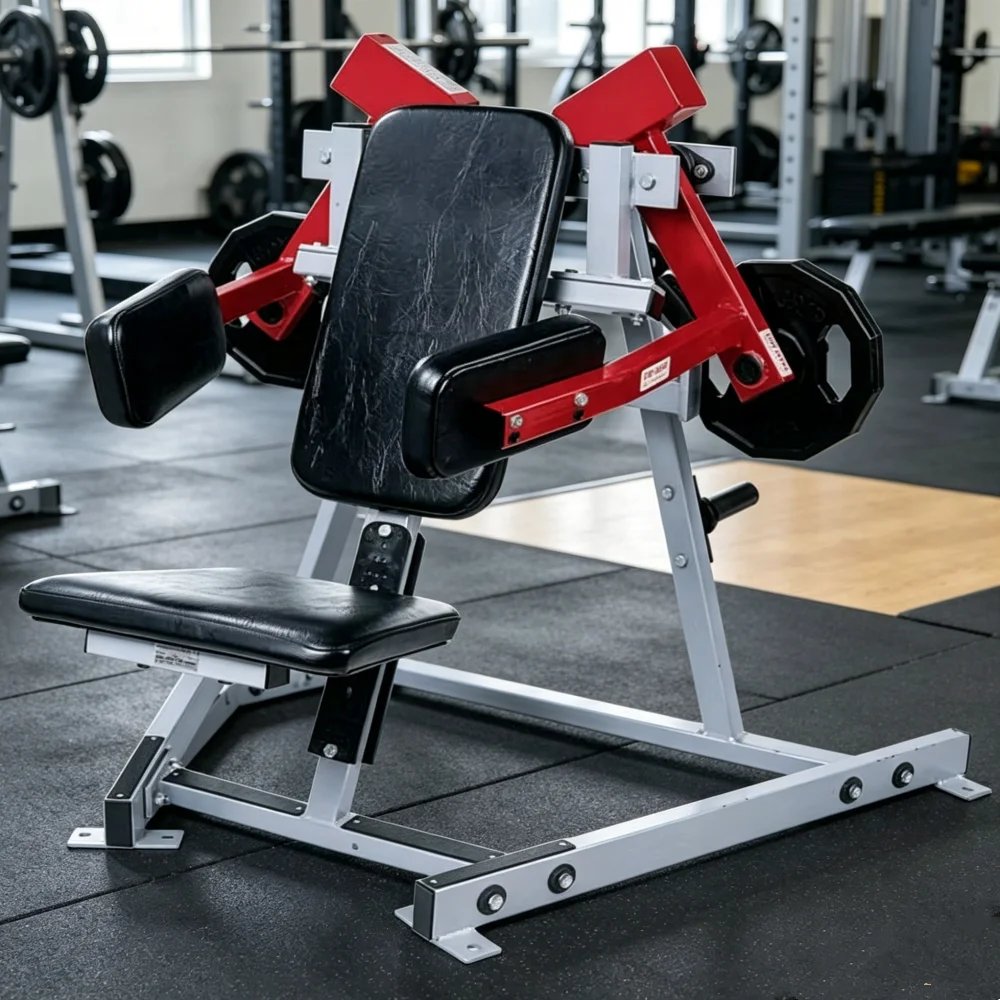
Heavy-Duty Stability — Welded steel frame and high-density padding tested for continuous commercial chest and dumbbell training under loads up to the structural limit.
Technical Specifications
| Parameter | Value |
|---|---|
| Product Type | Flat Bench |
| Exercise Part | Chest |
| Material | Steel |
| Product Dimensions | 130413001234mm |
| Net Weight | 63kg |
| Certification | ISO 9001, CE |
| Application | Gymnasium, Commercial Gym, Fitness Center |
| Age Group | Adult |
| Gender | Unisex |
Application Suitability
| Deployment Scenario | Typical Use |
|---|---|
| Chain gym free-weight zone | High-frequency flat pressing and dumbbell fly routines during peak hours |
| Hotel fitness center | Guest self-service chest and core training with minimal supervision |
| Corporate wellness room | Quick strength circuits for employees during short breaks |
| High-end residential home gym | Dedicated pressing station paired with a power rack or dumbbell set |
| Sports performance training center | Accessory pressing work and rehabilitation movements for athletes |
Why Wobbling Benches Drive Members Away from the Free-Weight Zone
A rigid steel frame eliminates the micro-shifts that break concentration during heavy presses.
When a lifter sets up for a maximal dumbbell press, any lateral play in the bench structure translates directly into instability. Over months of use, lighter-gauge frames and bolt-only assemblies begin to shift, creating noise and movement that force spotters to intervene prematurely. In busy gymnasium environments, this degradation accelerates as dozens of users load and unload plates daily. Equipment that feels solid on day one can develop noticeable wobble before the first maintenance cycle [NEED_CITE: structural fatigue testing for commercial weight benches]. The commercial flat bench steel frame gym equipment addresses this with reinforced welds at every load-bearing junction.
How This Flat Bench Fits into a Commercial Free-Weight Layout
This commercial flat bench steel frame gym equipment handles the foundational pressing movements—barbell bench press, dumbbell fly, and seated shoulder work—that anchor any free-weight zone. It pairs directly with adjustable incline benches and power racks to create a complete pressing station. The fixed geometry suits high-throughput areas where quick user turnover matters more than multi-angle adjustability. The 1304 mm length accommodates users across a broad height range while keeping the footprint compact enough for tight equipment spacing.
Load-Bearing Demands in a 24/7 Gymnasium Environment
A bench in a busy facility sees continuous loading cycles from early morning through late evening, with peak use concentrated around lunch and after-work hours. The 63 kg net weight reflects the mass of steel required to absorb repeated eccentric loads without resonance or creep. Floor anchoring points must be checked against the facility’s slab thickness, especially on upper floors where vibration transmission becomes a concern. Adequate spacing around the bench—typically at least one meter on each side—ensures safe plate loading and spotter positioning. Regular inspection of weld seams and padding integrity prevents small issues from escalating into member complaints [NEED_CITE: EN 957 requirements for commercial strength equipment].
Decoding the Steel Frame and Padding Specifications
The steel construction provides the structural backbone that distinguishes commercial-grade benches from residential alternatives. Frame thickness and weld penetration depth determine how the bench responds to off-center loads, such as when a user shifts during a unilateral dumbbell press. The 130413001234 mm dimensions indicate a wide base footprint that resists tipping even when loaded unevenly. Padding density affects both comfort and stability; firmer, high-density foam prevents the user from sinking into an unstable position under heavy loads. The ISO 9001 certification confirms that manufacturing processes maintain consistent weld quality and material traceability across production batches. CE marking indicates conformity with European safety directives applicable to gymnasium equipment.
What Happens When Benches Are Specified Below Commercial Grade
Purchasing benches with lighter frames for a busy gymnasium often leads to premature failure at weld points or bolt connections. Padding compressed beyond its recovery point within months creates an uneven surface that compromises pressing form and invites member complaints. Lightweight benches also shift during use, requiring frequent repositioning and creating safety hazards when placed near racks. The cumulative cost of replacements and the member attrition driven by unreliable equipment typically exceed the initial savings [NEED_CITE: total cost of ownership for commercial strength equipment]. Specifying a commercial flat bench steel frame gym equipment with verified load ratings avoids this cycle entirely.
Why This Product Line Supports Facility-Wide Procurement
The steel frame construction is validated through repeated load-cycle testing to confirm long-term structural integrity in high-traffic deployments. The 63 kg net weight ensures the bench stays planted during dynamic movements without requiring permanent floor anchoring. The full product range covers every strength and cardio discipline, so a facility can source matching equipment from a single production line with consistent finish quality. OEM options extend to frame color and upholstery selection, allowing alignment with brand identity. A 3D layout plan accounts for bench spacing, rack placement, and member traffic flow to optimize the free-weight zone. Technical support is available around the clock to resolve commissioning questions or spare parts needs.
Documentation & Test Records
- CE declaration of conformity covering structural safety requirements for gymnasium use
- EN 957 test report verifying load capacity and stability under standard protocols
- ISO 9001 certificate confirming controlled manufacturing and weld quality processes
- Durability test record documenting repeated load-cycle performance on the steel frame
- Noise and vibration assessment for upper-floor deployment considerations
- Spare parts list with padding and hardware replacement specifications
Installation, Commissioning & Maintenance
- Maintain at least one meter clearance on all sides for safe plate loading and spotter access
- Verify floor levelness before placement; use shims if the base rocks on uneven surfaces
- Inspect all bolt connections after the first month of use and retighten to specified torque
- Clean upholstery after each session with pH-neutral cleaner to prevent sweat degradation
- Check weld seams quarterly for hairline cracks, especially at high-stress junction points
- Rotate bench position periodically to distribute wear across the floor surface evenly
Planning Your Free-Weight Zone Equipment Order
Share your facility floor plan and expected daily member volume to receive a detailed layout showing bench placement relative to racks and dumbbell stations. Specify whether the deployment floor is ground level or elevated to confirm vibration and load-bearing requirements. Indicate target market standards for any electrical accessories if integrating with electronic inventory systems. Clarify upholstery color and frame finish preferences early to align production with your brand palette.
Frequently Asked Questions
Q: What distinguishes a commercial flat bench from a residential model?
A: Commercial benches use thicker steel tubing, deeper weld penetration, and higher-density padding designed to withstand hundreds of daily use cycles without structural degradation. Residential models prioritize cost and portability, sacrificing the frame mass and joint reinforcement needed for continuous gymnasium operation. The difference becomes apparent within months under shared-use conditions.
Q: How does steel frame thickness relate to load capacity?
A: Greater tube wall thickness increases the frame’s resistance to bending and torsional stress during off-center lifts. Thicker steel also provides more material for welds, creating stronger joints at connection points. However, wall thickness alone does not determine capacity; the overall geometry and weld quality are equally critical factors.
Q: How can I evaluate a flat bench’s stability before purchasing?
A: Apply lateral force to the top of the uprights and check for any play or flex in the frame connections. Sit on the bench and shift weight side to side to detect rocking or shifting. Request the manufacturer’s load test documentation showing the bench tested under dynamic conditions, not just static weight ratings.
Q: What upholstery material holds up best in commercial gyms?
A: High-density vinyl with double-stitched seams resists tearing and moisture penetration from sweat and cleaning solutions. The padding beneath should be firm enough to prevent the user from bottoming out under load, which compromises pressing stability. Thickness matters less than density and recovery characteristics over repeated compression cycles.
Q: How should I space flat benches in a free-weight zone?
A: Allow at least one meter between adjacent benches to accommodate dumbbell movement and spotter positioning. Place benches parallel to mirrors when possible so users can monitor form. Keep clear sightlines between benches and the nearest emergency exit, and avoid placing them directly in high-traffic walkways between cardio and strength zones.
![Commercial Vertical Leg Press Machine H5037 for Gym Use [WARN] draft identifier mismatch](https://bicksport.com/wp-content/uploads/2026/08/commercial-vertical-leg-press-machine-h5037-for-gym-use-warn-draft-identifier-mismatch-4b8998.webp)