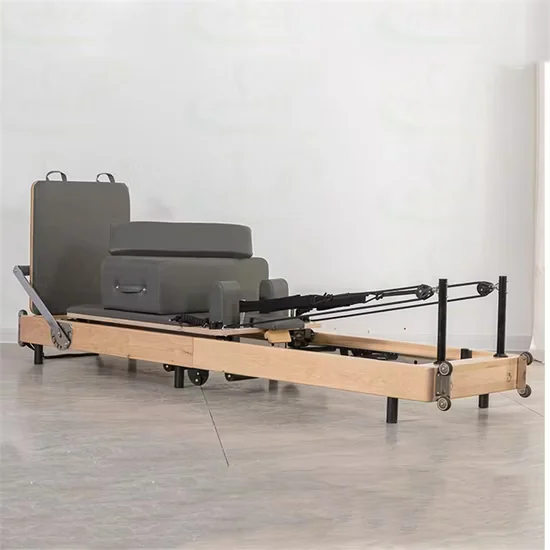
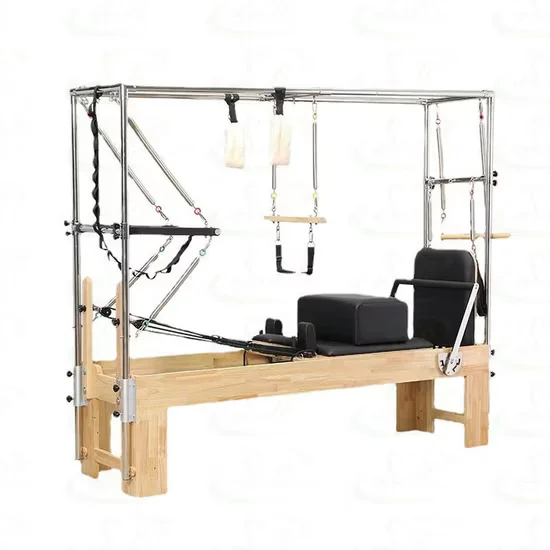
Quiet Glide Carriage — Aluminium frame rigidity and precision-machined rails keep carriage noise below ambient thresholds during back-to-back studio classes.
Technical Specifications
| Parameter | Value |
|---|---|
| Designation | SRY-12A |
| Product Type | Pilates Reformer with Half Tower |
| Frame Material | Aluminium Alloy |
| Color | White (custom colors available) |
| Accessories Included | Long Box / Jump Board / Platform |
| Product Dimensions | 2570 × 730 × 1850 mm |
| Net Weight | 130 kg |
| Target User | Adult, Unisex |
| Logo Customization | Available |
| Warranty | 3 Years |
Application Suitability
| Deployment Scenario | Typical Use |
|---|---|
| Boutique Pilates studio | Group-class rooms with uniform reformer rows for instructor-led sessions |
| Five-star hotel fitness center | Private or semi-private Pilates sessions for guests seeking low-impact conditioning |
| Rehabilitation and wellness center | Controlled-resistance therapy and post-injury mobility work under practitioner supervision |
| High-end residential home gym | Dedicated Pilates space for daily flexibility and core maintenance |
| Corporate wellness room | Employee wellness programs combining Pilates instruction with stress-reduction sessions |
Why Spring Resonance Travels Through Floor Slabs Before Anyone Reports It
Carriage noise is a frame and wheel problem, not a maintenance problem.
When a reformer carriage rattles at full extension, the vibration transfers through the frame into the floor structure. In upper-floor hotel fitness centers and residential studio conversions, that resonance reaches the room below long before the front desk receives a call [NEED_CITE: acoustic transmission through structural slabs under dynamic equipment loading]. I have seen an entire batch of reformers pulled from a boutique hotel after three consecutive nights of guest complaints — the root cause was standard carbon-steel bearings on the carriage wheels and undamped resistance springs that sang at specific extension points. The aluminium alloy frame on the SRY-12A addresses this at the source: its rigidity prevents the flex-induced wobble that amplifies carriage noise, and the material’s natural damping characteristics reduce harmonic transfer to the floor.
Where the Half Tower Fits in a Mixed-Discipline Studio Layout
The Pilates reformer with half tower configuration bridges mat-based group classes and full Cadillac work without demanding the floor space of a separate tower unit. It covers supine, prone, seated, kneeling and standing spring-resistance exercises, complementing mat zones and small-equipment stations in a typical studio rotation. The half tower enables vertical spring vectors for arm and leg work that a standalone reformer cannot offer, making it suitable for intermediate-to-advanced class programming. The 2570 mm length accommodates users across a broad height range, and the aluminium alloy frame keeps the unit manageable for studio staff who need to reposition equipment between class formats.
Continuous Class Scheduling and the Acoustic Environment
A studio running six to eight group classes daily subjects each reformer to near-continuous carriage travel and spring cycling. The aluminium alloy frame maintains dimensional stability under this rhythm — it does not warp or develop play at the rail mounting points the way lighter materials can over thousands of cycles [NEED_CITE: material fatigue thresholds for aluminium alloy in cyclic-load fitness equipment]. Noise propagation matters most when the studio sits above guest rooms, offices or residential units: floor-borne vibration from carriage impact at rail ends is the primary complaint vector. Rubber-isolated feet and level flooring reduce transfer, but the frame and carriage wheel interface remains the first line of acoustic defense. Studios with HVAC-driven airflow should factor reformer spacing into ventilation planning, as tightly packed units disrupt cross-room air circulation and create hot zones that accelerate sweat corrosion on moving parts.
What the Frame and Rail Tolerance Actually Control
The aluminium alloy frame resists torsional flex during unilateral exercises — when a user pushes off one foot on the jump board or performs single-leg footwork on the bar, the frame must hold the carriage square to the rails. Any lateral play translates into audible scraping and uneven wheel wear. The rail-and-wheel system determines glide smoothness: wheel material hardness, rail surface finish and the gap tolerance between wheel and rail edge collectively define whether the carriage whispers or chatters under load. The half tower spring set adds another variable — spring tension range must match the reformer’s primary spring ratings so that combined resistance vectors remain predictable for instructors programming class sequences. A mismatched spring set forces users into compensatory movement patterns that accelerate carriage wheel wear on one side. The three-year warranty on the SRY-12A covers the structural frame and moving assemblies, signaling confidence in the long-term stability of these interfaces [NEED_CITE: commercial Pilates equipment warranty benchmarks for frame and carriage components].
The Price of Underspecified Carriage Hardware
Studios that select reformers based on frame aesthetics alone often discover the carriage system’s limits within the first six months of heavy rotation. Carbon-steel bearings develop flat spots under repeated high-load extensions, introducing a rhythmic click that grows louder with each class cycle. Springs without proper damping treatment resonate at mid-extension points, producing a metallic hum that carries through timber and concrete floors alike. Once noise complaints begin, the operational cost is not a single repair visit — it is pulling units from class schedules, sourcing replacement carriages and managing member dissatisfaction [NEED_CITE: equipment downtime impact on studio class scheduling and member retention]. In hospitality deployments, the consequence is steeper: a single guest noise complaint can trigger a capital-level conversation about replacing the entire equipment package.
Why This Product Line Holds Up Under Studio Conditions
The SRY-12A sits within a cardio and conditioning equipment family engineered around verified noise performance and continuous-use durability. The aluminium alloy frame has been tested for the 10,000-hour operational benchmark that defines commercial-grade readiness across the product range. The half tower configuration allows a studio to cover the full Pilates exercise repertoire from a single footprint, reducing the equipment count needed for comprehensive class programming. OEM customization extends to logo placement, frame color and accessory bundling, so facilities can align the reformer with their interior identity without compromising structural specifications. A 3D layout plan accounts for reformer spacing, instructor sightlines across the class grid and airflow paths between units — critical when twelve or more reformers occupy a single room. Technical support is available around the clock for carriage adjustment questions, spring replacement guidance and rail maintenance scheduling.
Documentation & Test Records
- CE declaration of conformity covering the full reformer and half tower assembly
- EN 957 test report validating structural load and moving-part safety requirements
- ISO 9001 certificate for manufacturing quality management systems
- Noise level test record documenting carriage glide acoustics under loaded conditions
- Durability test log for frame, rail and spring assemblies under cyclic loading
- Assembly and commissioning guide with spring-tension calibration procedures
Installation, Commissioning & Maintenance
- Maintain minimum 900 mm clearance on all sides of the 2570 × 730 mm footprint for safe user entry and instructor access
- Install on a level surface with vibration-isolating pads to minimize floor-borne noise transfer to adjacent rooms
- Inspect carriage wheel-to-rail contact surfaces weekly and clean accumulated dust that accelerates wear
- Verify half tower spring tension calibration against the manual’s resistance chart during initial commissioning
- Wipe down aluminium alloy frame and carriage rails after each class to prevent sweat-induced corrosion
- Check spring anchor points and attachment hardware monthly for loosening under repeated load cycling
Requesting the Right Configuration for Your Facility
Provide your studio floor area and intended reformer count to receive a 3D layout with spacing recommendations, instructor sightline analysis and airflow planning. Specify the average daily class schedule and expected carriage cycles per unit so we can confirm the spring and rail configuration matches your usage intensity. If the studio occupies an upper floor or shares walls with noise-sensitive spaces, flag this early so we can advise on isolation accessories and floor preparation requirements. Indicate your market region for any labeling, documentation language or accessory standard requirements, and confirm whether frame color or logo customization is needed to match your facility identity.
Frequently Asked Questions
Q: How does an aluminium alloy frame compare to steel for high-frequency commercial Pilates use?
A: Aluminium alloy provides comparable rigidity at lower weight, making the reformer easier to reposition between class formats. Its corrosion resistance is superior in humid studio environments where sweat exposure is constant. The material’s natural damping properties also reduce harmonic vibration transfer to the floor, which matters in multi-story deployments where noise propagation is a primary concern for adjacent occupied spaces.
Q: What exercises does the half tower enable that a standalone reformer cannot?
A: The half tower adds vertical spring anchor points above the carriage, enabling standing, kneeling and seated arm and leg work with overhead and lateral resistance vectors. This covers a substantial portion of the Cadillac exercise library without requiring the floor space of a full tower unit. For studios balancing group class capacity with exercise variety, the half tower configuration delivers advanced programming options from a single reformer footprint.
Q: What carriage maintenance is required to keep noise levels consistently low?
A: Weekly inspection of wheel-to-rail contact surfaces for dust buildup and wear patterns is the baseline. Wheels should be checked for flat spots or uneven wear that introduces rhythmic noise during carriage travel. Rail surfaces need periodic cleaning with a non-abrasive solvent to remove oxidized lubricant residue. Any lateral play developing at the carriage mounting points should be addressed immediately to prevent accelerated rail wear and noise escalation.
Q: Can the reformer be customized with facility branding and color specifications?
A: Logo application on the frame is available, and custom color options can be matched to facility interior schemes. Accessory bundling with the long box, jump board and platform is standard, but additional accessory configurations can be discussed during the ordering process. These customizations are handled at the manufacturing level so they do not compromise the structural warranty or the carriage system’s acoustic performance specifications.
Q: How should reformer spacing be planned for group classes with instructor oversight?
A: Each unit requires lateral clearance for user mounting and dismounting, plus sufficient aisle width for the instructor to move between reformers during class. A 3D layout plan accounts for these movement corridors alongside HVAC airflow paths, since tightly packed reformers disrupt ventilation and create localized humidity zones. Sightline planning ensures the instructor can observe carriage alignment and user form from any position in the room without blind spots created by equipment arrangement.