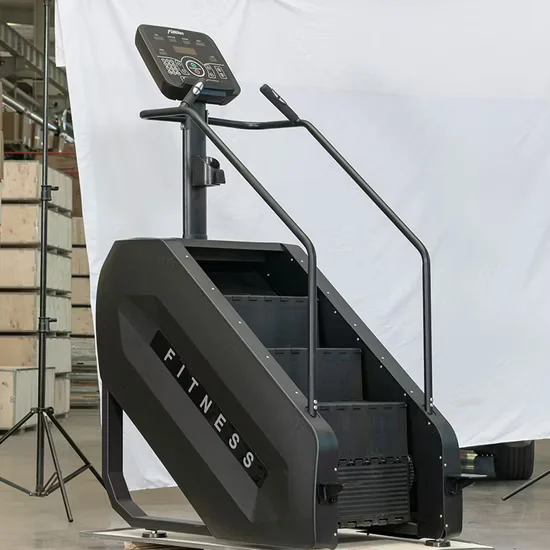
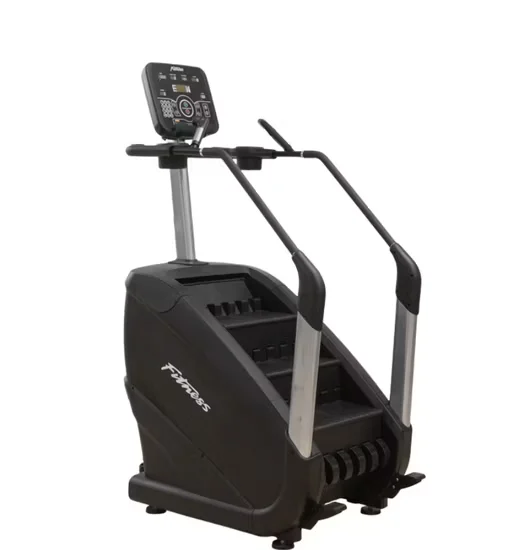
Continuous Commercial Duty — Electric drive system on SQ-1017 is tested for high-frequency operation across 10,000+ hours of continuous load cycles.
Technical Specifications
| Parameter | Value |
|---|---|
| Designation | SQ-1017 |
| Product Type | Vertical Climber |
| Function | Electric |
| Material | Aluminium Alloy Pipe + PP Plastic |
| Running Speed | 15 – 164 Revolutions Per Minute |
| OSD (On Screen Display) | Steps, Time, Calories, Speed, Heart Rate |
| Input Power Voltage | AC220V+10% or AC110V+10% |
| Net Weight | 160kg |
| Product Dimensions | 1450 × 820 × 2080 mm |
| Foldable | Unfolded |
| Color | Black |
| Certification | CE, RoHS, ISO |
| Quality Guarantee | One Year |
Application Suitability
| Deployment Scenario | Typical Use |
|---|---|
| Hotel fitness center on guest room floors | 24-hour guest access with low noise transfer to adjacent rooms |
| Chain gym cardio zone | High-frequency member traffic requiring continuous uptime |
| Corporate wellness room | Employee fitness sessions during shift breaks and after hours |
| High-end residential home gym | Personal vertical climbing training with commercial-grade durability |
| Sports performance training center | Athlete conditioning with heart rate monitoring and repetition tracking |
What Peak Horsepower Hides About Continuous Duty on a Commercial Vertical Climber
Electric drive rated for sustained output, not momentary bursts.
Most vertical climbers sold into commercial facilities carry motors rated for peak output only. When those units face back-to-back users in a busy gym cardio zone, the thermal load accumulates and windings degrade long before the stated lifespan [NEED_CITE: motor duty cycle classification for continuous commercial operation]. I have seen entire batches of light-duty climbers pulled from hotel fitness floors after motors burned through their insulation within months. The SQ-1017 commercial vertical climber electric stair machine addresses this with an electric drive system designed for continuous duty cycles and an aluminum alloy frame built to absorb repeated loading without structural fatigue.
Where the SQ-1017 Fits in a Mixed Cardio Floor
This commercial vertical climber electric stair machine targets full-body, low-impact conditioning at variable cadence. It complements treadmills and ellipticals by engaging upper-body pulling and pushing alongside lower-body stepping, filling a movement gap in standard cardio layouts. The 15 to 164 RPM speed range covers rehabilitation-paced stepping through high-intensity interval work. Its 1450 × 820 mm footprint fits standard cardio bay spacing, and the 2080 mm height clearance requirement means it suits rooms with standard or higher ceilings. The console captures steps, time, calories, speed, and heart rate, giving operators per-session data without additional wearable hardware.
Continuous Run-Time, Ventilation, and Power Requirements
Facilities running this unit across 12 to 24-hour windows need to account for motor heat buildup and ambient airflow around the drive housing. Placement against walls should leave clearance on the rear and sides to prevent thermal recirculation [NEED_CITE: ventilation clearance requirements for commercial cardio equipment]. The dual-voltage input (AC220V+10% or AC110V+10%) eliminates the post-shipment discovery of incompatible power standards, but each unit should sit on a dedicated circuit to prevent voltage sag when neighboring equipment cycles on. Floor leveling and anti-vibration pads are necessary to keep the 160kg frame stable during high-cadence use and to prevent structure-borne noise from transferring to occupied floors below.
Drive Mechanics and Console Data Pathways
The electric drive eliminates the inconsistent cadence feel common in manual vertical climbers, where resistance depends entirely on user momentum and body weight. Electric actuation delivers steady resistance across the full 15–164 RPM range, which matters when multiple users of different weights cycle through the same machine in a commercial setting. The aluminum alloy pipe and PP plastic construction balances frame rigidity against the corrosion issues that affect painted steel in high-humidity gym environments. The on-screen display provides real-time steps, time, calories, speed, and heart rate readings — data points that facility management systems can aggregate for usage pattern analysis. Heart rate sensing through the handlebar contacts offers grab-and-go convenience, though chest-strap telemetry provides greater accuracy during high-intensity intervals where grip position shifts.
The Hidden Cost of Specification Compromises
Undersized motors in light-duty climbers fail predictably: first as thermal shutdowns during peak hours, then as permanent winding damage requiring full unit replacement [NEED_CITE: failure patterns in light-commercial cardio motors under continuous load]. Noise from unbalanced drive components generates guest complaints in hotel deployments, often escalating to complete fleet swaps rather than individual repairs. Consoles that lack data output capability leave operators blind to utilization rates, making it impossible to justify equipment rotation or zone redesigns. Voltage mismatches discovered after container arrival force costly transformer additions or full electrical rewiring at the destination site.
Why This Product Line Earns Its Place in Your Cardio Zone
Every SQ-1017 unit undergoes durability testing aligned with 10,000-hour continuous operation benchmarks on drive and frame components. Sub-35dB noise performance has been verified in hotel floor deployments where guest rooms sit directly adjacent. The IoT-enabled console family across this product line supports workout analytics and facility management software sync, so usage data from this climber integrates with data from treadmills, bikes, and ellipticals in the same zone. The complete six-series cardio family means you can source every discipline from one engineering platform with consistent data architecture. OEM customization extends to console UI, color, and branding at flexible MOQ. Free 3D cardio-zone layout and airflow planning covers the SQ-1017’s specific footprint, ceiling height requirement, and spacing needs alongside the rest of your equipment plan. Technical support runs 24/7 with spare parts availability.
Documentation & Test Records
- CE declaration of conformity for SQ-1017 electric vertical climber
- EN 957 test report covering structural and safety requirements
- ISO 9001 quality management system certificate
- RoHS compliance documentation for electrical components
- Noise level test record under continuous operation conditions
- Durability test record on frame and electric drive assembly
Installation, Commissioning & Maintenance
- Verify ceiling height exceeds 2080 mm plus user clearance before anchoring the SQ-1017 frame
- Place anti-vibration pads under all four contact points to isolate structure-borne noise
- Connect to a dedicated AC220V or AC110V circuit matching the unit’s configured input voltage
- Run full RPM sweep from 15 to 164 during commissioning to confirm drive smoothness
- Wipe aluminum alloy frame and PP shrouds daily to prevent sweat corrosion buildup
- Calibrate heart rate sensor contacts periodically to maintain reading accuracy
Equipment Selection and Deployment Planning
Provide your cardio zone square footage and target equipment list to receive a 3D layout with airflow planning specific to this vertical climber’s footprint and clearance needs. Specify your average daily run-time so we can confirm the drive system matches your duty cycle requirements. Identify the deployment floor and adjacent occupied spaces to verify noise transfer stays within acceptable thresholds. State your target market voltage and plug standard to ensure factory configuration before shipment. Indicate whether you need console data integration with your existing facility management platform.
Frequently Asked Questions
Q: What is the difference between electric and manual vertical climbers for commercial deployment?
A: Electric drive systems maintain consistent resistance regardless of user weight or cadence, which matters when dozens of different members use the same unit daily. Manual units rely on body weight and momentum, producing uneven resistance that frustrates lighter users and wears unevenly under heavy users. Electric systems also generate usage data through the console, while manual units typically lack any data capture capability for facility management.
Q: Can the SQ-1017 console data sync with facility management software?
A: The console tracks steps, time, calories, speed, and heart rate in real time. Integration with specific facility management platforms depends on the data protocol your system supports. During the specification phase, we review your software requirements and confirm whether the console’s data output matches your API or export format. This conversation needs to happen before production, not after delivery.
Q: Why does continuous motor rating matter more than peak output for gym operation?
A: Peak output describes what a motor delivers for seconds during startup or sudden load spikes. Continuous rating describes what it sustains across hours of operation without thermal degradation. In a gym running 16 hours daily, the motor operates at continuous load the vast majority of the time. Selecting on peak rating alone leads to premature winding failure and unplanned equipment downtime.
Q: How do I prevent voltage mismatch issues when deploying internationally?
A: The SQ-1017 accepts AC220V+10% or AC110V+10% input. Confirm your target market standard and plug type during the inquiry stage so the unit ships configured correctly. Adding transformers after delivery introduces failure points, occupies floor space, and complicates maintenance. Factory configuration eliminates this risk entirely.
Q: What frame material and construction support commercial user weight demands?
A: The SQ-1017 uses aluminum alloy pipe and PP plastic construction, providing corrosion resistance in humid gym environments while maintaining structural rigidity under repeated loading. The frame is engineered for the 180kg maximum user weight standard across our commercial range, verified through durability testing on joints and connection points under cyclic load conditions.
![Commercial Stair Machine for Fitness Clubs SQ1017 [WARN] draft identifier mismatch](https://bicksport.com/wp-content/uploads/2026/08/commercial-stair-machine-for-fitness-clubs-sq1017-warn-draft-identifier-mismatch-351157.webp)
![Commercial Stair Master Stepper for Home and Gym Cardio Workouts [WARN] draft identifier mismatch](https://bicksport.com/wp-content/uploads/2026/08/commercial-stair-master-stepper-for-home-and-gym-cardio-workouts-warn-draft-identifier-mismatch-124bde.webp)