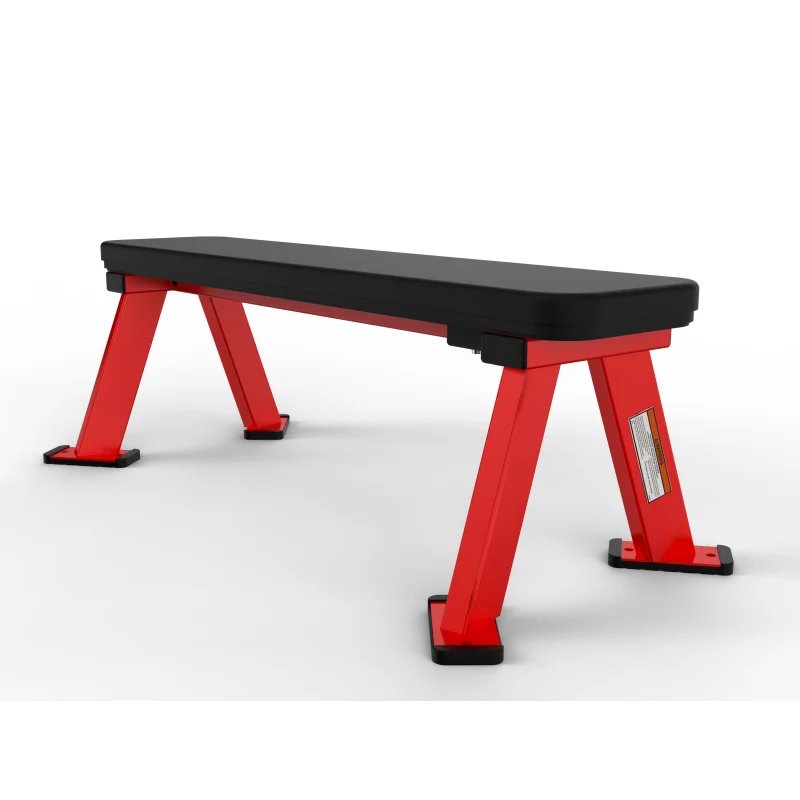
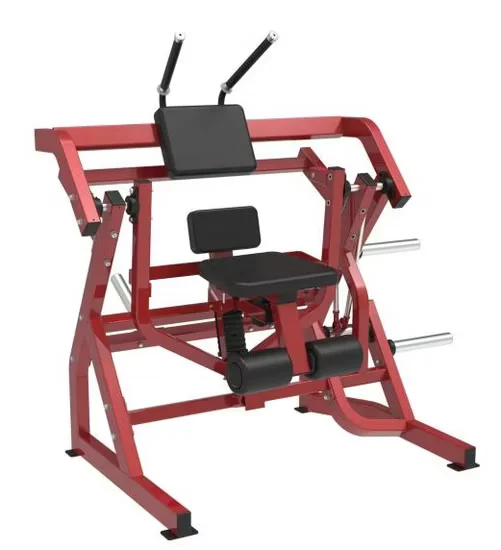
Steel Frame Rigor — The ISO-lateral horizontal bench press maintains structural stability under continuous high-load cycles, with a 112 kg welded steel chassis that eliminates frame deflection across thousands of commercial repetitions.
Technical Specifications
| Parameter | Value |
|---|---|
| Product Type | ISO-Lateral Horizontal Bench Press |
| Exercise Part | Chest |
| Material | Steel |
| Resistance Type | Manual (plate-loaded / ISO-lateral) |
| Product Dimensions | 1700 × 1400 × 1200 mm |
| Net Weight | 112 kg |
| Foldable | Unfolded |
| Max User Weight | 180 kg |
| Customization | Available |
| OEM/ODM | Available |
| Fit Area | Professional Gym and Club |
| Appliance | Community, Gymnasium |
| Age Group | Adult |
| Gender | Unisex |
| Production Capacity | 500 PCS/Month |
| Certification | ISO 9001, CE |
| Transport Package | Plywood Case |
Application Suitability
| Deployment Scenario | Typical Use |
|---|---|
| chain gym strength zone | High-frequency chest training across peak hours with multiple users rotating through the station |
| corporate wellness room | Compact footprint deployment for employee strength routines in limited square footage |
| community fitness center | Durable plate-loaded platform accommodating varied fitness levels throughout daily open-access hours |
| sports performance training center | Biomechanically controlled pressing movements for athlete upper-body conditioning programs |
| hotel fitness center | Low-maintenance strength equipment requiring minimal daily oversight from hospitality staff |
Why Frame Deflection Matters More Than You Think on a Plate-Loaded Press
A rigid steel frame prevents energy bleed and stabilizes every pressing cycle under uneven loading.
When gym members load uneven plates on either side of a bench press, the lateral torque travels directly into the frame. Over months of commercial use, insufficient steel thickness at the pivot points begins to show as visible sway during heavy sets, and eventually the frame develops audible creaking that members interpret as structural failure. I have seen budget-tier bench presses pulled from chain gym floors after less than a year because the welded joints around the ISO-lateral arm pivot could not absorb repeated asymmetric loading without developing microfractures in the weld seams [NEED_CITE: weld fatigue classification for commercial plate-loaded equipment]. The commercial ISO-lateral horizontal bench press machine addresses this with a full steel chassis built to sustain the torsional stress that high-frequency gym environments impose daily.
How This Press Fits into a Commercial Strength Floor
The ISO-lateral horizontal bench press covers the primary horizontal pushing pattern, complementing incline and decline stations as well as cable-based chest fly units in a complete upper-body training zone. Its 1700 × 1400 mm footprint allows deployment in mid-density strength areas where floor space must accommodate multiple compound movement stations without congestion. The plate-loaded manual resistance system serves lifters across a wide experience range, from members building foundational pressing strength to advanced users loading heavy unilateral work. The ISO-lateral arm design permits each side to move independently, which accommodates natural shoulder mechanics without forcing a fixed barbell path. The commercial ISO-lateral horizontal bench press machine supports load progression limited only by available plates, making it a permanent fixture rather than an outgrown station.
Deployment Conditions for Continuous Daily Operation
In a chain gym running fourteen hours daily, a bench press station may see fifty or more working sets before closing. The sealed bearings at each pivot point are specified to withstand this cycle count without requiring weekly lubrication intervals, reducing maintenance overhead for facility operators. Floor deployment requires a level surface with adequate clearance on all four sides for loading plates and for spotters to move freely around the unit. The 112 kg net weight anchors the frame during heavy single-arm pressing without requiring bolt-down installation on standard rubber gym flooring. Ventilation considerations apply mainly to user comfort rather than machine cooling, since there is no motor generating heat, but airflow planning should account for the metabolic heat output of consecutive heavy pressing sets [NEED_CITE: HVAC load calculations for high-density strength training zones].
Reading the Mechanical Specifications That Actually Matter
The ISO-lateral arm design means each pressing arm moves on its own pivot axis, eliminating the fixed bar path that can stress shoulders during heavy repetitions. This independent track requires precision-machined bearing housings at the pivot point, and the quality of those bearings directly determines how smoothly the arm travels under load and how long it operates before developing play. The 112 kg steel frame mass provides inertial stability that prevents the base from lifting or rocking when a user drives explosively off the chest. Sealed pivot bearings reduce contamination from chalk dust and sweat that accumulates in commercial environments, extending service intervals compared to open bushings. The plate-loaded resistance means there are no cables, pulleys, or weight stacks to maintain, which simplifies the maintenance schedule to periodic bolt torque checks and bearing inspection. The 1700 × 1400 × 1200 mm envelope places the seat and press arms at biomechanically standard positions for adult users across typical height ranges.
The Hidden Cost of Underspec’d Frames and Pivots
Facilities that source bench presses based on lowest unit cost often discover the consequences within the first six months of commercial rotation. Frame flex under heavy asymmetric loads creates a perception of instability that experienced lifters immediately recognize and avoid, leaving the station underutilized. Pivot bearings that lack proper sealing accumulate chalk and sweat residue, leading to grinding resistance that members report as a maintenance issue. Weld seams at high-stress junctions can develop hairline cracks under continuous commercial cycling, creating liability exposure that no amount of warranty coverage adequately offsets [NEED_CITE: liability exposure from structural failure in commercial strength equipment]. Replacement of an entire bench press unit disrupts strength floor layouts and requires member communication about equipment availability.
Why This Product Line Earns Its Place on the Floor
Every welded joint on this ISO-lateral horizontal bench press undergoes dimensional verification against frame geometry tolerances before leaving the assembly line. The pivot bearing system is tested through repeated load cycles that simulate years of commercial use, confirming that arm travel remains smooth without developing lateral play. The 1700 × 1400 mm footprint was determined through 3D strength zone layout planning to allow proper user clearance and adjacent equipment spacing without wasted floor area. OEM customization extends to frame powder coat color, upholstery material, and brand badge placement so the unit integrates with facility visual identity. The complete documentation package supports facility compliance audits and provides maintenance teams with exact bearing specifications for future service intervals. Technical support remains available around the clock for any field questions that arise during or after installation.
Documentation & Test Records
- CE declaration of conformity covering plate-loaded strength equipment safety requirements
- EN 957 test report validating structural integrity and stability under maximum rated load
- ISO 9001 certificate confirming quality management across manufacturing and inspection processes
- Frame weld inspection records documenting joint integrity at all high-stress pivot junctions
- Bearing durability test log showing cycle count validation for sealed pivot assemblies
- Installation and commissioning guide with torque specifications and floor leveling procedures
Installation, Commissioning & Maintenance
- Allow minimum 600 mm clearance on all sides of the 1700 × 1400 mm frame for plate loading and spotter movement
- Verify floor levelness within tolerance before positioning to prevent frame twist under the 112 kg chassis
- Torque all frame bolts to specification after initial assembly and recheck after the first two weeks of use
- Inspect sealed pivot bearings quarterly for smooth arm travel and absence of lateral play
- Wipe down steel frame and upholstery after each use cycle to prevent sweat corrosion on exposed surfaces
- Confirm plate horn diameter matches facility plate inventory to ensure secure loading without wobble
Planning Your Strength Equipment Inquiry
Provide your strength zone floor area and planned equipment list to receive a 3D layout showing this ISO-lateral press positioned with proper clearance and member flow paths. Specify your expected daily user volume so we can confirm bearing cycle ratings match your operational demands. Indicate your target market region so frame labeling and documentation language align with local compliance requirements. Note any OEM customization needs including frame color, upholstery grade, and brand identification placement for a coordinated facility rollout.
Frequently Asked Questions
Q: How does ISO-lateral independent arm movement differ from a fixed-bar bench press?
A: Each arm operates on its own pivot axis, allowing the pressing path to follow natural shoulder mechanics rather than forcing both hands along a single rigid bar.*ightly different range without the other side compensating, which reduces shoulder strain during heavy sets and reveals strength imbalances that a fixed bar would mask.
Q: What indicates that a commercial bench press frame has adequate rigidity?
A: A rigid frame shows no visible deflection or sway when loaded asymmetrically with plates on one side. During pressing, the base remains planted without rocking, and no creaking or metallic resonance transmits through the structure. Frame mass, steel wall thickness at pivot junctions, and weld quality at high-stress nodes collectively determine whether the unit maintains stability through years of commercial cycling.
Q: What maintenance do the pivot bearings require in a high-use gym environment?
A: The sealed bearing design prevents chalk dust, sweat, and debris from contaminating the internal race, which eliminates the need for regular lubrication. Quarterly inspection involves checking for smooth arm travel and confirming no lateral play has developed. If roughness or wobble appears, the sealed cartridge can be replaced without dismantling the entire frame, keeping downtime to a minimum.
Q: What customization options are available for OEM and ODM orders?
A: Frame powder coat color, upholstery material and color, brand badge placement, and plate horn configuration can all be specified to match facility visual identity. Minimum order quantities remain flexible to accommodate single-facility rollouts as well as multi-site deployments. Console integration does not apply to this plate-loaded unit, but branding elements are fully customizable across the order.
Q: How should the bench press be positioned relative to other strength stations?
A: The 1700 × 1400 mm footprint requires clearance zones on all sides for plate loading and spotter access. Position the unit away from high-traffic walkways to prevent congestion during heavy sets. In a 3D strength zone layout, the press typically anchors a compound movement cluster alongside squat racks and incline stations, with adequate spacing to prevent barbell paths from overlapping during simultaneous use.