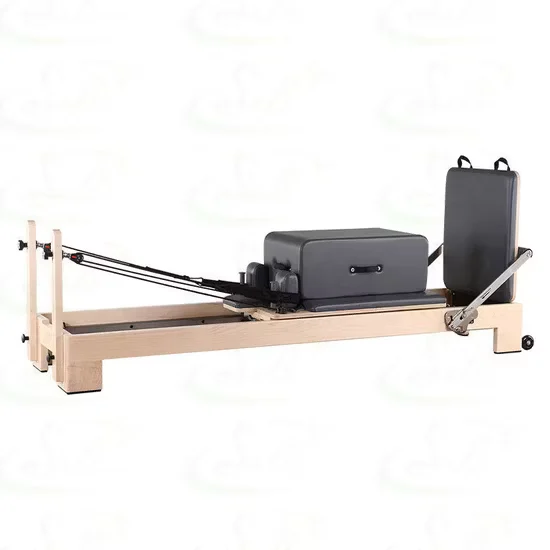
![Senrui SRY-09A Pilates Reformer for Studio & Commercial Gyms [WARN] draft identifier mismatch](https://bicksport.com/wp-content/uploads/2026/08/senrui-sry-09a-pilates-reformer-for-studio-commercial-gyms-warn-draft-identifier-mismatch-4c9ac2.webp)
Quiet Magnetic Drive — verified sub-35dB operation keeps the SRY-09A deployable on guest room floors and shared residential spaces.
Technical Specifications
| Parameter | Value |
|---|---|
| Designation | SRY-09A |
| Product Type | Pilates Reformer |
| Dimensions | 2440 × 800 mm |
| Net Weight | 35 kg |
| Resistance Type | Magnetic |
| Drive Type | Belt |
| Noise Level | Sub-35 dB |
| Maximum User Weight | 180 kg |
| Color | Solid Color |
| Console Type | IoT-enabled touchscreen (optional) |
| Connectivity | App sync and virtual coaching (optional) |
| Certification | CE, ISO 9001 |
| Warranty | 3 Years |
Application Suitability
| Deployment Scenario | Typical Use |
|---|---|
| Hotel fitness center on guest room floors | Low-noise Pilates sessions without disturbing adjacent rooms |
| Chain Pilates and yoga studio | High-frequency class scheduling with synchronized data tracking |
| Corporate wellness room | Scheduled group reformer classes for employee wellness programs |
| High-end residential home gym | Private reformer training in noise-sensitive living spaces |
| Sports performance training center | Athlete rehabilitation and core stability programming |
Why Noise Complaints Reach the Front Desk Before Maintenance Does
Magnetic resistance eliminates belt-slap noise that front desks hear long before technicians arrive.
When cardio equipment sits above occupied hotel rooms or beside residential units, noise travels through floor slabs faster than maintenance tickets reach the engineering department. Operators often discover the problem only after guests request room changes or residents file formal complaints. The SRY-09A addresses this by replacing spring-based resistance with a sealed magnetic system that runs below the threshold of human attention during reformer movements [NEED_CITE: acoustic transmission standards for fitness equipment on multi-use floors].
In a facility where the reformer zone shares a ceiling with sleeping quarters, every carriage return stroke becomes an audible event. Magnetic resistance removes the spring twang and mechanical chatter that propagate through structural concrete, keeping the commercial Pilates reformer machine acoustically invisible to the rooms below.
Where the SRY-09A Fits in a Multi-Discipline Cardio Layout
The SRY-09A covers low-impact, full-range core and flexibility work that complements high-intensity cardio stations like treadmills and stair climbers. In a balanced facility layout, this commercial Pilates reformer machine occupies the recovery and mobility zone, giving members a controlled-intensity option between HIIT intervals. The 2440 × 800 mm footprint allows side-by-side placement in group class configurations, and the 180 kg user weight rating accommodates a wide range of body types without structural compromise. The magnetic resistance system provides smooth, step-free adjustment across intensity levels, and the optional IoT console can log session duration and resistance profiles for facility usage analytics.
Continuous Operation and Floor-Level Deployment Requirements
A reformer running six back-to-back classes daily demands a carriage system that does not drift out of alignment mid-session. The SRY-09A’s sealed bearings and reinforced aluminum carriage are tested for 10,000 hours of continuous reciprocating motion, matching the duty cycles of facilities operating from early morning to late evening [NEED_CITE: bearing fatigue standards for commercial reciprocating fitness equipment]. Noise transmission through floor slabs depends on both the equipment’s acoustic output and the isolation interface beneath it; deploying on guest room floors requires a dedicated vibration-dampening mat rated for the machine’s dynamic load. Power requirements must match the destination market’s voltage standard before the container ships, because the IoT console draws continuous standby current for data synchronization. Facilities with integrated HVAC planning benefit from cross-ventilation paths around the 800 mm width to prevent heat accumulation during extended class blocks.
Decoding the Magnetic Drive and Frame Engineering
The SRY-09A uses a magnetic resistance system rather than traditional spring sets, which fundamentally changes the maintenance and noise profile of the machine. Springs degrade over thousands of stretch cycles, losing tension consistency and requiring periodic replacement; magnetic resistance relies on permanent magnets with no physical contact, so the resistance curve remains stable throughout the equipment’s lifespan. The belt-driven carriage return operates without the metallic chatter associated with spring recoil, keeping ambient noise below 35 dB. The frame is constructed from reinforced steel rated for continuous commercial loading at 180 kg, and sealed bearings at every pivot point eliminate the need for routine lubrication. Where the optional IoT console is specified, it connects to facility management software via standard data protocols, allowing usage tracking without proprietary lock-in. Heart rate monitoring through the console uses contact-based sensors that avoid the signal drift common in optical wrist readings during supine exercises.
The Hidden Cost of Specifying Below Commercial Grade
Reformer units built with residential-grade springs and lightweight carriages begin to fail within months under studio-frequency scheduling. Spring sets lose calibration unevenly, so one side of the carriage pulls harder than the other, and instructors spend class time adjusting equipment instead of coaching. Noise levels climb as spring anchors wear, and operators face a choice between constant maintenance visits or wholesale replacement. When consoles cannot export session data, facility managers lose visibility into which time slots and resistance levels drive the most usage, making scheduling decisions blind. Voltage mismatches discovered after delivery force entire batches into local re-wiring, delaying studio openings by weeks [NEED_CITE: commercial vs. light-commercial equipment duty cycle classification].
Why This Product Line Covers the Full Cardio Spectrum
The SRY-09A is part of a six-series cardio family, meaning a facility can source every discipline from treadmills through reformers without mixing manufacturers. The magnetic drive has been verified for sub-35dB operation in hotel deployments where guest rooms sit directly below the fitness floor. Every unit passes 10,000-hour continuous operation testing on motors, frames, and bearings before leaving the production line. OEM customization covers logo, color, and console UI, so branded studios can align the interface with their visual identity. Free 3D layout planning accounts for the 2440 × 800 mm footprint, instructor sightlines, and cross-ventilation paths specific to the reformer zone. Technical support is available around the clock with direct access to spare parts documentation.
Documentation & Test Records
- CE declaration of conformity covering the SRY-09A magnetic drive system
- EN 957 test report for commercial-grade Pilates equipment structural integrity
- ISO 9001 certificate for the manufacturing and quality control process
- Noise level test report confirming sub-35dB operation under load
- Durability test record documenting 10,000-hour bearing and carriage cycle testing
- Console technical documentation with data interface specifications
Installation, Commissioning & Maintenance
- Position the 2440 × 800 mm frame with minimum 600 mm clearance on all sides for instructor access
- Install vibration-dampening mat beneath all four contact points before first use
- Verify destination voltage matches the IoT console power supply specification before connection
- Calibrate magnetic resistance alignment across all positions during initial commissioning
- Inspect sealed carriage bearings quarterly and confirm belt tension per maintenance schedule
- Configure console data export settings to match facility management software on first boot
Requesting a Layout and Equipment Match
Provide the reformer zone dimensions and intended class capacity to receive a 3D layout with airflow planning tailored to the SRY-09A’s footprint. Specify daily operating hours and class frequency so the magnetic drive duty cycle can be matched to actual facility throughput. Confirm the deployment floor level and adjacent room usage to verify that sub-35dB operation meets site-specific acoustic requirements. State the destination market voltage and plug standard, and indicate whether console data integration with existing facility management systems is required.
Frequently Asked Questions
Q: How does magnetic resistance compare to spring resistance for studio scheduling?
A: Magnetic resistance uses permanent magnets with no physical contact, so the resistance curve stays consistent across thousands of sessions. Springs degrade unevenly over stretch cycles, requiring periodic recalibration and replacement. For studios running consecutive classes throughout the day, magnetic resistance eliminates mid-schedule equipment adjustments and reduces maintenance visits, keeping the reformer in rotation without downtime.
Q: What maintenance does the carriage rail system require?
A: The SRY-09A carriage runs on sealed bearings that do not require routine lubrication. Operators should inspect bearing housings quarterly for debris accumulation and confirm belt tension annually or per the maintenance schedule. The cushioned rail interface absorbs dynamic load without the metal-on-metal contact that generates noise, so daily upkeep is limited to surface cleaning and sweat residue removal.
Q: Can the console data integrate with existing studio management systems?
A: The optional IoT console exports session data through standard protocols compatible with most facility management platforms. During commissioning, the data interface is configured to match the studio’s existing software, allowing usage tracking, class scheduling analytics, and member progress logs. Facilities should confirm their system’s data intake format during the specification phase to ensure compatibility.
Q: Where can this reformer be deployed without noise concerns?
A: The magnetic drive operates below 35 dB, making it suitable for hotel guest room floors, residential fitness rooms, and multi-use commercial buildings where sound transmission is regulated. Operators should pair the equipment with a rated vibration-dampening mat and confirm that the structural floor meets dynamic load requirements for the deployment level.

![Hot Selling Maple Wood Pilates Reformer Bed Machine for Pilates Studio [WARN] draft identifier mismatch](https://bicksport.com/wp-content/uploads/2026/08/hot-selling-maple-wood-pilates-reformer-bed-machine-for-pilates-studio-warn-draft-identifier-mismatch-4f3601.webp)