

10,000-Hour Endurance Tested — Pivot bearings and reinforced steel frames validated through continuous high-frequency repetition cycles simulating years of commercial arm training load.
Technical Specifications
| Parameter | Value |
|---|---|
| Designation | PRO Tackler 5041 |
| Product Type | Hammer Strength Machine |
| Exercise Part | Arm |
| Frame Material | Steel |
| Product Dimensions | 1643 × 1356 × 1841 mm |
| Net Weight | 139 kg |
| Max User Weight | 180 kg |
| Appliance | Community, Gymnasium |
| Fit Area | Professional Gym and Club |
| OEM/ODM | Available |
| Production Capacity | 500 PCS/Month |
| Certification | ISO 9001, CE |
Application Suitability
| Deployment Scenario | Typical Use |
|---|---|
| Chain gym strength zone | High-frequency arm isolation training across peak membership hours |
| Hotel fitness center | Compact arm station paired with cardio equipment in limited footprint |
| Corporate wellness room | Moderate-use arm training for employee fitness programs |
| Community fitness center | Durable arm-focused station for adult members of varying strength levels |
| Sports performance training center | Biomechanically accurate arm motion paths for athlete conditioning |
Why Pivot Bearing Failures Surface Before Warranty Claims Do
Commercial-grade pivot bearings are the difference between a machine that survives five years and one that seizes in six months.
Strength machines in high-traffic facilities endure repetition counts that rival cardio equipment duty cycles. Every curl, press, and extension loads pivot points with lateral forces that expose undersized bearings within weeks. When a commercial hammer strength arm machine PRO Tackler 5041 arrives at a facility, its bearing assemblies have already completed thousands of test cycles under load — because the cost of a seized pivot mid-session is not just a repair ticket, it is member attrition cascading through personal training bookings [NEED_CITE: pivot bearing failure modes in commercial strength equipment].
Where This Arm Station Fits in a Commercial Strength Floor
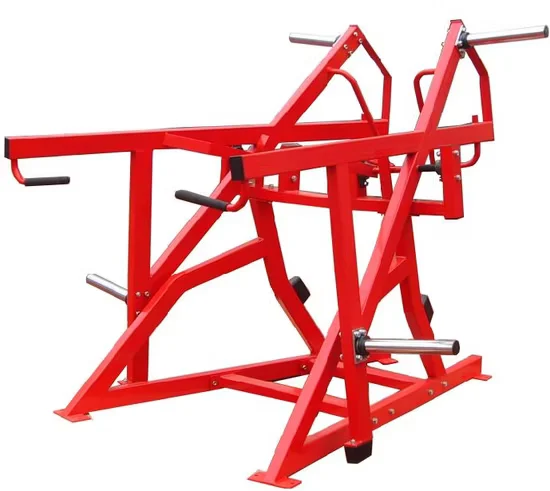
The PRO Tackler 5041 targets arm musculature through a fixed motion path that isolates biceps, triceps, and forearm groups without requiring spotters. In a commercial strength zone, it complements free-weight racks and cable crossover stations by providing consistent resistance curves that free weights cannot replicate. Facilities deploying this commercial hammer strength arm machine PRO Tackler 5041 typically position it along perimeter walls where its 1643 × 1356 mm footprint leaves clear traffic lanes. The 180 kg user weight capacity accommodates the full adult membership spectrum without structural compromise.
Continuous Operation Demands on Frame and Bearing Systems
A strength station in a chain gym may see hundreds of sets daily, each loading pivot bearings with cyclical forces that accumulate fatigue in ways invisible to visual inspection. The steel frame of the PRO Tackler 5041 is engineered to resist flex under these repeated loads, maintaining alignment that keeps motion paths accurate over years of use [NEED_CITE: structural fatigue testing standards for commercial gym equipment]. Deployment environments require level flooring with vibration-dampening pads beneath the 139 kg unit to prevent micro-migration during heavy sets. Ventilation planning matters less than with motorized cardio, but adequate spacing between stations ensures members can load and unload plates without congestion during peak hours.
Steel Grade and Pivot Engineering Under Repeated Load
The distinction between a frame that holds tolerance and one that drifts lies in steel cross-section thickness and weld penetration depth. The PRO Tackler 5041 uses reinforced steel tubing at stress concentration points where arm levers transfer force into the main upright. Pivot bearings in commercial hammer strength equipment must accommodate both radial loads from the lever arm and axial loads from user movement — undersized bearings develop play that manifests as wobble, then slop, then failure. Sealed bearing housings prevent chalk dust and sweat ingress that accelerate wear in unsealed alternatives. The biomechanically accurate motion path depends entirely on these pivot points maintaining zero play through the full range of arm movement.
The Hidden Cost of Underspecified Frame Tolerance
Facilities that procure strength equipment based on pad aesthetics and paint finish often discover frame flex problems only after members report inconsistent resistance feel across identical machines. A frame that deflects under load changes the effective leverage ratio, making a commercial hammer strength arm machine PRO Tackler 5041 feel different at the bottom of a set than at the top [NEED_CITE: frame deflection impact on resistance consistency]. Weld quality failures compound this: hairline cracks at gusset joints propagate silently until catastrophic separation. Bearing replacement on poorly engineered frames requires disassembly sequences that take machines offline for days rather than hours, compounding revenue loss from unavailable equipment.
Why This Product Line Addresses Commercial Procurement Gaps
The reinforced steel frame of the PRO Tackler 5041 undergoes continuous-load testing that simulates the duty cycles of high-traffic strength zones. Pivot and bearing systems are validated for 10,000 hours of high-frequency repetition before production release. OEM customization extends to frame color, pad upholstery material, and branding placement at flexible MOQ — critical for chain facilities maintaining visual identity across locations. The complete Biketon cardio and strength family allows sourcing every discipline from a single engineering team, simplifying warranty management and spare parts logistics. Free 3D layout planning accounts for this unit’s footprint alongside cardio zones, ensuring member flow patterns that prevent bottlenecking during peak hours. Technical support responds around the clock to commissioning questions and maintenance scheduling.
Documentation & Test Records
- CE declaration of conformity for commercial strength equipment
- EN 957 test report covering structural integrity and safety requirements
- ISO 9001 certificate for quality management in manufacturing
- Pivot bearing durability test record with cycle counts
- Frame weld inspection and material grade documentation
- Pad upholstery foam density and tear resistance specifications
Installation, Commissioning & Maintenance
- Position the 1643 × 1356 mm footprint with clearance on all sides for plate loading and member passage
- Level flooring and install vibration-dampening pads beneath the 139 kg frame to prevent migration
- Inspect pivot bearing play at commissioning and establish quarterly re-inspection intervals based on usage volume
- Verify pad upholstery attachment hardware torque after the first week of member use
- Schedule bearing lubrication per usage intensity, increasing frequency in high-humidity environments
- Clean steel frame and pads daily with pH-neutral solutions to prevent sweat corrosion
Equipment Selection and Procurement Process
Provide your strength zone square footage and existing equipment list to receive a 3D layout incorporating the PRO Tackler 5041 alongside cardio stations with optimized member flow. Specify expected daily usage volume so bearing duty cycles can be matched to facility traffic patterns. Confirm target market voltage standards if any powered accessories are planned for future integration. Indicate whether OEM frame color, pad upholstery material, or branding customization is required for your facility’s visual standards.
Frequently Asked Questions
Q: How does a hammer strength arm machine differ from selectorized arm equipment in a commercial setting?
A: Hammer strength machines like the PRO Tackler 5041 use plate-loaded resistance with fixed motion paths, offering consistent leverage curves that selectorized pin-stack machines approximate through cam profiles. Commercial facilities often deploy both: hammer strength for members preferring plate loading and progressive overload tracking, selectorized for quick-change circuit training environments where speed of adjustment matters more than loading precision.
Q: What frame and bearing specifications indicate commercial-grade durability?
A: Look for steel cross-section thickness at pivot junctions, sealed bearing housings that resist chalk and sweat ingress, and documented cycle testing exceeding 10,000 hours of continuous operation. The PRO Tackler 5041 uses reinforced tubing at stress concentration points and sealed pivot bearings validated through high-frequency repetition testing, distinguishing commercial-duty construction from light-commercial alternatives.
Q: How does OEM customization work for branding and color matching across multiple locations?
A: Biketon offers OEM/ODM services covering frame color selection, pad upholstery material and color, and logo placement on the PRO Tackler 5041 at flexible minimum order quantities. Chain gym operators typically specify Pantone references for frame powder coating and provide vector artwork for branding application, ensuring visual consistency when outfitting multiple facilities from a single production run.
Q: What maintenance intervals apply to pivot bearings and frame hardware on commercial arm machines?
A: Pivot bearings on the PRO Tackler 5041 should be inspected for play quarterly in high-traffic facilities, with lubrication intervals adjusted based on usage intensity and environmental humidity. Frame hardware — particularly gusset bolts and pad attachment fasteners — requires torque verification during initial commissioning and periodic re-checks thereafter to maintain structural alignment and motion path accuracy.
Q: How should strength zone layout account for hammer strength equipment alongside cardio zones?
A: The 1643 × 1356 × 1841 mm footprint of the PRO Tackler 5041 requires perimeter wall placement with clearance for plate loading on both sides. Biketon provides free 3D layout planning that positions strength stations relative to cardio zones, accounting for member flow patterns, sightlines for trainer supervision, and ventilation requirements that differ between motorized cardio heat output and passive strength training areas.
![Commercial ISO-Lateral Front Lat Pulldown Machine for Gym Use [result]Commercial ISO-Lateral Front Lat Pulldown Machine for Gym Use[/result]](https://bicksport.com/wp-content/uploads/2026/08/commercial-iso-lateral-front-lat-pulldown-machine-for-gym-use-resultcommercial-iso-lateral-front-lat-pulldown-machine-for-gym-use-result-81571f.webp)

