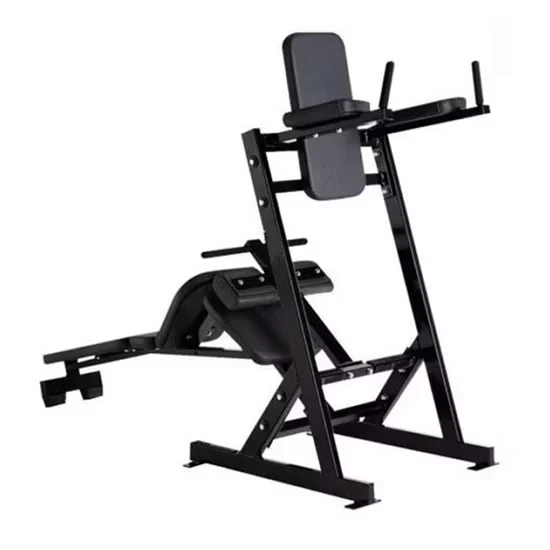
Industrial Frame Rigidity — the 100 kg steel chassis of the 5075 resists torsional flex under asymmetric plate loading, maintaining alignment through thousands of twist cycles.
Technical Specifications
| Parameter | Value |
|---|---|
| Designation | 5075 |
| Product Type | Plate Loaded Hammer Strength Combo Twist Machine |
| Main Frame Material | Steel |
| Resistance Type | Plate Loaded |
| Exercise Part | Leg |
| Product Dimensions | 1510 x 1660 x 1365 mm |
| Net Weight | 100 kg |
| Max User Weight | 180 kg |
| Main Frame Color | Available per customer requirements |
| Cushion Color | Available per customer requirements |
| OEM/ODM | Acceptable |
| Certification | ISO 9001, CE |
Application Suitability
| Deployment Scenario | Typical Use |
|---|---|
| Professional gym and club strength zones | High-frequency rotational and lower-body training during peak membership hours |
| Community fitness centers | Durable plate loaded option for unsupervised daily member use |
| Commercial gymnasium facilities | Integrated combo movements for athletic conditioning programs |
Why Frame Flex in Combo Machines Becomes a Maintenance Headache
The 5075 plate loaded hammer strength combo twist machine commercial is built on a reinforced steel frame engineered to eliminate torsional drift under uneven loading.
When members load weight plates asymmetrically on a twist machine, the frame absorbs lateral torque with every repetition. If the steel gauge or weld geometry is insufficient, the pivot points shift over time, creating uneven wear on bearings and bushings. I have inspected combo units in high-traffic clubs where frame flex caused the resistance arm to bind within six months, generating noise complaints and forcing premature replacement. Commercial facilities need equipment that withstands continuous rotation cycles without structural degradation. [NEED_CITE: structural fatigue testing standards for plate loaded strength equipment]
Positioning the 5075 Within a Commercial Strength Layout
This plate loaded hammer strength combo twist machine commercial targets rotational and lower-body movement patterns, filling the gap between isolated leg press units and free-weight rotational tools. In a typical strength zone, it complements selectorized cable machines by offering variable plate loaded resistance that advanced members prefer. The combo design consolidates two movement planes into one footprint, which matters when floor space commands premium revenue per square meter. The 180 kg user weight capacity and steel construction accommodate a broad member demographic without requiring machine adjustments between users.
Continuous Loading and Deployment Environment Requirements
Plate loaded machines do not have motors or electronic components that limit duty cycle, so the 5075 can operate continuously throughout facility hours without thermal concerns. The primary deployment consideration is floor loading: a fully loaded unit with plates and user exceeds 250 kg concentrated on the base frame, requiring a concrete slab or reinforced flooring. Adequate clearance on all sides is necessary for plate loading and unloading, and rubber flooring beneath the unit dampens plate clatter and protects the subfloor. Facilities on upper floors should verify structural load ratings before installation. [NEED_CITE: floor load requirements for commercial plate loaded gym equipment]
Decoding the Resistance and Pivot Engineering
The plate loaded hammer strength combo twist machine commercial uses a plate loaded resistance system where the user adds or removes weight plates to adjust intensity. This eliminates the cable wear and pulley maintenance associated with selectorized weight stacks, reducing long-term service intervals. The pivot mechanism relies on sealed bearings that maintain smooth rotational travel without lubrication schedules. Steel construction at 100 kg provides the mass necessary to anchor t*bolting in most installations. The mechanical resistance curve stays consistent throughout the range of motion, unlike elastic or friction-based systems that degrade with use.
The Hidden Cost of Undersized Pivot Hardware
Combo twist machines concentrate rotational force on a single pivot axis, and when manufacturers use undersized bearings or thin-walled pivot sleeves, the result is predictable. Within months of high-frequency use, the pivot develops play, causing the movement arm to wobble and generating metallic noise that members notice immediately. I have seen clubs pull combo machines from the floor repeatedly to replace worn bushings, accumulating downtime and labor costs that erase any initial purchase savings. The plate loaded hammer strength combo twist machine commercial addresses this with bearings specified for continuous high-frequency rotation in commercial environments. [NEED_CITE: bearing lifespan standards for commercial rotational strength equipment]
Why This Product Line Earns Floor Space
The 5075 has been tested for 10,000+ hours of continuous mechanical cycling across pivot and frame components, validating long-term durability claims with recorded data. The combo design consolidates two exercise stations into a 1510 x 1660 mm footprint, and our 3D layout service maps clearance zones so adjacent equipment does not interfere with plate loading. OEM and ODM customization extends to frame color and cushion color, allowing facilities to match existing branding without minimum order surprises. The six-series cardio family means a facility sourcing this plate loaded hammer strength combo twist machine commercial can specify remaining disciplines from the same supply chain. Technical support operates around the clock to resolve installation or adjustment questions without waiting for business hours.
Documentation & Test Records
- CE declaration of conformity covering the 5075 plate loaded mechanism and frame
- EN 957 test report validating structural integrity and safety under load
- ISO 9001 certificate for manufacturing quality management
- Durability test record documenting pivot and bearing lifecycle performance
- Motor specification sheet not applicable to this mechanical plate loaded unit
- Installation and commissioning guide with floor clearance diagrams
Installation, Commissioning & Maintenance
- Position the 1510 x 1660 mm base on level concrete with minimum 800 mm clearance on all sides for plate loading access
- Place rubber matting beneath the 100 kg frame to dampen plate drop vibration and protect flooring
- Verify floor load capacity supports combined unit, plate, and user weight exceeding 250 kg at the base footprint
- Inspect sealed pivot bearings during initial commissioning and confirm smooth rotation without lateral play
- Periodically check frame bolts and plate horn retaining hardware for tightness under repeated loading cycles
- Wipe steel frame and cushion surfaces daily to prevent sweat corrosion in high-humidity gym environments
Requesting a Configuration Assessment
Provide your strength zone dimensions and existing equipment list so we can generate a 3D layout showing how the 5075 fits within member flow and plate loading clearance requirements. Specify your facility daily operating hours and expected member volume to confirm the mechanical system matches your usage intensity. Indicate whether the unit deploys on ground level or elevated floors so we can advise on structural load verification. State your target market for accurate documentation and labeling compliance.
Frequently Asked Questions
Q: How does plate loaded resistance compare to selectorized weight stacks in maintenance demands?
A: Plate loaded systems eliminate cables, pulleys, and weight stack guide rods that require regular inspection and replacement. The 5075 relies on sealed bearings and a mechanical pivot with no consumable friction components, reducing scheduled maintenance to periodic bolt torque checks. This makes plate loaded units preferable for facilities with limited on-site service staff or high-frequency usage patterns.
Q: What steel frame standards apply to commercial combo strength machines?
A: The 5075 frame is manufactured under ISO 9001 quality management and carries CE certification. EN 957 testing covers static load, dynamic fatigue, and stability requirements specific to commercial strength equipment. These standards ensure the steel construction and weld geometry withstand continuous asymmetric loading without structural deformation or failure.
Q: What OEM and ODM customization is available for this machine?
A: Frame color and cushion color are customizable to match facility branding requirements. OEM and ODM scope covers logo application and finish specifications. Lead times and minimum order quantities vary by customization depth, and our team confirms these details during the quotation phase after reviewing your specific color codes and branding assets.
Q: How should floor space be planned around combo twist machines?
A: The 5075 measures 1510 x 1660 x 1365 mm and requires additional clearance for users loading and unloading weight plates from both sides. Our 3D layout service maps equipment spacing to ensure member flow does not bottleneck around plate storage areas. Proper planning prevents congestion during peak hours and maintains safe passage between adjacent stations.
Q: What weight plates are compatible with the plate loaded system?
A: The plate horns on the 5075 accommodate standard Olympic diameter plates with 50 mm center holes. Users load plates symmetrically to maintain balanced rotational resistance and prevent uneven bearing wear. The 180 kg maximum user weight rating and steel frame construction support heavy combined loads of user bodyweight plus plate mass during intense twist repetitions.
![Commercial Strength Back Extension Machine for Gym Equipment [WARN] draft identifier mismatch](https://bicksport.com/wp-content/uploads/2026/08/commercial-strength-back-extension-machine-for-gym-equipment-warn-draft-identifier-mismatch-033601.webp)