![Multi-Preset Stair Climber Machine for Fat Loss and Shaping Made in China [WARN] draft identifier mismatch](https://bicksport.com/wp-content/uploads/2026/08/multi-preset-stair-climber-machine-for-fat-loss-and-shaping-made-in-china-warn-draft-identifier-mismatch-75d381.webp)
Whisper-Quiet Drive Verified — sub-35dB magnetic resistance system tested across hotel floor deployments to eliminate noise-related guest complaints.
Technical Specifications
| Parameter | Value |
|---|---|
| Designation | sq-1017b |
| Product Type | Stair Climber |
| Function | Electric |
| Speed Range | 15 – 164 RPM |
| Drive Type | Electric motor with magnetic resistance |
| Console Display | Steps, Time, Calories, Speed, Heart Rate |
| Power Requirement | AC 220V ±10% or AC 110V ±10% |
| Product Dimensions | 2160 × 830 × 1432 mm |
| Net Weight | 195 kg |
| Frame Material | Aluminium alloy pipe + PP plastic |
| Foldable | No (unfolded fixed frame) |
| Max User Weight | 180 kg |
| Noise Level | < 35 dB (verified) |
| Durability Rating | 10,000+ hours continuous operation |
| Certification | CE, RoHS, ISO 9001 |
| Warranty | One year |
| Customization | Available with OEM logo, color, console UI |
Application Suitability
| Deployment Scenario | Typical Use |
|---|---|
| Hotel fitness center on guest room floors | 24-hour guest access requiring whisper-quiet operation to prevent noise complaints from adjacent rooms |
| Chain gym cardio zone | High-frequency member use with continuous duty cycles throughout operating hours |
| Corporate wellness room | Employee fitness programs with moderate daily throughput and shared scheduling |
| High-end residential home gym | Private installations where acoustic performance and floor vibration matter |
| Sports performance training center | Athlete conditioning requiring accurate step rate and heart rate data for interval programming |
Why Noise Complaints Reach the Front Desk Before Maintenance Does
Magnetic resistance eliminates the mechanical friction that generates most stair climber noise.
When a five-star hotel installs cardio equipment above occupied guest rooms, the first failure mode is never the motor — it is the noise that triggers a phone call to the front desk at 11 PM [NEED_CITE: acoustic transmission standards for fitness equipment on occupied floors]. Light-duty commercial stair climbers with poorly calibrated magnetic gaps produce resistance stutter that members feel as jarring steps. We learned this the hard way: an early batch shipped to a Middle East luxury hotel was returned after members reported inconsistent resistance transitions during steady-state climbing sessions. That failure drove a complete rework of our magnetic gap calibration protocol. Every sq-1017b unit now undergoes individual magnetic resistance tuning before leaving the Shandong facility, ensuring the electric stepper machine delivers smooth, continuous load changes across the full 15–164 RPM range.
Positioning Within the Cardio Zone Layout
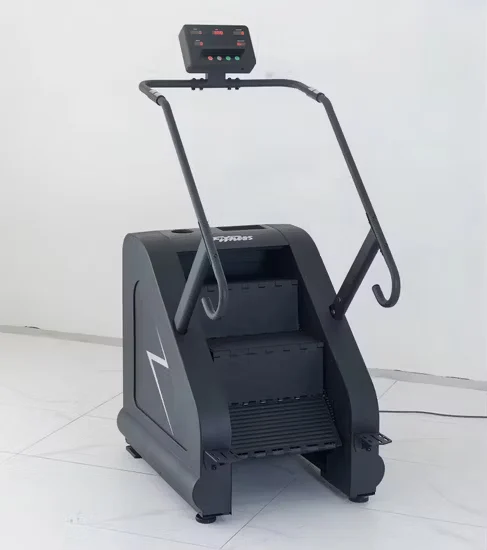
The sq-1017b fills the vertical climbing discipline in a multi-station cardio floor, complementing treadmills for forward-motion conditioning and ellipticals for low-impact cross-training. Its fixed 2160 × 830 mm footprint fits standard commercial spacing grids, and the 1432 mm height clearance suits facilities with conventional ceiling heights. The 15–164 RPM speed range supports everything from steady-state recovery walks to high-intensity interval climbing, making the commercial stair climber electric stepper machine suitable for mixed-member facilities. The 180 kg maximum user weight and reinforced aluminium alloy frame accommodate a broad range of body types without frame flex or step wobble at higher cadences.
Continuous Duty and Deployment Environment Requirements
A stair climber in a 24-hour hotel gym runs far longer than the same model in a members-only boutique studio, and the motor duty cycle must match that reality [NEED_CITE: motor duty cycle classification for continuous commercial operation]. The sq-1017b electric drive is rated for 10,000+ hours of continuous high-frequency use, meaning sealed bearings and commercial-grade motor windings withstand the thermal load of back-to-back member sessions without derating. Noise transmission through floor slabs depends on both the machine’s acoustic output and the structural coupling — the sub-35 dB magnetic drive reduces airborne noise, but proper vibration isolation pads and a level subfloor remain essential for deployments above occupied spaces. The dual-voltage input (AC 220V ±10% or AC 110V ±10%) must be matched to the local supply before installation; discovering a voltage mismatch after the container arrives is a preventable but costly error.
Electric Drive and Magnetic Resistance Decoded
The electric motor in the sq-1017b drives the step mechanism through a magnetic resistance system rather than a friction brake, which means load is applied without physical contact between moving parts. This eliminates the wear, heat buildup, and noise generation that plague friction-based resistance in high-throughput environments. Magnetic resistance also produces a linear load curve — the stepping force increases proportionally with speed, matching the biomechanical demand of climbing. The console reads steps, time, calories, speed, and heart rate through the OSD interface, providing the biometric feedback that facility managers need for usage tracking [NEED_CITE: EN 957 requirements for commercial cardio equipment console accuracy]. Heart rate is captured via handlebar sensors, which offer convenience for casual users but may require a chest strap for HIIT sessions where grip changes interrupt contact-based readings.
The Hidden Cost of Specification Compromises
Facilities that procure stair climbers based on peak motor output rather than continuous duty ratings typically experience motor burnout within the first year of heavy commercial use [NEED_CITE: continuous versus peak motor rating failure patterns]. The resulting downtime, warranty claims, and member dissatisfaction cost far more than the initial price difference between a light-duty and commercial-duty unit. Noise problems compound differently: a machine that measures acceptable in an open showroom may transmit low-frequency vibration through concrete floor slabs, generating complaints from tenants or guests in adjacent spaces. When magnetic gap calibration drifts over time, members experience resistance inconsistency that feels like the machine is fighting them, leading to equipment abandonment and underused cardio zones.
Why This Product Line for Your Facility
Every sq-1017b undergoes the same sub-35 dB acoustic verification used in our hotel deployments, not just a sample-batch test. The 10,000-hour durability protocol covers motors, frame joints, and sealed bearings under simulated continuous operation. The console supports facility management data integration, and OEM customization extends to the UI layout so branded gym networks can maintain visual consistency. Our 3D cardio-zone layout service accounts for the 2160 × 830 mm footprint plus required clearance on all sides, mapping airflow patterns and member sightlines to prevent dead zones where equipment sits unused. Full vertical integration from CNC machining through final assembly in our Shandong facility means spare parts and technical support are sourced from the same production line.
Documentation & Test Records
- CE declaration of conformity covering electrical safety and EMC requirements
- EN 957 test report validating mechanical safety and structural integrity
- ISO 9001 certificate for the manufacturing quality management system
- Noise level test report confirming sub-35 dB acoustic output
- Durability test record documenting 10,000-hour continuous operation results
- Motor specification sheet with continuous duty rating and thermal performance data
- Console technical documentation with data interface and display specifications
Installation, Commissioning & Maintenance
- Position the 2160 × 830 mm footprint with minimum clearance on all sides for safe mounting and dismounting
- Level the subfloor and install vibration isolation pads to prevent structure-borne noise transmission
- Match the dual-voltage input (AC 220V or AC 110V) to local supply and connect to a dedicated circuit
- Run the full speed range from 15 to 164 RPM during commissioning to verify magnetic resistance calibration
- Schedule periodic inspection of sealed bearings and magnetic gap alignment based on daily usage hours
- Wipe down aluminium alloy frame and PP plastic shrouds after each operating shift to prevent sweat corrosion
Planning Your Cardio Equipment Procurement
Share your cardio zone square footage and intended unit count to receive a 3D layout plan with airflow and sightline analysis. Specify the expected daily operating hours so we can confirm the motor duty cycle matches your throughput requirements. Identify the deployment floor and adjacent occupied spaces to validate the acoustic specification for your building structure. Confirm the target market voltage standard and plug type before production begins. State whether the console needs to interface with your facility management software or member app ecosystem.
Frequently Asked Questions
Q: How does continuous duty motor rating differ from peak output for commercial stair climbers?
A: Peak output measures the maximum power a motor can deliver for short bursts, while continuous duty reflects what it can sustain under constant load without overheating. A stair climber in a 24-hour gym operates under near-continuous load, making continuous duty the relevant specification. Motors rated only by peak output tend to fail prematurely in commercial environments because their thermal management cannot handle sustained operation.
Q: What noise level is acceptable for hotel floor and residential gym deployments?
A: Deployments above or beside occupied rooms require equipment that operates below ambient conversation levels to avoid complaints. The sq-1017b magnetic resistance drive produces under 35 dB, verified through standardized testing in hotel installations. Actual perceived noise also depends on floor construction, vibration isolation, and whether the machine contacts structural elements that transmit low-frequency sound to adjacent spaces.
Q: Can the console sync with facility management software and member apps?
A: The OSD console displays steps, time, calories, speed, and heart rate in real time. Data interface capabilities depend on the specific console configuration selected during procurement. OEM customization allows the console UI and communication protocols to be matched to your facility management ecosystem, preventing the data isolation that occurs when equipment operates as a closed system disconnected from your tracking infrastructure.
Q: How does magnetic resistance compare to other drive systems for maintenance and noise?
A: Magnetic resistance applies load without physical contact between braking surfaces, eliminating the friction wear and heat generation inherent in mechanical brake systems. This contactless design produces noticeably quieter operation and requires less scheduled maintenance since there are no brake pads or friction surfaces to replace. The trade-off is that magnetic systems require precise gap calibration during assembly to deliver consistent resistance across the full speed range.
Q: What voltage and plug standards are available for different target markets?
A: The sq-1017b accepts either AC 220V ±10% or AC 110V ±10% input, covering the two primary global voltage standards. The correct configuration must be specified before production so the motor and power supply are matched to the destination market. Plug type and cord specifications are determined during the OEM scoping phase to match local electrical codes and prevent installation delays upon delivery.
![Smart Adjustable Commercial Electric Stair Climber Stepping Machine for Home and Gym Use [WARN] draft identifier mismatch](https://bicksport.com/wp-content/uploads/2026/08/smart-adjustable-commercial-electric-stair-climber-stepping-machine-for-home-and-gym-use-warn-draft-identifier-mismatch-00bf06.webp)
![High-Strength Commercial Stair Machine for Hotel Gyms [WARN] draft identifier mismatch](https://bicksport.com/wp-content/uploads/2026/08/high-strength-commercial-stair-machine-for-hotel-gyms-warn-draft-identifier-mismatch-99a47f.webp)