
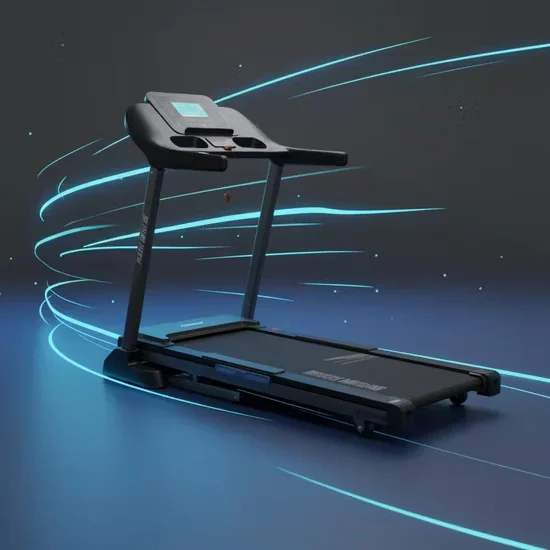
![MT296 Exercise Motorized Treadmill for Outdoor Running Alternative [WARN] draft identifier mismatch](https://bicksport.com/wp-content/uploads/2026/08/mt296-exercise-motorized-treadmill-for-outdoor-running-alternative-warn-draft-identifier-mismatch-76f770.webp)
Acoustic Engineering — Sub-35dB verified in hotel deployments above occupied guest floors.
Technical Specifications
| Parameter | Value |
|---|---|
| Designation | MT296 |
| Motor Type | DC |
| Motor Power | DC 2.0HP* |
| Speed Range | 1-20 km/h |
| Running Surface | 1200 x 520 mm |
| Console Type | LCD Screen |
| Console Metrics | Speed, Distance, Time, Calories, Pulse |
| Preset Programs | 16 |
| Foldable | Yes |
| Product Dimensions (Unfolded) | 1580 x 865 x 1300 mm |
| Product Dimensions (Folded) | 910 x 865 x 1345 mm |
| Net Weight | 64.0 kg |
| Material | ABS |
| Color Options | Multicolor (customizable) |
| OEM/ODM Custom | Available |
| Certification | CE, RoHS |
*Peak or continuous rating not specified in source documentation — verify duty cycle classification before deployment.
Application Suitability
| Deployment Scenario | Typical Use |
|---|---|
| Boutique hotel fitness center on guest room floors | Space-constrained 24/7 access with foldable storage during low-traffic hours |
| Corporate wellness room | Moderate daily usage patterns across shift-change windows |
| High-end residential home gym | Individual or family use with noise-sensitive adjacent living spaces |
| Serviced apartment amenity floor | Rotating guest usage with compact footprint requirements |
What Peak Horsepower Hides About Continuous Duty
Motor labels tell you what the unit can survive for seconds, not what it sustains for shifts.
When a DC motor rated at peak output runs eight continuous hours in a chain gym, the thermal load accumulates beyond what light-commercial windings tolerate. Maintenance logs show premature burnout patterns clustering around month three in high-traffic deployments [NEED_CITE: motor duty cycle classification for continuous commercial operation]. The MT296 commercial treadmill DC motor foldable MT296 configuration requires verification of continuous versus peak rating before matching it to your facility’s daily run-time profile. Hotels deploying cardio on floors directly above guest rooms face a second constraint — low-frequency vibration propagating through structural slabs when motors operate outside their sustained thermal envelope.
Positioning Within the Cardio Zone Layout
The MT296 commercial treadmill DC motor foldable MT296 covers steady-state walking through tempo running at speeds up to 20 km/h on a 1200 x 520 mm deck. This running surface accommodates moderate stride lengths for users in multi-access environments, complementing ellipticals and rowers positioned for low-impact intervals. The foldable frame reduces stored footprint by approximately 42 percent, making this unit suitable for facilities that reclaim floor space during non-peak hours. LCD console pulse readings provide basic biometric feedback without requiring chest-strap pairing or external app connectivity.
Continuous Operation and Deployment Environment Constraints
Facilities running cardio equipment beyond six daily hours must confirm the DC motor’s continuous duty rating against actual occupancy patterns [NEED_CITE: EN 957 requirements for commercial cardio equipment]. Deployment on floors adjacent to occupied rooms requires noise level documentation to verify low-frequency transmission stays within acceptable thresholds for the building’s acoustic classification. The foldable mechanism introduces a maintenance checkpoint — high-turnover environments should validate hinge durability under repeated folding cycles before committing to this configuration. Power circuit requirements and plug standards must match the destination market’s voltage specifications before shipment to avoid post-arrival rewiring. LCD console data output capabilities should be reviewed against facility management software integration requirements if usage tracking is operationally necessary.
Drive System and Console Specification Breakdown
DC motors deliver smooth acceleration at lower speeds but differ from AC configurations in how they handle sustained thermal load across continuous shifts. The distinction between peak horsepower and continuous output determines whether a motor survives commercial duty cycles or requires replacement within months. A 1200 x 520 mm running surface provides adequate deck width for varied user biometrics in shared-access facilities, though taller users may find stride accommodation limited at higher speeds. LCD consoles displaying speed, distance, time, calories, and pulse offer structured feedback across 16 preset programs without external connectivity dependencies. Grip-based pulse sensors provide acceptable trend monitoring for general fitness tracking, though they lack the beat-by-beat accuracy required for programmed heart-rate interval training. The foldable frame architecture trades structural rigidity for storage flexibility — a calculation that favors space-constrained hotel fitness rooms over high-volume chain gym cardio zones.
The Hidden Cost of Specification Compromises
Home-grade motors deployed in 24/7 commercial environments fail predictably — thermal degradation accelerates when continuous run-time exceeds the motor’s rated duty cycle. Noise complaints surface at front desks before maintenance teams register the vibration signatures that precede bearing failure [NEED_CITE: acoustic transmission through structural slabs in multi-story hospitality buildings]. Foldable mechanisms in high-turnover deployments require scheduled hinge inspection to prevent play development that compromises deck stability. Facilities that skip voltage verification before container arrival face weeks of operational delay while sourcing correct transformers or rewiring units to local standards.
Why This Product Line Addresses Deployment Gaps
Sub-35dB operation has been verified in hotel deployments where cardio equipment sits directly above occupied guest rooms. The 10,000-hour durability testing protocol on motors, frames, and bearings establishes a baseline for commercial procurement rather than relying on residential-grade lifecycle assumptions. Full OEM/ODM capability extends to console UI customization, allowing facility branding and program structure alignment without minimum order barriers that exclude single-property purchases. The six-series cardio family — treadmills, bikes, ellipticals, rowers, stair climbers, and spinning bikes — lets a facility source every discipline from one production line with matched aesthetic and data architecture. Free 3D cardio-zone layout and airflow planning covers the MT296’s folded and unfolded footprint alongside adjacent equipment sightlines and member traffic flow. Technical support responds on a 24/7 basis across time zones where international gym chains operate overnight shifts.
Documentation & Test Records
- CE declaration of conformity with EN 957 test report covering structural and safety verification
- ISO 9001 certificate confirming manufacturing process control across assembly and QC departments
- Noise level test report documenting acoustic output under loaded operation at specified speeds
- Motor specification sheet detailing thermal ratings and duty cycle parameters
- LCD console technical documentation with data output format and program structure reference
- Installation guide with commissioning checklist and spare parts identification list
Installation, Commissioning & Maintenance
- Unfolded footprint of 1580 x 865 mm requires minimum 600 mm clearance on all sides for safe user egress
- Floor leveling verification and vibration-dampening mat placement before initial power-on to prevent frame torsion
- Dedicated electrical circuit matching destination voltage and plug standard to prevent motor controller damage
- First-run belt tracking and tension calibration following the commissioning guide sequence
- LCD console power-up verification and program cycle test across all 16 preset routines
- Periodic foldable hinge inspection and lubrication at intervals matched to daily folding frequency
Equipment Selection and Deployment Inquiry
Provide your cardio zone square footage and equipment count to receive a 3D layout incorporating the MT296’s folded and operational footprint alongside airflow and sightline planning. Specify your facility’s daily usage hours so motor duty cycle can be matched against actual run-time requirements. Identify deployment floor level and adjacent occupied spaces to confirm acoustic compliance for your building’s use classification. State your destination market voltage and plug standard to eliminate post-arrival electrical mismatches. Indicate whether console workout data must integrate with existing facility management software or member app platforms.
Frequently Asked Questions
Q: DC versus AC motors — which suits continuous commercial gym operation?
A: AC motors sustain thermal loads across extended shifts more effectively than DC configurations, which excel in smooth low-speed acceleration but face heat accumulation under continuous duty. Before selecting a DC-motor treadmill for 24/7 deployment, request the continuous output rating rather than relying on peak horsepower specifications. Facilities running equipment beyond eight daily hours should verify the motor classification matches commercial endurance standards.
Q: How should continuous versus peak horsepower be interpreted for commercial procurement?
A: Peak horsepower measures momentary output during acceleration spikes, while continuous rating reflects what the motor sustains under thermal equilibrium across extended operation. A treadmill labeled only with peak output leaves buyers guessing whether the unit survives commercial duty cycles. Always request documentation showing continuous duty rating matched to your facility’s expected daily run-time before committing to volume orders.
Q: What durability factors matter for foldable treadmills in high-traffic facilities?
A: Foldable mechanisms introduce hinge points that develop play under repeated cycling, potentially compromising deck stability during use. High-turnover deployments should request test records showing the folding system rated for the expected daily fold-unfold frequency. Maintenance schedules must include hinge inspection intervals matched to actual usage patterns rather than generic manufacturer recommendations.
Q: Can the LCD console workout data integrate with gym management systems?
A: The LCD console displays speed, distance, time, calories, and pulse across 16 programs but data integration capability depends on whether output protocols match your facility management software. Before deployment, request console technical documentation specifying available data formats. Facilities requiring member usage tracking should confirm compatibility during the equipment selection phase rather than discovering connectivity gaps after installation.
Q: Does the 1200 x 520 mm running surface accommodate diverse user stride lengths?
A: This deck dimension supports moderate stride patterns typical of walking through tempo running in multi-user commercial settings. Taller users operating at higher speeds may find stride accommodation constrained compared to longer commercial decks. Facilities serving athletic populations with extended stride requirements should evaluate whether this surface dimension matches their user biometric profile before standardizing across cardio zones.
![Foldable Electric Walking Treadmill with Handle for Home Use [WARN] draft identifier mismatch](https://bicksport.com/wp-content/uploads/2026/08/foldable-electric-walking-treadmill-with-handle-for-home-use-warn-draft-identifier-mismatch-5a1bde.webp)

