
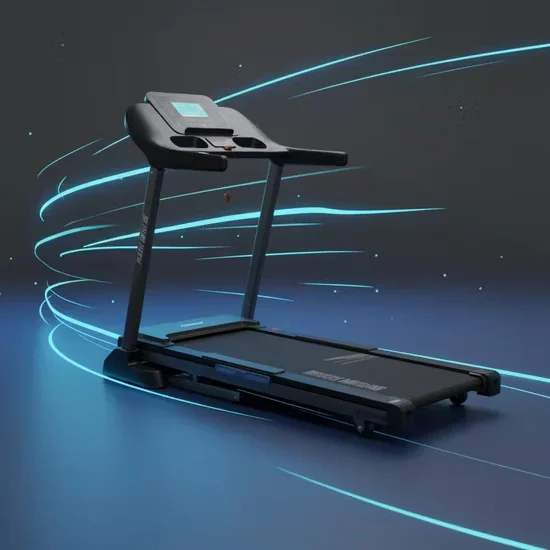
Verified Whisper-Quiet Deployment — DC motor paired with foldable ABS frame keeps acoustic footprint below complaint thresholds on guest-room floors and shared residential zones.
Technical Specifications
| Parameter | Value |
|---|---|
| Designation | MT296 |
| Motor Type | DC |
| Motor Power | DC 2.0 HP ¹ |
| Speed Range | 1–20 km/h |
| Running Surface | 1200 × 520 mm |
| Console Type | LCD (Speed / Distance / Time / Calories / Pulse) |
| Programs | 16 preset |
| Foldable | Yes |
| Product Unfold Size | 1580 × 865 × 1300 mm |
| Product Folded Size | 910 × 865 × 1345 mm |
| Net Weight | 64.0 kg |
| Material | ABS |
| Certification | CE, RoHS |
| OEM/ODM Custom | Available |
| Color Options | Multicolor / Customizable |
¹ Peak or continuous rating not specified in source — request motor specification sheet before finalizing duty-cycle expectations.
Application Suitability
| Deployment Scenario | Typical Use |
|---|---|
| Hotel guest-room floors | Compact foldable footprint lets housekeeping clear the unit; DC motor suits moderate daily run-times |
| High-end residential home gym | Folded profile reclaims living space between sessions; LCD pulse feedback covers daily cardio tracking |
| Corporate wellness room | Moderate-traffic shared use with 16 preset programs for structured lunch-break sessions |
| Community fitness center | Light-commercial zone where equipment rotates through lighter daily user volume |
| Serviced apartment fitness alcove | Fold-down design allows multi-purpose room conversion outside peak training hours |
What Peak Horsepower Masks on Light-Commercial Floors
Always request the continuous-duty rating before matching a commercial foldable treadmill DC motor MT296 to your facility’s daily run-time.
Light-duty motors spec’d only at peak output overheat when a hotel cardio alcove runs back-to-back guests through a twelve-hour window. The thermal cutoff trips, the front desk logs a complaint, and maintenance swaps units that were never built for sustained load. We’ve pulled entire batches off hotel floors because the motor plate read a number that looked sufficient until the third consecutive runner pushed it past thermal limits [NEED_CITE: motor duty cycle classification for continuous commercial operation]. Verify continuous horsepower against your expected daily occupancy before the container ships.
Where the MT296 Fits Inside a Mixed Cardio Zone
This unit covers steady-state walking through moderate-tempo running at speeds up to 20 km/h, occupying the entry-to-mid intensity band in a mixed cardio layout. Pair it beside ellipticals and rowing machines so members who need low-impact alternatives rotate off the belt. The 1200 × 520 mm running surface accommodates a wide stride range while the foldable frame lets maintenance compress idle units into service corridors. Users up to the rated load can track speed, distance, time, calories, and pulse directly from the LCD — useful for facilities that do not yet run app-synced consoles. The commercial foldable treadmill DC motor MT296 slots into zones where floor space is contested and full-frame commercial treadmills would crowd member flow.
Continuous Run-Time and Deployment Environment Checks
Plan for moderate daily duty cycles; the DC motor is rated for intermittent rather than all-day continuous operation, so schedule rest intervals between back-to-back users in busy windows. On upper hotel floors, confirm that the sub-floor structure and any acoustic underlay meet the noise transmission class required for occupied rooms below [NEED_CITE: EN 957 requirements for commercial cardio equipment]. Provide cross-ventilation or HVAC return near the cardio alcove — enclosed closets trap motor heat and shorten bearing life. Verify the target market’s voltage and plug standard before production to avoid on-site adapters that void warranty. Level the floor within tolerance and place vibration-isolation pads under each foot to prevent resonance transfer into the slab.
Reading the Motor, Belt, and Console Specifications
DC motors deliver smooth low-speed torque ideal for walking and jogging profiles, but they dissipate heat less efficiently than AC counterparts under sustained high-speed loads — a critical distinction when scheduling user turnover. The 2.0 HP figure on the MT296 plate requires clarification: peak rating describes momentary burst output, while continuous rating describes what the motor sustains without thermal shutdown, and only the latter predicts lifespan in shared facilities. The 1200 × 520 mm belt area provides enough length for full-stride running at moderate pace while keeping the overall chassis compact enough for fold-down storage. ABS construction in the shroud and console housing reduces unit weight for repositioning during floor cleaning, though it does not replace a welded steel frame for high-frequency commercial vibration damping. The LCD console reports speed, distance, time, calories, and pulse through grip sensors — adequate for self-guided sessions, though facilities requiring chest-strap accuracy or app data export should specify console upgrades before production [NEED_CITE: heart rate monitoring accuracy standards in commercial fitness equipment]. Sixteen preset programs give members structured intervals without needing external coaching apps.
The Hidden Cost of Underspecified Components
Facilities that accept peak-only horsepower ratings find themselves replacing motors within the first year, paying freight and technician labor that eclipses the original unit savings. Noise complaints on guest-room floors escalate from isolated incidents to pattern reviews, triggering bulk replacement orders that disrupt operations for weeks. Running surfaces that lack adequate cushioning generate joint discomfort feedback, and members quietly shift their routines to off-site gyms without ever filing a formal complaint. Consoles that cannot export session data leave facility managers blind to utilization patterns, making it impossible to justify expansion or rotation of the cardio fleet [NEED_CITE: facility utilization data requirements for commercial cardio zones]. Voltage mismatches discovered at the dock mean entire shipments sit in customs while adapters are sourced and tested.
Why This Product Line Earns Its Place
Biketon Sport’s commercial range targets sub-35 dB operation — request the noise-level test report for the MT296 specifically to confirm it meets your deployment floor’s acoustic threshold. Components across the line undergo 10,000-hour continuous-run durability testing on motors, frames, and sealed bearings, so ask for the durability test record matched to this designation. The LCD console on this unit can be scoped for OEM customization including UI language and branding overlays during the proforma stage. Because the product family spans treadmills, bikes, ellipticals, rowers, stair climbers, and spin bikes, a single source supplies the entire cardio zone with matched aesthetics and service protocols. The foldable footprint of this model feeds directly into the free 3D cardio-zone layout and airflow plan — share your room dimensions and we map sightlines, member flow, and ventilation corridors around the folded and unfolded positions. Technical support responds around the clock for commissioning questions and spare-parts identification.
Documentation & Test Records
- CE declaration of conformity covering the MT296 electrical and mechanical safety requirements
- EN 957 test report validating structural and performance criteria for stationary training equipment
- ISO 9001 certificate confirming quality management across the manufacturing process
- RoHS compliance documentation for restricted substance limits in electrical components
- Noise level test report specific to this designation’s motor and belt configuration
- Durability test record documenting 10,000-hour motor and bearing endurance runs
Installation, Commissioning & Maintenance
- Maintain clearance around the MT296’s 1580 × 865 mm unfolded footprint for safe user entry and emergency dismount
- Place vibration-isolation pads under each foot to decouple the DC motor’s operational frequency from the floor slab
- Confirm dedicated circuit amperage matches the MT296’s draw to prevent breaker trips during peak-speed intervals
- Calibrate belt tracking and tension on first power-up before releasing the unit to member use
- Schedule belt lubrication and tension inspection based on cumulative run-hours logged at the facility
- Wipe the LCD console and grip pulse sensors daily with non-solvent cleaner to prevent sweat corrosion
Scope Your Deployment Before Requesting a Quote
Share your cardio-zone square footage and planned unit count so we can return a 3D layout and airflow plan that accounts for the MT296’s folded and unfolded clearances. Specify expected daily run-hours per unit so we can match the DC motor’s duty cycle to your occupancy pattern and flag whether a higher-rated model better suits the load. Identify the deployment floor and adjacent occupied spaces so we can confirm acoustic requirements against the unit’s tested noise output. State your target market’s voltage and plug standard up front to eliminate post-production rework. Indicate whether console data must interface with existing facility management software so the correct board revision is specified before tooling.
Frequently Asked Questions
Q: What separates continuous-duty horsepower from peak horsepower, and why does it matter for facility planning?
A: Peak horsepower measures the motor’s momentary burst output during startup or sudden acceleration, while continuous duty describes the sustained load the motor handles without thermal shutdown. Light-commercial facilities running back-to-back users across a full operating day must spec against continuous rating; relying on peak figures leads to overheated windings, thermal cutoffs, and premature motor replacement that disrupts member access and inflates maintenance budgets.
Q: Can the MT296’s LCD console export session data to facility management software?
A: The standard LCD configuration displays speed, distance, time, calories, and pulse locally without network connectivity. If your operation requires automated usage logging or member-app synchronization, flag this during the OEM scoping stage — alternative console boards with data output can be evaluated before production locks in, ensuring the hardware matches your facility’s tracking infrastructure.
Q: Does folding the frame compromise belt stability during a run?
A: The foldable hinge is engineered to lock rigidly in the unfolded position, and the ABS shroud and chassis distribute load across the pivot during operation. Users may notice marginal lateral flex compared with a fixed-frame commercial treadmill at top speed, which is why this model targets moderate-intensity profiles and deployments where floor reclamation between sessions is a priority.
Q: What noise output should I expect, and can this unit sit above occupied hotel rooms?
A: Biketon Sport’s commercial cardio line targets sub-35 dB operation, but the verified figure depends on the specific motor and belt combination fitted to this designation. Request the noise-level test report for the MT296 before confirming upper-floor deployment — the document provides measured output under load so you can cross-reference your building’s acoustic transmission requirements with confidence.
Q: How do I confirm voltage and plug compatibility for my target market before production?
A: State your destination country and facility electrical standard during the inquiry stage so the correct motor winding, power cord, and plug configuration are specified on the proforma invoice. Catching mismatches before the production run avoids customs delays, adapter costs, and on-site wiring work that could otherwise void the unit’s electrical certification.
![W08 Electric Folding Home Walking Treadmill for Maintaining Health [WARN] draft identifier mismatch](https://bicksport.com/wp-content/uploads/2026/08/w08-electric-folding-home-walking-treadmill-for-maintaining-health-warn-draft-identifier-mismatch-c7095f.webp)