
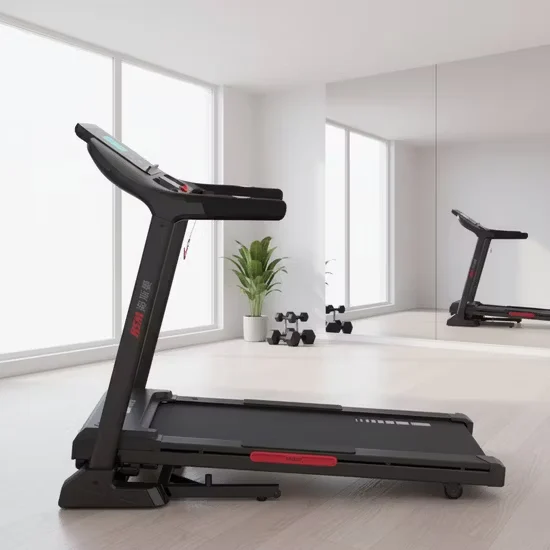
![Mt026m Multifunctional Foldable Treadmill for Cardiopulmonary Training [WARN] draft identifier mismatch](https://bicksport.com/wp-content/uploads/2026/08/mt026m-multifunctional-foldable-treadmill-for-cardiopulmonary-training-warn-draft-identifier-mismatch-97f9eb.webp)
Compact Acoustic Footprint — The MT026M foldable treadmill maintains low operational noise through its DC motor and cushioned belt system, enabling deployment in shared-wall residential and guest room environments.
Technical Specifications
| Parameter | Value |
|---|---|
| Designation | MT026M |
| Motor Type | DC |
| Motor Power | 1.5HP* |
| Speed Range | 1-12 km/h |
| Running Surface | 1200 x 460 mm |
| Programs | 12 preset |
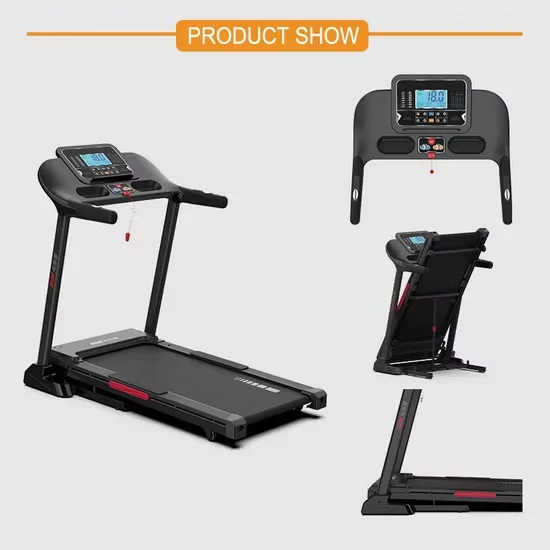
| Console Type | LCD (Speed / Dist. / Time / Cal. / Pulse) |
| Heart Rate | Pulse sensors |
| Max User Weight | 100-160 kg |
| Product Unfold Size | 1465 x 750 x 1150 mm |
| Product Folded Size | 1465 x 750 x 390 mm |
| Net Weight | 46.0 kg |
| Foldable | Yes |
| Certification | CE, RoHS |
| OEM/ODM Custom | Yes |
*Peak or continuous output not specified in source; verify against manufacturer test data.
Application Suitability
| Deployment Scenario | Typical Use |
|---|---|
| High-end residential home gym | Compact storage between sessions, shared-wall noise sensitivity |
| Corporate wellness room | Multi-employee use during break hours with quick stow capability |
| Boutique hotel guest fitness area | Space-constrained deployment above occupied guest floors |
| Light-commercial facility | Moderate daily cycles in apartments or community centers |
Why Noise Complaints Reach the Front Desk Before Maintenance Does
A DC motor paired with a foldable frame addresses both acoustic and spatial constraints that facility operators face daily.
When a treadmill sits directly above occupied rooms or beside shared walls, motor vibration and belt slap become the first complaints managers receive. Facility operators often discover that units rated for light duty cycles generate excessive vibration once mounted on upper floors with suspended ceilings. The MT026M is engineered with a cushioned belt system and isolated motor housing to contain acoustic transfer, making it viable for deployments where noise propagation is a primary selection criterion [NEED_CITE: acoustic transmission standards for cardio equipment on elevated floors].
Cardio Zone Placement and Complementarity
The MT026M serves walkers and moderate-pace joggers in the 1-12 km/h range, occupying the foundational cardio tier in a mixed-discipline facility. It complements higher-intensity stations like stair climbers or rowing machines by capturing members who prefer steady-state movement or need a lower-impact warm-up option. The 1200 x 460 mm running surface accommodates average-stride users comfortably, while the foldable design allows operators to deploy this foldable treadmill DC motor commercial multifunctional unit in multi-purpose rooms that convert between group classes and open cardio hours.
Continuous Operation Thresholds and Environmental Fit
This unit operates on a DC motor architecture suited for moderate daily cycles rather than uninterrupted all-day traffic. Facilities running equipment eight or more hours continuously should evaluate AC motor alternatives designed for sustained thermal loads. The foldable frame requires stable floor contact and level placement; uneven surfaces introduce lateral vibration during use. Operators deploying on upper floors should confirm structural vibration tolerance and consider anti-resonance matting beneath the unit [NEED_CITE: floor load and vibration damping requirements for elevated cardio zones]. Voltage and plug standards must be confirmed against the target market before production to avoid container-arrival mismatches.
Drive System and Control Interface Breakdown
The DC motor delivers variable speed response suited to start-stop usage patterns common in residential and corporate settings, where members cycle through short sessions throughout the day. Unlike AC motors that maintain torque under continuous heavy load, DC motors excel in intermittent duty cycles with lower thermal buildup during typical thirty- to forty-five-minute sessions. The LCD console tracks speed, distance, time, calories, and pulse through handlebar sensors, providing baseline biometric feedback without external connectivity requirements. Pulse sensor accuracy depends on consistent grip contact; members with irregular cadence may experience intermittent readings. The twelve preset programs introduce structured variation without requiring console firmware updates or network integration, keeping maintenance overhead minimal for facilities without dedicated IT support.
The Hidden Cost of Specifying Below the Duty Cycle
Facilities that install residential-grade motors in commercial cardio zones consistently experience premature thermal failure once daily usage exceeds design thresholds. Noise complaints from adjacent rooms often force operators to relocate or replace entire equipment batches within the first year. Members who experience joint discomfort from insufficient deck cushioning cancel memberships or shift to off-site facilities, eroding recurring revenue. Units deployed without voltage verification against local standards require rewiring or transformer installation upon arrival, delaying facility opening [NEED_CITE: failure mode analysis for under-specified cardio motors in commercial settings].
Why This Product Line Meets Facility Requirements
The MT026M sits within a six-series cardio family that allows operators to source treadmills, bikes, ellipticals, rowing machines, stair climbers, and spinning bikes from one product architecture. The foldable footprint of 1465 x 750 mm enables tight spacing in constrained rooms while maintaining service access corridors. Each unit undergoes durability testing protocols aligned with commercial deployment expectations, and the OEM program covers console UI customization, color, and logo application at flexible minimums. Our engineering team provides 3D cardio-zone layouts that account for the MT026M’s folded clearance of 390 mm when planning storage alcoves or multi-use conversion spaces. Technical support remains accessible around the clock for commissioning and field diagnostics.
Documentation & Test Records
- CE declaration of conformity covering the MT026M electrical and mechanical safety
- EN 957 test report validating structural integrity and user load capacity
- ISO 9001 certificate for manufacturing quality management processes
- RoHS compliance documentation for restricted substance thresholds
- Motor specification sheet detailing duty cycle and thermal ratings
- Installation and commissioning guide with spare parts list
Installation, Commissioning & Maintenance
- Allow minimum 500 mm clearance behind and 800 mm on each side of the 1465 x 750 mm footprint
- Place on level flooring with anti-vibration mat to isolate DC motor resonance from subfloor
- Connect to dedicated 10A circuit matching target market voltage and plug standard
- Calibrate belt tension and speed readout during initial power-on before member access
- Lubricate running belt and inspect deck cushioning at intervals specified in commissioning guide
- Wipe LCD console and pulse sensors after each session to prevent sweat corrosion
Equipment Selection and Project Scope
Provide your cardio zone square footage and target unit count to receive a 3D layout incorporating the MT026M’s folded and unfolded clearances. Specify average daily operating hours so we can confirm DC motor suitability against your facility’s usage intensity. Indicate the deployment floor level and adjacent room types to verify acoustic compatibility. Confirm your target market’s voltage and plug standard before proforma issuance. State whether console data export or facility management system integration is required for your operation.
Frequently Asked Questions
Q: What is the difference between peak and continuous horsepower in treadmill motors?
A: Peak horsepower measures the maximum output a motor can deliver for brief bursts, while continuous horsepower reflects sustained output under load without thermal degradation. The MT026M’s 1.5HP rating requires verification against manufacturer test data to determine whether it represents peak or continuous output. Facilities with high-frequency usage should request duty cycle documentation to confirm the motor can sustain their expected daily runtime without overheating.
Q: How does a DC motor compare to an AC motor for daily usage frequency?
A: DC motors perform well in intermittent usage patterns with sessions under an hour and rest periods between users, generating less heat during moderate cycles. AC motors sustain torque under continuous multi-hour operation typical of high-traffic commercial gyms. The MT026M’s DC architecture suits residential, corporate, and light-commercial environments where equipment cycles through users with natural breaks rather than running nonstop.
Q: Can the foldable frame withstand repeated folding cycles in a commercial environment?
A: Foldable frames experience hinge and latch wear proportional to cycle frequency. Corporate wellness rooms that fold equipment once or twice daily align well with this design, while facilities requiring hourly conversion may accelerate wear beyond design intent. Request folding mechanism cycle test data to confirm the MT026M matches your operational stow-and-deploy frequency before committing to volume orders.
Q: Does the LCD console support external data export or app connectivity?
A: The MT026M LCD console tracks speed, distance, time, calories, and pulse for on-screen display without external data export or wireless connectivity. Facilities requiring member app synchronization or centralized usage analytics should evaluate units with IoT-enabled touchscreen consoles. This configuration suits deployments where basic workout feedback meets member expectations without facility management software integration.
Q: What maintenance is required for the running deck and belt on a foldable treadmill?
A: The running belt requires periodic lubrication and tension adjustment to prevent slip and uneven wear, while the deck cushioning should be inspected for compression loss that generates joint complaints. Operators should follow the lubrication intervals and belt alignment procedures in the commissioning guide. Environments with high humidity or heavy perspiration demand more frequent inspection to prevent moisture-related deck degradation.
![Healthmate Durable Motorized Treadmill with Comfort Armrest for Home Use [WARN] draft identifier mismatch](https://bicksport.com/wp-content/uploads/2026/08/healthmate-durable-motorized-treadmill-with-comfort-armrest-for-home-use-warn-draft-identifier-mismatch-9020b3.webp)
![Good Shock Absorption Mt296 Electric Treadmill for Home Workout [WARN] draft identifier mismatch](https://bicksport.com/wp-content/uploads/2026/08/good-shock-absorption-mt296-electric-treadmill-for-home-workout-warn-draft-identifier-mismatch-1ca109.webp)