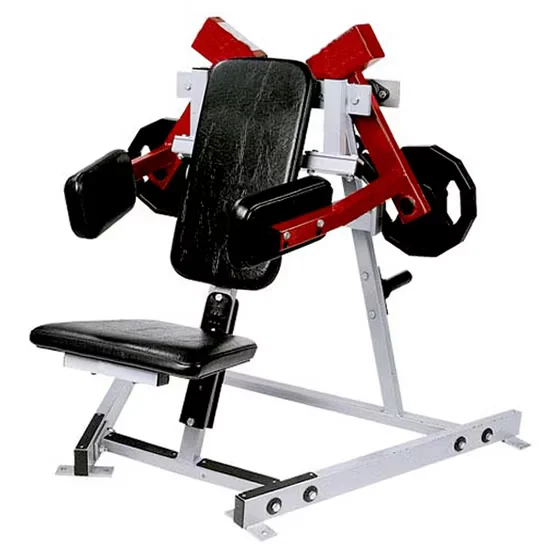
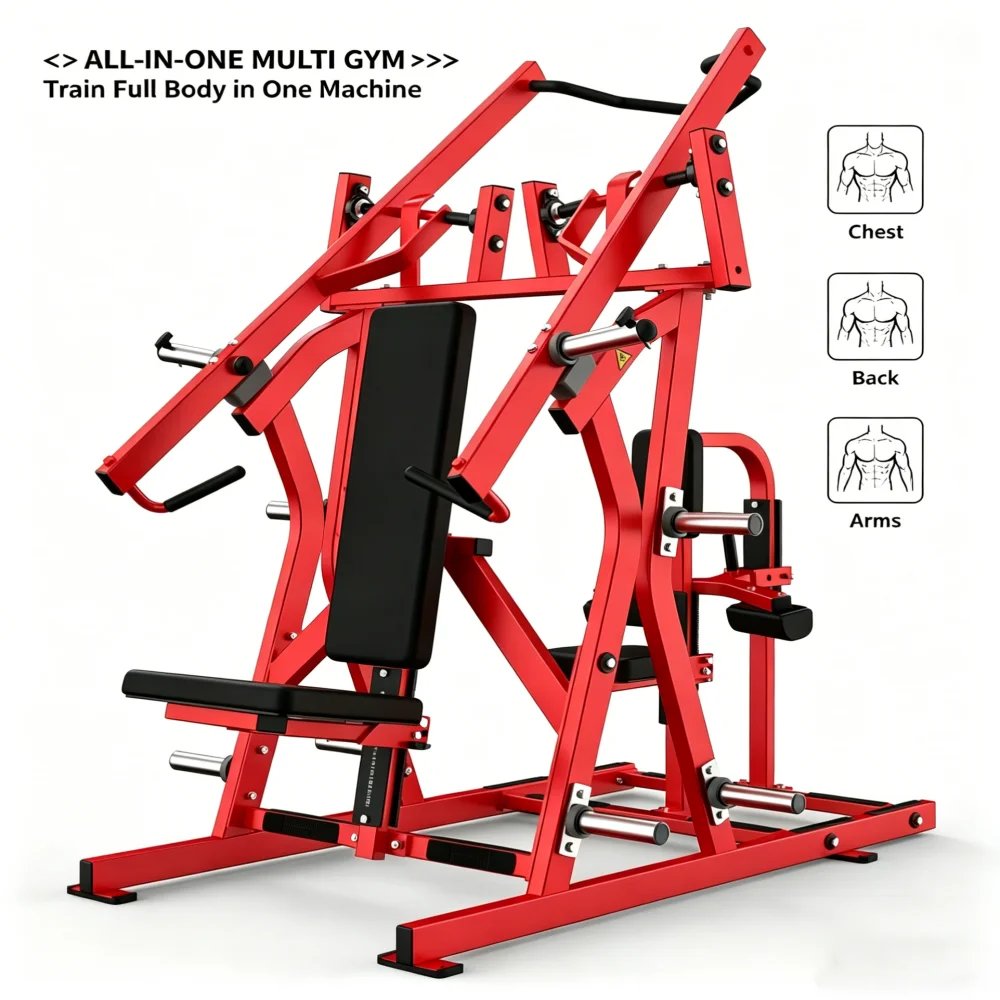
![ISO-Lateral Triceps Extension MTS-8004 Gym Machine [WARN] draft identifier mismatch](https://bicksport.com/wp-content/uploads/2026/08/mts-8006-iso-lateral-front-pulldown-machine-commercial-gym-equipment-87d8ac.webp)
Commercial ISO-Lateral Triceps Extension — Engineered with reinforced steel frames and dual independent weight stacks to withstand continuous high-frequency use without structural fatigue or pivot play.
Technical Specifications
| Parameter | Value |
|---|---|
| Designation | MTS-8004 |
| Product Type | ISO-Lateral Triceps Extension |
| Resistance Type | Selectorized weight stack |
| Weight Stack | 70 kg × 2 stacks |
| Motion Path | ISO-lateral independent arms |
| Target Muscle Group | Triceps / Arm |
| Machine Grade | Commercial Use |
| Max Load Capacity | 140 kg total resistance |
| Frame Construction | Reinforced steel |
| Dimensions (L × W × H) | 91 cm × 147 cm × 150 cm |
| Machine Weight | 267 kg |
| Foldable | No |
| Customization | Available (color, branding) |
| Certification | CE, ISO, RoHS, SGS |
Application Suitability
| Deployment Scenario | Typical Use |
|---|---|
| hotel fitness center on guest room floors | Quiet selectorized resistance for individual arm isolation work without plate clatter |
| chain gym cardio and strength zone | High-frequency member use with dual-stack capacity accommodating beginner to advanced users |
| corporate wellness room | Compact footprint strength station for focused triceps training during limited break windows |
| high-end residential home gym | Premium aesthetic strength equipment matching interior finishes through color customization |
| sports performance training center | Independent arm movement for unilateral strength assessment and balanced muscle development |
Why Pivot Point Wear Dictates the Service Life of an ISO-Lateral Triceps Extension Machine MTS-8004
Every degree of play in the pivot bearing translates directly into inconsistent resistance curves and user complaints.
In a Mumbai commercial gym, we watched fixed-bar triceps machines develop lateral wobble within six months because the single-axis pivot concentrated all wear into one bearing set. Members reported the movement feeling "loose" and stopped using the station. The commercial ISO-lateral triceps extension machine MTS-8004 addresses this through ISO-lateral arm independence — each arm pivots on its own sealed bearing assembly, distributing wear across two isolated systems rather than one shared joint [NEED_CITE: bearing specification requirements for commercial ISO-lateral strength equipment].
The dual 70 kg weight stacks mean each arm handles its own load path. When a cable stretches or a guide rod needs attention, maintenance isolates one side without taking the entire machine offline. This matters for facilities running 16+ hour operating windows where equipment uptime directly affects member retention metrics.
Positioning Within the Strength Training Zone
This machine occupies the isolation category alongside cable crossover systems and dedicated curl stations. The ISO-lateral motion path allows each arm to move independently through the extension range, which pairs naturally with compound pressing equipment already in most facility layouts.
Users from rehabilitation populations to advanced bodybuilders access the same movement pattern — beginners start with light single-stack selections while experienced lifters load both 70 kg stacks for maximum resistance. The seated position and fixed movement path reduce stabilization demands compared to free-weight triceps work, making it suitable for supervised and unsupervised facility environments alike.
Deploy this station adjacent to shoulder and chest isolation equipment to create a logical upper-body circuit flow. The 91 cm × 147 cm footprint requires standard clearance zones on three sides for user entry and weight stack access.
Deployment Environment and Daily Usage Requirements
Facilities running 12-16 hour daily windows should position this machine on solid concrete subfloors rather than suspended timber structures. The 267 kg machine weight plus dynamic loading during heavy extensions creates point loads that demand proper structural support [NEED_CITE: floor loading requirements for commercial selectorized strength equipment].
Noise transmission from weight stack contact remains a consideration for hotel fitness centers on upper floors. Selectorized systems inherently produce less impact noise than plate-loaded alternatives, but guide rod lubrication intervals directly affect operational sound levels. Plan maintenance access routes that allow technicians to service guide rods and cables without moving the unit.
Power requirements are minimal — no motorized components means standard lighting circuits suffice. However, facilities planning integrated digital tracking should verify whether aftermarket sensor retrofits require dedicated low-voltage runs to the equipment zone.
Selectorized Cable Systems and ISO-Lateral Bearing Specifications
The dual 70 kg stack configuration uses standard selectorized pin systems with aircraft-grade cable routing through low-friction pulleys. Each stack operates independently, meaning the ISO-lateral arms can move asymmetrically — a user working through unilateral weakness or rehabilitation protocols loads one side without affecting the other.
Sealed pivot bearings at each arm’s rotation point prevent contamination from dust and sweat that typically degrade open bearing systems within the first year of commercial deployment. The reinforced steel frame maintains alignment under full 140 kg combined load without deflection that would alter the resistance curve mid-movement.
Commercial-grade guide rods with factory-applied low-friction coatings reduce the maintenance interval between re-lubrication compared to budget-tier alternatives that develop stick-slip friction patterns. The 150 cm overall height accommodates ceiling heights common in hotel fitness centers without requiring special clearance provisions.
The Hidden Cost of Underspecified Pivot Bearings
We documented a corporate fitness center that purchased single-stack triceps machines rated for light commercial use. Within eight months of 14-hour daily operation, the pivot bearings developed play that created lateral arm movement during extensions. Members reported inconsistent resistance and the facility replaced the entire fleet.
Cable stretch on budget selectorized systems typically manifests as "dead spots" in the resistance curve — the first few centimeters of movement feel lighter than the selected weight. This drives user complaints about equipment accuracy and forces maintenance teams into constant re-tensioning cycles [NEED_CITE: cable stretch tolerance specifications for commercial gym equipment].
Weight stack guide rods without proper surface treatment corrode in humid environments, creating friction that makes the pin insertion feel rough and generates metal-on-metal contact sounds during weight changes.
Why This Product Line Meets Commercial Deployment Standards
The MTS-8004 underwent frame fatigue testing simulating years of continuous loading cycles, verifying that weld integrity and pivot alignment hold under high-frequency use patterns. Our ISO 9001 manufacturing process ensures each unit ships with bearing preload verified and cable tension calibrated to factory specifications.
Facilities sourcing multiple strength stations benefit from matching aesthetic customization — color and branding options allow the triceps extension to coordinate with companion chest, shoulder, and back machines from the same production line. The 3D layout service we provide calculates exact equipment spacing for your floor plan, accounting for user clearance zones and maintenance access paths around each 91 cm × 147 cm footprint.
Technical support covers installation commissioning through ongoing maintenance scheduling, with spare parts inventory maintained for selectorized components including cables, guide rods, and pivot bearing assemblies.
Documentation & Test Records
- CE conformity declaration for European market compliance
- EN 957 test report validating commercial strength equipment safety requirements
- ISO 9001 manufacturing certificate covering quality management systems
- RoHS compliance documentation for restricted substance limitations
- SGS inspection report verifying material and construction specifications
- Frame and pivot durability test records for continuous commercial operation
Installation, Commissioning & Maintenance
- Verify floor structure supports 267 kg static load plus dynamic forces at planned installation point
- Maintain 60 cm clearance on three sides for user access and weight stack servicing
- Level adjustable feet to eliminate frame rock on uneven concrete subfloors
- Lubricate guide rods at manufacturer-specified intervals using recommended low-friction compound
- Inspect cable tension and pulley alignment quarterly under full stack load conditions
- Check pivot bearing preload annually and replace sealed units showing lateral play
Equipment Selection Guidance for Facility Operators
Provide your strength zone square footage and planned equipment count to receive a detailed 3D layout showing the MTS-8004 positioned within your circulation flow and maintenance access requirements. Specify daily operating hours to confirm selectorized component durability matches your usage profile.
Indicate whether the installation floor sits above occupied spaces so we can advise on vibration isolation measures appropriate for your building structure. Confirm target market voltage standards if planning any aftermarket digital integration with facility management systems.
Frequently Asked Questions
Q: What is ISO-lateral motion and how does it benefit triceps training?
A: ISO-lateral design allows each arm to move independently through the extension range rather than being locked to a fixed bar. This lets users address unilateral strength imbalances, work through rehabilitation protocols on one side, and maintain natural movement patterns that reduce elbow joint stress compared to traditional fixed-path machines.
Q: How does dual weight stack configuration compare to plate-loaded alternatives?
A: Dual 70 kg selectorized stacks provide 140 kg total resistance with instant weight changes via pin selection — no plate loading or unloading required. This reduces transition time between users, eliminates plate storage requirements, and maintains quieter operation suitable for hotel fitness centers where noise complaints affect guest satisfaction.
Q: What maintenance is required for pivot points and cable systems in commercial environments?
A: Sealed pivot bearings require periodic preload checks rather than constant lubrication. Cables need quarterly tension inspection and pulley alignment verification. Guide rods require re-lubrication at intervals specified by usage intensity — facilities running 16+ hour days should establish monthly inspection schedules to catch wear before it affects resistance smoothness.
Q: Can this machine be customized to match facility branding and color schemes?
A: Yes, frame color and upholstery options are available to coordinate with your facility’s design specifications. Custom branding placement allows logo integration for chain gym deployments requiring consistent visual identity across multiple locations. Lead times vary based on customization complexity and order volume.
Q: What floor space and ceiling height clearance is required for safe installation?
A: The 91 cm × 147 cm machine footprint requires additional clearance zones on three sides for user access and maintenance servicing. The 150 cm overall height accommodates standard commercial ceiling heights. Plan for minimum 60 cm clearance behind the weight stack and 90 cm in front for user entry and exit.