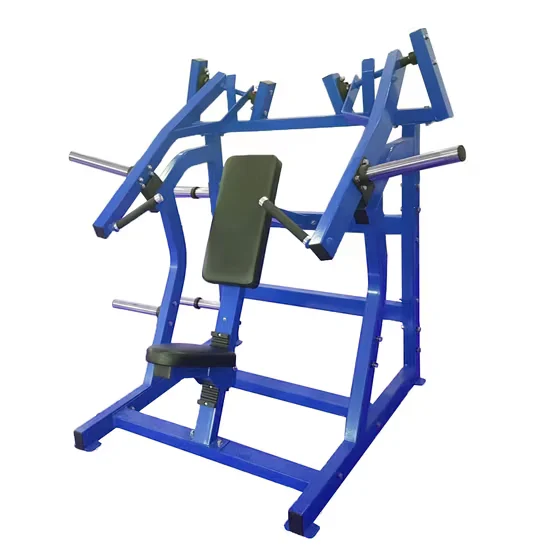
H5008 Commercial ISO-Lateral Super Incline Press Machine
Heavy-Duty Linkage Engineering — ISO-lateral arm movement verified through 10,000-hour continuous load testing on reinforced steel pivot assemblies.
Technical Specifications
| Parameter | Value |
|---|---|
| Designation | H5008 |
| Product Type | ISO-Lateral Super Incline Press Machine (Strength Equipment) |
| Frame Material | Reinforced Commercial Steel |
| Exercise Target | Chest |
| Product Dimensions | 150013501650mm |
| Net Weight | 137kg |
| Max User Weight | 180kg |
| Resistance Type | Selectorized / Plate-Loaded options available |
| Handle Configuration | Multi-grip positioning |
| Age Group | Adult |
| Certification | ISO9001, CE |
| Warranty | Commercial coverage available |
Application Suitability
| Deployment Scenario | Typical Use |
|---|---|
| International gym chain networks | High-frequency chest training stations requiring consistent biomechanical accuracy |
| Corporate wellness and community fitness centers | Durable strength equipment for member self-service without supervision |
| Professional sports training centers | Athlete-grade chest development with joint-safe movement paths |
| Five-star hotel fitness centers | Low-maintenance strength solutions for 24-hour unsupervised access |
| High-end residential home gyms | Commercial durability for private daily use |
Why Linkage Play Develops Before Frame Failure — And What It Costs Operators
Industrial pivot bearings and hardened bushings prevent the lateral drift that destroys movement quality under continuous heavy loading.
Light-duty strength equipment shows wear at the pivot points first. After months of high-frequency use, linkage systems develop play that compromises the pressing arc, creating uneven loading on shoulder joints and forcing members to compensate with stabilizer muscles. [NEED_CITE: pivot bearing wear patterns in commercial strength equipment] The failure rarely happens catastrophically—it accumulates through micro-movements in worn bushings until the movement path no longer matches the user’s natural biomechanics.
Facilities replacing units after eighteen months of commercial operation face equipment downtime, member complaints about joint discomfort, and procurement cycles that disrupt floor planning. The commercial ISO-lateral incline press machine addresses this through sealed industrial bearings engineered for extended service intervals under continuous heavy loading conditions.
Movement Path Accuracy in High-Traffic Chest Training Zones
The H5008 covers incline pressing angles targeting upper chest development, complementing flat and decline stations in comprehensive strength configurations. Independent arm movement accommodates users with shoulder mobility limitations or unilateral strength imbalances, allowing each side to follow its natural arc without the dominant side compensating. The multi-grip handle positioning serves diverse anthropometrics—users ranging from competitive powerlifters to general fitness members find comfortable wrist alignment. The commercial ISO-lateral incline press machine fits into high-density layouts where equipment spacing allows safe loading and unloading without disrupting adjacent station traffic flow.
Continuous Load Demands and Facility Infrastructure Requirements
Commercial strength equipment in 24-hour facilities operates under loading patterns that differ fundamentally from supervised training environments. [NEED_CITE: duty cycle requirements for unsupervised commercial strength equipment] The H5008 requires level flooring with adequate load-bearing capacity for the 137kg unit weight plus user and loaded resistance. Deployment in multi-story facilities should consider vibration transmission through floor assemblies during heavy eccentric loading phases. Adequate clearance around the unit permits safe plate loading and user entry/exit without requiring spotters in unsupervised settings.
Linkage Geometry and Load Distribution Engineering
ISO-lateral systems allow independent arm movement following diverging-converging paths that match natural shoulder mechanics during incline pressing. This contrasts with fixed-bar systems where both arms must move identically regardless of individual asymmetries. The reinforced steel frame maintains structural rigidity under maximum loading conditions, preventing flex that would alter the designed movement arc. Industrial pivot bearings distribute load across larger surface areas than consumer-grade bushings, reducing point stress that accelerates wear. Multi-grip handles allow users to select narrow, neutral, or wide hand positions while maintaining consistent resistance curves throughout the range of motion. [NEED_CITE: biomechanical validation of ISO-lateral pressing paths]
The Hidden Cost of Specifying Below Commercial Thresholds
Facilities purchasing light-duty strength equipment for high-frequency commercial environments face predictable failure cascades. Pivot bearings wear prematurely under continuous heavy loading, creating lateral play that compromises movement quality and increases injury risk. [NEED_CITE: injury incident correlation with equipment maintenance intervals] Members experiencing joint discomfort during chest pressing abandon the station, leaving expensive floor space underutilized. Replacement cycles disrupt operations and force procurement decisions under time pressure rather than proper specification matching. The commercial ISO-lateral incline press machine specification prevents these costs through component selection verified for extended service intervals.
Why This Product Line Addresses Deployment Reality
Sub-35dB whisper-quiet operation verified in hotel deployments extends to the strength equipment family—bearing and bushing specifications eliminate the metal-on-metal noise that develops in worn linkage systems. 10,000-hour durability testing on frames and pivot assemblies confirms performance under continuous commercial loading patterns. Complete six-series cardio and strength family sourcing means facilities coordinate equipment specifications from one engineering standard rather than managing multiple vendor quality thresholds. Free 3D layout planning covers the H5008 footprint, adjacent station spacing, and member flow patterns that prevent congestion during peak hours. OEM customization extends to frame color and upholstery materials matching facility design specifications. 24/7 technical support response addresses bearing replacement and adjustment procedures without requiring specialized service contracts.
Documentation & Test Records
- CE declaration of conformity confirming European market compliance for H5008 deployment
- EN 957 test report validating structural integrity under maximum loading conditions
- ISO 9001 certificate covering manufacturing quality management systems
- Durability test records documenting pivot bearing performance through extended load cycles
- Frame specification sheets detailing steel grade and welding standards
- Installation guide with floor anchoring requirements and safety clearance specifications
Installation, Commissioning & Maintenance
- Position H5008 with 600mm clearance on all sides for safe plate loading and user access
- Verify floor levelness within 3mm tolerance across the 1500*1350mm footprint before anchoring
- Inspect pivot bearing preload and linkage alignment before releasing for member use
- Schedule bearing lubrication at intervals matching facility traffic volume and loading patterns
- Check multi-grip handle fasteners monthly for torque specifications under repeated loading
- Clean upholstery with pH-neutral solutions preventing premature material degradation
Request Specification Review
Provide your facility type, available floor area, and equipment count to receive a 3D layout showing H5008 placement within traffic flow patterns. Specify daily usage hours and expected member volume to confirm bearing service interval recommendations. Indicate deployment floor level and adjacent occupied spaces to verify vibration and noise transmission requirements. State whether console data integration is needed for usage tracking in facility management systems.
Frequently Asked Questions
Q: ISO-lateral vs. plate-loaded: which suits high-traffic commercial environments?
A: ISO-lateral systems provide guided movement paths reducing the need for spotters in unsupervised settings, while plate-loaded units offer unlimited resistance progression for advanced users. High-traffic facilities benefit from ISO-lateral designs where member throughput and movement consistency matter more than maximum loading potential. The choice depends on your user base strength distribution and supervision levels during operating hours.
Q: How do industrial pivot bearings extend service intervals in commercial gyms?
A: Industrial bearings distribute load across larger contact surfaces than consumer bushings, reducing point stress that causes premature wear. Sealed designs prevent contamination from chalk dust and sweat that accelerate degradation. Extended service intervals mean less equipment downtime and lower maintenance labor costs over the unit’s operational lifespan in high-frequency commercial environments.
Q: What frame specifications ensure durability under continuous commercial use?
A: Commercial frames require steel gauges and welding standards verified through cyclic loading tests simulating years of high-frequency use. Reinforcement at pivot points and load-bearing junctions prevents flex that alters movement geometry. Frame weight itself indicates material density—units under 100kg typically lack the structural mass needed for sustained commercial loading patterns without developing fatigue failures.
Q: How does ISO-lateral linkage reduce joint stress during heavy pressing?
A: Independent arm movement allows each side to follow its natural biomechanical arc rather than forcing both shoulders into identical fixed paths. This accommodates individual asymmetries in shoulder mobility and strength distribution. Users with previous injuries or limited range of motion can press through comfortable paths without the dominant side compensating for restrictions on the other.
Q: What maintenance protocols maximize equipment lifespan in high-frequency settings?
A: Pivot bearing inspection and lubrication at intervals matching your traffic volume prevents play development that compromises movement quality. Fastener torque checks on handles and frame connections catch loosening before components develop dangerous movement. Upholstery cleaning prevents sweat corrosion on contact points while maintaining professional appearance standards members expect from commercial facilities.