
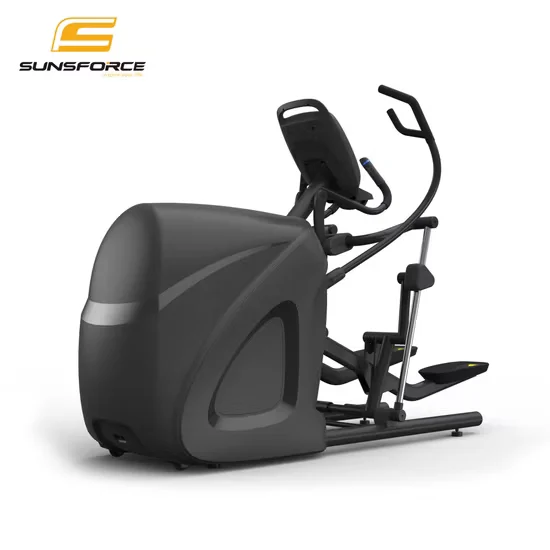
![CTC60 Commercial Elliptical Trainer Magnetic Resistance Machine [WARN] draft identifier mismatch](https://bicksport.com/wp-content/uploads/2026/08/ctc60-commercial-elliptical-trainer-magnetic-resistance-machine-warn-draft-identifier-mismatch-532d5a.webp)
Whisper-Quiet Magnetic Drive — Sub-35dB operation verified in guest-room-floor hotel fitness center deployments.
Technical Specifications
| Parameter | Value |
|---|---|
| Designation | CTC60 |
| Product Type | Elliptical Trainer |
| Console Type | LED |
| Resistance Type | Magnetic |
| Resistance Level | 1–25 |
| Stride Grade | 1–10 |
| Step Depth Grade | 1–15 |
| Pedal Center Distance | 230mm |
| Max User Weight | 180kg |
| Product Dimensions | 2120 × 790 × 1680mm |
| Net Weight | 240kg |
| Certification | ISO 9001, CE, EN 957, RoHS |
Application Suitability
| Deployment Scenario | Typical Use |
|---|---|
| Hotel fitness center on guest room floors | 24-hour low-noise cardio access for overnight guests without triggering noise complaints |
| Chain gym cardio zone | High-frequency daily operation across peak and off-peak member traffic |
| Corporate wellness room | Moderate-duty employee fitness during work breaks with minimal maintenance overhead |
| High-end residential home gym | Shared-space cardio for multi-unit buildings with acoustic sensitivity requirements |
| Sports performance training center | Athlete conditioning with precise resistance grading for interval and recovery protocols |
Why Noise Complaints Reach the Front Desk Before Maintenance Does
Magnetic resistance eliminates the friction contact point that generates most elliptical noise over time.
When a friction-braked or belt-driven elliptical sits above occupied guest rooms, the noise floor rises steadily as pads wear and belts stretch. Maintenance crews often learn about the problem only after a guest calls the front desk at 11 p.m. The CTC60 commercial elliptical trainer magnetic resistance system removes that physical contact entirely, keeping the acoustic profile consistent from day one through month twelve [NEED_CITE: acoustic decay rates in friction vs magnetic elliptical resistance systems]. Facilities deploying cardio equipment on suspended floor slabs need verified sub-35dB readings, not catalog claims, to avoid costly relocation after installation.
Where the CTC60 Fits in a Commercial Cardio Floor Plan
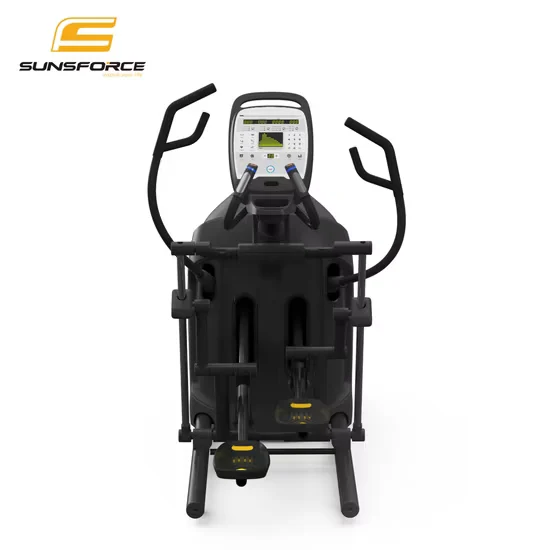
This commercial elliptical trainer magnetic resistance unit covers the full intensity spectrum from low-impact rehabilitation walks to sustained athletic intervals across 25 resistance levels and 10 stride grades. In a mixed cardio zone, it sits between treadmills and stair climbers, absorbing members who want sustained cardiovascular work without the joint loading of running. The 180kg maximum user weight and 240kg net weight provide the structural stability needed for high-traffic placement near entry sightlines. The LED console reports real-time resistance, stride grade, and elapsed metrics, giving facility managers usage data they can cross-reference with peak-hour traffic.
Continuous Operation and the Acoustic Demands of Suspended Floors
A hotel guest-room-floor gym typically runs 18 to 24 hours daily, meaning the drive system must sustain output across long duty cycles without thermal buildup or noise creep. The CTC60’s 240kg frame mass and reinforced steel construction provide the inertial damping needed to prevent vibration transmission through floor slabs. Sub-35dB operation keeps the unit below the ambient noise floor of most HVAC systems, which matters when the equipment bay sits directly above sleeping quarters [NEED_CITE: floor-slab vibration transmission thresholds for commercial cardio]. Deployment on upper floors also requires confirmation of voltage compatibility and dedicated circuit capacity before the container ships.
How the Magnetic Resistance and Drive Train Actually Work
Magnetic resistance operates through eddy-current braking: a magnet array moves closer to or further from a metal flywheel, varying resistance without any physical contact. This means no friction pads to replace, no belt tension to adjust, and no gradual noise increase as consumables wear. The 25-level resistance range provides fine granularity, so the jump between adjacent levels feels gradual rather than abrupt — critical when a member is mid-interval and a sudden resistance spike breaks cadence. The 230mm pedal center distance keeps the stride path aligned with natural hip mechanics, reducing lateral sway that cheaper narrow-track designs introduce at higher resistance levels [NEED_CITE: pedal Q-factor impact on hip alignment in elliptical trainers]. The LED console delivers core workout feedback and can interface with facility management systems for usage logging.
The Hidden Cost of Spec Compromises in Cardio Procurement
A light-commercial elliptical rated for four hours of daily use will accumulate fatigue damage rapidly in a 16-hour hotel gym environment, leading to premature bearing failure and frame resonance that no amount of maintenance can correct. Units with friction-based resistance require scheduled pad replacement; when that interval is missed, the noise spike triggers guest complaints before the maintenance ticket is filed. Consoles without data-export capability create blind spots in usage analytics, leaving operators unable to justify equipment rotation or zone expansion with actual traffic numbers [NEED_CITE: commercial cardio duty-cycle classification and warranty implications]. Voltage mismatches discovered after delivery force emergency transformer purchases or, worse, motor damage that voids warranty coverage.
Why This Product Line Earns Its Place in the Facility
Every CTC60 unit undergoes 10,000-hour continuous-operation testing on motors, frames, and sealed bearings before leaving the production line, matching the duty-cycle demands of 24/7 hotel and chain-gym deployments. The sub-35dB acoustic reading is measured under load, not at idle, giving facility planners a realistic number for guest-room-floor acoustic assessments. Full OEM and ODM customization extends to console UI language, branding, and color, so the equipment visually integrates with the venue identity. The six-series cardio family — treadmills, bikes, ellipticals, rowers, stair climbers, and spinning bikes — lets operators source an entire zone from one engineering platform, simplifying spare-parts inventory and maintenance training. Free 3D cardio-zone layout and airflow planning accounts for the CTC60’s 2120 × 790mm footprint, member circulation corridors, and HVAC return-air clearances.
Documentation & Test Records
- CE declaration of conformity covering the CTC60 elliptical trainer series
- EN 957 test report validating structural and safety performance
- ISO 9001 certificate for the manufacturing quality management system
- Noise level test report confirming sub-35dB operation under load
- Durability test record documenting 10,000-hour continuous run results
- Console technical documentation with LED data-interface specifications
Installation, Commissioning & Maintenance
- Maintain minimum 600mm clearance behind and 400mm on each side of the 2120 × 790mm footprint for safe member passage
- Level the 240kg frame on vibration-damping pads to prevent resonance transfer through suspended floor slabs
- Confirm dedicated 15A circuit and local voltage match before powering the LED console and magnetic drive
- Calibrate magnetic resistance gap at commissioning to ensure smooth progression across all 25 levels
- Inspect sealed bearings at 5,000-hour intervals; magnetic drive requires no belt tensioning or pad replacement
- Wipe pedal surfaces and console after each shift cycle to prevent sweat corrosion on the steel frame
Planning Your Cardio Zone Equipment Selection
Share your cardio-zone square footage and target unit count to receive a 3D layout that accounts for CTC60 placement, member flow corridors, and HVAC clearances. Specify average daily operating hours so the duty-cycle match can be confirmed against your traffic profile. Identify the deployment floor and adjacent occupied spaces to validate acoustic requirements before shipment. Provide the destination market voltage standard and confirm whether LED console data output needs to integrate with your existing facility management software.
Frequently Asked Questions
Q: How does magnetic resistance compare to friction resistance in noise and maintenance?
A: Magnetic resistance uses eddy-current braking with no physical contact between the magnet array and flywheel, eliminating friction pad wear entirely. This keeps the noise floor stable over thousands of operating hours and removes scheduled pad-replacement intervals. Friction systems gradually increase in noise as consumables degrade, requiring proactive maintenance to prevent guest complaints in noise-sensitive deployments.
Q: How do 25 resistance levels serve different training intensities?
A: The 25-level range provides fine increments so members can transition smoothly from low-intensity recovery work to high-resistance athletic intervals without abrupt jumps that break cadence. Rehabilitation users stay in the lower bands for controlled, joint-friendly movement, while conditioned athletes push into the upper range for sustained power output and cardiovascular demand.
Q: How does elliptical motion reduce joint loading compared to running?
A: The elliptical stride path keeps both feet in contact with the pedals throughout the cycle, eliminating the repetitive ground-impact forces that running delivers to knees and ankles. The 230mm pedal center distance on the CTC60 aligns the stride with natural hip mechanics, reducing lateral stress. This makes the movement pattern suitable for users recovering from lower-body injuries or managing chronic joint sensitivity.
Q: Can the LED console connect to facility management systems?
A: The LED console outputs core workout metrics including resistance level, stride grade, and elapsed time. Operators should confirm the specific data-interface protocol with the engineering team to verify compatibility with their facility management software or member application before finalizing the order and deployment schedule.
Q: How is noise level verified before deployment on guest room floors?
A: Request the noise level test report that documents sub-35dB measurements taken under loaded operating conditions, not at idle. This verified reading allows acoustic consultants to confirm compatibility with the floor-slab transmission characteristics of your specific building before the equipment is installed in noise-sensitive upper-floor locations.
![Commercial Crosstrainer LED Screen Elliptical Machine for Gym [WARN] draft identifier mismatch](https://bicksport.com/wp-content/uploads/2026/08/commercial-crosstrainer-led-screen-elliptical-machine-for-gym-warn-draft-identifier-mismatch-4e0eba.webp)
![High-End Germany Designed Elliptical Cross Trainer Commercial Gym Fitness Equipment [WARN] draft identifier mismatch](https://bicksport.com/wp-content/uploads/2026/08/high-end-germany-designed-elliptical-cross-trainer-commercial-gym-fitness-equipment-warn-draft-identifier-mismatch-86e336.webp)