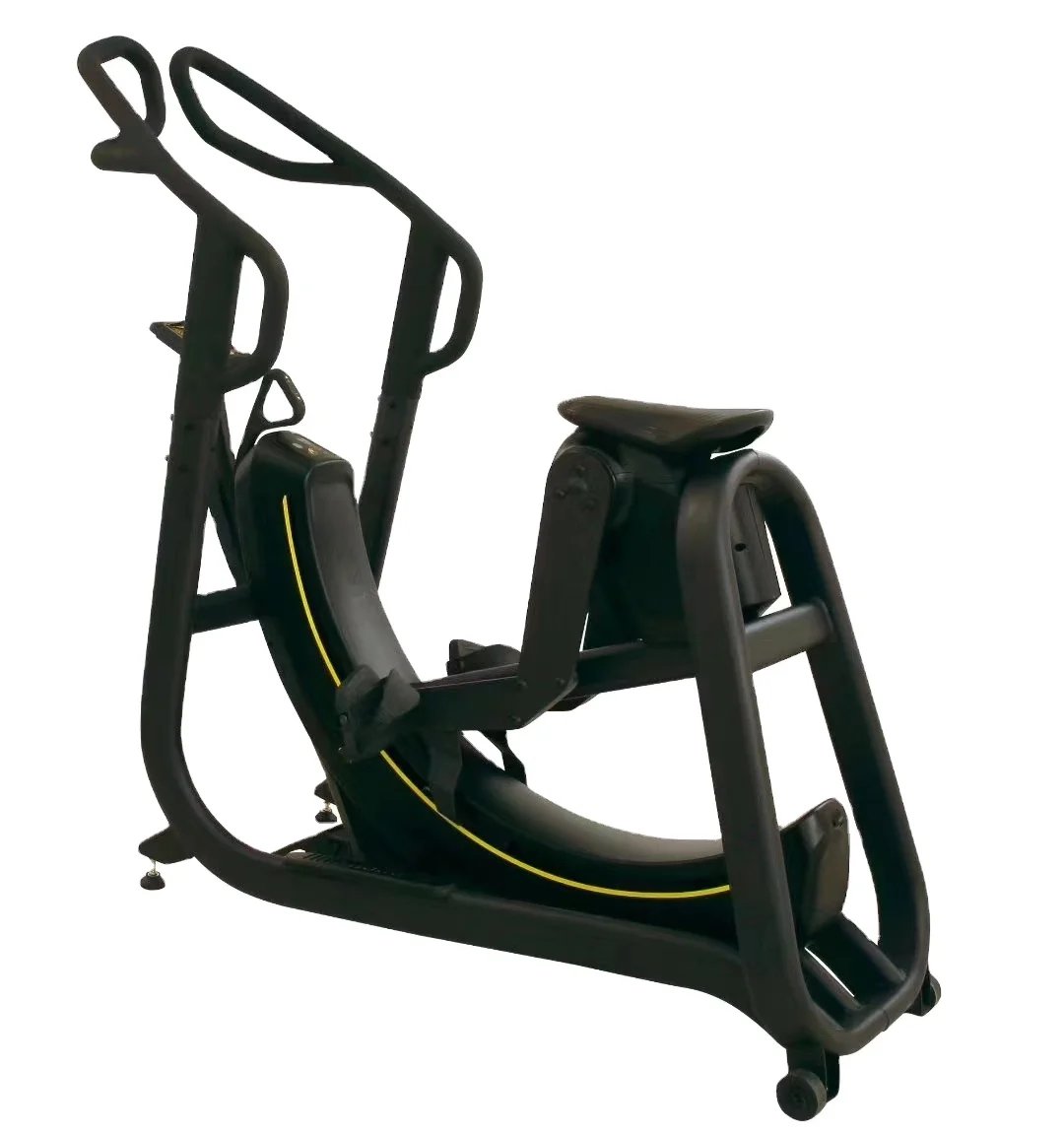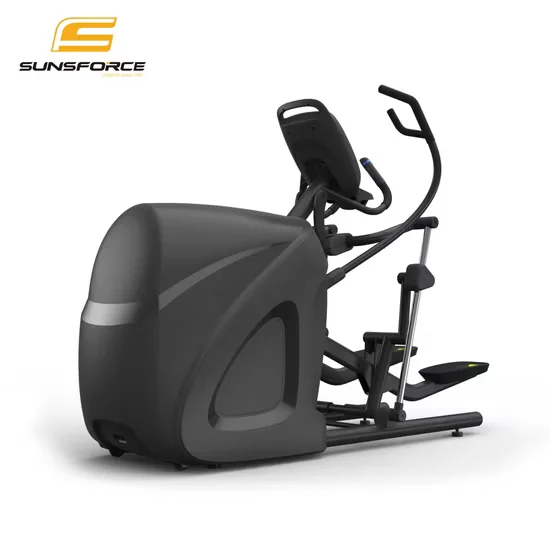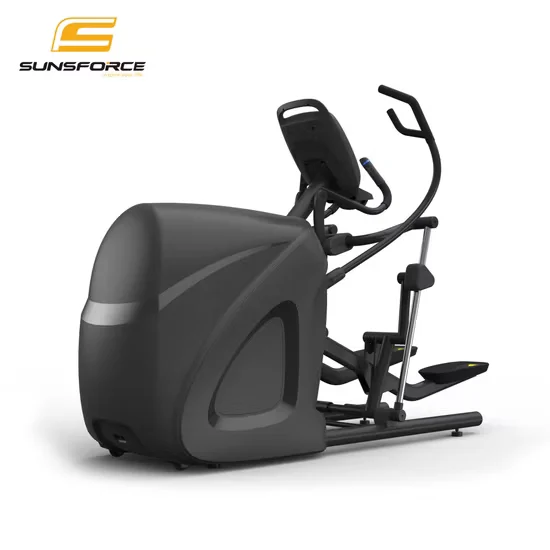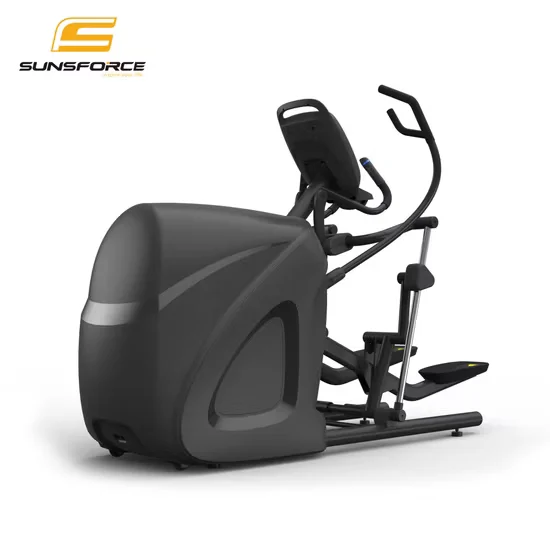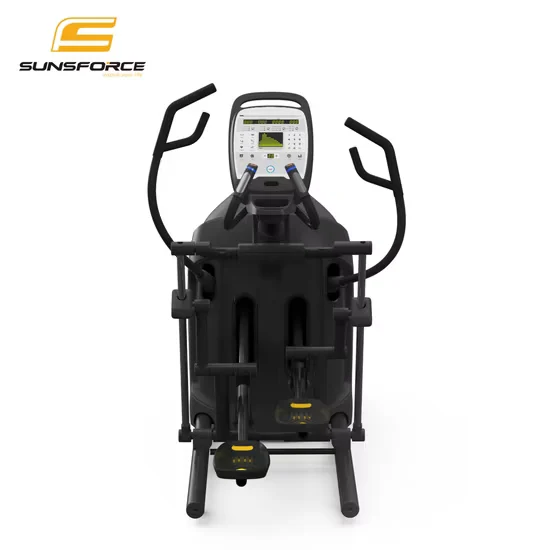
Whisper-Quiet Magnetic Drive — Sub-35dB operation verified through sealed bearing assemblies and non-contact magnetic resistance across all 25 levels.
Technical Specifications
| Parameter | Value |
|---|---|
| Designation | CTC60 |
| Product Type | Cross Trainer / Elliptical Machine |
| Resistance Type | Magnetic |
| Resistance Levels | 1–25 |
| Stride Grade | 1–10 |
| Step Depth Grade | 1–15 |
| Pedal Center Distance | 230mm |
| Console Type | LED |
| Max User Weight | 180kg |
| Net Weight | 240kg |
| Product Dimensions | 2120 × 790 × 1680mm |
| Certification | ISO 9001, CE, EN 957, RoHS |
Application Suitability
| Deployment Scenario | Typical Use |
|---|---|
| Five-star hotel fitness center on guest room floors | 24-hour access cardio with sub-35dB operation to prevent noise complaints from adjacent rooms |
| International gym chain cardio zone | High-frequency elliptical stations rated for continuous rotation across peak and off-peak hours |
| Corporate wellness room | Low-impact cross-training for employees during breaks, covering rehabilitation through interval work |
| High-end residential home gym | Full-range stride and depth adjustment accommodating multiple household users |
| Professional sports training center | Multi-joint angle conditioning with 25 resistance levels supporting structured periodization |
Why Front Desk Complaints Arrive Before Maintenance Notices
Magnetic resistance eliminates the friction noise that triggers guest calls at midnight.
When friction-based ellipticals run eight or more hours daily in hotel fitness rooms, the brake pad wears unevenly and begins producing a rhythmic scraping sound that travels through floor slabs. Guests on the floor below report it before the maintenance team ever logs a ticket. The commercial cross trainer magnetic resistance elliptical machine avoids this failure mode entirely — the magnetic field creates resistance without physical contact, so the sound profile stays consistent from day one through year three [NEED_CITE: long-term noise stability of magnetic vs friction resistance in commercial cardio].
Positioning Within a Multi-Station Cardio Layout
This elliptical trainer fills the low-impact, full-body conditioning slot between treadmills and recumbent bikes. The 230mm pedal center distance and adjustable stride grade accommodate users from rehabilitation populations through athletes running high-resistance intervals. In a typical cardio zone, it pairs with treadmill stations for members who want upper-body engagement without the joint loading of running. The 180kg max user weight and 240kg net weight keep the frame planted during aggressive stride changes. The commercial cross trainer magnetic resistance elliptical machine collects basic performance metrics through the LED console, and the data architecture supports future integration with facility management systems.
Continuous Duty Cycles and Deployment Environment Checks
A hotel cardio room running around the clock demands equipment that tolerates near-continuous occupancy. The 240kg frame mass and sealed bearing specification are designed for this duty profile, but deployment still requires attention to subfloor rigidity and ambient ventilation. Units placed on upper floors above occupied rooms benefit from anti-vibration pads rated for the machine’s operating weight. Voltage and plug standards must match the destination market before the container ships — discovering a mismatch after delivery delays commissioning by weeks [NEED_CITE: voltage standard verification for commercial fitness equipment export]. The LED console draws minimal power compared to touchscreen alternatives, reducing thermal load in enclosed fitness rooms with limited HVAC capacity.
Magnetic Drive and Frame Engineering Explained
Magnetic resistance operates through eddy current braking — a magnet assembly moves closer to or farther from the flywheel without touching it, which means there is no consumable brake pad to replace. The 25-level range spans from rehabilitation-grade light resistance through heavy interval loads. The stride grade adjustment alters the pedal path angle across 10 positions, while the 15-step depth grade changes the vertical excursion of each stride, allowing users to shift emphasis between glute-dominant and quad-dominant movement patterns. The LED console provides real-time feedback on time, distance, speed, and resistance level without the thermal output or maintenance burden of a touchscreen. The 230mm pedal center distance sits within the range biomechanists associate with natural gait width, reducing lateral knee stress compared to wider Q-factor designs.
The Hidden Cost of Specifying Below Commercial Grade
Facilities that install light-commercial ellipticals in high-traffic zones typically see bearing noise emerge within months as seals degrade under continuous load. When that noise migrates to guest rooms or residential units below, the operator faces a choice between relocating the entire cardio zone or absorbing the complaint volume. Units with friction-based resistance require periodic pad replacement and recalibration — downtime that removes equipment from the floor during revenue hours. Consoles that lack data interface capability leave usage patterns invisible, preventing operators from identifying underperforming stations or scheduling maintenance based on actual run-time rather than calendar intervals [NEED_CITE: commercial cardio maintenance scheduling based on usage data vs calendar intervals].
Why This Product Line Fits the Facility Plan
The sub-35dB noise floor has been verified in hotel deployments where cardio equipment sits directly above sleeping guests. Every unit undergoes 10,000-hour continuous operation testing on motors, frames, and bearings before leaving the production line. The six-series cardio family means a facility can source treadmills, bikes, ellipticals, rowers, climbers, and spin bikes from a single engineering platform, simplifying spare parts inventory. OEM customization extends to console UI, color, and specification adjustments at flexible minimum order quantities. The 3D cardio zone layout service covers the footprint, clearance, and airflow requirements specific to this machine’s 2120 × 790mm footprint and ventilation profile. Technical support responds around the clock with spare parts documentation available from day one.
Documentation & Test Records
- CE declaration of conformity covering electromagnetic compatibility and safety
- EN 957 test report validating structural and mechanical performance
- ISO 9001 certificate for manufacturing quality management
- Noise level test report confirming sub-35dB operating profile
- Durability test record documenting 10,000-hour continuous operation validation
- Console technical documentation with data interface specifications
Installation, Commissioning & Maintenance
- Maintain minimum clearance around the 2120 × 790mm footprint per the installation guide
- Level the floor surface and fit anti-vibration pads beneath all four stabilizer feet
- Connect to a dedicated circuit matching the destination market voltage standard
- Calibrate magnetic resistance alignment during first power-on to verify level linearity
- Inspect sealed bearings at intervals specified in the maintenance schedule
- Clean LED console surface with non-solvent cleaner to prevent sweat corrosion
Request a Facility-Specific Deployment Plan
Share your cardio zone floor area and target equipment count to receive a 3D layout with clearance and airflow mapping for the CTC60. Specify expected daily run-time so the duty-cycle profile can be matched to your traffic pattern. Confirm the deployment floor and adjacent room types to validate the noise isolation requirement. State the destination market voltage and plug standard to ensure electrical compatibility before shipment. Indicate whether console data output needs to interface with your existing facility management platform.
Frequently Asked Questions
Q: How does magnetic resistance compare to friction resistance in noise and maintenance?
A: Magnetic resistance uses eddy current braking with no physical contact between the magnet and flywheel, so there is no brake pad wear and no scraping noise development over time. Friction systems require periodic pad replacement and recalibration, which means scheduled downtime. In environments where equipment runs continuously, magnetic drive maintains a consistent acoustic profile throughout its service life.
Q: Why does the 240kg net weight matter for commercial deployment?
A: A heavier frame mass resists lateral oscillation when users change stride direction or push high resistance levels. In a busy gym where members rotate through quickly and may not ease into the machine gently, the 240kg structure stays planted on the floor without rocking. This structural stability also supports the 180kg maximum user weight rating without frame deflection.
Q: Can the LED console interface with facility management software?
A: The LED console displays real-time training data and is engineered with a data architecture that supports future integration with facility management systems and member applications. Specific interface protocols and compatibility should be confirmed during the specification phase to match your existing software platform and data collection requirements.
Q: How do stride and depth adjustments affect training variety?
A: The 10-level stride grade changes the pedal path angle, while the 15-level step depth grade alters vertical excursion. Adjusting these parameters shifts muscle emphasis and joint angles, allowing a single commercial cross trainer magnetic resistance elliptical machine to serve users pursuing rehabilitation, steady-state conditioning, or high-intensity interval work without requiring multiple dedicated machines.
Q: What noise and electrical checks are needed before deploying on hotel guest floors?
A: Verify the sub-35dB operating specification against your floor slab transmission characteristics, as structural coupling varies between buildings. Confirm voltage, frequency, and plug type match the destination market standard. Anti-vibration pads rated for the machine operating weight should be installed to decouple the frame from the floor structure above occupied rooms.