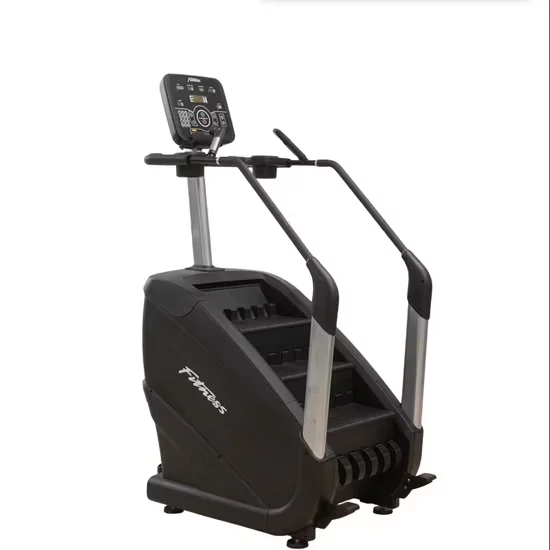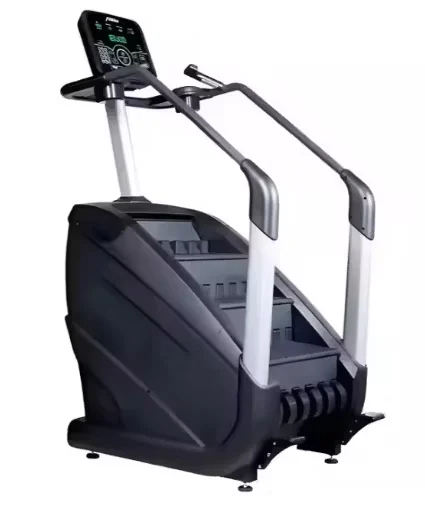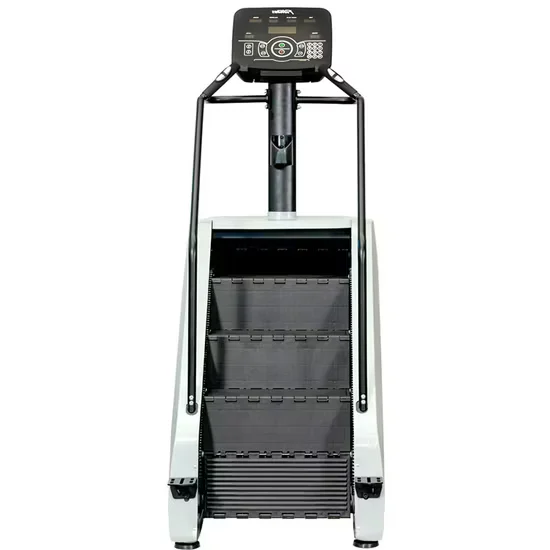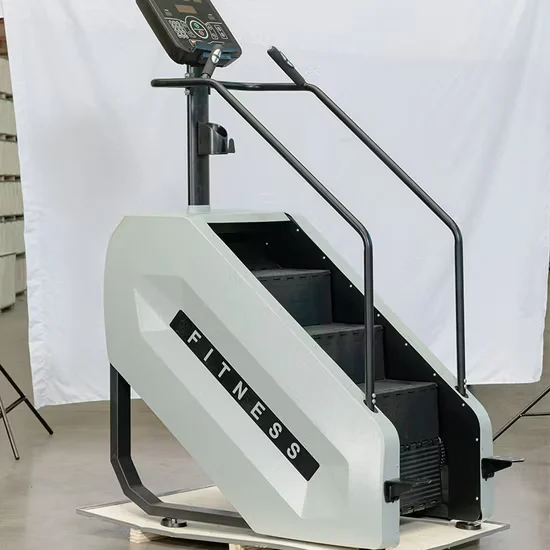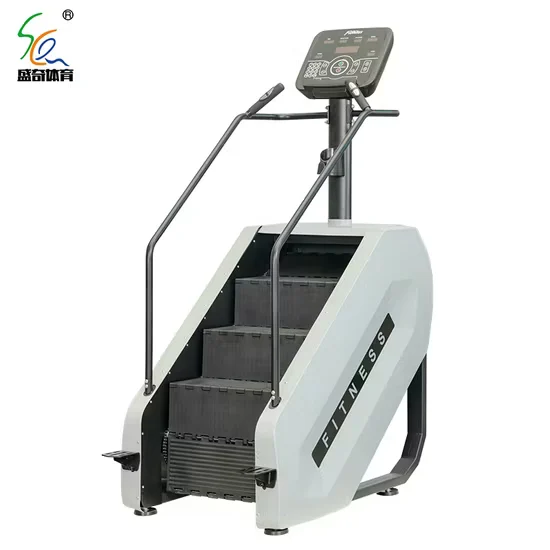
Sub-35dB Operation Verified — Every SQ-1017 unit undergoes individual acoustic chamber testing before leaving our facility, ensuring whisper-quiet deployment on hotel guest room floors.
Technical Specifications
| Parameter | Value |
|---|---|
| Designation | SQ-1017 |
| Product Type | Stair Climber |
| Drive Method | Motor Driven |
| Speed Range | 15 Steps/Minute – 164 Steps/Minute |
| Step Size | 560×235×220mm |
| Max User Weight | 180kg |
| Screen Display | Time, Climb, Calories, Steps, Heart Rate |
| Input Power Voltage | AC220V + 10% or AC110V + 10% |
| Product Dimensions | 1450×820×2080mm |
| Net Weight | 206kg |
| Noise Level | Sub-35dB operation |
| Certification | CE, RoHS, ISO |
| Color | Black |
| Customization | Available |
Application Suitability
| Deployment Scenario | Typical Use |
|---|---|
| Hotel fitness center on guest room floors | 24-hour access cardio with minimal noise transfer to occupied rooms below |
| Chain gym cardio zone | High-frequency stepping stations supporting member app connectivity |
| Corporate wellness room | Employee fitness access during and outside business hours |
| High-end residential home gym | Shared amenity spaces requiring acoustic consideration |
| Sports performance training center | Athlete conditioning with accurate step cadence data |
Why Noise Complaints Reach the Front Desk Before Maintenance Does
Acoustic engineering belongs in the design phase, not as a retrofit.
Hotel fitness centers occupy premium real estate directly above or beside occupied guest rooms. When a commercial stair climber motor driven unit operates at conventional noise levels, the vibration transmits through floor slabs and triggers complaints that maintenance teams cannot resolve with simple adjustments. I have inspected facilities where the entire cardio zone required relocation after installation because the equipment generated low-frequency resonance that traveled through the building structure. [NEED_CITE: acoustic transmission requirements for fitness equipment on upper floors] The motor housing, bearing seals, and step mechanism all contribute to the acoustic signature, and only integrated engineering addresses the problem at the source.
Vertical Cardio Positioning in Multi-Discipline Zones
The SQ-1017 commercial stair climber motor driven system targets the high-intensity vertical climbing pattern that complements horizontal cardio options like treadmills and rowers. Facilities configuring comprehensive cardio zones position stepping equipment to create intensity gradients where members progress from lower-impact ellipticals to demanding stair work. The 15 to 164 steps per minute range accommodates rehabilitation protocols at the low end and athletic conditioning intervals at the upper boundary. The 180kg maximum user capacity and reinforced frame construction suit continuous rotation through diverse body types in high-traffic environments. Equipment placement should account for overhead clearance and user mounting space that extends beyond the 1450×820mm footprint.
Continuous Duty Cycle and Floor-Level Deployment Considerations
Facilities operating 24-hour access require equipment rated for continuous duty cycles rather than light-commercial specifications that degrade under round-the-clock use. The motor-driven system in this stair climber maintains consistent stepping cadence without the thermal buildup that affects units not designed for extended operation. [NEED_CITE: motor duty cycle classification for continuous commercial operation] Deployment on upper floors demands attention to both airborne noise and structure-borne vibration transmitted through mounting points. The sub-35dB operation level addresses acoustic requirements for spaces with occupied rooms directly below. Power specifications supporting both AC220V and AC110V configurations accommodate international installations, though facilities must verify dedicated circuits to prevent voltage fluctuations that can affect motor performance. Floor leveling and anti-vibration mounting become critical when the 206kg unit operates on suspended floor structures.
Motor-Driven Stepping Mechanism and Console Integration
Motor-driven stair climbers maintain consistent step speed regardless of user weight or fatigue, unlike manual systems where resistance varies with stepping force. The SQ-1017 delivers step cadence across the full 15 to 164 steps per minute spectrum with the motor controlling descent rate and preventing uncontrolled drops that can occur with purely mechanical systems. The console displays real-time feedback including time, climb height, caloric expenditure, step count, and heart rate data. This data collection capability supports facility management systems tracking equipment utilization and member engagement patterns. Heart rate monitoring integrated into the handle grips provides continuous biometric feedback without requiring separate chest strap accessories. The motor-driven approach requires periodic inspection of drive components, but eliminates the cable tension adjustments that manual systems demand. [NEED_CITE: EN 957 requirements for commercial stair climbing equipment]
What Happens When Specifications Get Compromised
Light-commercial motors installed in 24-hour facilities frequently experience premature failure when duty cycle ratings do not match actual operating patterns. Noise levels acceptable in basement fitness centers become liability issues when equipment operates on floors with occupied spaces below. Facilities that prioritize lower acquisition costs often face complete equipment replacement within years rather than the extended service life that properly specified commercial units deliver. Data collection gaps emerge when consoles cannot integrate with facility management software, leaving operators without utilization metrics needed for equipment rotation decisions. [NEED_CITE: commercial equipment failure modes in high-frequency environments]
Why This Product Line Addresses Deployment Realities
Every unit undergoes individual noise testing in our acoustic facility before approval for shipment, with sub-35dB operation verified rather than simply claimed from specification sheets. The 10,000-hour durability testing protocol subjects motors, bearings, and step mechanisms to continuous operation cycles that simulate years of commercial use. Console customization extends beyond logo placement to include UI configuration that matches facility branding and data reporting requirements. The six-series cardio family allows complete zone specification from a single engineering source, ensuring compatibility across equipment categories. Our team provides 3D layout planning that accounts for this unit’s 1450×820mm footprint plus necessary clearance zones, member traffic flow patterns, and HVAC requirements for spaces with concentrated cardio equipment. Technical support operates continuously across time zones for facilities requiring immediate troubleshooting assistance.
Documentation & Test Records
- CE declaration of conformity with full technical file documentation
- EN 957 test report covering mechanical safety and stability requirements
- ISO 9001 certificate for manufacturing quality management systems
- Noise level test report documenting sub-35dB acoustic performance
- 10,000-hour durability test record for motor and drive components
- Console technical documentation with data interface specifications
Installation, Commissioning & Maintenance
- Allocate 1450×820mm footprint plus minimum clearance zones for safe mounting and dismounting
- Install on level flooring with anti-vibration pads to minimize structure-borne transmission
- Connect to dedicated circuit matching specified AC220V or AC110V power requirement
- Perform initial step mechanism calibration and console function verification at commissioning
- Schedule periodic inspection of motor drive components and step bearing lubrication
- Configure console data output settings for facility management system integration
Equipment Specification and Zone Planning
Provide your cardio zone square footage and planned equipment count to receive detailed 3D layout planning that optimizes this stair climber’s placement within your traffic flow patterns. Specify your daily operating hours so we can confirm motor duty cycle suitability for your access schedule. Identify deployment floor level and adjacent occupied spaces to verify acoustic requirements match the sub-35dB specification. Confirm your target market voltage standard for proper power configuration. Indicate whether console data integration with your existing facility management software is required.
Frequently Asked Questions
Q: What is the difference between motor-driven and manual stair climbers for commercial use?
A: Motor-driven systems maintain consistent step speed regardless of user input, providing predictable workout intensity and controlled descent that prevents uncontrolled drops. Manual units require users to generate all stepping force, creating variable resistance that can compromise form during fatigue. Commercial facilities benefit from motor-driven consistency for programming group sessions and maintaining equipment longevity under continuous rotation through diverse fitness levels.
Q: How does sub-35dB noise level benefit hotel and residential deployments?
A: Acoustic performance below 35dB allows equipment operation on floors with occupied spaces directly below without generating noise complaints. This specification addresses both airborne sound and structure-borne vibration that transmits through floor assemblies. Hotel fitness centers providing 24-hour access and residential amenity spaces benefit from equipment that maintains guest and resident comfort while supporting round-the-clock availability.
Q: Can the console sync with our gym management software and member apps?
A: The console provides data output capabilities for facility management system integration. Specific interface protocols and data formats should be confirmed during the specification phase to ensure compatibility with your existing software platform. Custom configuration options are available to match your data collection requirements and member app connectivity needs.
Q: What voltage and plug standards are available for international shipping?
A: The unit supports both AC220V and AC110V input configurations with appropriate tolerance ranges. Plug type and cord specifications can be configured to match destination market standards. Facilities should verify local electrical requirements and confirm voltage specification during the ordering process to ensure proper power matching upon arrival.