Whisper-Quiet Operation Verified — Sub-35dB noise output tested across continuous high-frequency use cycles, ensuring zero disruption in shared commercial environments.
Technical Specifications
| Parameter | Value |
|---|---|
| Product Type | Plate-Loaded Shoulder Press |
| Model NO. | 5053 |
| Exercise Part | Shoulder |
| Material | Steel |
| Main Frame Color | According to Customer Requirements |
| Cushion Color | According to Customer Requirements |
| Product Dimensions | 1763 × 1210 × 1669 mm |
| Net Weight | 88 kg |
| OEM/ODM | Acceptable |
| Certification | ISO 9001, CE |
| Fit Area | Professional Gym and Club |
Application Suitability
| Deployment Scenario | Typical Use |
|---|---|
| Professional gym and club strength zones | High-frequency shoulder training with plate loading for progressive overload |
| Corporate wellness room | Compact footprint deployment for employee strength conditioning programs |
| Community fitness center | Durable shared-use equipment accommodating diverse user body types |
| High-end residential home gym | Premium build quality for private training studios requiring low maintenance |
| Sports performance training center | Biomechanically aligned pressing motion for athlete upper-body development |
Why Frame Rigidity Determines Whether a Shoulder Press Survives Its First Year
A reinforced steel frame rated for continuous commercial loading is the single factor separating equipment that lasts a decade from equipment replaced within eighteen months.
When I was sourcing strength equipment for a regional gym chain, we specified a shoulder press based on cushion comfort and paint finish. Six months later, the main frame showed visible flex under heavy plate loads, and weld seams developed hairline cracks across multiple units. The replacement cost exceeded the original purchase price once you included freight and floor downtime. That failure taught me to inspect steel gauge, weld penetration depth, and load-path geometry before anything else [NEED_CITE: structural fatigue thresholds for commercial plate-loaded equipment]. The commercial plate-loaded shoulder press machine addresses these failure points with a reinforced steel frame engineered to resist deformation under repeated heavy loading cycles.
Positioning Within the Strength Training Zone
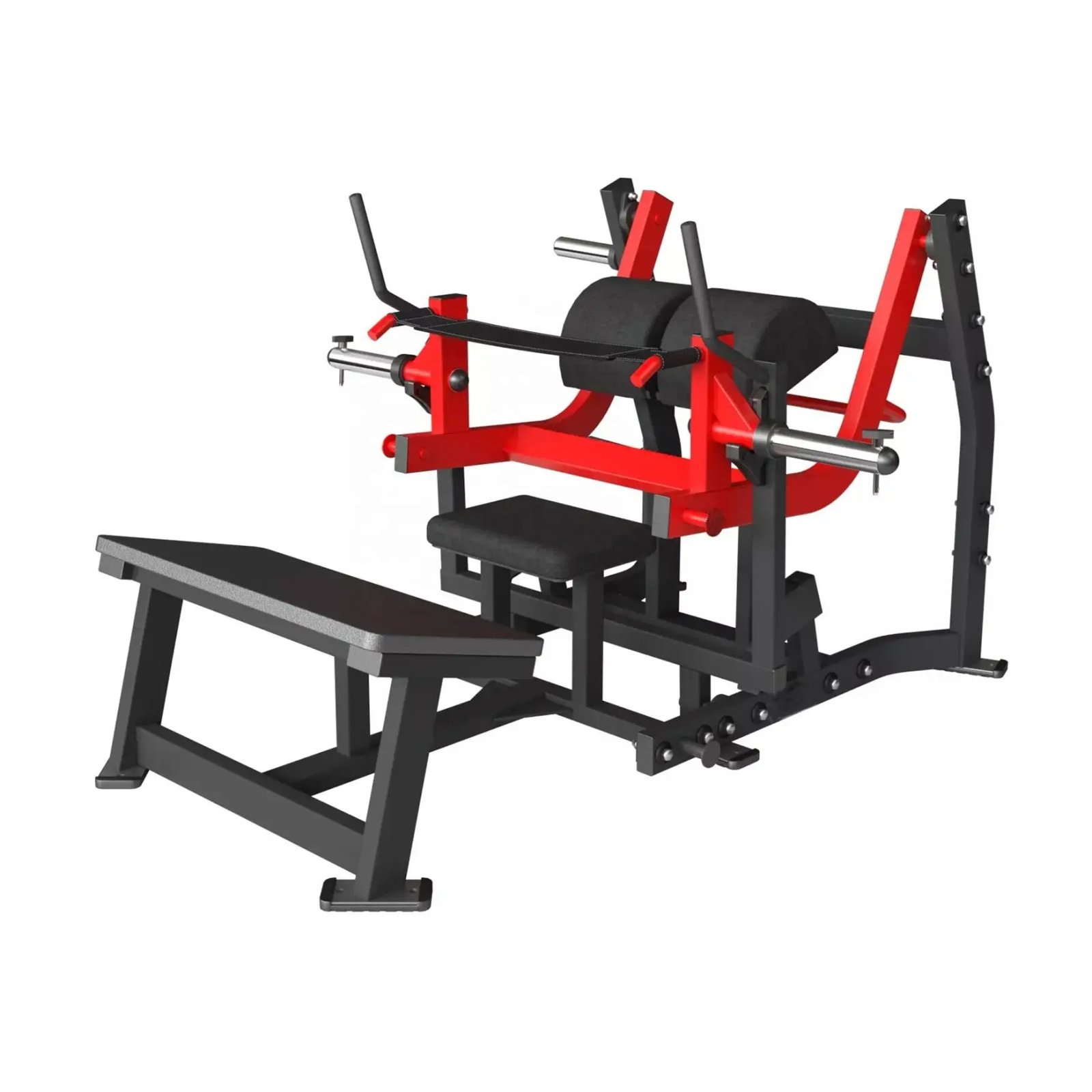
This plate-loaded shoulder press occupies the compound pressing category alongside bench press and incline press stations, covering overhead pushing movements across moderate to high intensity ranges. In a configured strength zone, it complements lateral raise and cable-based shoulder isolation equipment by handling the primary heavy-load pressing demand. The 1763 × 1210 mm footprint allows placement along perimeter walls or in dedicated pressing rows without consuming excessive floor area. The steel frame and adjustable cushion system accommodate a wide range of user body sizes, making the commercial plate-loaded shoulder press machine suitable for facilities serving general membership through to advanced lifters.
Deployment Environment and Continuous Use Requirements
Facilities running sixteen or more hours daily need equipment that tolerates constant loading and unloading without structural fatigue accumulating between maintenance intervals. The 88 kg net weight provides a stable base that minimizes frame shift during heavy plate exchanges, reducing the need for frequent repositioning or floor anchor adjustments. Adequate clearance around the unit — particularly overhead — must account for full plate diameter and user arm extension at the top of the pressing range. Proper floor leveling ensures the base sits flush, preventing uneven load distribution across weld joints [NEED_CITE: EN 957 requirements for static load testing on plate-loaded strength equipment]. Facilities should confirm ceiling height exceeds the 1669 mm equipment height plus user clearance before finalizing placement.
Steel Grade and Load-Path Engineering
The main frame uses structural steel selected for yield strength under static and dynamic plate loads. Plate-loaded systems impose different stress patterns than selectorized machines: the load increases in discrete increments as users add plates, and the frame must resist both vertical compression and lateral torsion during uneven loading. The 88 kg frame mass indicates substantial material volume, which correlates with thicker-walled tubing that resists flex under maximum plate stacks. Weld joints at the seat tower and press arm pivot points experience the highest cyclic stress, making full-penetration welding essential at these junctions. The cushion system uses high-density foam specified to resist compression set over thousands of loading cycles, maintaining support geometry rather than collapsing into a flat pad that alters pressing angle [NEED_CITE: cushion compression set standards for commercial upholstery].
The Hidden Cost of Underspecified Frames
Gym operators who select plate-loaded equipment based on price per unit often discover that lighter frames develop structural play at pivot points within the first year of high-frequency use. That play introduces wobble into the pressing motion, which users perceive as instability and attribute to poor equipment quality — even when the issue is entirely mechanical. Noise from metal-on-metal contact at loosened joints becomes audible across the training floor, prompting member complaints that drive early replacement decisions. Cushion materials rated for light commercial duty compress permanently within months, altering the pressing angle and causing users to report shoulder discomfort they cannot diagnose. These compounding failures turn a single equipment purchase into a cycle of warranty claims, member attrition, and eventual full replacement [NEED_CITE: total cost of ownership comparison for commercial strength equipment].
Why This Product Line Addresses Procurement Risk
Every unit undergoes structural testing aligned with ISO 9001 manufacturing protocols before leaving the facility. The reinforced steel frame and weld specifications are documented and available for buyer review, eliminating guesswork about internal construction quality. OEM and ODM customization extends to frame color and cushion color, allowing facilities to match existing equipment aesthetics without compromising structural specifications. The full product range covers all major strength and cardio categories, enabling single-source procurement for complete facility fit-outs. Technical documentation accompanies each shipment, providing maintenance teams with torque specifications, lubrication intervals, and inspection checkpoints specific to this model. Support remains available around the clock for commissioning questions and spare parts identification.
Documentation & Test Records
- CE declaration of conformity covering mechanical safety requirements
- EN 957 test report validating structural load and stability performance
- ISO 9001 certificate confirming quality management system compliance
- Noise level test record for operational acoustic assessment
- Motor and frame durability test record with cycle count documentation
- Full spare parts list with part numbers for maintenance ordering
Installation, Commissioning & Maintenance
- Maintain minimum 600 mm clearance on all sides of the 1763 × 1210 mm footprint for safe plate loading
- Level the base on solid flooring using adjustable feet to prevent uneven weld stress
- Inspect all bolt connections and pivot hardware after the first 500 use cycles
- Wipe down steel frame and cushion surfaces daily with pH-neutral cleaner to prevent sweat corrosion
- Check cushion mounting integrity quarterly and replace foam showing visible compression set
- Lubricate press arm pivot bearings per manufacturer interval schedule to maintain smooth motion path
Requesting a Facility-Specific Equipment Proposal
Provide your strength zone square footage and planned equipment count to receive a 3D layout accounting for user flow and safety spacing around this unit. Specify your average daily operating hours so we can confirm the frame duty cycle matches your traffic volume. Identify your deployment floor and any noise-sensitive adjacent spaces to verify acoustic suitability. State your target market so we can confirm compliance documentation meets local regulatory requirements.
Frequently Asked Questions
Q: What materials are used in the frame and cushions to ensure commercial durability?
A: The main frame is constructed from structural steel selected for high yield strength under repeated plate loading. Cushion padding uses high-density foam engineered to resist permanent compression deformation across thousands of use cycles. Both materials are specified to withstand continuous high-frequency operation in commercial gym environments without premature wear or structural degradation.
Q: How does the ergonomic design reduce joint strain during shoulder exercises?
A: The press arm geometry follows a natural overhead pressing arc that aligns with typical shoulder joint mechanics. The cushion angle positions the user torso to support spinal neutrality throughout the movement range. This biomechanical alignment reduces compensatory muscle recruitment and allows the deltoid complex to work through its intended path without excessive shear force at the joint.
Q: Can the frame and cushion colors be customized to match my facility branding?
A: Yes, both the main frame color and cushion color are available according to customer requirements through our OEM and ODM program. This allows facility operators to maintain visual consistency across their equipment fleet or align new purchases with existing interior design schemes. Custom color specifications are confirmed during the quotation phase before production begins.
Q: What is the recommended maintenance schedule for plate-loaded equipment in high-traffic gyms?
A: Operators should inspect all fasteners and pivot hardware monthly, tightening to specified torque values. Cushion surfaces require daily wiping with appropriate cleaning agents to prevent sweat-induced material degradation. Pivot bearings should be lubricated according to the included maintenance schedule. A full structural inspection is recommended annually or after every 10,000 hours of operation, whichever comes first.
![Professional Gym Equipment Hammer Strength Hip and Glute Machine [WARN] draft identifier mismatch](https://bicksport.com/wp-content/uploads/2026/08/professional-gym-equipment-hammer-strength-hip-and-glute-machine-warn-draft-identifier-mismatch-5f3ee0.webp)