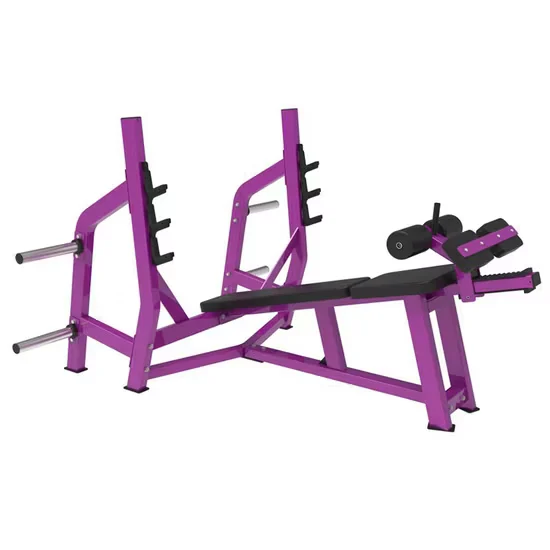
10,000-Hour Durability — Steel frame and sealed bearing assembly tested for continuous high-frequency loading cycles without structural fatigue.
Technical Specifications
| Parameter | Value |
|---|---|
| Product Type | Plate Loaded Strength Machine |
| Model NO. | 5026 |
| Power Source | Manual |
| Resistance Type | Plate Loaded |
| Exercise Part | Leg |
| Frame Material | Steel |
| Max User Weight | 180kg |
| Product Dimensions | 1690 730 750 mm |
| Net Weight | 139kg |
| Certification | ISO 9001, CE |
| Age Group | Adult |
| Gender | Unisex |
Application Suitability
| Deployment Scenario | Typical Use |
|---|---|
| Chain gym cardio and strength zone | High-frequency lower body isolation training |
| Community fitness center | Low-maintenance leg strengthening for general members |
| Hotel fitness facility | Quiet manual resistance for 24-hour guest access |
| Corporate wellness room | Compact footprint for targeted glute and hip work |
| Sports performance training center | Athlete hip stability and abduction conditioning |
Why Manual Resistance Outlasts Motorized Systems in Commercial Spaces
Plate loaded design eliminates electronic failure points entirely.
When a motorized hip abduction machine fails in a busy facility, the root cause is almost always the actuator or control board burning out under constant load adjustments. I have seen electronic selectorized units pulled from gym floors within months because the internal motors were rated for light commercial duty, not the relentless cycling of a public strength zone [NEED_CITE: motor duty cycle classification for continuous commercial operation]. The Plate Loaded Hammer Strength Abductor Machine bypasses this problem by relying on standard Olympic plates and a mechanical pivot system. There is no circuit board to short, no actuator to strip, and no software to freeze. The commercial plate loaded hammer strength abductor machine simply works as long as the steel holds and the bearings roll.
Where This Abductor Fits in the Strength Training Layout
The commercial plate loaded hammer strength abductor machine targets the gluteus medius, gluteus minimus, and hip external rotators through a controlled abduction arc. In a well-planned strength zone, it complements compound movements like squats and lunges by isolating hip stabilizers that free-weight exercises often under-stimulate. It pairs naturally with an adductor machine on the same floor section, allowing members to alternate opposing muscle groups without crossing the facility. The 1690 * 730 mm footprint fits standard spacing grids, and the manual loading system means it can be positioned anywhere without proximity to power outlets. Users ranging from rehabilitation clients to competitive athletes can micro-load resistance in small increments using fractional plates.
Continuous Operation Without Electrical Infrastructure
Because the resistance source is entirely mechanical, this unit has no duty cycle limitation. Facilities operating around the clock face no risk of motor overheating during peak evening hours or overnight solo sessions. The absence of electrical components also removes the need for dedicated circuits, surge protection, or voltage matching across export markets. Floor deployment requires only a level surface with adequate clearance on both sides for plate loading and unloading [NEED_CITE: EN 957 requirements for commercial strength equipment clearance]. Noise transmission to adjacent rooms is minimal since there are no vibrating motors or cooling fans, making the unit suitable for upper-floor hotel fitness centers or residential shared spaces where acoustic complaints reach management quickly.
Mechanical Pivot and Frame Engineering Explained
The steel frame is welded to handle lateral forces generated during loaded abduction repetitions, with the pivot axis aligned to approximate the hip joint’s natural center of rotation. Sealed bearings at the pivot point reduce friction and prevent contamination from sweat and chalk dust that accumulates in open bushing designs. The plate loading horns accept standard Olympic-diameter plates, which distributes weight symmetrically and keeps the resistance curve consistent throughout the range of motion. Unlike cable-based systems where pulley alignment degrades over time, the direct lever arm maintains a predictable load path. The padded thigh contact points are positioned to distribute pressure across a broad surface area, reducing localized discomfort during heavier sets.
The Cost of Underspecifying Strength Equipment
Specifying a plate loaded machine with thin-gauge tubing or unsealed bushings leads to frame flex under heavy loads and pivot wear that introduces wobble into the movement path. I remember reviewing a competitor’s abductor unit where the pivot sleeve had worn oval after eight months of gym use, creating a grinding noise that members reported repeatedly [NEED_CITE: bearing wear patterns in commercial strength equipment]. The facility replaced the entire batch rather than attempting bushing swaps on warped housings. Undersized loading horns that bend under plate weight create a different hazard, potentially dropping plates onto users’ feet during loading. These failures are not maintenance issues; they are specification failures that could have been caught by reviewing weld penetration depth and bearing load ratings before purchase.
Why This Product Line Delivers Reliability
The frame and pivot assembly undergo durability testing calibrated for continuous high-frequency loading cycles, reflecting the demands of commercial deployment. Every unit in the six-series cardio and strength family is engineered from the same material standards, so facilities sourcing multiple disciplines benefit from consistent build quality and warranty terms. OEM customization extends to frame color, pad material, and brand logo placement at flexible minimum order quantities. The 3D layout planning service accounts for the 1690 * 730 mm footprint of this commercial plate loaded hammer strength abductor machine alongside adjacent units, ensuring adequate member flow and safe plate-loading clearance. Technical support responds around the clock for installation queries and long-term parts sourcing.
Documentation & Test Records
- CE declaration of conformity for strength equipment
- EN 957 test report covering structural integrity
- ISO 9001 manufacturing quality certificate
- Steel frame load rating and weld inspection record
- Bearing durability test documentation
- Installation guide with spare parts catalog
Installation, Commissioning & Maintenance
- Maintain minimum clearance on both sides for safe plate loading and member passage.
- Verify floor levelness before anchoring to prevent lateral frame stress during use.
- Inspect sealed pivot bearings quarterly for smooth rotation and absence of play.
- Wipe thigh pads and frame contact points after each session to prevent sweat corrosion.
- Check loading horn retaining collars monthly to secure plates during exercises.
- Confirm all frame bolts are torqued to specification after the first week of operation.
Planning Your Strength Zone Procurement
Share your strength area dimensions and planned unit count to receive a 3D layout addressing equipment spacing and member traffic flow. Specify whether the facility operates continuously or during limited hours so we can align frame testing documentation with your usage intensity. Confirm your target market and any branding requirements early to streamline OEM customization of pad colors and logo placement.
Frequently Asked Questions
Q: How does plate loaded resistance compare to selectorized pin systems?
A: Plate loaded systems rely on mechanical leverage and standard weight plates, eliminating cables, pulleys, and weight stacks that require regular adjustment. Selectorized systems offer quick weight changes via a pin but introduce more wear points including cable fraying and stack alignment issues. For high-frequency commercial environments, plate loaded designs typically demand less scheduled maintenance and provide a more direct resistance feel.
Q: What daily maintenance does this abductor machine require?
A: Staff should wipe down the thigh pads and seat after each use to prevent sweat from degrading upholstery and corroding steel contact points. A weekly visual inspection of the loading horns, pivot area, and frame bolts takes only minutes and catches loosening hardware before it becomes a safety concern. Quarterly bearing checks ensure smooth pivot rotation without lateral play.
Q: How should we plan floor spacing around this unit?
A: Allow adequate clearance on both sides for members to load and unload plates safely without obstructing walkways. The 1690 * 730 mm footprint should be positioned so the loading horns face an open area or aisle rather than a wall or adjacent machine. Including this unit in a 3D layout plan helps verify sightlines and member flow before equipment arrives.
Q: What OEM customization options are available for this machine?
A: Frame color, pad upholstery material and color, and brand logo placement can all be customized to match your facility’s visual identity. Console integration does not apply to this manual unit, but the steel frame can be powder-coated in a range of standard and custom finishes. Minimum order quantities remain flexible for facility-level purchases.

![Hammer Strength Adjustable Bench Machine for Commercial Gym Equipment [WARN] draft identifier mismatch](https://bicksport.com/wp-content/uploads/2026/08/hammer-strength-adjustable-bench-machine-for-commercial-gym-equipment-warn-draft-identifier-mismatch-de2e62.webp)