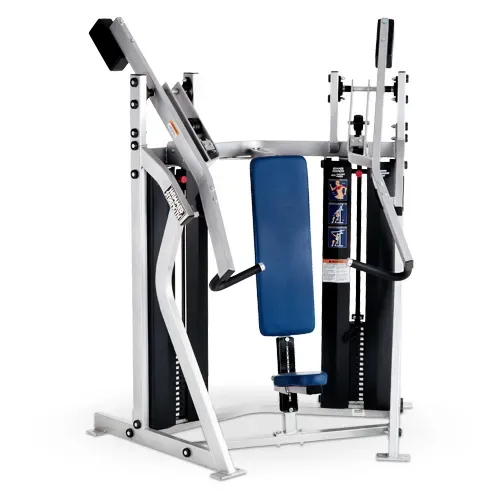
Steel Storage Durability — 2210700800mm reinforced steel frame holds 10 pairs across tiered levels, built for high-traffic free weight zones where daily loading cycles exceed hundreds of picks.
Technical Specifications
| Parameter | Value |
|---|---|
| Product Type | Dumbbell Rack |
| Model NO. | 5070 |
| Material | Steel |
| Capacity | 10 Pairs |
| Product Dimensions | 2210700800mm |
| Net Weight | 66kg |
| Max User Weight | N/A (storage equipment) |
| Certification | ISO 9001, CE |
| OEM/ODM | Available |
| Production Capacity | 500 PCS/Month |
Application Suitability
| Deployment Scenario | Typical Use |
|---|---|
| Professional gym and club strength training areas | Organized free weight access during peak hours with tiered layout |
| Community fitness centers | Shared dumbbell storage supporting high member turnover |
| Hotel fitness facilities | Compact footprint integrating strength equipment in limited floor space |
| Corporate wellness rooms | Clean, accessible dumbbell organization for employee fitness programs |
| Sports training centers | Heavy pair storage for athlete conditioning and warm-up routines |
Why Commercial Dumbbell Rack Steel Storage Machine Failures Start at the Frame Welds
Weld failures under daily loading cycles drive most commercial dumbbell rack steel storage replacements, not paint or cosmetics.
I’ve seen rack tiers sag within six months at community fitness centers where members drop heavy pairs back unevenly. The stress concentrates at the tier-to-upright junction, and once a weld cracks, the entire frame geometry shifts. A gym I worked with in Dubai replaced an entire free weight row because one failed rack tipped during re-racking, pulling adjacent units off alignment [NEED_CITE: structural fatigue patterns in commercial weight storage equipment]. The commercial dumbbell rack steel storage market tolerates this cycle because operators rarely inspect welds until visible deformation appears.
Where This Rack Fits in the Strength Training Zone
The 10-pair capacity covers a complete dumbbell set from light increments through heavy pairs, supporting progressive overload programming without members crossing the floor. Positioned at the entry to free weight areas, this commercial dumbbell rack steel storage unit pairs naturally with adjustable benches and plate-loaded stations. The 2210700800mm footprint accommodates standard aisle clearance while keeping equipment within reach during supersets. Members ranging from recreational lifters to athletes will find the tiered height accessible across the weight spectrum.
Floor Load, Aisle Clearance, and Rack Positioning Requirements
At 66kg net weight plus 10 pairs of dumbbells, the total loaded mass demands a level concrete subfloor with no lateral slope. Allow clearance on both long sides for members to pick and return pairs without blocking traffic flow. Deploy away from cardio zones where dropped weights create vibration transfer through the floor [NEED_CITE: equipment placement guidelines for vibration isolation in fitness facilities]. Ensure overhead lighting does not create shadows across the tiered slots, reducing visibility during low-light early morning sessions. The rack should anchor against a wall or structural column where possible to prevent drift during heavy pair removal.
Interpreting the Steel Frame and Tier Geometry
The steel construction addresses the continuous loading pattern unique to dumbbell storage, where each tier bears asymmetric weight distribution when members remove pairs mid-workout. Tiered rack design positions lighter pairs at upper slots and heavier pairs at lower slots, keeping the center of gravity low and reducing tip risk. The 2210mm length accommodates standard commercial dumbbell handle lengths with clearance between adjacent pairs. ISO 9001 and CE certification confirm the manufacturing process meets structural and safety standards required for public facility deployment [NEED_CITE: EN 957 requirements for commercial fitness equipment storage]. The reinforced steel frame distributes load across the base rather than concentrating stress at individual upright connections.
What Spec Compromises Cost When Storage Racks Are Underbuilt
Residential-grade racks in commercial environments fail at predictable points: tier welds crack under repeated heavy pair insertion, upright tubes deform when members force oversized dumbbells into undersized slots, and base feet sink into flooring under sustained asymmetric load. Operators often respond by rotating racks out of service rather than replacing them, leaving members to stack pairs on the floor. This creates tripping hazards and accelerates dumbbell damage from rolling impacts. The cycle repeats because procurement treats storage as secondary to the cardio and plate-loaded equipment budget [NEED_CITE: equipment lifecycle cost analysis for commercial fitness storage].
Why This Product Line Addresses Storage Durability
The 10-pair capacity eliminates overcrowding that bends tier supports when too many pairs share limited slots. Steel frame construction with reinforced welding points matches the duty cycle of facilities operating extended hours. The compact 2210700800mm footprint integrates into 3D strength zone layouts where aisle flow and sightlines matter. OEM/ODM options allow color and branding alignment with facility identity. Production capacity of 500 PCS/Month supports multi-unit orders for chain deployments. Documentation includes ISO 9001 certificates and CE declarations verifying structural standards. The 24/7 technical support response covers assembly guidance and replacement part sourcing.
Documentation & Test Records
- CE declaration of conformity for commercial dumbbell rack steel storage
- ISO 9001 certificate covering manufacturing and quality control processes
- Material specification sheet confirming steel grade and welding standards
- Load capacity test record per tier under continuous asymmetric loading
- Installation and commissioning guide with anchoring and leveling procedures
- Spare parts list for tier supports, base feet, and hardware replacements
Installation, Commissioning & Maintenance
- Position on level concrete subfloor with clearance on both long sides for member access
- Anchor base feet to floor or adjacent wall using hardware specified in the installation guide
- Verify tier alignment after initial loading with full 10-pair dumbbell set
- Inspect weld points at tier-to-upright junctions quarterly for stress fractures
- Clean steel surfaces weekly with pH-neutral cleaner to prevent sweat corrosion
- Replace worn base feet when lateral movement is detected during pair removal
Sourcing the Right Storage Configuration for Your Facility
Provide your strength zone floor area and dumbbell inventory count to receive a 3D layout showing rack placement relative to benches and traffic flow. Specify whether dumbbells are rubber-coated or urethane to confirm tier slot compatibility. Indicate the deployment floor and adjacent spaces to assess vibration transfer during heavy pair handling. State your target market voltage standards if integrating rack zones with powered equipment requiring dedicated circuits. Note whether OEM customization is needed for color matching or facility branding on the frame.
Frequently Asked Questions
Q: What steel grade and welding standards ensure commercial durability for dumbbell racks?
A: Commercial dumbbell rack steel storage frames use structural steel grades selected for repeated asymmetric loading. Welding standards cover penetration depth and joint preparation at tier-to-upright connections, which bear the highest stress during heavy pair insertion and removal. ISO 9001 certification confirms manufacturing consistency. Request the material specification sheet and load test records for your specific deployment environment to verify the frame meets your facility’s daily cycle requirements.
Q: How does tiered rack design improve equipment accessibility and facility workflow?
A: Tiered rack design positions lighter dumbbell pairs at upper slots and heavier pairs at lower slots, keeping the center of gravity stable while allowing members to locate their target weight quickly. This arrangement reduces floor crossing during supersets and keeps the free weight zone organized during peak traffic. The 2210mm length accommodates standard handle spacing, preventing adjacent pairs from catching during removal and return.
Q: What weight capacity per tier is required for commercial dumbbell storage?
A: Each tier must support the cumulative weight of two dumbbells plus dynamic loading from insertion and removal. Commercial facilities typically stock pairs ranging from light increments through heavy sets, meaning lower tiers bear significantly more load than upper tiers. Request load capacity test records per tier to confirm the rack handles your heaviest pair without deflection. The reinforced steel frame distributes weight across the base structure.
Q: How to integrate dumbbell rack placement with strength zone layout and member traffic flow?
A: Position the commercial dumbbell rack steel storage unit at the entry to free weight areas with clearance on both long sides for member access. Avoid placing racks between benches and cable stations where traffic converges. The 2210700800mm footprint fits standard aisle widths while maintaining sightlines across the zone. Request a 3D layout that models peak-hour member flow to identify congestion points before equipment arrives.
Q: What customization options are available for branding and facility color schemes?
A: OEM/ODM customization covers frame color, logo placement, and finish selection to match facility branding standards. Powder coating options include standard commercial colors and custom Pantone matches. Logo application methods accommodate facility identity requirements. Production capacity of 500 PCS/Month supports consistent color matching across multi-unit orders for chain gym deployments or hotel fitness center rollouts.

![2019 Hammer Strength PRO Tackler 41 Commercial Gym Back Exercise Equipment [WARN] draft identifier mismatch](https://bicksport.com/wp-content/uploads/2026/08/2019-hammer-strength-pro-tackler-41-commercial-gym-back-exercise-equipment-warn-draft-identifier-mismatch-5929ff.webp)