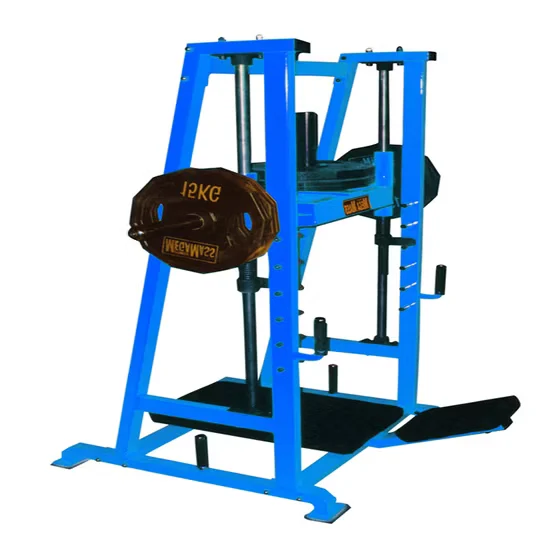
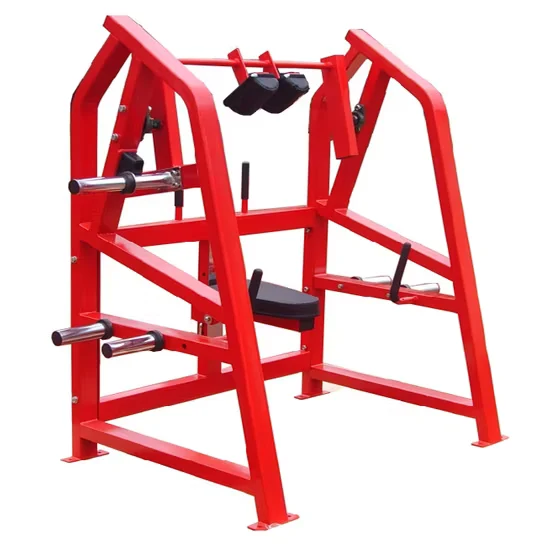
Steel Frame Durability — The Commercial Leg Raise Machine features reinforced welding at stress points, tested for high-frequency use in professional gym environments.
Technical Specifications
| Parameter | Value |
|---|---|
| Product Type | Integrated Gym Trainer (Strength – Leg/Core) |
| Model NO. | 5059 |
| Exercise Part | Leg |
| Main Frame Material | Steel |
| Frame Color | Customizable per facility requirements |
| Cushion Color | Customizable per facility requirements |
| Product Dimensions | 1104 × 990 × 1730 mm |
| Net Weight | 72 kg |
| Max User Weight | 180 kg |
| Certification | ISO 9001, CE |
Application Suitability
| Deployment Scenario | Typical Use |
|---|---|
| Professional gym and club strength zones | Core and leg training stations in high-traffic circuit layouts |
| Community fitness center | Accessible strength equipment for adult members of varying fitness levels |
| Corporate wellness room | Compact strength training for employee fitness programs |
| Hotel fitness center on guest room floors | Durable self-guided core training requiring minimal floor space |
| Sports performance training center | Targeted leg raise and knee raise work for athletic conditioning |
Why Frame Flex Undermines Commercial Strength Deployments Before Anyone Notices
Reinforced steel construction with stress-point welding eliminates the gradual loosening that light-duty frames develop within months of continuous use.
When a facility operator inspects a leg raise station, the frame looks fine on the surface. But daily use by members weighing up to 180 kg generates cyclic loading at the pivot and weld joints. Over time, lighter-gauge steel develops micro-flex at those junctions, producing subtle wobble that members perceive as instability. By the time the issue reaches maintenance, the frame has already shifted beyond field repair and requires full replacement — a cost that compounds across an entire strength circuit. [NEED_CITE: structural fatigue failure patterns in commercial strength equipment frames]
This commercial leg raise machine gym equipment addresses that failure mode with a 72 kg steel frame engineered specifically for sustained commercial duty cycles, where member turnover runs continuously throughout operating hours.
How This Station Fits Into a Commercial Strength Layout
The Commercial Leg Raise Machine targets core flexion and hip flexor engagement through a fixed-path bodyweight movement pattern. In a strength zone circuit, it pairs naturally with back extension benches and cable rotation stations to create balanced anterior-posterior core coverage. Its 1104 × 990 mm footprint allows deployment along perimeter walls or as an island station with adequate clearance on all sides. The 180 kg user weight capacity accommodates the full range of adult body types found in professional gym and club environments without requiring separate heavy-duty variants. Facility planners sourcing commercial leg raise machine gym equipment for multi-station circuits can position this unit where floor space is constrained, since its vertical profile occupies minimal square footage relative to its training value.
Continuous Use Demands and Deployment Environment Considerations
Unlike motorized cardio equipment, a leg raise station has no duty-cycle rating tied to a motor — but its frame, pivot hardware, and cushion upholstery face continuous mechanical stress in high-traffic facilities. In a professional gym seeing hundreds of daily users, the grip handles and back pad endure repeated loading and sweat exposure that degrade cheaper materials within months. [NEED_CITE: upholstery degradation rates in commercial gym environments] The steel frame’s mass provides inherent stability without bolting to the floor, though rubber contact pads on the base prevent migration on polished surfaces. Deploying this commercial leg raise machine gym equipment on upper floors of hotels or residential buildings requires attention to impact noise when users lower their legs at the bottom of each rep — a rubber mat beneath the unit absorbs that impulse transmission effectively. Voltage and electrical concerns do not apply here, simplifying the installation process compared to powered stations.
Interpreting the Frame and Cushion Engineering Decisions
The 72 kg net weight of this unit reflects the steel gauge chosen for the main frame and the reinforcement applied at welded junctions. Heavier frames resist lateral sway when users swing their legs during dynamic variations of the exercise, maintaining alignment under off-axis loads. The cushion system — comprising a back pad and arm support pads — must balance two competing demands: sufficient density to resist permanent compression under repeated bodyweight loading, and enough surface compliance to prevent discomfort during extended sets. High-density foam cores wrapped in commercial-grade upholstery meet both requirements while resisting moisture penetration from perspiration. Customizable frame and cushion colors allow facilities to maintain visual consistency across their strength equipment fleet, which matters when a commercial leg raise machine gym equipment unit sits beside matching cable machines and benches. The ISO 9001 certified manufacturing process ensures that color application and weld quality remain consistent across production runs, whether the order is for a single unit or a full facility outfitting.
The Hidden Cost of Specifying Below Commercial Grade
Purchasing a lighter-duty leg raise unit for a community fitness center or commercial gym may reduce the initial equipment budget, but the financial picture changes within the first year. Frames that flex under daily use generate maintenance tickets for tightening and re-welding — tasks that take the station offline and frustrate members who expect consistent availability. [NEED_CITE: equipment downtime costs in commercial fitness facilities] Cushion materials rated for light-commercial use compress permanently under high-frequency loading, creating uncomfortable contact surfaces that members avoid. When a station sees declining usage, operators face the choice of re-upholstering at significant labor cost or replacing the entire unit. Facilities that specified this commercial leg raise machine gym equipment from the start avoid both paths, since the frame and cushion system are built for the volume and intensity that professional environments demand.
What Sets This Product Line Apart for Facility Operators
The 10,000-hour durability testing protocol applied to this product line ensures that frame welds, pivot hardware, and cushion systems are validated under simulated continuous operation before reaching the gym floor. The full six-series equipment family means a facility can source every cardio and strength discipline from a single manufacturing partner, simplifying logistics and warranty management. For this leg raise station, OEM and ODM customization covers frame color, cushion color, and branding application — allowing operators to match existing equipment aesthetics or create a distinct visual identity for their strength zone. The free 3D layout and airflow planning service accounts for the unit’s 1104 × 990 mm footprint and the clearance needed for safe leg movement, ensuring the station integrates properly with adjacent equipment spacing. Post-deployment, 24/7 technical support covers any field questions regarding assembly, alignment, or hardware maintenance.
Documentation & Test Records
- CE declaration of conformity for European market deployment
- EN 957 test report covering structural integrity and safety requirements
- ISO 9001 certificate verifying quality management across production
- Noise level test record for impact transmission assessment
- Durability test record documenting frame and cushion endurance validation
- Spare parts list with part numbers for cushions, grips, and hardware
Installation, Commissioning & Maintenance
- Allow minimum clearance around the 1104 × 990 mm footprint for full leg extension range
- Level the base on solid flooring using adjustable feet to prevent frame rocking
- Place rubber matting beneath the 72 kg frame to absorb impact noise and prevent migration
- Inspect all bolted connections after the first month of use and retorque to specification
- Clean cushion upholstery with pH-neutral cleaner weekly to prevent sweat degradation
- Check pivot hardware quarterly for wear and replace bushings as needed
Requesting a Deployment Assessment
Provide the total strength zone square footage and planned equipment count to receive a 3D layout incorporating this leg raise station with proper spacing and member flow paths. Indicate whether the deployment floor sits above occupied spaces so that impact noise mitigation can be addressed in the layout plan. Specify frame and cushion color requirements to ensure visual consistency with existing or planned equipment. Confirm the destination market for applicable certification and compliance documentation.
Frequently Asked Questions
Q: What frame material specifications ensure commercial durability?
A: The frame uses structural steel with reinforced welding at stress points where cyclic loading concentrates during leg raise movements. The 72 kg net weight reflects the material gauge required to resist lateral flex under users up to 180 kg. This construction prevents the gradual loosening that lighter-gauge frames develop in professional gym environments with continuous daily traffic from diverse member populations.
Q: How does cushion density affect long-term comfort and maintenance?
A: High-density foam cores resist permanent compression that develops when a back pad endures hundreds of daily uses. Lower-density foam flattens within months, creating an uncomfortable surface that members avoid and that requires costly re-upholstering. The cushion system on this station balances density for durability with surface compliance for comfort during extended training sets, reducing replacement frequency significantly.
Q: Can frame and cushion colors be customized to match facility branding?
A: Both frame finish and cushion upholstery color are fully customizable under the OEM and ODM program. Facility operators can match existing equipment lines, apply corporate color schemes, or create zone-specific color coding for their strength areas. Customization applies across production runs while maintaining consistent weld quality and upholstery construction verified under ISO 9001 manufacturing standards.
Q: What weight capacity is appropriate for diverse user populations?
A: The 180 kg maximum user weight capacity covers the broad demographic range found in professional gyms, community fitness centers, and hotel facilities. Specifying a station with insufficient capacity risks frame stress and premature wear when heavier members use the equipment. This rating ensures structural integrity across the full spectrum of adult users without requiring a separate heavy-duty variant.