
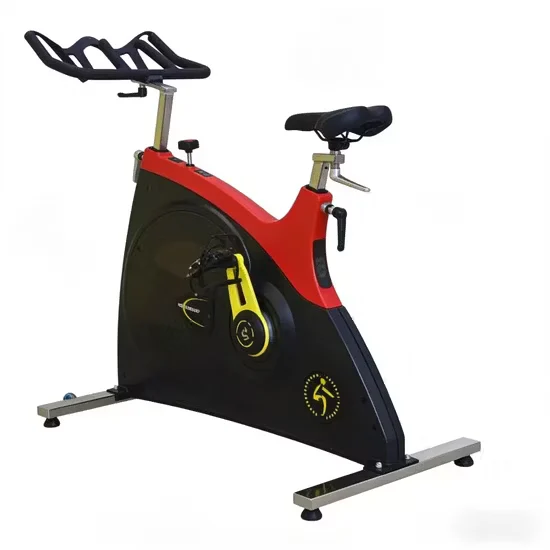
Whisper-Quiet Magnetic Drive — Sub-35dB magnetic resistance operation verified across hotel and studio deployments eliminates friction wear and noise complaints in mixed-use facilities.
Technical Specifications
| Parameter | Value |
|---|---|
| Product Type | Spin Bike |
| Resistance Type | Power-Style Magnetic Resistance Adjustment |
| Max User Weight | 150kg |
| Net Weight | 48–53kg |
| Product Dimensions | 1060 × 110 × 380 mm |
| Foldable | No |
| Certification | CE, GS, RoHS, FCC |
| Origin | Shandong, China |
Application Suitability
| Deployment Scenario | Typical Use |
|---|---|
| Hotel fitness center on guest room floors | 24-hour self-service cycling with sub-35dB operation preventing noise transfer to adjacent rooms |
| Chain gym cardio zone | High-frequency group cycling classes with continuous back-to-back scheduling |
| Corporate wellness room | Employee interval training during break windows with app-synced session data |
| High-end residential home gym | Daily solo riding in shared living spaces requiring minimal acoustic footprint |
| Sports performance training center | Athlete power output drills relying on consistent magnetic resistance across cadence ranges |
Why Magnetic Resistance Matters When Studio Neighbors File Noise Complaints
Contact-free magnetic braking eliminates the friction pad wear and grinding noise that friction-based spin bikes generate within months of studio deployment.
Group cycling studios built above hotel lobbies, office floors, or residential units face a recurring pattern: friction-resistance bikes accumulate noise complaints as felt pads degrade and flywheel contact surfaces roughen under daily class loads. Facility managers then cycle through replacement pads on accelerating schedules while managing guest or tenant relations [NEED_CITE: acoustic impact of friction versus magnetic resistance in multi-floor commercial facilities]. A commercial indoor cycling spinning bike magnetic resistance system avoids this failure mode entirely because the braking magnets never physically touch the flywheel. The resistance curve stays consistent across thousands of sessions, and the noise floor remains stable whether the bike is in its first week or its third year of continuous studio rotation.
Where This Spin Bike Fits in a Multi-Discipline Cardio Floor
This commercial indoor cycling spinning bike occupies the high-intensity, lower-body-dominant position in a mixed cardio layout. It pairs naturally with elliptical cross-trainers and rowing machines to give members upper-body engagement options between cycling sessions, while treadmills cover steady-state aerobic work. The compact footprint suits dedicated group cycling studios as well as open cardio zones where floor space must accommodate peak class occupancy. The 150kg maximum user weight and reinforced steel frame accommodate a broad range of member body types without structural deflection during out-of-saddle sprints.
Continuous Duty Expectations for 24/7 Studio Environments
Studios running four to six back-to-back cycling classes daily place sustained thermal and mechanical loads on every drivetrain component. Magnetic resistance systems dissipate heat differently than friction pads because braking force comes from eddy currents rather than surface contact, reducing localized hot spots on the flywheel [NEED_CITE: thermal behavior of magnetic versus friction braking under continuous cycling loads]. Deployment on upper floors requires confirming structural vibration transfer through the frame base; leveling feet and anti-vibration pads help isolate the flywheel’s rotational mass from floor slabs. Power requirements should match the facility’s voltage standard before production to avoid post-delivery rewiring. Console data interfaces need early coordination with facility management software providers so usage logs integrate without custom middleware development.
Magnetic Braking, Frame Rigidity, and Console Data Architecture
The power-style magnetic resistance adjustment moves permanent magnets closer to or farther from the flywheel via a mechanical linkage, producing a smooth resistance curve without the stick-slip behavior common in friction systems. This design choice removes the most frequent maintenance item on friction bikes — pad replacement — and stabilizes the acoustic signature across the resistance range. The 48–53kg net weight provides the inertial mass needed for a stable ride feel during standing climbs and rapid cadence changes without requiring ballast additions. CE, GS, RoHS, and FCC certifications confirm electromagnetic compatibility and material compliance for European and North American commercial markets. The reinforced steel frame resists torsional flex under high-torque pedal strokes, maintaining alignment between the bottom bracket and flywheel over extended service life [NEED_CITE: frame torsional stiffness requirements for commercial spin bikes under dynamic loading]. Console connectivity options should be confirmed at order stage to ensure data output matches the facility’s existing member tracking platform.
The Hidden Cost of Specifying Below Commercial Duty Requirements
Facilities that deploy light-commercial or home-grade spin bikes in group cycling studios routinely encounter premature bearing failure, resistance mechanism drift, and frame fatigue cracking within the first year of high-frequency use. Noise levels that are acceptable in a garage gym become liability triggers in a multi-tenant building once cumulative wear degrades the drivetrain. Data-stranded consoles that cannot export session metrics leave operators without usage evidence for membership retention analysis or class scheduling optimization. Voltage mismatches discovered after container arrival force costly transformer installations or entire shipment returns [NEED_CITE: commercial facility equipment failure patterns linked to duty-cycle misclassification]. These costs compound because they surface only after the equipment is installed, wired, and scheduled into class rotations.
Why Biketon Sport’s Cardio Line Deserves a Closer Look
Every commercial indoor cycling spinning bike magnetic resistance unit from this production line undergoes 10,000-hour continuous operation testing on motors, frames, and sealed bearings before release. Sub-35dB acoustic performance is verified under typical studio RPM ranges, not just idle bench conditions, giving facility planners reliable noise data for upper-floor and mixed-use deployments. IoT-enabled consoles support workout analytics, app synchronization, and virtual coaching with data interfaces configurable to existing facility management platforms. The full six-series cardio family means a single sourcing relationship covers treadmills, ellipticals, rowers, stair climbers, and bikes — simplifying procurement and spare parts logistics. OEM customization extends to console UI, colorways, and branding at flexible minimum order quantities. Free 3D cardio-zone layout planning accounts for equipment spacing, airflow requirements, and sightline optimization specific to each facility’s floor plan. Round-the-clock technical support ensures rapid response when maintenance questions arise outside local business hours.
Documentation & Test Records
- CE declaration of conformity for European commercial fitness equipment placement
- EN 957 test report covering structural integrity and safety under dynamic cycling loads
- ISO 9001 certificate confirming quality management across manufacturing and assembly
- GS and RoHS compliance records for material safety and electromagnetic compatibility
- FCC certification documentation for console electronics and wireless modules
- Noise level test report measured at typical studio cadence ranges under magnetic resistance
Installation, Commissioning & Maintenance
- Allow minimum clearance around the 1060 × 110 × 380 mm footprint for safe mounting and dismounting during group classes
- Level all four contact points on a rigid floor surface with anti-vibration pads to isolate flywheel rotation from structure-borne noise
- Confirm voltage and plug standard match the facility’s electrical supply before connecting to a dedicated circuit
- Calibrate magnetic resistance linkage during first commissioning to verify smooth progression across the full adjustment range
- Inspect sealed bearings and flywheel alignment quarterly under high-frequency studio use schedules
- Wipe down frame and handlebars after each class to prevent sweat corrosion on steel and contact surfaces
Before You Request a Quote
Provide your cycling studio dimensions and target unit count so the layout team can generate a 3D placement plan with spacing and airflow analysis. Specify daily class frequency and average session duration to confirm the magnetic resistance system matches your operational duty cycle. Identify the deployment floor and adjacent occupied spaces to validate whether sub-35dB acoustic performance meets your building’s noise transfer requirements. Confirm your target market’s voltage and plug standard to avoid post-shipment electrical mismatches, and indicate whether console data integration with your facility management software or member app is required for operational reporting.
Frequently Asked Questions
Q: How does magnetic resistance compare to friction systems for noise and maintenance in commercial studios?
A: Magnetic resistance uses contact-free braking through eddy currents, eliminating the felt pad wear and surface roughening that cause friction bikes to grow louder over time. This removes the most common maintenance task — pad replacement — and keeps the noise floor stable across thousands of sessions, which matters significantly in studios located above or beside occupied spaces.
Q: What is the difference between continuous duty and peak power ratings for commercial spin bikes?
A: Peak power describes the maximum output a component can sustain briefly, while continuous duty reflects what it can handle during sustained daily operation. Studios running multiple back-to-back classes need components rated for continuous duty, because relying on peak ratings alone risks premature thermal failure and unplanned downtime that disrupts scheduled programming.
Q: Can the console sync workout data with our existing facility management software?
A: IoT-enabled consoles support data export and app synchronization, but integration with specific facility management platforms depends on the software’s API and data protocol requirements. Confirm your platform’s specifications during the quotation stage so the console configuration matches your existing infrastructure without requiring custom middleware development.
Q: Is this spin bike suitable for deployment above occupied hotel or office floors?
A: The sub-35dB magnetic resistance operation is specifically engineered for noise-sensitive environments including hotel guest room floors and shared commercial spaces. Anti-vibration pads and proper floor leveling further reduce structure-borne transmission, but confirming acoustic requirements with building management before final deployment is recommended.
Q: How do we confirm voltage and plug standards match our market before production?
A: Specify your target deployment country and electrical standard during the inquiry stage so the production team configures the correct voltage rating and plug type before manufacturing begins. This avoids costly transformer additions or shipment returns caused by mismatches discovered only after the equipment arrives at the facility.
![Savo-015 Commercial Magnetic Resistance Spin Bike with Screen for Gym [WARN] draft identifier mismatch](https://bicksport.com/wp-content/uploads/2026/08/savo-015-commercial-magnetic-resistance-spin-bike-with-screen-for-gym-warn-draft-identifier-mismatch-c25418.webp)