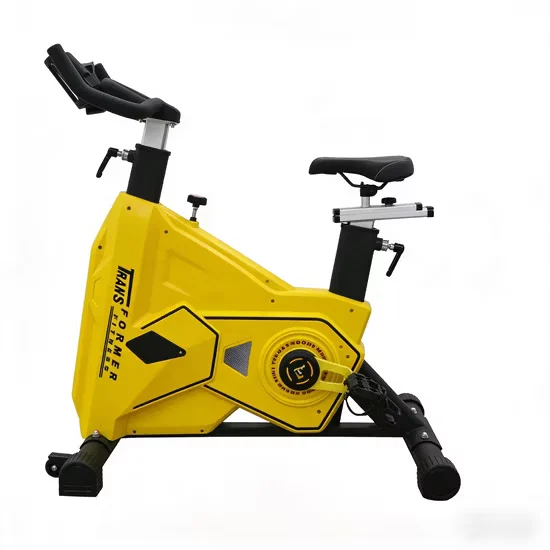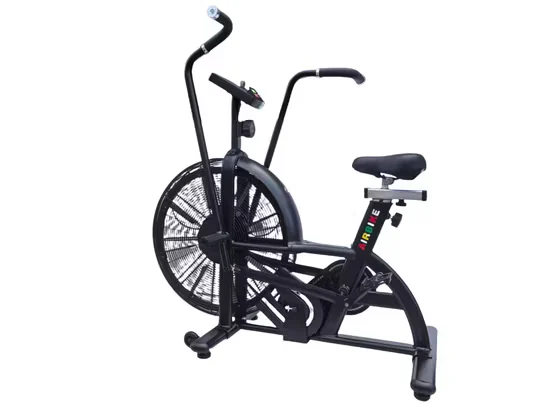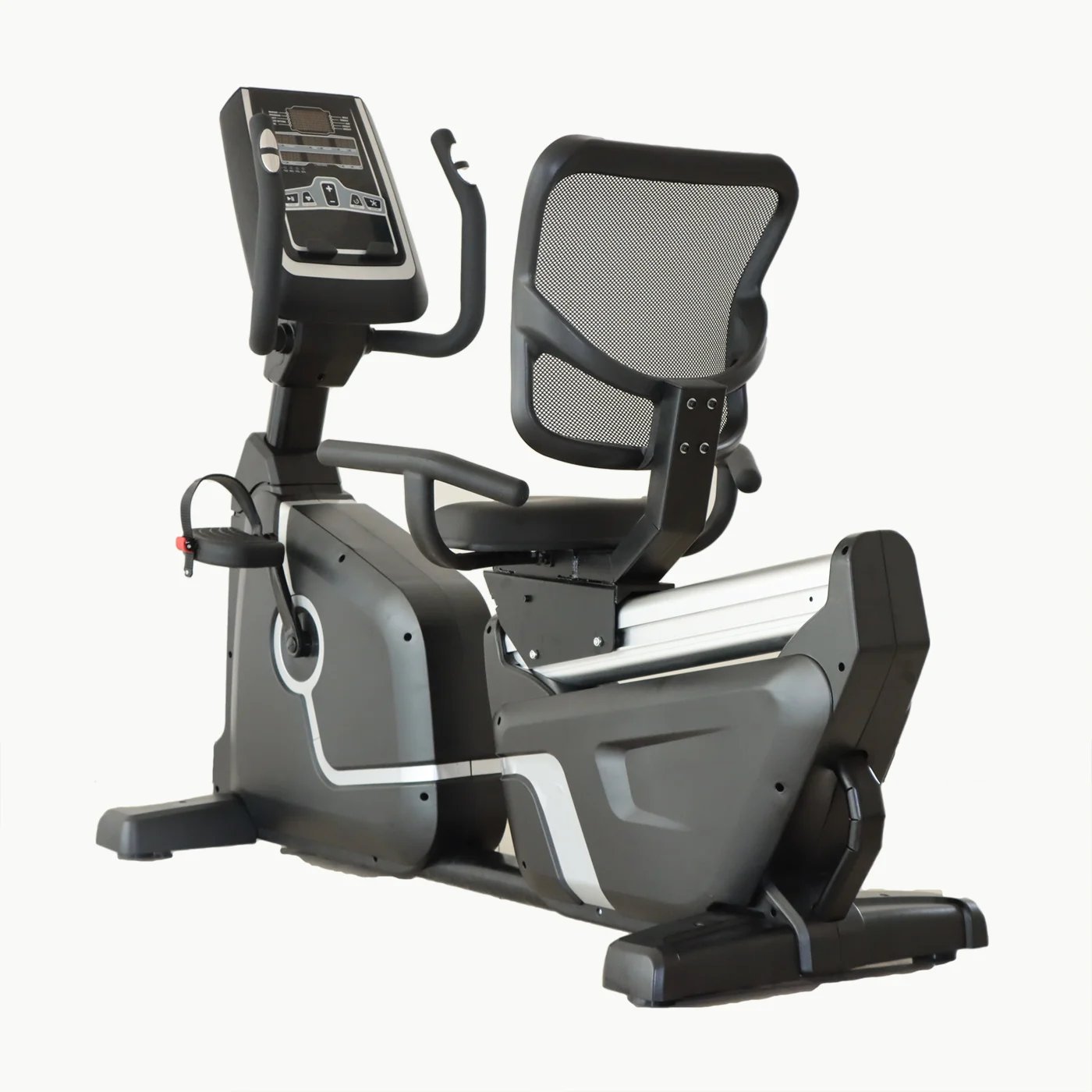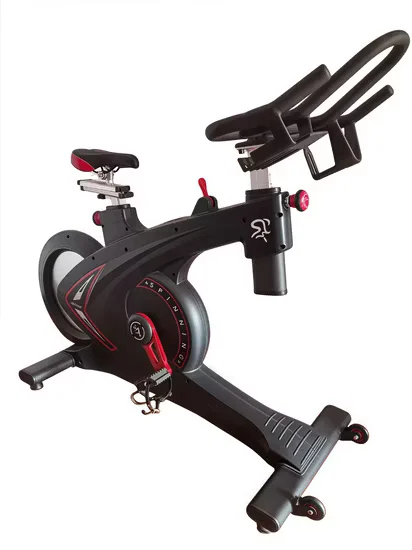
Whisper-Quiet Magnetic Drive — Sub-35dB operation verified across hotel floor deployments eliminates noise complaints from occupied rooms below.
Technical Specifications
| Parameter | Value |
|---|---|
| Designation | Savo-007(Spinning Bike black) |
| Product Type | Spin Bike |
| Resistance Mechanism | Power-Style Magnetic Resistance Adjustment |
| Drive Type | Belt Drive with Magnetic Resistance |
| Max User Weight | 150kg |
| Net Weight | 50kg |
| Product Dimensions | 1400 × 560 × 1300 mm |
| Foldable | No |
| Certification | CE, GS, RoHS, FCC |
| Origin | Shandong, China |
Application Suitability
| Deployment Scenario | Typical Use |
|---|---|
| Hotel fitness center on guest room floors | 24-hour access cycling without noise disturbance to adjacent rooms |
| Chain gym cardio zone | High-frequency interval training with consistent resistance feel |
| Corporate wellness room | Mid-day cycling sessions in shared office environments |
| High-end residential home gym | Daily riding with quiet operation near living spaces |
| Sports performance training center | Athlete conditioning with stable high-intensity output |
Why Friction-Based Spin Bikes Generate Complaints That Magnetic Systems Avoid
Magnetic resistance eliminates the contact noise and component wear that define friction-driven alternatives.
Traditional spin bikes use felt pads pressed against the flywheel to create resistance. Over weeks of commercial use, those pads compress unevenly, producing scraping sounds that travel through floor structures into occupied spaces. Maintenance teams swap pads on a rolling schedule, but the replacement cycle never quite catches up with complaint volume. A magnetic resistance spin bike commercial operators deploy on upper floors removes that entire failure mode — no contact means no wear noise and no pad inventory [NEED_CITE: friction vs magnetic resistance maintenance intervals in commercial cycling equipment].
Where the Savo-007(Spinning Bike black) Fits in a Commercial Cardio Layout
This unit covers steady-state endurance riding through high-intensity interval work via its stepless power-style resistance adjustment. In a full cardio zone, it complements treadmills and ellipticals by offering a zero-impact cycling discipline that accommodates users from rehabilitation through athletic conditioning. The 150kg max user weight capacity covers a broad commercial population. Deploy it along walls or in dedicated cycling clusters where the 1400 × 560 mm footprint allows tight spacing without sacrificing rider clearance. The magnetic resistance spin bike commercial facilities choose for mixed-use zones benefits from consistent resistance feel regardless of who is riding next.
Continuous Operation Demands and Floor-Level Deployment Considerations
A hotel fitness center running 24 hours means some units accumulate eight or more riding hours daily across multiple users. The 50kg net weight and reinforced steel frame absorb the lateral forces generated during standing sprints, preventing vibration transmission through the floor slab into rooms below [NEED_CITE: vibration transmission standards for commercial fitness equipment on suspended floors]. Upper-floor deployment requires attention to subfloor rigidity — a flexing floor amplifies any residual vibration. Leveling feet must contact a firm surface, and rubber isolation pads add a secondary decoupling layer. The magnetic system generates no friction heat, simplifying ventilation requirements compared to friction-based bikes in enclosed rooms.
How Power-Style Magnetic Adjustment Differs from Indexed or Friction Systems
The power-style resistance adjustment on this magnetic resistance spin bike commercial gyms specify delivers stepless progression — the rider turns the knob and resistance increases smoothly without clicking into fixed detents. This matters during coached classes where instructors call for gradual load increases rather than discrete jumps. The magnetic mechanism acts on the flywheel through air-gap force, so resistance components experience zero physical wear. Sealed bearings in the bottom bracket and flywheel axle protect against sweat ingress and dust accumulation. The belt drive connecting the pedals to the flywheel runs quieter than chain alternatives and requires no periodic lubrication. A 50kg frame mass keeps the center of gravity low during aggressive out-of-saddle efforts.
What Spec Corners Cost When Buyers Prioritize Unit Price Over Duty Cycle
Facilities that purchase light-duty spin bikes for commercial floors often see resistance mechanisms degrade within months — indexed knobs loosen, friction pads glaze, and the riding experience diverges unit to unit. Noise complaints from guest rooms force relocations to basement spaces that see lower member traffic [NEED_CITE: cardio equipment relocation patterns following noise complaints in hospitality facilities]. Inconsistent resistance across a cycling studio undermines coached programming and drives members toward boutique studios with better-maintained fleets. The cost of a single fleet replacement typically exceeds the price difference between light-duty and commercial-grade procurement.
Why Operators Source the Full Cardio Family from One Engineering Line
This magnetic resistance spin bike commercial buyers select has been validated for sub-35dB operation during hotel deployments, matching the acoustic requirements of guest-adjacent fitness spaces. Every unit undergoes durability testing aligned with 10,000-hour continuous operation benchmarks before release. The six-series cardio family — treadmills, bikes, ellipticals, rowers, stair climbers, and spin bikes — means a facility sources every discipline from one engineering platform with matched noise profiles. OEM customization extends to frame color and branding, so the cycling zone matches the facility’s visual identity. Free 3D cardio-zone layout planning accounts for the Savo-007(Spinning Bike black) footprint, rider clearance, and airflow paths so the cycling cluster integrates with the rest of the floor. Technical support responds on a 24/7 basis with spare parts logistics.
Documentation & Test Records
- CE declaration of conformity for the Savo-007(Spinning Bike black) magnetic spin bike
- EN 957 test report covering structural integrity and resistance system performance
- ISO 9001 certificate validating manufacturing quality management processes
- Noise level test report confirming sub-35dB operation across resistance range
- Durability test record documenting continuous operation validation
- Motor and magnetic resistance specification sheet with adjustment range data
Installation, Commissioning & Maintenance
- Maintain minimum 600mm lateral clearance per unit for rider mounting and dismounting safety
- Place rubber isolation pads under leveling feet to decouple vibration from floor structure
- Confirm local voltage and plug type before energizing; no dedicated circuit required for magnetic system
- Calibrate resistance knob travel at first commissioning to ensure full range engagement
- Inspect belt tension and bottom bracket bearing play quarterly under commercial frequency
- Wipe frame and handlebars with non-corrosive cleaner after each use session to prevent sweat damage
Planning Your Cycling Zone Deployment
Share your cardio zone floor area and total unit count to receive a 3D layout incorporating cycling cluster placement and airflow planning. Specify daily operating hours so we can confirm the magnetic resistance system suits your duty cycle. Identify the deployment floor and adjacent room types to validate the sub-35dB acoustic profile for your environment. State your target market voltage and plug standard so units ship ready for immediate commissioning.
Frequently Asked Questions
Q: How does magnetic resistance compare to friction resistance in commercial environments?
A: Magnetic resistance uses air-gap force on the flywheel with zero physical contact, producing noticeably quieter operation and eliminating pad wear. Friction systems rely on felt or leather pads that compress over time, generating scraping noise and requiring regular replacement. For hotel floors and shared residential spaces, magnetic systems remove the primary source of noise complaints and reduce ongoing maintenance labor.
Q: Does the 50kg frame weight affect stability during standing sprints?
A: The 50kg net weight combined with a reinforced steel frame and wide base footprint keeps the bike planted during high-intensity out-of-saddle efforts. Riders up to 150kg can perform aggressive intervals without feeling lateral shift or floor vibration. The mass also dampens road-feel resonance that lighter frames transmit to the rider through the pedals and handlebars.
Q: What maintenance does the magnetic resistance system require?
A: The magnetic mechanism has no contact wear components, so there are no pads to replace or surfaces to recondition. Maintenance focuses on the belt drive tension check, sealed bearing inspection, and sweat corrosion prevention on the frame. Compared to friction bikes that need pad inventory and regular adjustment, the magnetic system shifts maintenance attention to structural and cosmetic upkeep only.
Q: Can this spin bike be deployed on upper hotel floors without structural reinforcement?
A: The sub-35dB noise profile and 50kg frame weight make upper-floor deployment practical in standard commercial construction. Rubber isolation pads under the leveling feet decouple residual vibration from the floor slab. Confirm subfloor rigidity with your building engineer — flexing floors can amplify vibration regardless of equipment specifications [NEED_CITE: floor load and vibration criteria for commercial fitness equipment placement].
Q: How does power-style resistance adjustment perform under continuous commercial use?
A: The stepless power-style knob operates through magnetic air-gap modulation with no mechanical detents to wear out. Resistance feel remains consistent unit to unit over time because the magnetic components do not degrade with use. Instructors calling for gradual load progressions get smooth transitions without the jarring jumps that indexed systems produce as their internal mechanisms accumulate play.