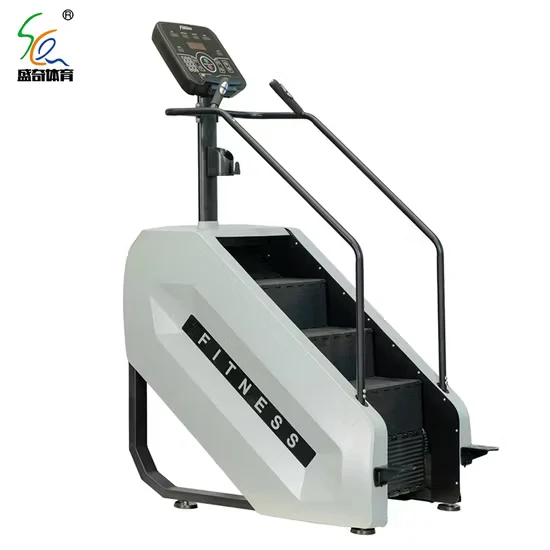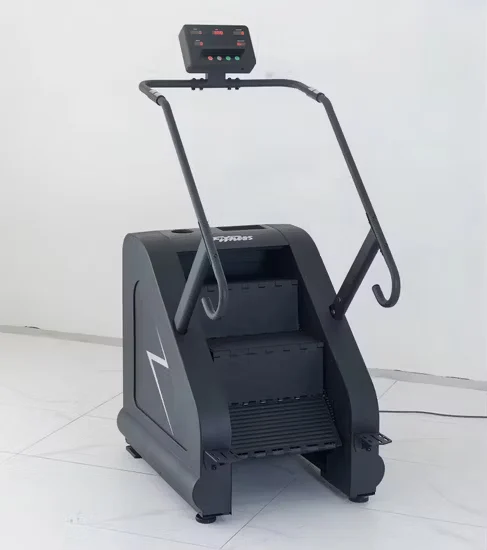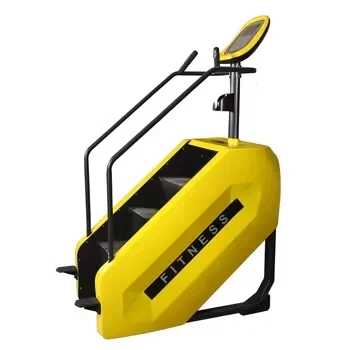
Continuous Duty Drive Validation — Every SQ-1020 stair climber undergoes sustained load-cycle testing calibrated for uninterrupted commercial cardio floor operation.
Technical Specifications
| Parameter | Value |
|---|---|
| Designation | SQ-1020 |
| Product Type | Stair Climber |
| Drive System | Electric |
| Frame Construction | Aluminium Alloy Pipe + PP Plastic |
| Max User Weight | 150 Kg |
| Console Display | LED / LCD |
| Power Requirement | 220V, 8.6 A |
| Product Dimensions | 1420 × 810 × 2400 mm |
| Net Weight | 201 Kg |
| Gross Weight | 221 Kg |
| Foldable | Unfolded |
| Certification | CE, RoHS, ISO |
Application Suitability
| Deployment Scenario | Typical Use |
|---|---|
| Chain gym cardio zone | High-traffic continuous stair climbing stations in main workout areas |
| Hotel fitness center on guest room floors | Whisper-quiet vertical climbing for early-morning and late-night guest access |
| Corporate wellness room | Compact vertical footprint accommodating shift-worker schedules |
| Sports performance training center | Lower-body endurance and power output drills for athletic conditioning |
| High-end residential home gym | Private vertical climbing training without noise transfer to adjacent rooms |
Why Electric Motors Fail First on the Stair Climber Floor
Continuous thermal load, not peak power, determines stair climber survival in commercial cardio zones.
Facility operators consistently report that stair climbers are the first cardio units to pull maintenance tickets when the drive system is rated for intermittent rather than sustained duty. The vertical climbing motion demands constant torque output against user body weight, generating heat accumulation in the motor housing that light-duty windings cannot dissipate [NEED_CITE: motor duty cycle classification for continuous commercial operation]. When a stair climber motor enters thermal protection shutdown mid-session, the member experiences sudden resistance drop-off — exactly the scenario I traced back to magnetic gap calibration on a Middle East hotel deployment, where entire batches required return and recalibration. That failure pattern drives our insistence on verifying continuous duty ratings before any electric stair climber leaves the assembly line.
Where the SQ-1020 Fits in a Commercial Cardio Floor Layout
This commercial stair climber occupies a distinct vertical training niche, delivering lower-body concentric and eccentric loading that treadmills and ellipticals cannot replicate. In a mixed cardio zone, stair climbers complement horizontal-plane equipment by targeting glute, quadriceps and calf muscle groups under gravity-loaded conditions, serving users who need low-impact vertical conditioning without the joint strike of running. The 1420 × 810 mm footprint and 2400 mm height clearance require dedicated ceiling height planning, typically positioned against perimeter walls to preserve sightlines across the cardio floor. The 150 kg max user weight accommodates the majority of commercial gym member demographics while maintaining frame rigidity under dynamic climbing loads.
Deployment Environment Requirements for Continuous Stair Climber Operation
The electric stair climber demands a dedicated circuit matching the 220V, 8.6 A input specification to prevent voltage sag when multiple units start simultaneously in a high-density cardio zone. Ceiling clearance must account for the 2400 mm frame height plus user headroom during full-extension climbing, making basement or low-ceiling mezzanine locations problematic without advance measurement. Floor leveling is critical: an unlevel base transfers cyclic load unevenly to the aluminium alloy pipe joints, accelerating fatigue at connection points [NEED_CITE: EN 957 requirements for commercial cardio equipment]. Ambient temperature and ventilation planning must address continuous motor heat rejection, particularly when units are placed back-to-back or against walls that trap convective airflow. For hotel deployments above occupied floors, vibration isolation pads between the 201 kg frame and floor structure prevent structure-borne noise transmission during extended climbing sessions.
Electric Drive System and Frame Specification Breakdown
The electric drive configuration delivers consistent stepping cadence under variable user loads, contrasting with hydraulic or pneumatic systems that exhibit resistance fade as fluid temperature rises during prolonged sessions. The aluminium alloy pipe frame construction provides structural stiffness at a weight penalty substantially below equivalent steel tubing, reducing floor load concentration while maintaining rigidity under the lateral forces generated by climbing motion. LED or LCD console options are available to match facility data visibility requirements — LED for high-ambient-light gym floors, LCD for lower-glare environments. The 220V, 8.6 A power draw indicates a motor sized for sustained torque delivery rather than intermittent peak bursts, drawing current proportional to user weight and stepping speed. PP plastic shroud components protect internal drive mechanisms from dust accumulation and member contact without adding acoustic resonance to the frame assembly. The unfolded configuration eliminates folding hinge mechanisms as potential failure points under commercial-frequency use cycles.
The Hidden Cost of Specifying Below Commercial Duty Thresholds
When a stair climber motor is selected for peak rather than continuous rating, thermal shutdown events accumulate silently until the unit enters a failure-repair cycle that pulls it off the floor repeatedly. Noise complaints compound the problem: a drive system operating beyond its thermal envelope generates audible whine and vibration that travels through floor structures to adjacent occupied spaces, generating member complaints before maintenance staff detect the underlying cause. Data isolation on units with basic consoles prevents facility managers from tracking utilization patterns that would flag early motor degradation through rising current draw trends [NEED_CITE: commercial cardio equipment utilization data integration]. Voltage mismatch discovered after shipment forces transformer retrofits or complete unit returns, delaying facility opening timelines. These failure modes share a common origin: specifications written without verifying the thermal and electrical margins required for uninterrupted commercial stair climber operation.
Why This Stair Climber Line Holds Up Under Continuous Commercial Demand
Every unit in this stair climber series passes 10,000-hour continuous operation testing on motor, frame and bearing assemblies before production approval — a protocol rooted in the lesson that magnetic gap drift under sustained load produces the resistance inconsistency that triggers member complaints. The aluminium alloy frame and electric drive combination targets sub-35dB acoustic output verified in hotel deployments where cardio equipment operates directly above occupied guest rooms. LED and LCD console options support workout data tracking for facilities that integrate usage analytics into member engagement platforms. Full OEM and ODM capability extends to console UI customization, frame color and branding application at flexible minimum order quantities. The 1420 × 810 × 2400 mm unit dimensions feed directly into free 3D cardio zone layout and airflow planning that accounts for ceiling clearance, member flow corridors and ventilation requirements specific to stair climber heat rejection profiles. Technical support response covers commissioning guidance and spare parts logistics across export markets.
Documentation & Test Records
- CE declaration of conformity covering electrical safety and EMC compliance
- EN 957 test report validating structural and mechanical safety requirements
- ISO 9001 certificate for quality management system conformance
- RoHS compliance documentation for restricted substance limitations
- Motor specification sheet detailing continuous duty rating and thermal class
- Durability test record documenting 10,000-hour component validation cycles
- Console technical documentation with data interface specifications
Installation, Commissioning & Maintenance
- Maintain minimum 500 mm rear clearance and 1000 mm overhead clearance from the 2400 mm frame top for safe user egress
- Level the aluminium alloy frame base on vibration isolation pads to prevent cyclic load transfer to floor structure
- Connect to dedicated 220V circuit with 10 A minimum breaker rating matching the 8.6 A continuous draw specification
- Verify console LED or LCD display initialization and data output function before releasing unit to member use
- Inspect PP plastic shroud fasteners and internal drive belt tension at scheduled maintenance intervals
- Clean console display surface and frame contact points with non-corrosive agents to prevent sweat-induced degradation
Equipment Selection and Inquiry Parameters
Provide your cardio zone floor area and target stair climber unit count to receive a 3D layout incorporating ceiling clearance verification, member flow corridors and convective airflow planning for continuous motor heat rejection. Specify expected daily operating hours and peak concurrent usage to confirm drive system duty cycle alignment with your facility utilization profile. Declare deployment floor level and adjacent occupied spaces so acoustic isolation requirements can be matched to the electric drive system output. Confirm target market voltage and plug configuration to eliminate post-shipment electrical compatibility issues. Indicate whether console data output must interface with existing facility management software or member tracking applications.
Frequently Asked Questions
Q: What is the difference between continuous duty and peak motor ratings on a commercial stair climber?
A: Peak rating describes the maximum torque output a motor can deliver for brief intervals, while continuous duty rating defines sustained thermal capacity under uninterrupted load. Stair climbers demand continuous torque against user body weight throughout each session, making continuous duty rating the specification that predicts long-term reliability in commercial cardio environments where units operate for extended daily cycles.
Q: How does aluminium alloy frame construction compare to steel for stair climber durability?
A: Aluminium alloy pipe framing provides structural rigidity with reduced weight, lowering floor load concentration and easing installation handling. For commercial stair climber applications, the material resists corrosion from sweat exposure and maintains joint integrity under the cyclic lateral forces generated by climbing motion, provided connection points are engineered for the specific load patterns of vertical stepping equipment.
Q: Can the console on this stair climber connect to facility management systems?
A: Console data output capability depends on the specific configuration selected. LED and LCD display options are available with varying data interface specifications. Facilities requiring integration with management software should request console technical documentation detailing output protocols and compatibility parameters during the specification phase to ensure alignment with existing infrastructure.
Q: What voltage and plug configurations are supported for international deployment?
A: The standard configuration operates on 220V, 8.6 A input. Voltage and plug standard customization is available through OEM specification to match target market electrical requirements. Confirming destination country voltage, frequency and plug type before production prevents post-shipment compatibility issues that delay facility commissioning and require transformer retrofits.
Q: What maintenance intervals apply to the electric drive system?
A: Maintenance scheduling depends on daily operating hours and ambient conditions in the deployment environment. Drive belt tension inspection, motor housing dust clearance and electrical connection verification should follow intervals established during commissioning based on actual utilization patterns. Console firmware updates and data calibration checks integrate into the same scheduled maintenance windows.
![Stair Climber Machine with Easy Assembly Guide for Beginners [WARN] draft identifier mismatch](https://bicksport.com/wp-content/uploads/2026/08/stair-climber-machine-with-easy-assembly-guide-for-beginners-warn-draft-identifier-mismatch-d78b7a.webp)