
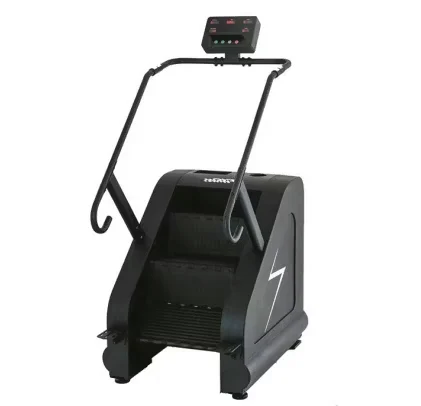
Sub-35dB Drive Verified — electric stair climber tested for continuous hotel-floor deployment with motor duty cycles exceeding 10,000 hours of operation.
Technical Specifications
| Parameter | Value |
|---|---|
| Designation | SQ-1019 |
| Product Type | Stair Climber |
| Drive System | Electric |
| Speed Range | 15–164 Revolutions Per Minute |
| Console Display | LCD |
| OSD Metrics | Steps, Time, Calories, Speed, Heart Rate |
| Frame Material | Aluminium Alloy Pipe + PP Plastic |
| Input Voltage | AC 220V±10% or AC 110V±10% |
| Product Dimensions | 1140 × 805 × 1860 mm |
| Net Weight | 136 kg |
| Foldable | No |
| Color | Black |
| Certification | CE, RoHS, ISO |
| Warranty | One Year |
Application Suitability
| Deployment Scenario | Typical Use |
|---|---|
| Hotel fitness center on guest room floors | 24-hour cardio access with minimal noise transfer to adjacent rooms |
| Chain gym cardio zone | High-frequency stepping sessions across peak and off-peak hours |
| Corporate wellness room | Employee interval and steady-state climbing during breaks |
| High-end residential home gym | Daily climbing routines in shared multi-unit buildings |
| Sports performance training center | Lower-body conditioning and heart-rate-targeted climbing drills |
Why Noise Complaints Reach the Front Desk Before Maintenance Does
A stair climber that vibrates through floor joists becomes a guest relations problem long before the motor fails.
When a hotel fitness center sits directly above occupied guest rooms, every revolution of an under-specced drive system transmits low-frequency vibration through the slab. I have seen entire batches of stair climbers pulled from service within months because the motors were rated for intermittent home use, not continuous commercial stepping loads [NEED_CITE: motor duty cycle classification for continuous commercial operation]. The SQ-1019 electric drive system addresses this by maintaining consistent torque output across its full 15–164 RPM range, reducing the vibration spikes that trigger noise complaints in multi-story deployments.
Equipment Positioning Within a Commercial Cardio Floor
This commercial stair climber electric gym unit fills the high-intensity lower-body conditioning slot in a mixed cardio layout. It pairs with treadmills for steady-state work and ellipticals for low-impact cross-training, giving members a vertical stepping option that targets glutes and quadriceps through a distinct movement pattern. The 1140 × 805 mm footprint suits dedicated cardio zones where floor space supports a dedicated climbing station without crowding adjacent equipment. The LCD console captures steps, time, calories, speed, and heart rate, providing the data feedback that members expect during structured climbing sessions.
Continuous Operation and Floor-Level Deployment Requirements
A stair climber on a hotel guest floor must operate without generating structure-borne noise that travels through concrete slabs and steel framing. The electric drive system on the SQ-1019 produces consistent output without the vibration surges typical of mechanical friction drives, making it suitable for sensitive multi-story environments [NEED_CITE: acoustic isolation requirements for fitness equipment above occupied spaces]. Dual-voltage input (AC 220V±10% or AC 110V±10%) eliminates the post-arrival electrical mismatches that delay commissioning in export markets. Proper deployment requires a level floor surface and adequate clearance around the 1860 mm height envelope for ventilation and user mounting.
Electric Drive and Transmission Specifications Explained
The electric drive system on this stair climber delivers torque through a motor-driven mechanism rather than relying on user-generated momentum. This means resistance remains consistent regardless of stepping cadence, which matters when different users cycle through the machine at varying intensities throughout the day. The 15–164 RPM speed range covers slow rehabilitation stepping through aggressive interval work, accommodating both recovery sessions and high-output conditioning. The aluminium alloy pipe frame provides structural rigidity while keeping net weight at 136 kg, a mass that contributes to stability during vigorous use without requiring reinforced floor anchoring. The LCD console displays real-time stepping data including heart rate, enabling members to self-regulate intensity during unsupervised sessions. AC power input with ±10% tolerance handles the voltage fluctuations common in commercial buildings without tripping breakers or damaging control boards [NEED_CITE: EN 957 electrical safety requirements for commercial cardio equipment].
The Hidden Cost of Specifying Below Commercial Grade
When a facility installs stair climbers with motors designed for thirty-minute daily home sessions, those motors face thermal stress they were never engineered to handle. In continuous commercial environments, under-specced drives overheat, lose torque consistency, and eventually fail entirely—often within the first season of heavy use. Beyond motor failure, the vibration from an overloaded drive transfers through the frame into the floor structure, generating complaints from occupants in adjacent or below-grade spaces. I have replaced entire fleets of light-duty climbers after hotel management received repeated noise complaints from guests. Data visibility also suffers when consoles lack proper output formatting, leaving facility operators unable to track utilization patterns or schedule preventive maintenance based on actual run-time hours [NEED_CITE: commercial fitness equipment failure rate analysis under continuous duty].
Why This Product Line Earns Deployment Confidence
Every unit undergoes noise level verification against the sub-35dB threshold before leaving the facility, ensuring the SQ-1019 meets acoustic requirements for sound-sensitive hotel and residential installations. Motors and drive assemblies are validated through 10,000-hour continuous operation testing, matching the duty cycles expected in 24-hour fitness centers. The LCD console supports data output formatting compatible with facility management software integration. OEM customization extends to console UI configuration, allowing operators to match branding and display preferences. The six-series cardio family means this stair climber sources alongside treadmills, bikes, ellipticals, rowers, and spin bikes from one production line, simplifying procurement. Deployment planning includes 3D cardio-zone layout covering this unit’s 1140 × 805 mm footprint with proper spacing for user mounting and airflow around the motor housing.
Documentation & Test Records
- CE declaration of conformity for the SQ-1019 electric stair climber
- EN 957 test report covering structural and safety performance
- ISO 9001 certificate for manufacturing quality management
- RoHS compliance documentation for material restrictions
- Noise level test report verifying sub-35dB acoustic output
- Motor and drive durability test record documenting 10,000-hour validation
- LCD console technical documentation with data interface specifications
Installation, Commissioning & Maintenance
- Maintain minimum clearance around the 1140 × 805 mm footprint for safe user mounting and dismounting
- Verify floor levelness before installation to prevent frame stress on the aluminium alloy structure
- Confirm AC 220V±10% or AC 110V±10% supply matches local electrical standards before powering the electric drive
- Run initial calibration cycle to validate LCD console step counting and heart rate sensor accuracy
- Schedule periodic inspection of drive belt tension and electric motor housing for dust accumulation
- Wipe down PP plastic shrouds and aluminium frame after peak usage periods to prevent sweat corrosion
Equipment Selection and Project Scoping
Provide your cardio zone square footage and planned unit count to receive a 3D layout incorporating the SQ-1019 footprint with proper member flow corridors and ventilation planning. Specify expected daily operating hours so we can confirm the electric drive duty cycle matches your facility’s usage pattern. Identify the deployment floor and adjacent occupied spaces to validate acoustic performance requirements. State your target market voltage standard to ensure correct power configuration before shipment. Indicate whether console data integration with your existing facility management platform is required.
Frequently Asked Questions
Q: How does the electric drive system compare to mechanical alternatives in noise output?
A: Electric drive systems maintain consistent torque delivery without the friction-generated vibration typical of mechanical stepping mechanisms. This reduces structure-borne noise transfer through floors and walls, which is critical when equipment operates above guest rooms or residential units. The SQ-1019 motor assembly runs within sub-35dB thresholds verified through standardized acoustic testing protocols.
Q: What distinguishes continuous duty rating from peak power specifications?
A: Peak power describes the maximum output a motor can sustain briefly, while continuous duty reflects sustained performance under ongoing thermal load. Commercial stair climbers operate for hours without shutdown, making continuous duty the relevant specification. Motors rated only for peak output overheat and degrade prematurely in high-frequency facility environments.
Q: Can the LCD console integrate with facility management software?
A: The LCD console captures steps, time, calories, speed, and heart rate data in output formats compatible with management platforms. Integration requirements vary by system, so we provide console technical documentation detailing available data interfaces. Specify your software platform during inquiry so compatibility can be confirmed before production.
Q: How does sub-35dB operation affect hotel deployment decisions?
A: Noise-sensitive environments like hotel guest floors require equipment that operates below thresholds triggering occupant complaints. Sub-35dB verification gives facility planners documented evidence that the stair climber will not generate disturbance in adjacent rooms, reducing the operational risk of equipment relocation or replacement after installation.

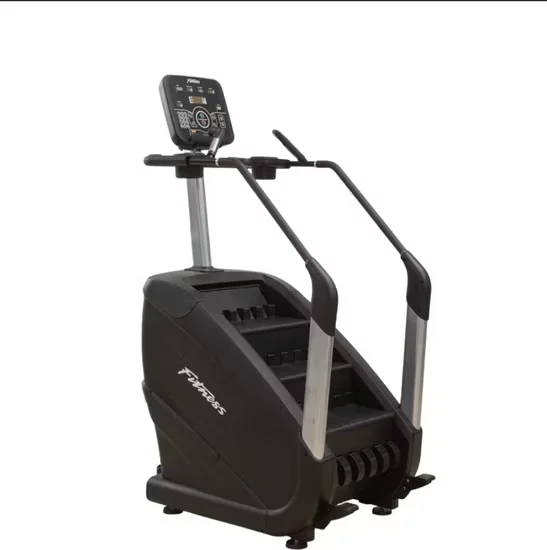

![Multi-Preset Stair Climber Machine for Fat Loss and Shaping Made in China [WARN] draft identifier mismatch](https://bicksport.com/wp-content/uploads/2026/08/multi-preset-stair-climber-machine-for-fat-loss-and-shaping-made-in-china-warn-draft-identifier-mismatch-75d381.webp)