
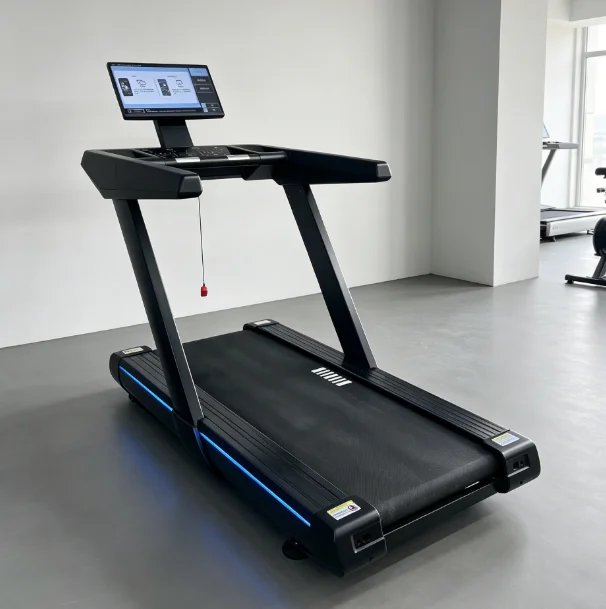
![W08 Electric Folding Home Fitness Treadmill for Cardiopulmonary Training [WARN] draft identifier mismatch](https://bicksport.com/wp-content/uploads/2026/08/w08-electric-folding-home-fitness-treadmill-for-cardiopulmonary-training-warn-draft-identifier-mismatch-c0f8a8.webp)
Whisper-Quiet Drive Engineering — DC motor and foldable frame designed for residential floors where noise complaints and space constraints define deployment viability.
Technical Specifications
| Parameter | Value |
|---|---|
| Product Type | Foldable Treadmill |
| Motor Type | DC |
| Motor Power | 1.5HP (peak or continuous not specified in source) |
| Speed Range | 1–16 km/h |
| Running Surface | 1200 x 450 mm |
| Console Type | LCD (Speed / Distance / Time / Calories) |
| Programs | 16 preset programs |
| Foldable | Yes |
| Product Unfold Size | 1500 x 740 x 1150 mm |
| Product Folded Size | 1810 x 740 x 220 mm |
| Net Weight | 42.0 kg |
| Material | ABS |
| Certification | CE, RoHS |
| OEM Custom | Yes |
| ODM Custom | Yes |
Application Suitability
| Deployment Scenario | Typical Use |
|---|---|
| High-end residential home gym | Daily cardio sessions in apartments where floor space and neighbor noise are primary concerns |
| Corporate wellness room | Compact stowable cardio for employees during breaks in limited-square-footage offices |
| Hotel fitness center on guest room floors | Foldable unit for small fitness alcoves where equipment must clear floor space when not in use |
| Home gym integrator projects | Private client installations requiring discreet cardio that folds away between sessions |
What a 1.5HP Rating Conceals About Daily Run-Time Survival
Motor survival depends on continuous duty rating, not the number printed on the box.
I watched a batch of home-class treadmills fail inside three months at a South Asian chain gym. The motors carried a 1.5HP label but were never rated for eight-hour daily operation. When residential-duty motors run beyond their thermal limits, windings overheat and insulation breaks down. The electric folding treadmill home fitness market is flooded with peak horsepower figures that obscure the real question: how many hours per day can this motor sustain load before thermal shutdown or permanent damage occurs. [NEED_CITE: motor duty cycle classification for continuous residential versus commercial operation]
Positioning This Foldable Treadmill Within a Residential Cardio Zone
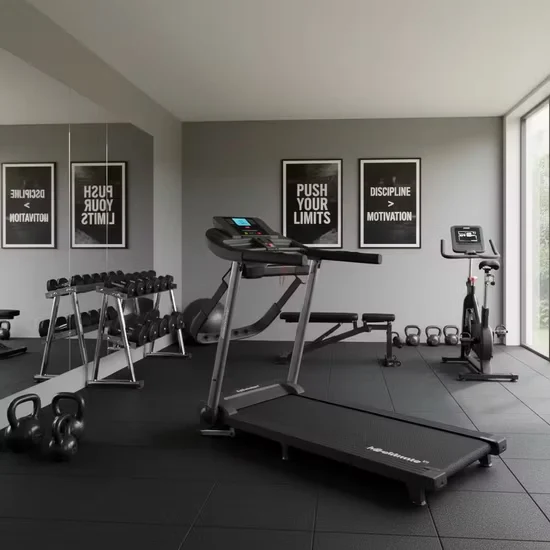
The W08 covers steady-state walking through moderate-intensity running at speeds up to 16 km/h on a 1200 x 450 mm surface. In a compact home gym or apartment fitness room, it pairs with a resistance trainer or compact cycle to deliver both upper and lower body conditioning without exceeding available floor space. The foldable frame suits environments where the electric folding treadmill home fitness unit must be stored vertically between sessions. The running surface accommodates users of average stride length; taller users should verify stride comfort at higher speeds before committing to a multi-unit purchase.
Continuous Run-Time Limits and Floor-Level Noise Considerations
A DC motor in this class is engineered for session-based use rather than all-day continuous operation. Deploying it in a setting where multiple users cycle through back-to-back sessions will push the motor beyond its intended duty cycle. Noise transmission through residential floor slabs depends on deck cushioning, motor vibration isolation, and whether the unit sits on a damping mat. Facilities on upper floors shared with occupied rooms below should verify acoustic transfer before installation. Voltage and plug configuration must match the destination market — discovering a mismatch after the unit arrives creates costly returns and downtime. [NEED_CITE: EN 957 requirements for treadmill noise and vibration in shared residential structures]
Reading the DC Motor and ABS Frame Specifications
DC motors deliver smooth speed ramping and adequate torque for single-user home sessions, differing from AC motors that sustain continuous thermal loads in commercial facilities. The distinction between peak and continuous horsepower matters: a 1.5HP peak rating indicates short-burst output, while continuous duty may sit considerably lower. The ABS frame material reduces overall unit weight to 42 kg, aiding fold-and-store deployment but offering less vibration damping than welded steel. The LCD console tracks speed, distance, time, and calories across 16 preset programs — a functional data layer for personal tracking, though it lacks the IoT connectivity needed for facility management system integration. The 1200 x 450 mm running surface provides adequate width for walking and jogging; sustained running at higher speeds benefits from wider decks for lateral foot placement margin.
The Cost of Overlooking Motor Duty Cycle in Deployment Planning
Residential-rated motors installed in high-frequency environments burn out predictably. The failure pattern is consistent: winding insulation degrades under sustained thermal stress, the motor controller trips repeatedly, and within months the unit sits dead on the floor. Noise complaints follow a similar trajectory — equipment specified without verified decibel testing generates friction with neighbors or hotel guests, leading to equipment removal and replacement. Deploying a foldable unit without confirming the continuous horsepower rating against expected daily run-time converts a capital purchase into recurring maintenance expense. [NEED_CITE: premature motor failure rates in light-commercial treadmill deployments exceeding duty cycle]
Why This Product Line Addresses Residential Deployment Gaps
Biketon Sport engineers cardio equipment around acoustic and electronic performance verified in actual hotel and residential installations. The sub-35dB operational target across the commercial range reflects deployments where equipment operates above occupied rooms. For the W08 specifically, the foldable footprint and 42 kg net weight align with the space-constrained environments this unit targets. OEM customization extends to console UI, allowing integrators to match branding or language requirements. The 10,000-hour durability testing protocol on the commercial range informs the engineering discipline applied across all product tiers. The six-series cardio family means sourcing walking, running, cycling, rowing, climbing, and elliptical motion from a single manufacturing partner simplifies specification and after-sales support. Free 3D cardio-zone layout planning addresses sightlines, airflow, and member flow for the specific room dimensions where this electric folding treadmill home fitness unit will operate.
Documentation & Test Records
- CE declaration of conformity covering electrical safety and electromagnetic compatibility
- RoHS compliance documentation confirming restricted substance limits
- EN 957 test report validating mechanical safety and structural integrity
- Motor specification sheet detailing duty cycle classification and thermal limits
- Console technical documentation with LCD display parameters and program logic
Installation, Commissioning & Maintenance
- Maintain minimum clearance around the 1500 x 740 mm unfolded footprint for safe user entry and exit
- Place a vibration-damping mat beneath the unit to reduce floor-transmitted noise on upper residential levels
- Verify destination voltage and plug type match the DC motor controller input before first power-on
- Run the belt at low speed without load for initial alignment and tension verification
- Inspect belt tension and deck lubrication at regular intervals based on weekly usage frequency
- Wipe the LCD console and handrails after each session to prevent sweat corrosion on ABS surfaces
Equipment Selection and Deployment Planning
Provide the cardio zone dimensions and intended unit count to receive a 3D layout addressing equipment spacing, airflow, and user traffic patterns. Specify expected daily usage hours so motor duty cycle can be matched to operational demand. Confirm the deployment floor level and adjacent room occupancy to establish noise transmission requirements. State the destination market voltage and plug standard before production begins. Indicate whether console data export or facility management system connectivity is required for your operation.
Frequently Asked Questions
Q: What is the difference between continuous duty and peak horsepower in treadmill motors?
A: Peak horsepower measures the motor’s maximum short-burst output during acceleration or incline surges. Continuous duty horsepower reflects the sustained thermal output the motor can maintain without overheating during extended sessions. A 1.5HP peak motor may deliver considerably less continuous output, which determines whether it survives daily use beyond brief workouts.
Q: How does a DC motor compare to AC for home versus commercial deployment?
A: DC motors provide smooth speed transitions and suit single-user, session-based environments with lower daily run-time. AC motors sustain continuous thermal loads and handle the back-to-back usage patterns of commercial facilities. Specifying a DC motor for high-frequency deployment leads to premature winding failure and unplanned equipment downtime.
Q: What noise level should a residential treadmill meet to avoid complaints?
A: Shared residential floors require equipment that operates without generating audible vibration transfer through the floor slab. Sub-35dB operation is achievable in commercial-grade cardio through magnetic resistance and vibration-isolated motor mounts. Request a noise level test report before deployment to confirm the unit meets the acoustic threshold of the specific building.
Q: How does deck cushioning affect joint impact during daily home use?
A: A rigid deck transmits ground reaction force directly through the ankle, knee, and hip during each footstrike. Cushioned deck systems absorb a portion of this impact, reducing cumulative joint stress over repeated sessions. Users running frequently at higher speeds notice the difference in post-session joint fatigue and long-term comfort.

![W08 Electric Folding Running Machine Treadmill for Living Room Workout [WARN] draft identifier mismatch](https://bicksport.com/wp-content/uploads/2026/08/w08-electric-folding-running-machine-treadmill-for-living-room-workout-warn-draft-identifier-mismatch-3ccf7b.webp)