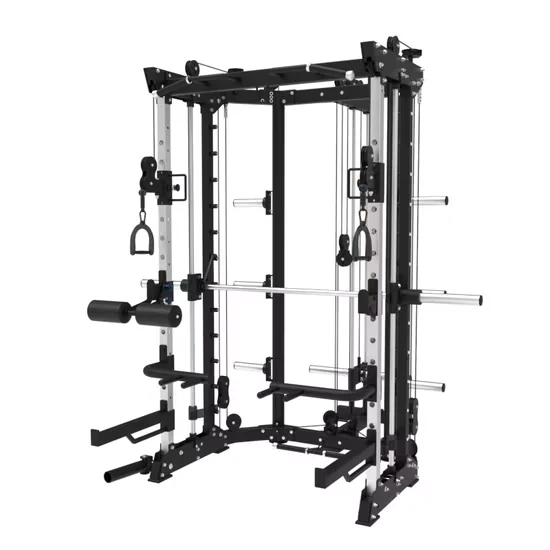
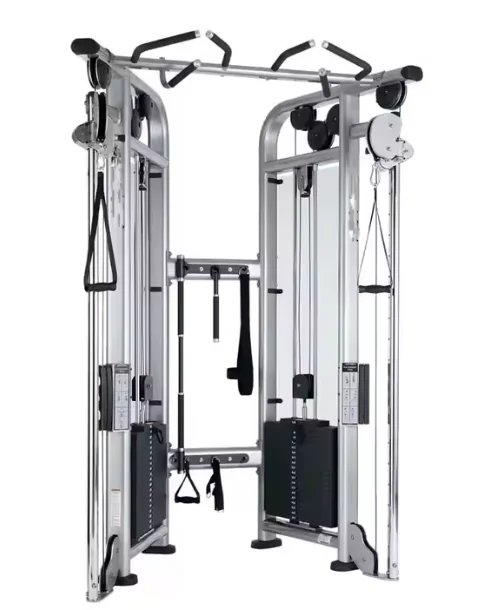
Commercial-Grade Steel Frame — 150-200kg load capacity validated for high-frequency strength training zones where structural rigidity prevents equipment wobble during heavy isolation work.
Technical Specifications
| Parameter | Value |
|---|---|
| Product Type | Preacher Curl Bench |
| Type | Abdomen Machine |
| Max Bearing | 150-200kg |
| Material | Steel |
| Foldable | No |
| Age Group | Adult |
| Gender | Unisex |
| Product Dimensions | 18512266cm |
| Net Weight | 28.5kg |
| Customization | Available (Logo, Color) |
| Certification | CE, ISO, RoHS |
Application Suitability
| Deployment Scenario | Typical Use |
|---|---|
| hotel fitness center on guest room floors | Isolation arm training in compact 24-hour access cardio and strength zones |
| chain gym strength area | High-frequency preacher curl and tricep extension stations |
| corporate wellness room | Dedicated bicep isolation alongside functional training rigs |
| high-end residential home gym | Space-efficient arm specialization for private training |
| sports performance training center | Controlled hypertrophy work for athletic conditioning programs |
Why Structural Rigidity Determines Whether a Preacher Curl Bench Survives Its First Year
A commercial adjustable preacher curl bench that shifts under load teaches users to skip isolation work entirely.
I have watched gym operators cycle through lightweight benches that rack up wobble within six months of continuous use. The padded arm support loosens from the frame, the angle adjustment pin wears through its detent holes, and members stop trusting the platform. Strength zones in chain gyms and hotel fitness centers demand equipment that holds its geometry through hundreds of daily sets. When the frame flexes or the seat mount drifts, the training stimulus moves off target and complaints reach management [NEED_CITE: structural load testing for commercial strength equipment]. A 150-200kg bearing rating reflects what the steel frame and welded joints actually endure when loaded users lean into heavy eccentric reps.
Positioning This Bench Within the Strength Training Layout
A preacher curl bench fills a specific isolation niche in any strength zone. It pairs with cable machines and free-weight racks by offering controlled bicep and forearm work without requiring spotters. In hotel gyms with limited square footage, the compact 18512266cm footprint allows placement against walls or between larger multi-station rigs. The commercial adjustable preacher curl bench accommodates adult users across a broad height range through its adjustable seat and arm pad positions. Angle adjustment lets members shift emphasis between short-head and long-head bicep activation without swapping equipment, keeping traffic flowing through the arm specialization area.
Continuous Use Demands and Floor Placement Considerations
Strength benches in commercial facilities see concentrated repetition cycles — a single station may handle forty to sixty sets during peak evening hours. The 28.5kg net weight provides enough mass to resist walking across rubber flooring during aggressive curls, but placement on level ground with adequate front and side clearance remains essential. Hotel fitness centers deploying this equipment on upper floors benefit from the absence of motor-driven noise, making it compatible with guest room adjacency. The steel frame transmits vibration minimally compared to plate-loaded machines with moving carriages. Adequate spacing between units prevents elbow collision during simultaneous use [NEED_CITE: commercial strength equipment spacing standards for safe operation].
What the Steel Frame and Load Rating Actually Tell You
The 150-200kg max bearing specification covers the combined weight of the user plus any loaded barbell or dumbbell pressed against the pad. Steel construction at this capacity range typically involves tubular sections welded at stress junctions — the seat mount, the arm pad pivot, and the base feet. Unlike benches rated below 120kg, a frame in this class resists the lateral torque generated when users shift their grip width or perform unilateral work. The non-foldable design eliminates hinge mechanisms that would otherwise become failure points under commercial repetition volumes. Adjustment pins and detent plates experience concentrated wear; the quality of these contact surfaces determines whether angle changes remain crisp after thousands of cycles.
The Hidden Cost of Underspecifying Strength Benches
Operators who purchase light-duty preacher benches for commercial floors typically replace them within eighteen months. The arm pad mount develops play, creating a rocking sensation that trained users immediately distrust. Weld fractures at the base-to-upright junction occur when load cycles exceed the frame’s fatigue threshold. In hotel environments, a wobbling bench generates guest complaints that escalate faster than malfunctioning cardio consoles because the instability feels unsafe mid-rep. Procurement teams then face batch replacement costs and member attrition that outweighs the initial savings [NEED_CITE: commercial equipment replacement cycles and total cost of ownership].
Why This Product Line Holds Up in Strength Zones
Every unit undergoes structural load testing that verifies the 150-200kg bearing rating under cyclic stress rather than static proof loads. The 50,000㎡ manufacturing operation produces the steel frame, welding, and upholstery in-house, maintaining quality control across the complete assembly. OEM customization covers logo application and frame color to match existing strength zone aesthetics. The compact dimensions factor into 3D layout planning, where spacing calculations account for user elbow sweep and loading clearance. Technical support covers weld inspection guidance and adjustment mechanism servicing for facility maintenance teams. Documentation packages include EN 957 test reports relevant to strength equipment stability requirements.
Documentation & Test Records
- CE declaration of conformity covering structural safety for commercial strength use
- EN 957 test report validating static and cyclic load performance
- ISO 9001 certificate for manufacturing process control
- RoHS compliance documentation for material composition
- Structural load and weld inspection records per production batch
- Assembly guide with torque specifications for frame fasteners
Installation, Commissioning & Maintenance
- Maintain 60cm front clearance for barbell loading and 40cm lateral spacing between adjacent units
- Position on level flooring with rubber mat beneath base feet to prevent migration during use
- Verify all frame fasteners at specified torque values during initial assembly
- Inspect adjustment pin and detent surfaces quarterly for wear and re-grease as needed
- Wipe vinyl pad surfaces daily with non-solvent cleaner to prevent sweat-induced degradation
- Check weld joints at base-to-upright connections annually for stress fracture indicators
Planning Your Strength Equipment Procurement
Provide your strength zone dimensions and equipment list to receive a 3D layout showing bench placement relative to racks, cable systems, and member flow paths. Specify expected daily user volume so load-bearing recommendations align with actual repetition cycles. Indicate deployment floor level and adjacent occupied spaces to confirm that vibration transmission meets your facility’s acoustic requirements. State target market delivery so frame finish and packaging match your receiving and installation workflow.
Frequently Asked Questions
Q: What separates a commercial preacher curl bench from a home-grade version structurally?
A: Commercial benches use heavier-gauge steel tubing and reinforced weld patterns at stress junctions. The adjustment mechanism features hardened pins and deeper detent holes to withstand thousands of angle changes. Home benches often rely on thinner materials and simpler friction-lock systems that degrade under daily multi-user conditions. The load rating gap reflects these structural differences.
Q: How do I verify the bench can handle high-frequency commercial use?
A: Request cyclic load test records showing the frame and adjustment mechanism tested through repeated stress cycles at or above the rated bearing capacity. Static proof load alone does not predict fatigue life. The EN 957 test report should document both static and dynamic structural validation. Weld inspection records per batch provide additional confidence in manufacturing consistency.
Q: Does adjustable angle positioning meaningfully affect training outcomes?
A: Angle adjustment changes the shoulder position relative to the arm pad, shifting emphasis between bicep heads and altering the stretch-tension curve through the range of motion. Fixed-angle benches limit exercise variation, which matters in facilities where members expect comprehensive arm training options. Proper detent positioning ensures the pad stays locked during loaded repetitions.
Q: What maintenance does the adjustment mechanism require over time?
A: The angle adjustment pin and corresponding detent holes accumulate metal wear from repeated position changes. Quarterly inspection should confirm the pin engages fully without lateral play. Greasing contact surfaces reduces friction wear. If detent holes elongate visibly, the adjustment plate may need replacement to maintain secure angle locking during use.
Q: How much floor space should I allocate per preacher curl bench in a commercial layout?
A: Allow the full 18512266cm footprint plus minimum 60cm front clearance for loading and 40cm on each side for elbow sweep during use. In high-traffic zones, increasing lateral spacing prevents user collision during peak hours. The 3D layout plan accounts for these clearances alongside adjacent equipment positioning and member circulation paths.
![Commercial Multi-Functional Smith Machine Cable Crossover Power Rack [WARN] draft identifier mismatch](https://bicksport.com/wp-content/uploads/2026/08/commercial-multi-functional-smith-machine-cable-crossover-power-rack-warn-draft-identifier-mismatch-7605dc.webp)