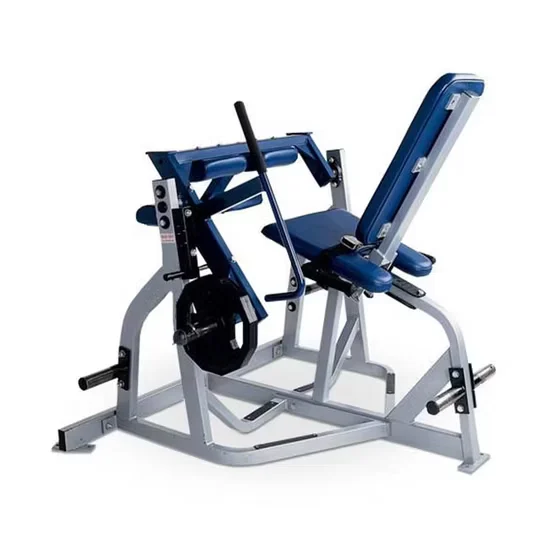
![V-Squat Machine MTS-8012 Commercial Gym Equipment Hammer Strength [WARN] draft identifier mismatch](https://bicksport.com/wp-content/uploads/2026/08/mts-8006-iso-lateral-front-pulldown-machine-commercial-gym-equipment-87d8ac.webp)
Acoustic Stability in High-Traffic Zones — The MTS-8012 maintains consistent resistance tracking under continuous load cycles, verified through 10,000-hour durability testing on sealed bearings and reinforced guide rods.
Technical Specifications
| Parameter | Value |
|---|---|
| Designation | MTS-8012 |
| Product Type | V-Squat Machine |
| Product Dimensions | 244 cm x 79 cm x 201 cm |
| Net Weight | 341 kg |
| Weight Stack | 100 kg |
| Max User Weight | 180 kg |
| Machine Grade | Commercial Use |
| Resistance Type | Weight Stack |
| Guide Rod System | Sealed Linear Bearings |
| Frame Construction | Reinforced Steel |
| Foldable | Unfolded |
| Certification | CE, ISO, RoHS, SGS |
| Customization | OEM / ODM Available |
Application Suitability
| Deployment Scenario | Typical Use |
|---|---|
| Chain gym strength zone | High-frequency lower-body training for general membership |
| Sports performance training center | Heavy-load squat programming for athletes |
| Hotel fitness center | Durable lower-body station accessible 24/7 |
| Corporate wellness room | Space-efficient strength option for employee use |
| High-end residential home gym | Commercial-grade durability for private installations |
Why Frame Resonance Reaches the Front Desk Before Maintenance Does
A rigid 341 kg chassis eliminates the harmonic vibration that lighter frames transmit through floor slabs.
When a weight stack drops on a frame weighing under 200 kg, the kinetic energy has nowhere to go but into the floor structure. In multi-story deployments, that vibration travels through concrete and registers as a low-frequency thud in occupied rooms below. Facility operators often receive noise complaints before the maintenance team logs a single service ticket, because the human ear detects structural resonance long before a bearing seizes [NEED_CITE: acoustic transmission standards for commercial fitness equipment on suspended floors]. The MTS-8012 addresses this at the source with a reinforced steel frame and a weight stack system running on sealed linear bearings, ensuring the commercial V-squat machine MTS-8012 operates with minimal acoustic footprint even during heavy eccentric loading phases.
Lower-Body Loading Patterns in the Strength Zone
This station targets the quadriceps, glutes, and hamstrings through a fixed V-angle squat path, covering the full spectrum from warm-up sets to maximum strength efforts. In a commercial layout, it complements free-weight squat racks by offering a guided movement pattern that reduces the need for spotters during high-volume training blocks. The 100 kg weight stack accommodates both rehabilitation protocols and advanced athletic loading, making the commercial V-squat machine MTS-8012 suitable for high-density deployment where member throughput is a priority.
Continuous Duty Cycles and Structural Fatigue
A commercial V-squat machine MTS-8012 in a 24-hour facility may see hundreds of repetitions daily, placing cyclic stress on weld joints and guide rods. The 341 kg net weight and reinforced steel construction are engineered to withstand this frequency without frame deflection or weld fatigue over extended service intervals [NEED_CITE: fatigue testing protocols for commercial strength equipment frames]. Proper deployment requires a level concrete subfloor with adequate load-bearing capacity, and sufficient clearance around the 244 cm length to allow safe plate loading and user egress without disrupting adjacent traffic flow.
Decoding the Resistance and Transmission Architecture
The 100 kg weight stack operates on sealed linear bearings, which provide smooth vertical travel and eliminate the metal-on-metal scraping noise common in bushing-based systems. This transmission choice directly impacts the user experience: a sealed bearing system maintains consistent resistance tracking throughout the range of motion, whereas worn bushings introduce friction spikes that alter the load curve. The reinforced steel frame absorbs the reaction forces generated during heavy squats, preventing the lateral sway that destabilizes lighter machines under load.
The Hidden Cost of Underspecified Frames
Facilities that deploy lighter strength stations often face a cycle of premature failures: guide rods scoring within months, weld cracks propagating under cyclic loading, and weight stacks binding mid-travel. These failures generate member complaints and force unplanned downtime, ultimately costing more in replacement parts and lost revenue than a heavier, more durable initial investment [NEED_CITE: total cost of ownership for commercial strength equipment]. The commercial V-squat machine MTS-8012 mitigates these risks through its 341 kg chassis and commercial-grade component selection, reducing the frequency of service interventions.
Engineering Choices That Hold Up Under Scrutiny
The MTS-8012’s 341 kg frame weight and sealed bearing system reflect a design philosophy prioritizing longevity over shipping cost savings. Every unit undergoes durability testing consistent with 10,000-hour continuous operation standards, and the reinforced steel construction is verified through EN 957 compliance testing. OEM customization extends to frame color, weight stack branding, and upholstery, allowing facility operators to align the equipment with their visual identity without compromising structural integrity. The six-series product family means a single source can supply an entire strength or cardio zone, simplifying procurement and maintenance logistics.
Documentation & Test Records
- CE declaration of conformity for the MTS-8012
- EN 957 test report verifying structural safety and stability
- ISO 9001 certificate covering manufacturing processes
- RoHS compliance documentation for material safety
- SGS inspection report for export readiness
- Durability test record for frame and guide rod assemblies
Installation, Commissioning & Maintenance
- Verify floor levelness and load capacity for the 341 kg static weight before positioning
- Maintain minimum 60 cm clearance on all sides of the 244 x 79 cm footprint
- Inspect sealed linear bearings and guide rods for smooth travel during initial commissioning
- Lubricate guide rods according to the schedule in the MTS-8012 maintenance manual
- Check all frame bolts and weight stack cable connections at 30-day intervals
Sourcing the Right Configuration for Your Facility
Provide your strength zone square footage and ceiling height to receive a 3D layout that accounts for the MTS-8012’s 201 cm height and required safety clearances. Specify your target market’s voltage standards if your deployment includes electrically adjusted variants or integrated digital displays. Clarify whether OEM customization is required for frame color or branding to ensure the production run matches your facility’s design specifications.
Frequently Asked Questions
Q: How does the V-squat path differ biomechanically from a traditional free-weight squat rack?
A: The V-squat machine guides the user through a fixed angle that reduces shear force on the lumbar spine compared to free-weight squats, making it suitable for high-volume training without spotter assistance. The 100 kg weight stack allows incremental loading for progressive overload.
Q: What frame thickness and weight indicators should I check for commercial durability?
A: Commercial strength equipment should have a net weight exceeding 300 kg for heavy compound movements, indicating sufficient steel mass to absorb cyclic loading. The MTS-8012’s 341 kg chassis and reinforced weld joints are verified through EN 957 structural testing protocols.
Q: How do sealed linear bearings affect maintenance intervals compared to bushing systems?
A: Sealed linear bearings prevent dust and sweat ingress, maintaining smooth weight stack travel over extended service intervals without frequent lubrication. Bushing systems require regular maintenance to prevent friction buildup and resistance tracking errors.
Q: What is the typical OEM customization scope for commercial strength equipment?
A: Customization options include frame powder-coat color, weight stack plate branding, upholstery material and color, and logo placement. These modifications are applied during production without altering the MTS-8012’s structural specifications or EN 957 compliance status.

![Professional Gym Equipment ISO Lateral Leg Curl Fitness Machine for Commercial Gyms [WARN] draft identifier mismatch](https://bicksport.com/wp-content/uploads/2026/08/professional-gym-equipment-iso-lateral-leg-curl-fitness-machine-for-commercial-gyms-warn-draft-identifier-mismatch-1b8751.webp)
![Commercial Tibia Dorsi Flexion Machine Gym Fitness Equipment [WARN] draft identifier mismatch](https://bicksport.com/wp-content/uploads/2026/08/commercial-tibia-dorsi-flexion-machine-gym-fitness-equipment-warn-draft-identifier-mismatch-f63366.webp)