
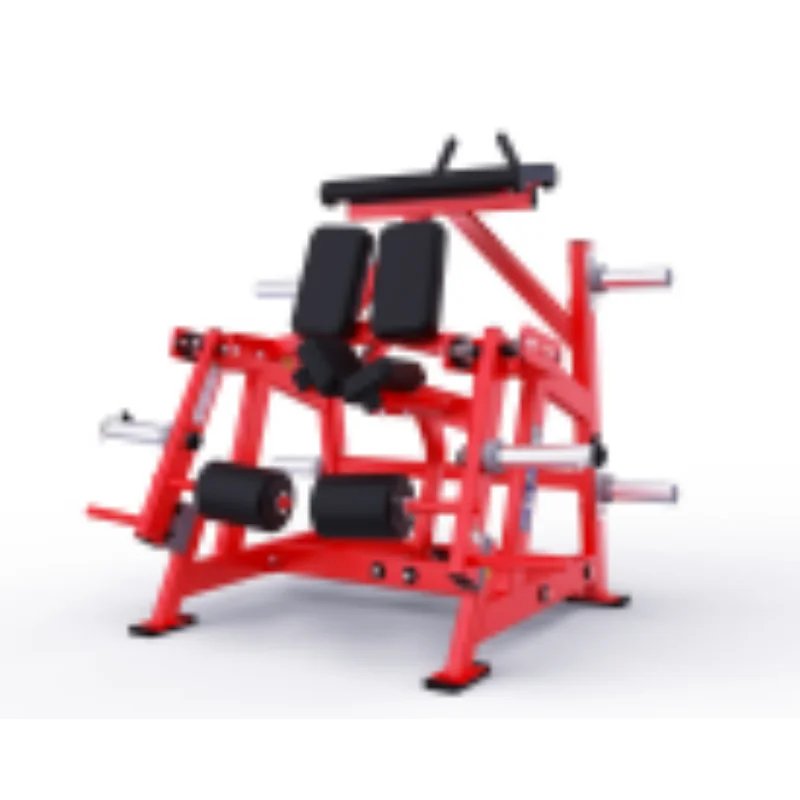
![Super Horizontal Calf Raise Machine Commercial Gym Equipment [WARN] draft identifier mismatch](https://bicksport.com/wp-content/uploads/2026/08/super-horizontal-calf-raise-machine-commercial-gym-equipment-warn-draft-identifier-mismatch-163c13.webp)
Heavy-Duty Steel Stability — Reinforced pivot bearings and 135kg steel frame withstand continuous multi-user loading cycles in high-traffic facilities.
Technical Specifications
| Parameter | Value |
|---|---|
| Designation | 5034 |
| Product Name | Super Horizontal Calf |
| Exercise Part | Leg |
| Movement Path | Horizontal calf raise |
| Frame Material | Steel |
| Product Dimensions | 1673 × 1631 × 1501 mm |
| Net Weight | 135 kg |
| Max User Weight | 180 kg |
| Age Group | Adult |
| Gender | Unisex |
| OEM/ODM | Available (pad material, frame color, branding) |
| Certification | ISO 9001, CE |
| Fit Area | Professional Gym and Club |
Application Suitability
| Deployment Scenario | Typical Use |
|---|---|
| Professional gym leg training zone | High-volume lower-leg isolation work between compound lift stations |
| Community fitness center | Multi-user daily access with controlled movement paths reducing joint shear |
| Corporate wellness facility | Low-maintenance strength station for employees targeting calf and shin musculature |
| Sports performance training center | Athlete-specific ankle stability and plantarflexion strength development |
| Hotel fitness center | Compact footprint unit for limited-space strength corners |
Why Wobble Starts at the Pivot Before the Frame Shows It
Light-duty calf raise machines in commercial environments develop lateral play at the pivot assembly within months, long before visible frame deformation appears. The horizontal calf raise movement path concentrates cyclic loading on a single rotational axis, and undersized bearings degrade under repeated multi-user traffic. Facility operators often attribute member complaints about joint discomfort to user error, when the root cause traces back to pivot bearing wear introducing uneven resistance curves through the range of motion [NEED_CITE: pivot bearing fatigue under cyclic commercial loading].
The 5034 commercial horizontal calf raise machine strength equipment addresses this through reinforced pivot and bearing assemblies designed for continuous high-frequency operation. Steel frame construction at 135 kg net weight provides the mass necessary to resist translation during loaded repetitions without requiring floor bolting in most deployment scenarios.
Positioning Within the Strength Training Floor Plan
This horizontal calf raise station fills a specific gap in lower-leg programming that standing and seated variations cannot replicate. The supine body position eliminates spinal loading entirely, allowing users with lower-back limitations to train plantarflexion without compromise. In a commercial leg training zone, the 5034 pairs naturally with leg press and hack squat stations, providing isolation work after compound movements fatigue the primary movers. The 1673 × 1631 mm footprint occupies floor space comparable to a single power rack, and the horizontal orientation means overhead clearance is not a constraint. Maximum user weight capacity of 180 kg accommodates the full range of athletes and general population members.
Continuous Loading Cycles and Facility Environment Requirements
A community fitness center running twelve to fourteen operating hours daily will see this station loaded and unloaded dozens of times per hour during peak periods. The steel frame and sealed bearing assembly handle this duty cycle without scheduled downtime beyond routine inspection. Unlike motorized cardio equipment, the 5034 generates no electromagnetic interference and requires no dedicated electrical circuit, simplifying placement flexibility across the training floor. Floor leveling within tolerance prevents asymmetric loading on the pivot axis, which is the primary cause of premature bearing wear in any rotational strength machine [NEED_CITE: floor flatness tolerance for rotational axis strength equipment]. Adequate clearance on all four sides allows safe plate loading and user entry and exit without interfering with adjacent station traffic flow.
What the Frame Gauge and Pivot Assembly Actually Govern
The 135 kg net weight reflects steel thickness and weld volume distributed across the main frame and carriage assembly. Heavier gauge tubing resists deflection under maximum loaded conditions, maintaining the geometric relationship between the shoulder pad, pivot axis, and foot plate throughout every repetition. When that relationship shifts even fractionally, users perceive it as inconsistency in resistance feel and may alter their movement pattern to compensate, introducing unwanted shear forces at the ankle joint. Sealed bearing assemblies at the pivot point eliminate the need for periodic lubrication scheduling while maintaining smooth rotational movement under load. The horizontal movement path itself reduces ankle joint shear compared to standing calf raise variations where the full body weight vector passes through the forefoot at an angle [NEED_CITE: biomechanical comparison of horizontal versus standing calf raise joint loading].
What Specification Compromise Costs After Installation
Facilities that select calf raise machines based on initial purchase price alone encounter predictable failure sequences. Thin-gauge frames develop visible flex under loaded repetitions, creating an unsettling experience that members associate with equipment unreliability. Pivot assemblies using bushings rather than sealed bearings develop play that manifests as lateral wobble during the concentric phase, prompting complaints about joint discomfort and eventual member attrition from that station. Pad materials lacking adequate density compress permanently within months, requiring replacement that takes the machine out of service. Voltage and plug considerations do not apply to this purely mechanical station, but facilities expanding internationally sometimes overlook OEM pad and branding customization requirements until the equipment arrives without consistent visual identity across their chain locations [NEED_CITE: commercial strength equipment pad material density and compression set standards].
Why This Product Line Earns Floor Space
Every unit undergoes frame and pivot durability testing calibrated for continuous commercial operation, verifying weld integrity and bearing performance across extended load cycles. The full six-series cardio family available from the same manufacturing facility allows operators to source every discipline from one production line, simplifying warranty management and spare parts logistics. OEM and ODM customization extends to pad material selection, frame color, and facility branding, ensuring visual consistency across chain gym deployments. Free 3D floor layout planning accounts for the 1673 × 1631 mm footprint alongside member traffic flow and sightline considerations specific to leg training zones. Documentation includes CE conformity declarations, EN 957 test reports, and complete installation guides so commissioning teams have every specification required for sign-off. Technical support responds around the clock for alignment checks, bearing inspections, or pad replacement scheduling.
Documentation & Test Records
- CE declaration of conformity for commercial strength equipment
- EN 957 test report covering structural integrity and safety requirements
- ISO 9001 certificate confirming quality management system compliance
- Frame and pivot durability test record under cyclic loading
- Pad material density and compression resistance specification sheet
- Installation, commissioning guide, and spare parts list
Installation, Commissioning & Maintenance
- Position with minimum clearance on all four sides for safe plate loading and user access around the 1673 × 1631 × 1501 mm frame.
- Verify floor levelness before final placement to prevent asymmetric loading on the sealed pivot bearing assembly.
- Inspect pivot bearing play and frame weld integrity after initial break-in period and quarterly thereafter.
- Check pad material compression and surface condition monthly, replacing when density loss affects user comfort.
- Clean shoulder pad and foot plate contact surfaces daily with non-corrosive solution to prevent sweat damage to upholstery.
- Confirm all fastener torque values after first month of operation and semi-annually under continuous commercial use.
Request a Floor Plan and Specification Match
Provide your leg training zone dimensions and adjacent station list to receive a 3D layout showing the 5034 placement relative to member traffic flow and equipment sightlines. Specify daily operating hours and expected user volume so we can confirm pivot bearing and frame durability match your facility duty cycle. Identify target market and deployment region so OEM customization for pad material, frame color, and branding aligns with your chain visual standards. State whether documentation packages need to support local regulatory submission or third-party facility certification.
Frequently Asked Questions
Q: How does horizontal calf raise biomechanics differ from standing variations?
A: The horizontal body position eliminates axial spinal loading entirely, directing force through the plantarflexion movement without gravitational compression through the spine and lower extremity joints. This makes the horizontal calf raise suitable for users managing lower-back limitations while still targeting calf musculature with controlled resistance through the full range of motion.
Q: What frame gauge standards indicate commercial durability?
A: Commercial strength equipment frames use heavier gauge steel tubing with full-penetration welds at stress concentration points. The 135 kg net weight of this unit reflects material volume distributed to resist deflection under maximum loaded conditions. Facilities should request weld inspection documentation and cyclic load test records before committing to any strength station purchase.
Q: How often do pivot bearings require maintenance?
A: Sealed bearing assemblies at the pivot axis are designed to operate without scheduled lubrication throughout their service life. Maintenance focus shifts to periodic inspection for lateral play, which indicates bearing wear requiring replacement. Facilities running continuous daily operation should schedule pivot inspection quarterly and replace bearings when play exceeds tolerance.
Q: What pad material options support hygiene in high-traffic facilities?
A: High-density foam cores resist permanent compression under repeated loading, maintaining consistent support surface geometry. Outer coverings selected for tear resistance and non-porous cleaning compatibility withstand daily disinfection protocols. OEM customization allows pad material specification matching your facility hygiene standards and replacement part stocking strategy.
Q: Can OEM branding maintain consistency across multiple facility locations?
A: OEM and ODM capability covers frame color, pad material, and facility branding application directly during production. Chain operators specify visual identity requirements once, and every unit ships with consistent branding elements applied under factory quality control. This eliminates aftermarket customization costs and ensures uniform appearance across all deployment sites.
![Commercial ISO-Lateral Front Lat Pulldown Machine for Gym Use [result]Commercial ISO-Lateral Front Lat Pulldown Machine for Gym Use[/result]](https://bicksport.com/wp-content/uploads/2026/08/commercial-iso-lateral-front-lat-pulldown-machine-for-gym-use-resultcommercial-iso-lateral-front-lat-pulldown-machine-for-gym-use-result-81571f.webp)

![ISO-Lateral Super Incline Press Commercial Gym Equipment [WARN] draft identifier mismatch](https://bicksport.com/wp-content/uploads/2026/08/iso-lateral-super-incline-press-commercial-gym-equipment-warn-draft-identifier-mismatch-9b2b77.webp)