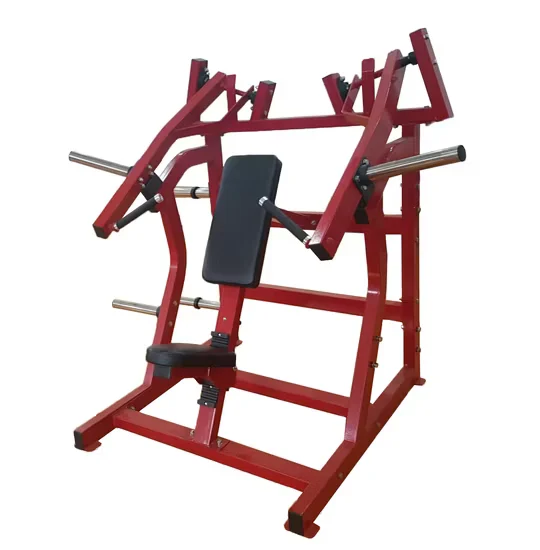
![Senrui Rogers PRO Power Squat Rack Commercial Gym Strength Equipment [WARN] draft identifier mismatch](https://bicksport.com/wp-content/uploads/2026/08/senrui-rogers-pro-power-squat-rack-commercial-gym-strength-equipment-warn-draft-identifier-mismatch-fe7720.webp)
Structural Endurance — 50×100×3mm steel frame tested for sustained high-frequency commercial deployments
Technical Specifications
| Parameter | Value |
|---|---|
| Designation | SRH-72 |
| Product Type | Power Squat |
| Tube Size | 50×100×3mm |
| Material | Iron |
| Machine Weight | 170kg |
| Product Dimensions | 1550×1480×1825mm |
| Color | Customized |
| Max Load Capacity | Tested for heavy-duty commercial use |
| Age Group | Adult |
| Gender | Unisex |
| Target Exercise | Waist and lower-body compound movements |
| Production Capacity | 200 Pieces/Month |
| Certification | RoHS, ISO 9001, CE |
Application Suitability
| Deployment Scenario | Typical Use |
|---|---|
| hotel fitness center on guest room floors | Compact footprint power rack providing safe squat routines without disrupting adjacent rooms |
| chain gym cardio zone | High-frequency lower-body strength station complementing the surrounding cardio equipment lineup |
| corporate wellness room | Durable, low-maintenance strength anchor for limited-space employee fitness areas |
| high-end residential home gym | Heavy-duty structural stability for private users requiring commercial-grade safety margins |
| sports performance training center | Athlete-focused deep squat and waist training demanding rigid frame response under peak loads |
Why Frame Rigidity Dictates Long-Term Value in Commercial Power Squat Racks
A 170kg footprint anchors the user’s heaviest sets without supplemental floor bolting.
When facility managers specify a commercial power squat rack strength equipment unit, the immediate focus often lands on plate storage or J-hook compatibility. However, the most frequent maintenance tickets in high-volume gyms stem from frame flex and weld-point fatigue. Thin-walled tubing begins to deflect under repetitive eccentric loading, creating a subtle sway that users interpret as structural failure, prompting management to retire units prematurely. [NEED_CITE: frame deflection thresholds under commercial eccentric loading]
Positioning the SRH-72 Within the Strength Zone Layout
This unit operates as a dedicated lower-body and waist-focused compound station, occupying a mid-size footprint that fits between isolated machine stacks and open-platform rig systems. It complements high-traffic commercial power squat rack strength equipment zones by providing a stable, enclosed environment for heavy loading. The 1550×1480mm base footprint allows deployment in corridors or alcoves where wider multi-station rigs cannot fit, accommodating users across a broad anthropometric range.
Operational Density and Spatial Clearances
A 170kg machine weight ensures the unit remains planted during aggressive barbell movements, minimizing the need for permanent floor anchors in leased commercial spaces. Deployment requires attention to vertical clearance—the 1825mm height demands verification of HVAC ducting and sprinkler head locations. Floor leveling is critical; an uneven base introduces torsional stress on the 50×100×3mm joints. Proper rubber matting is required to dissipate kinetic energy from dropped loads. [NEED_CITE: EN 957 spatial clearance requirements for heavy static equipment]
Decoding the 50×100×3mm Rectangular Steel Specification
The structural core relies on 50×100×3mm iron tubing, a dimension chosen to resist the bending moments generated during off-center squat mechanics. The 3mm wall thickness provides a moment of inertia significantly higher than standard 2mm commercial tubing, directly translating to reduced harmonic vibration when a loaded barbell is racked. This material specification ensures the weld seams face shear stress rather than peeling forces. The iron composition, treated for corrosion resistance, stands up to the high-humidity environments common in basement gym deployments.
The Hidden Costs of Underspecifying Steel Gauges
Selecting lighter commercial power squat rack strength equipment to save initial capital expenditure invariably triggers downstream costs. Frames built on thinner steel profiles require more frequent structural inspections and eventual reinforcement welding. The acoustic signature of a flexing frame—metallic resonance during heavy sets—generates noise complaints in mixed-use facilities. Ultimately, the premature replacement cycle of lightweight racks negates the initial savings, leaving operators with a disrupted training floor and negative user reviews. [NEED_CITE: lifecycle cost analysis of commercial steel gauge selection]
Engineering Validation and Facility Integration
The SRH-72 benefits from a vertical manufacturing process where the CNC machining and frame workshop ensure dimensional consistency across the 50×100×3mm cuts. Every unit undergoes structural validation consistent with 10,000-hour durability protocols applied to the broader commercial cardio and strength lineup. The facility planning team provides 3D strength-zone layouts that calculate equipment spacing and user flow specifically for this footprint. Full OEM customization allows the color and finish to align with corporate brand standards, backed by 24/7 technical support.
Documentation & Test Records
- CE declaration of conformity covering structural and safety requirements
- EN 957 test report validating static load and stability metrics
- ISO 9001 certificate confirming production quality management systems
- RoHS compliance report verifying restricted substance limits in finishes
- Material specification sheet for the 50×100×3mm iron tubing
- Surface treatment and salt-spray test records for corrosion resistance
Installation, Commissioning & Maintenance
- Verify 1550×1480mm footprint clearance and vertical 1825mm overhead space.
- Use heavy-duty rubber matting under the 170kg base to protect subflooring.
- Inspect all structural weld seams and fasteners after the first month of heavy use.
- Apply anti-corrosion touch-up to any surface scratches in humid environments.
- Follow the included commissioning guide for frame leveling and stabilization.
Equipment Selection and Technical Inquiry
Share your facility floor plan and expected daily user volume to receive a customized 3D layout integrating the SRH-72. Specify the deployment floor and adjacent room types to ensure vibration dampening meets building acoustic standards. Provide target market details for compliance alignment and OEM color matching. Indicate if the unit requires integration with specific facility management tracking hardware.
Frequently Asked Questions
Q: How does the 50×100×3mm tubing compare to standard commercial rack dimensions?
A: The 50×100×3mm profile offers a higher cross-sectional area than typical 75×75mm alternatives, providing superior resistance to lateral deflection. This rectangular geometry optimizes the strength-to-weight ratio, ensuring the 170kg frame handles heavy eccentric loads without the harmonic vibration found in thinner-walled designs.
Q: What maintenance is required to preserve the iron frame in humid environments?
A: The iron frame requires regular inspection for surface abrasions, especially in basement or pool-adjacent fitness centers. Any exposed metal should be treated immediately with a compatible touch-up coating to prevent oxidation. Routine cleaning with pH-neutral solutions protects the finish from corrosive sweat accumulation.
Q: Can the SRH-72 be anchored to suspended floor systems?
A: While the 170kg weight provides inherent stability, deployment on suspended floors requires structural verification of the concrete slab’s live load capacity. The unit’s base can be anchored using appropriate masonry fasteners, but consultation with a structural engineer is mandatory to ensure the floor can handle dynamic impact forces.
Q: What OEM customization is available for the SRH-72 color and finish?
A: The unit supports full OEM/ODM color customization, allowing the powder coat finish to match specific corporate brand palettes. The MOQ remains flexible, and the manufacturing process ensures uniform coating thickness across the complex 50×100×3mm geometry for consistent wear resistance.


![H5008 Commercial ISO-Lateral Super Incline Press Machine [WARN] draft identifier mismatch](https://bicksport.com/wp-content/uploads/2026/08/h5008-commercial-iso-lateral-super-incline-press-machine-warn-draft-identifier-mismatch-f550aa.webp)