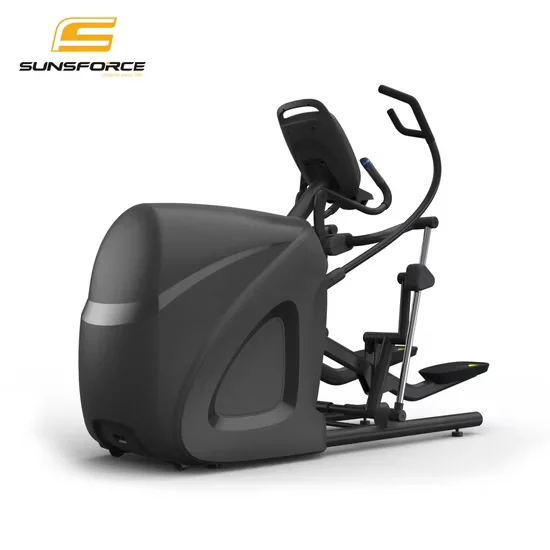
![PRO Commercial Fitness Crosstrainer Elliptical Machine for Gym Use [WARN] draft identifier mismatch](https://bicksport.com/wp-content/uploads/2026/08/pro-commercial-fitness-crosstrainer-elliptical-machine-for-gym-use-warn-draft-identifier-mismatch-830ab6.webp)
Whisper-Quiet Magnetic Operation — Sub-35dB noise output verified across hotel floor deployments where guest rooms share walls with fitness centers.
Technical Specifications
| Parameter | Value |
|---|---|
| Designation | CTC60-T |
| Product Type | Elliptical Trainer |
| Resistance Type | Magnetic |
| Resistance Levels | 1-25 |
| Console Type | 10.1" Touch Screen |
| Stride Grade | 1-10 |
| Step Depth Grade | 1-15 |
| Pedal Center Distance | 230mm |
| Max User Weight | 180kg |
| Product Dimensions | 2120 × 790 × 1680mm |
| Net Weight | 240kg |
| Certification | ISO 9001, CE, EN 957, RoHS |
Application Suitability
| Deployment Scenario | Typical Use |
|---|---|
| Five-star hotel fitness center on guest room floors | 24-hour access with noise-sensitive adjacent rooms requiring sub-35dB operation |
| International chain gym cardio zone | High-frequency continuous use with member app synchronization for workout tracking |
| Corporate wellness room | Mixed-demographic staff usage during shift breaks with moderate daily duty cycles |
| High-end residential home gym | Multi-unit shared fitness facilities where acoustic performance prevents neighbor complaints |
| Sports performance training center | Athlete conditioning with biometric data capture through IoT console connectivity |
Why Front Desk Complaints Outpace Maintenance Tickets on Cardio Floors
Magnetic resistance eliminates the friction-based mechanical noise that triggers guest complaints long before a technician is dispatched.
When an elliptical trainer sits one floor below sleeping guests, every bearing grind and belt slap travels through the slab. Friction-pad systems degrade within months, and the rising decibel level reaches the front desk before maintenance notices. A commercial elliptical trainer magnetic resistance system avoids this failure mode entirely because there is no physical contact between the braking element and the flywheel. The 25-level adjustment on this unit relies on electromagnetic proximity, meaning the resistance curve stays consistent across thousands of cycles [NEED_CITE: noise propagation standards for cardio equipment on suspended floors].
Where This Unit Fits Within a Mixed Cardio Layout
This elliptical trainer occupies the low-impact, steady-state segment of a commercial cardio floor, complementing high-intensity treadmills and stair climbers. Its 230mm pedal center distance accommodates a broad user demographic without forcing an unnatural hip sway, making it suitable for deployment in high-traffic zones where rapid user turnover is expected. The 1-10 stride grade and 1-15 step depth grade allow each user to dial in a comfortable motion path without requiring a technician to reconfigure hardware. In a balanced cardio zone, these units typically fill the middle bays where sightlines and traffic flow demand a compact footprint relative to treadmill rows.
Continuous Operation and Floor-Level Deployment Considerations
A 240kg net weight and reinforced steel frame anchor the unit firmly to the floor, reducing resonant vibration transfer to the structure below. Hotel deployments on upper floors benefit from this mass because it dampens harmonic oscillation during extended stride cycles. The magnetic resistance system generates minimal heat compared to friction alternatives, easing ventilation requirements in enclosed cardio rooms [NEED_CITE: thermal load calculations for enclosed commercial fitness spaces]. Facilities must verify that the local voltage and plug standard match the unit’s power requirement before the container ships. The 10.1" touch screen console requires a stable network connection to relay usage data to facility management dashboards, so structured cabling or dedicated access points should be planned during the 3D layout phase.
Reading the Drive and Resistance Specifications
Magnetic resistance systems adjust braking force by varying the proximity of permanent magnets to the flywheel, producing no friction wear and no contact noise. The 25-level range on this commercial elliptical trainer magnetic resistance unit covers rehabilitation-level low resistance through athlete-grade high load without requiring belt replacement or pad adjustment. The 230mm pedal center distance falls within the biomechanical range that minimizes medial-lateral hip deviation, reducing the lateral sway that compact residential units force on taller users. A 240kg frame mass combined with sealed bearings ensures that the flywheel maintains rotational stability during the dead-point of each stride cycle, preventing the micro-stutters that lighter units exhibit under heavy users approaching the 180kg maximum capacity.
The Hidden Cost of Underspecifying Cardio Equipment
Light-commercial motors rated for a few hours of daily use fail catastrophically when installed in 24-hour hotel fitness centers, often within the first warranty year. Friction-based resistance systems that seem adequate at commissioning lose their braking consistency within months, generating noise complaints and member attrition that far exceed the equipment’s purchase savings. Consoles without IoT integration strand usage data on the device itself, preventing facility managers from identifying underused units or scheduling preventive maintenance based on actual runtime [NEED_CITE: commercial cardio equipment failure modes in high-frequency facilities]. Voltage mismatches discovered at the destination port can idle an entire shipment while adapters are sourced, delaying facility opening.
Why Operators Select This Product Line
Every unit undergoes 10,000-hour continuous operation testing on motors, frames, and bearings before leaving the Shandong facility. The sub-35dB noise level has been verified in live hotel deployments where cardio equipment shares floor space with guest rooms. The IoT console supports workout analytics, app sync, and facility management software integration, preventing data from becoming trapped on the device. A complete six-series cardio family allows facilities to source treadmills, bikes, rowers, and climbers from one production line with matched aesthetics. Full OEM and ODM capability extends to console UI customization, logo placement, and color specification. The engineering team provides a free 3D cardio-zone layout that accounts for this unit’s 2120 × 790mm footprint, required clearance zones, airflow planning, and member sightlines.
Documentation & Test Records
- CE declaration of conformity covering the full commercial elliptical range
- EN 957 test report validating structural integrity and safety requirements
- ISO 9001 certificate confirming manufacturing quality management systems
- RoHS compliance documentation for restricted substance limitations
- Sub-35dB noise level test report recorded at maximum resistance setting
- 10,000-hour durability test record for frame, bearings, and magnetic assembly
- Console technical documentation with IoT connectivity protocols and API specifications
Installation, Commissioning & Maintenance
- Maintain minimum clearance around the 2120 × 790mm footprint for safe user ingress and egress
- Level the floor surface and install vibration-dampening pads beneath the 240kg frame to prevent structural noise transfer
- Verify voltage and plug standard match before connecting to a dedicated electrical circuit
- Calibrate the 25-level magnetic resistance range and verify stride grade motion during initial commissioning
- Schedule sealed bearing inspection and frame bolt torque verification at intervals defined by daily usage hours
- Configure the 10.1" IoT touchscreen with facility network credentials and management software endpoints
Planning Your Cardio Zone Deployment
Provide your facility floor area and target unit count to receive a 3D layout that positions this elliptical trainer within an optimized member flow and ventilation plan. Specify the daily operating hours so the engineering team can confirm the duty cycle matches continuous commercial demand. Indicate whether the deployment floor sits above or adjacent to occupied rooms to finalize acoustic isolation requirements. Confirm your target market voltage and plug standard early in the specification process. State whether the IoT console needs to integrate with an existing facility management platform or member application.
Frequently Asked Questions
Q: How does magnetic resistance compare to friction systems for noise-sensitive deployments?
A: Magnetic resistance uses electromagnetic proximity rather than physical contact to generate braking force, eliminating pad wear and contact noise entirely. This commercial elliptical trainer magnetic resistance system maintains sub-35dB operation throughout its service life, whereas friction systems degrade audibly within months and require regular pad replacement to stay below complaint thresholds in hotel environments.
Q: Can the IoT console integrate with existing facility management software?
A: The 10.1" touchscreen console supports IoT connectivity protocols designed for facility management integration, enabling usage data relay, remote diagnostics, and member app synchronization. The console technical documentation specifies available API endpoints, and the engineering team can scope custom integration requirements during the OEM configuration phase before production begins.
Q: What is the difference between stride grade and step depth grade?
A: Stride grade adjusts the overall length of the elliptical motion path across ten levels, accommodating different user heights and training intensities. Step depth grade modifies the vertical component of the pedal arc across fifteen levels, altering the climbing sensation. Together they allow fine-tuning of biomechanical comfort without any mechanical reconfiguration.
Q: How does the 230mm pedal center distance affect user comfort?
A: A 230mm pedal center distance positions the feet at a width that minimizes medial-lateral hip deviation during the stride cycle. Narrower spacing found on compact residential units forces a wider hip sway that causes discomfort during extended sessions. This dimension accommodates a broad user demographic across corporate and hotel fitness environments.
Q: What maintenance does the magnetic resistance system require over 10,000 hours?
A: The magnetic resistance assembly contains no friction-contact consumables, eliminating pad replacement and belt adjustment from the maintenance schedule. Primary service intervals focus on sealed bearing inspection, frame bolt torque verification, and flywheel alignment checks. The system’s non-contact design means resistance calibration remains stable across the full 1-25 range throughout the tested service life.
![Elliptical Gym Commercial Fitness Equipment Cross Trainer 10.1" Touch Screen [WARN] draft identifier mismatch](https://bicksport.com/wp-content/uploads/2026/08/elliptical-gym-commercial-fitness-equipment-cross-trainer-10-1-touch-screen-warn-draft-identifier-mismatch-7ec675.webp)