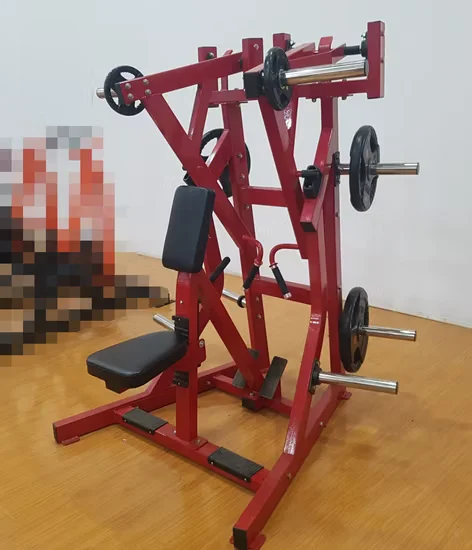
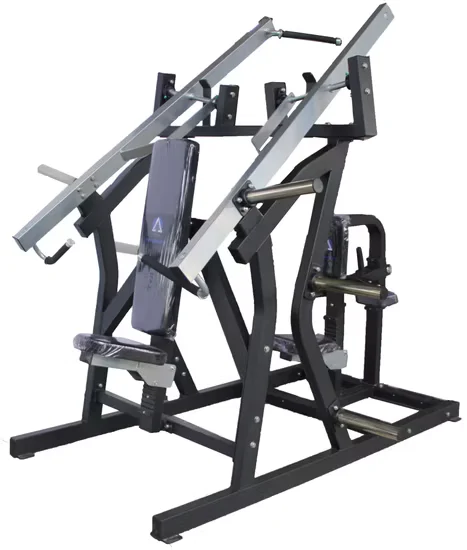
![Plate Loaded Seated Triceps Extension Commercial Gym Equipment [WARN] draft identifier mismatch](https://bicksport.com/wp-content/uploads/2026/08/plate-loaded-seated-triceps-extension-commercial-gym-equipment-warn-draft-identifier-mismatch-bee619.webp)
Structural Endurance — Reinforced steel frame engineered for 10,000+ hours of continuous high-frequency use in commercial gym environments.
Technical Specifications
| Parameter | Value |
|---|---|
| Product Type | Plate Loaded Seated Triceps Extension |
| Model NO. | 5077 |
| Exercise Part | Arm |
| Material | Steel |
| Product Dimensions | 135513301410mm |
| Net Weight | 90kg |
| Certification | ISO 9001, CE |
| Age Group | Adult |
| Gender | Unisex |
| Appliance | Gymnasium |
Application Suitability
| Deployment Scenario | Typical Use |
|---|---|
| chain gym cardio zone | High-frequency triceps isolation for members rotating through strength stations |
| hotel fitness center on guest room floors | Low-noise strength training compatible with occupied rooms directly below |
| corporate wellness room | Accessible upper-body training for employees during short break periods |
| high-end residential home gym | Compact plate-loaded isolation for dedicated strength corners |
| sports performance training center | Controlled elbow extension work for athlete upper-body programming |
Why Facility Managers Replace Light-Duty Strength Stations Within Months
Thin-gauge frames and worn pivot bearings create maintenance backlogs that never close.
Light-duty strength machines deployed in commercial facilities often arrive with frames that flex under loaded plates and pivot bearings that develop play after repetitive use. When a triceps extension station sits in a high-traffic gym, the pivot assembly cycles through thousands of repetitions daily. Bearing degradation introduces lateral wobble and grinding noise, which members notice immediately and report to front desk staff before maintenance teams ever log a ticket. The plate loaded seated triceps extension commercial gym equipment addresses this structural fatigue problem with reinforced steel construction designed for continuous public use. [NEED_CITE: structural fatigue failure rates in light-commercial versus commercial-grade strength equipment]
Positioning Within the Commercial Strength Training Floor
The Seated Triceps Extension fills a specific isolation role in the strength training zone, complementing compound pressing machines and free-weight stations by targeting the triceps through a controlled, fixed-path motion. It pairs naturally with biceps curl stations and overhead press equipment to form a complete upper-body cluster. The seated plate loaded seated triceps extension commercial gym equipment accommodates adult users of varying anthropometrics through adjustable seat and arm positioning. The fixed motion path keeps elbow extension consistent regardless of user experience level, making it suitable for both supervised athletic facilities and unsupervised hotel fitness rooms where movement safety matters.
Continuous Deployment Requirements for Shared Fitness Environments
This unit operates without electrical power, eliminating motor duty-cycle concerns and voltage compatibility issues across export markets. Noise generation depends entirely on the pivot bearing assembly and plate contact points—precision bearings reduce operational sound during repetitive loading in shared spaces. Floor leveling and vibration pads are necessary when the 135513301410mm footprint sits above occupied floors to prevent structure-borne transmission. Adequate lateral clearance accommodates plate loading and unloading without obstructing adjacent traffic flow. [NEED_CITE: floor loading and vibration isolation standards for upper-floor commercial fitness deployments]
Reading the Pivot and Bearing Specifications
The pivot assembly is the component that determines both operational smoothness and noise generation over thousands of cycles. Sealed bearings prevent dust and moisture ingress that accelerates wear in humid gym environments, maintaining consistent rotational resistance through the full extension arc. Plate-loaded systems eliminate cables, pulleys, and weight stacks—components that require periodic adjustment and generate rattling as they age. The resistance curve remains consistent because tension comes directly from gravity acting on Olympic plates, avoiding the friction losses inherent in cable routing. Steel frame rigidity prevents the flex and sway that lighter constructions exhibit when loaded heavily, keeping the motion path stable and predictable for users across the weight spectrum.
The Hidden Cost of Specifying Below Commercial Grade
Facilities that install residential-grade strength stations in commercial environments encounter predictable failure sequences: pivot bearings develop play within months, frame welds crack under repetitive loaded cycling, and seat adjustment mechanisms loosen to the point where positioning becomes unreliable. Each failure generates member complaints and pulls maintenance staff away from preventive work on other equipment. Noise from degraded bearings travels through floor structures, reaching occupied spaces below and generating complaints that escalate from front desk logs to management-level intervention. Replacing an entire fleet of light-duty stations costs more than specifying commercial-grade construction from the outset. [NEED_CITE: total cost of ownership comparison between light-commercial and commercial strength equipment]
What This Product Line Brings to Facility Procurement
The reinforced steel frame has been tested for 10,000+ hours of continuous high-frequency operation, matching the durability standard applied across the full cardio and strength range. The plate loaded seated triceps extension commercial gym equipment uses precision pivot bearings that maintain smooth, low-noise operation in shared fitness spaces where sound transmission matters. The complete equipment family allows facilities to source multiple strength and cardio disciplines from one manufacturing line, simplifying procurement logistics. OEM customization extends to frame color, upholstery, and branding, with flexible minimum order quantities. Free 3D floor planning addresses equipment spacing, member flow, and sightline considerations specific to the facility layout. Technical support operates around the clock for commissioning questions and spare parts coordination.
Documentation & Test Records
- CE declaration of conformity covering structural and safety requirements
- EN 957 test report verifying stationary training equipment standards
- ISO 9001 certificate for manufacturing quality management
- Durability test record documenting continuous high-frequency operation cycles
- Noise level test report measuring operational sound under loaded conditions
- Installation and commissioning guide with spare parts list
Installation, Commissioning & Maintenance
- Allow clearance around the 135513301410mm footprint for safe plate loading and user entry
- Level the floor contact points and install vibration pads when deploying above occupied floors
- Verify all pivot bolts and fasteners are torqued to specification during initial commissioning
- Inspect sealed bearings for smooth rotation monthly and replace if lateral play develops
- Wipe steel surfaces and upholstery after heavy-use periods to prevent sweat corrosion
- Lubricate plate-loading horns periodically to ensure smooth plate insertion and removal
Inquiry & Equipment Selection Guidance
Provide your strength training zone dimensions and target equipment count to receive a 3D layout covering spacing, member flow, and sightlines. Specify whether the unit will be deployed on upper floors adjacent to occupied rooms so that vibration isolation requirements can be confirmed. Indicate your target market to ensure plate-loading compatibility with locally available Olympic plates. Describe your expected daily usage volume so that the bearing specification matches the facility’s operational intensity.
Frequently Asked Questions
Q: What frame specifications indicate commercial-grade durability versus light-duty construction?
A: Commercial-grade frames use thicker-gauge steel and reinforced weld patterns at stress concentration points, particularly where the pivot assembly mounts to the main structure. Light-duty frames often rely on thinner tubing that flexes visibly under loaded plates and develops fatigue cracks at weld junctions. Requesting material thickness documentation and weld inspection records provides objective verification of structural capacity before procurement decisions are finalized.
Q: How does plate-loaded resistance compare to pin-select or cable systems for maintenance and longevity?
A: Plate-loaded systems eliminate cables, pulleys, and internal weight stacks entirely, removing the components most prone to wear and periodic adjustment. Resistance comes directly from gravity acting on loaded plates, producing a consistent tension curve without friction losses from cable routing. Maintenance is limited to pivot bearing inspection and plate horn lubrication, reducing service intervals and spare parts consumption compared to cable-based alternatives.
Q: What pivot and bearing types minimize noise and ensure smooth operation in shared spaces?
A: Sealed precision bearings prevent contamination from dust, chalk particles, and moisture that accelerate wear in active gym environments. Unsealed or bushing-type pivots develop lateral play and grinding sounds as particulate matter enters the bearing surface. Specifying sealed bearing assemblies and verifying smooth rotation under load during commissioning helps confirm that the unit will operate quietly through thousands of daily repetitions.
Q: How to verify load capacity and structural integrity for high-frequency commercial use?
A: Request durability test records documenting continuous loaded cycling that simulates months of commercial operation in compressed timeframes. Inspect frame welds for consistent penetration and absence of porosity or undercut defects. Verify that the plate-loading horns accept standard Olympic plates without excessive play, and confirm that the seat adjustment mechanism holds position reliably after repeated cycling through its full adjustment range.