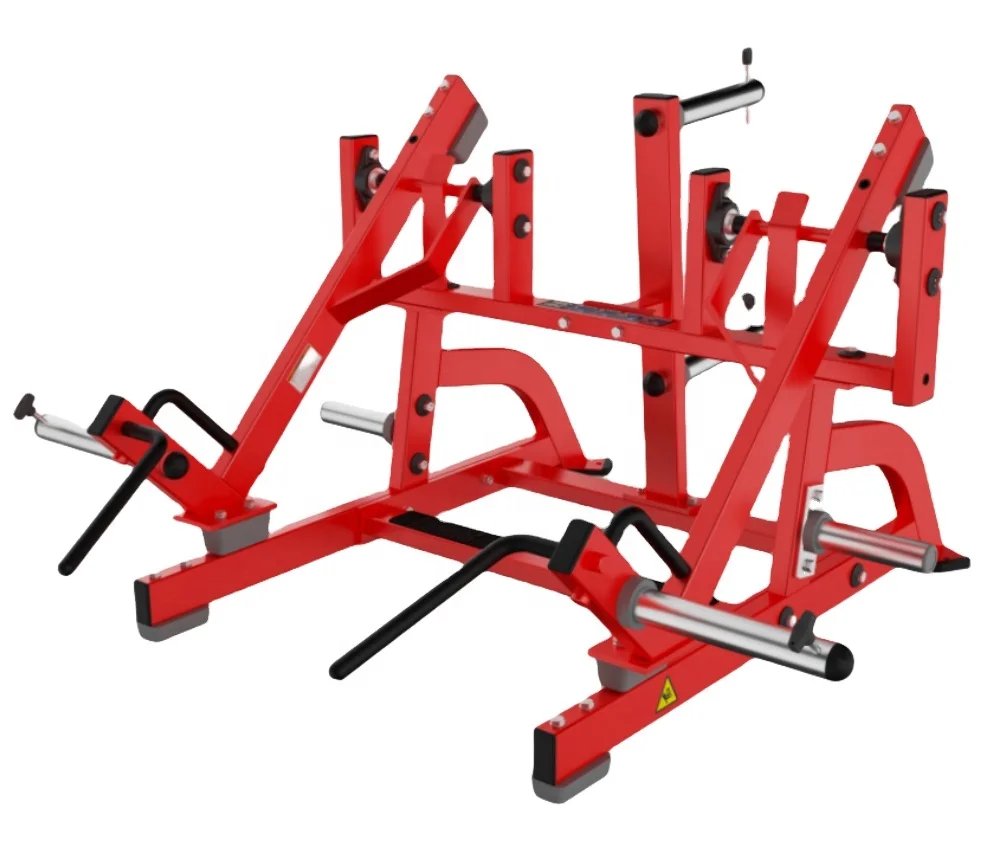
Steel Frame Durability — Reinforced pivot points and sealed bearing joints tested for continuous high-frequency plate loading in commercial strength zones.
Technical Specifications
| Parameter | Value |
|---|---|
| Product Type | Plate Loaded Strength Machine |
| Exercise Part | Arm |
| Material | Steel |
| Resistance Type | Manual (plate loaded) |
| Main Frame Color | Available according to customer requirements |
| Cushion Color | Available according to customer requirements |
| Product Dimensions | 1355 × 1330 × 1410 mm |
| Net Weight | 92 kg |
| Foldable | No |
| Power Source | Manual |
| Age Group | Adult |
| Certification | ISO 9001, CE |
| OEM/ODM | Acceptable |
Application Suitability
| Deployment Scenario | Typical Use |
|---|---|
| Professional gym and club strength zone | Dedicated arm isolation circuits alongside other plate-loaded machines |
| Community fitness center | Low-maintenance manual resistance for facilities with limited technical service access |
| Hotel and resort fitness center | 24/7 availability without electronic failure points |
| Corporate wellness room | Compact strength training in mixed-use spaces with minimal maintenance overhead |
| Sports performance training center | Athlete-grade triceps isolation with progressive plate-loaded resistance |
Why Pivot Wear Destroys Isolation Accuracy Before Anyone Notices
Sealed bearing joints maintain smooth resistance curves through thousands of loading cycles.
In high-traffic strength zones, plate-loaded machines endure repetitive heavy loading that gradually degrades open pivot joints. The result is uneven resistance arcs, grinding at the rotation point, and members abandoning the station because the movement no longer feels right. Maintenance crews often discover the problem only after complaints pile up [NEED_CITE: pivot bearing failure patterns in commercial plate-loaded equipment]. A plate loaded hammer strength seated triceps extension with sealed bearings eliminates this friction path entirely, keeping the resistance arm tracking cleanly through every rep.
Positioning Within the Commercial Strength Floor
This machine targets strict triceps isolation through a fixed-path seated pressing motion, filling the gap between free-weight overhead extensions and cable pushdowns. In a strength zone configured with other Hammer Strength-style plate-loaded units, it anchors the arm-specific circuit and pairs naturally with biceps and shoulder stations. The 1355 × 1330 mm footprint requires adequate lateral clearance for plate changes, making it suitable for open-floor layouts rather than tight corridor placements. The steel frame and adjustable seat accommodate a wide range of user sizes, and the plate-loaded design means resistance scales precisely with the weight loaded — no selectorized pin stacks to limit progression.
Deployment Density and Environmental Requirements
A plate-loaded triceps extension in a 24/7 gym environment sees hundreds of loading cycles daily, with members rotating through in rapid succession. The steel frame must sit on level flooring with appropriate rubber matting to absorb vibration from plate handling and prevent creep across polished concrete [NEED_CITE: flooring vibration requirements for plate-loaded commercial equipment]. Unlike motorized cardio units, there are no electrical circuits to plan, but the surrounding space must allow safe passage for members carrying plates. Adequate overhead clearance matters here — the 1410 mm frame height combined with standing plate changes means low ceilings create an oppressive feel and potential hazard.
Decoding the Steel Construction and Pivot Engineering
The frame gauge and welding quality determine whether the machine holds rigid under repeated heavy loading or develops flex that compromises movement accuracy. Commercial-grade steel tubing, properly gusseted at stress points, prevents the lateral sway that makes isolation exercises feel sloppy. The sealed bearing pivot system at the resistance arm joint is the single most critical wear component — open bushings develop play within months of commercial use, while sealed bearings retain smooth rotation far longer without lubrication. Cushion density matters equally: high-density foam rated for commercial frequency retains its shape under daily compression, preventing the bottoming-out that forces members into awkward joint angles. The plate-loaded manual resistance eliminates motor and cable maintenance entirely, reducing the service schedule to periodic bearing inspection and upholstery care.
What Happens When Specifications Compromise
Light-gauge frames in commercial strength zones develop visible flex within the first year, turning precise isolation movements into unstable pressing patterns that drive members to free weights. Open pivot joints grind and develop dead spots in the resistance arc, prompting complaints that maintenance teams cannot resolve without full pivot replacement. Cushions that compress prematurely leave users bracing against hard foam, accelerating wear further and generating replacement costs that compound across an entire strength circuit [NEED_CITE: cushion replacement frequency in high-traffic commercial gyms]. These failures rarely appear in showroom demonstrations — they emerge only after sustained deployment under real member traffic.
Why This Product Line Earns Floor Space
Every frame undergoes structural testing aligned with 10,000-hour continuous commercial operation standards, verifying weld integrity and bearing longevity before units ship. The six-series cardio and strength family means a facility sources multiple disciplines from one manufacturing partner, simplifying color coordination and OEM branding across the floor. For this plate loaded hammer strength seated triceps extension, the 1355 × 1330 × 1410 mm dimensions are factored into the free 3D layout plan that accounts for plate-loading clearance, member traffic flow, and sightline alignment with adjacent stations. OEM customization covers frame color, cushion color, and branding integration at flexible minimum order quantities, keeping facility design consistent. Technical support remains available around the clock for commissioning questions and spare parts coordination.
Documentation & Test Records
- CE declaration of conformity for commercial strength equipment
- EN 957 test report covering structural integrity and safety
- ISO 9001 certificate for manufacturing quality management
- Steel frame material specification and welding inspection report
- Bearing and pivot durability test record
- Cushion foam density certification and upholstery specification
Installation, Commissioning & Maintenance
- Position the 1355 × 1330 mm footprint with clearance on all sides for safe plate loading and member access
- Install on level flooring with commercial-grade rubber matting to absorb vibration from plate handling
- Verify frame bolt torque at all gusset points during initial commissioning before member use
- Inspect sealed bearing pivot joints quarterly for smooth rotation and absence of play
- Wipe down steel frame and upholstery after each use cycle to prevent sweat corrosion and foam degradation
Request a Deployment Assessment
Share your strength zone floor plan and equipment list to receive a 3D layout covering plate-loaded station spacing, traffic flow, and sightline planning. Specify your facility’s daily usage volume so we can confirm frame and bearing durability alignment. Identify your target market for color and branding customization lead times.
Frequently Asked Questions
Q: What steel grade and frame thickness are used in commercial plate-loaded machines?
A: Commercial plate-loaded strength machines use heavy-gauge steel tubing engineered for continuous high-frequency loading. The frame gauge and wall thickness are specified in the material inspection report provided with documentation, confirming structural rigidity under repeated heavy plate loading without flex or deformation at weld points.
Q: How do sealed bearings improve longevity compared to open pivot joints?
A: Sealed bearings prevent dust, chalk residue, and moisture from entering the rotation point, maintaining smooth resistance arc movement through thousands of loading cycles. Open pivot joints accumulate debris that accelerates wear and creates grinding or dead spots, requiring frequent lubrication and eventual replacement.
Q: What cushion foam density is recommended for high-traffic gym environments?
A: High-density foam rated for commercial frequency retains shape under daily compression from continuous member use. The cushion specification sheet details foam density and upholstery grade, ensuring the seat and backrest resist bottoming-out and surface cracking through extended deployment cycles.
Q: How does plate-loaded design reduce maintenance compared to cable or selectorized machines?
A: Plate-loaded machines eliminate cables, pulleys, selectorized pin stacks, and electronic components — all common failure points in commercial gyms. Maintenance is limited to periodic sealed bearing inspection and upholstery care, reducing service intervals and spare parts inventory requirements significantly.
Q: What customization options are available for frame color, cushion color, and facility branding?
A: OEM/ODM customization covers frame color, cushion color, and logo or branding integration to match facility design standards. Customization scope, color matching capability, and minimum order quantities are confirmed during the quotation phase based on your specific deployment requirements.