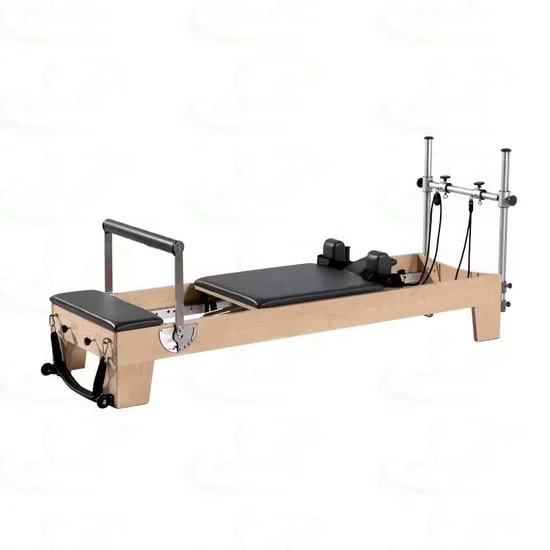
Whisper-Quiet Glide — Sealed bearing carriage and precision pulley alignment verified for sub-35dB operation in hotel fitness floors and shared residential wellness rooms.
Technical Specifications
| Parameter | Value |
|---|---|
| Designation | SRY-12 |
| Product Type | Pilates Reformer |
| Brand | Senrui |
| Frame Construction | Reinforced Steel |
| Carriage System | Sealed Bearings with Precision Pulley Alignment |
| Noise Level | Sub-35dB |
| Durability Rating | 10,000+ Hours Continuous Operation |
| Accessories Included | Long Box / Jump Board / Platform |
| Max User Weight | 180kg |
| Product Dimensions | 2390 × 900 × 1960mm |
| Net Weight | 150kgs |
| Color | Black |
| Logo | Customization Available |
| Certification | ISO 9001, CE |
| Warranty | 3 Years |
| Age Group | Adult |
| Gender | Unisex |
Application Suitability
| Deployment Scenario | Typical Use |
|---|---|
| Boutique Pilates studio on commercial floors | Back-to-back class rotations requiring consistent carriage glide and minimal acoustic output |
| Hotel fitness center on guest room floors | 24-hour guest access with noise-sensitive deployment above or beside occupied rooms |
| Corporate wellness room | Mid-day and after-work sessions where equipment sound carries into adjacent meeting spaces |
| High-end residential home gym | Shared building installations where acoustic performance prevents neighbor complaints |
| Sports performance training center | Athlete rehabilitation and conditioning programs requiring precise resistance feedback |
Why Friction Noise Reaches the Studio Manager Before the Maintenance Call
Precision-engineered carriage tracks and sealed bearings eliminate the grinding complaints that close studios during peak hours.
Reformer carriages rolling over misaligned pulleys or worn bearing surfaces produce friction noise that compounds across a full class schedule. Studio operators often hear about it from instructors mid-session before maintenance logs a ticket [NEED_CITE: noise complaint patterns in commercial Pilates studio environments]. Units deployed on upper hotel floors transmit carriage vibration through floor slabs into guest rooms below, triggering complaints that no amount of scheduling adjustment can resolve. This commercial Pilates reformer machine addresses acoustic output at the source through sealed bearing construction and friction-minimized carriage track systems that maintain sub-35dB operation even under continuous class rotations.
Positioning Within a Full-Discipline Studio Layout
This Pilates reformer anchors the core apparatus zone, supporting spring-based resistance training across beginner through advanced movement sequences. Paired with cadillac and chair stations in a mixed studio floor plan, it covers the full resistance spectrum from rehabilitation-grade loading to athletic power development. The 2390mm footprint fits standard commercial spacing grids, allowing side-by-side deployment with adequate instructor circulation paths. The 180kg maximum user weight accommodates the full adult population range without requiring separate heavy-duty apparatus designations. This commercial Pilates reformer machine is configured to collect usage cycle data when paired with compatible facility management interfaces for attendance and equipment rotation tracking.
Continuous Operation and Floor-Level Deployment Considerations
Back-to-back studio scheduling means reformer carriages cycle through hundreds of repetitions daily, demanding bearing systems rated for sustained high-frequency loading rather than occasional use [NEED_CITE: commercial duty cycle classification for Pilates carriage systems]. Sub-35dB verified output permits installation on upper hotel floors directly above occupied guest rooms without acoustic insulation upgrades. Adequate cross-ventilation around the reinforced steel frame prevents heat buildup from spring mechanisms during sustained class blocks. Standard commercial voltage powers any integrated console modules, though operators should confirm local plug configuration before shipment. Level subfloor installation with vibration-dampening pads further isolates carriage movement from structural transmission into adjacent spaces.
Engineering Behind the Carriage and Resistance Specifications
Sealed bearing carriage systems differ fundamentally from open bushing designs in how they manage lateral load and friction accumulation over thousands of cycles. Bushing-based carriages develop wobble as polymer surfaces wear unevenly, introducing side-to-side play that degrades movement precision and generates progressively louder operation. Sealed bearings maintain consistent radial tolerance throughout their service life, preserving the smooth linear glide that advanced practitioners require for controlled eccentric movements. The reinforced steel frame provides the torsional rigidity necessary to prevent flex under asymmetric loading, such as single-leg footwork sequences where lateral forces concentrate on one rail. Precision pulley alignment ensures that strap retraction follows a true path without rubbing against guide surfaces, a common source of friction noise and premature cord wear. The complete accessory ecosystem—Long Box for supine and seated work, Jump Board for plyometric loading, Platform for standing balance sequences—enables comprehensive programming from a single apparatus footprint.
The Hidden Cost of Light-Commercial Specifications
Reformers built to light-commercial duty cycles may perform adequately during a studio’s opening months, but bearing degradation accelerates once daily class volume exceeds design thresholds [NEED_CITE: bearing failure timelines under continuous commercial loading]. Operators report carriage wobble emerging mid-warranty, requiring bearing replacements that take units offline during revenue hours. Open bushing systems that seem cost-effective at purchase generate friction complaints within months, leading studios to cycle equipment out of rotation or face instructor and member attrition. Units lacking reinforced frame construction develop rail flex under high-frequency asymmetric loading, degrading the precise movement quality that distinguishes commercial studio experiences. Voltage and plug mismatches discovered after container arrival force costly rewiring projects that delay studio openings.
Why This Product Line Fits the Deployment
Sub-35dB acoustic verification in actual hotel deployments confirms this reformer operates without triggering guest room noise complaints on shared floor assemblies. The 10,000-hour durability testing protocol on frame, bearings, and carriage systems provides a documented baseline that procurement teams can reference against projected class schedules. Full accessory inclusion means studios source Long Box, Jump Board, and Platform configurations from one production line rather than managing multiple vendors. The 2390 × 900mm footprint integrates into 3D studio layouts with calculated spacing for instructor circulation and member flow between units. OEM customization covers logo application and color matching for brand-consistent studio interiors. Free 3D cardio-zone layout and airflow planning addresses equipment positioning, sightlines, and ventilation requirements specific to each facility’s square footage. 24/7 technical support response ensures that bearing or pulley issues receive attention outside standard business hours when studios run evening and weekend programming.
Documentation & Test Records
- CE declaration of conformity confirming compliance with European machinery safety directives
- EN 957 test report validating structural and mechanical performance requirements
- ISO 9001 certificate covering quality management across manufacturing processes
- Noise level test report documenting sub-35dB carriage operation under continuous use
- Durability test records confirming 10,000-hour performance on frame and bearing systems
- Console technical documentation specifying data interface and integration protocols
Installation, Commissioning & Maintenance
- Maintain minimum 800mm lateral clearance around the 2390 × 900mm frame for instructor circulation
- Level subfloor within tolerance specifications and install vibration-dampening pads beneath frame contact points
- Confirm local voltage and plug type match ordered configuration before connecting any console modules
- Run full carriage travel cycle during commissioning to verify sealed bearing smoothness and pulley alignment
- Inspect strap cords and spring attachment points quarterly for wear consistent with class frequency volume
- Wipe carriage tracks and pulley contact surfaces daily to remove sweat residue that accelerates friction buildup
Equipment Selection and Deployment Planning
Provide your studio floor area and planned apparatus count to receive a 3D layout covering unit spacing, instructor sightlines, and airflow requirements. Specify projected daily class volume so bearing and spring specifications match your operational duty cycle. Identify deployment floor level and adjacent occupied spaces to confirm acoustic requirements align with sub-35dB performance. State your target market voltage and plug standard to prevent post-delivery electrical mismatches. Indicate whether console data integration with existing facility management software is required for member usage tracking.
Frequently Asked Questions
Q: How does sealed bearing construction contribute to long-term noise reduction and carriage glide consistency?
A: Sealed bearings maintain precise radial tolerance throughout their service life, preventing the lateral wobble that open bushing systems develop as polymer surfaces wear. This consistent alignment eliminates carriage-to-rail friction that progressively increases noise output over months of commercial use. The sealed design also excludes dust and sweat contamination that accelerates wear, preserving smooth linear glide across the full 10,000-hour rated durability cycle without requiring mid-life bearing replacement.
Q: Can the smart console integrate with existing studio management software and member tracking systems?
A: Console technical documentation specifies the data interface protocols available for integration with third-party facility management platforms. Studio operators should provide their current software specifications during the inquiry stage so compatibility can be confirmed before order confirmation. This enables member usage tracking and class attendance logging without requiring duplicate data entry across separate systems. Integration scope depends on the specific management platform version deployed at each facility.
Q: What is the difference between light-commercial and full-commercial duty cycles for Pilates reformers?
A: Light-commercial specifications assume limited daily usage hours typical of small personal training studios, while full-commercial ratings account for continuous class rotations in high-volume facilities. Bearing systems, spring fatigue life, and frame welding specifications all require higher thresholds when equipment cycles through eight or more sessions daily. Units rated below actual usage volume develop premature wobble and friction issues that take revenue-producing apparatus offline for repairs.
Q: How does reinforced frame construction prevent carriage wobble during high-frequency commercial use?
A: The reinforced steel frame provides torsional rigidity that prevents rail flex under asymmetric loading conditions common in single-leg and unilateral movement sequences. Without adequate frame stiffness, repeated lateral forces gradually distort rail alignment, introducing carriage play that degrades movement precision. The rigid frame geometry maintains consistent rail parallelism across the full 180kg user weight range, ensuring practitioners experience the same controlled resistance response regardless of loading intensity.
Q: What accessory configurations are available for full-discipline Pilates programming?
A: This reformer ships with Long Box, Jump Board, and Platform accessories included, covering supine and seated pressing work, plyometric power development, and standing balance sequences. This complete ecosystem enables studios to deliver comprehensive class programming from a single apparatus rather than requiring separate dedicated stations for each movement category. Additional accessory requirements can be discussed during the customization scoping phase to address specialized rehabilitation or athletic conditioning needs.