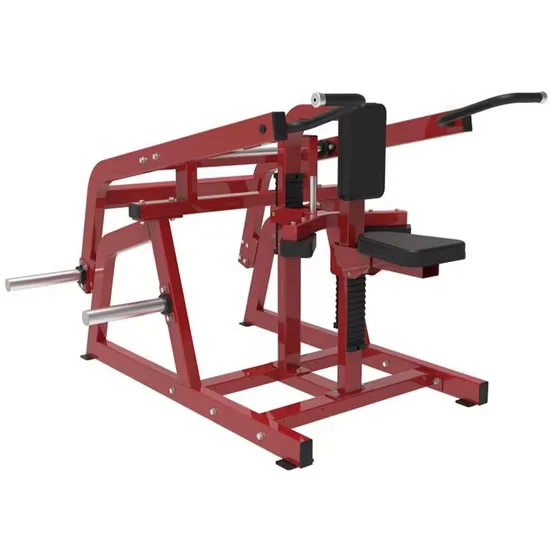
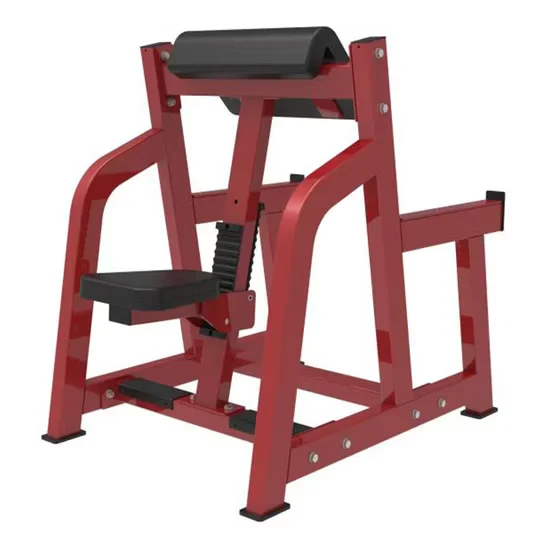
10,000-Hour Endurance Tested — The OS-H5076 steel frame and pivot assemblies are validated for continuous high-frequency loading across commercial deployment cycles.
Technical Specifications
| Parameter | Value |
|---|---|
| Designation | OS-H5076 |
| Product Type | Hip and Glute Machine |
| Exercise Target | Glute |
| Main Frame Material | Steel |
| Product Dimensions | 1250 × 1750 × 1090 mm |
| Net Weight | 65 kg |
| Main Frame Color | Available per customer requirements |
| Cushion Color | Available per customer requirements |
| OEM / ODM | Acceptable |
| Certification | ISO 9001, CE |
Application Suitability
| Deployment Scenario | Typical Use |
|---|---|
| Professional gym and health club | High-traffic glute isolation station within a dedicated strength training zone |
| Community fitness center | Shared-use lower-body machine accommodating diverse user groups throughout the day |
| Corporate wellness facility | Employee-accessible strength station for targeted lower-body conditioning |
| Hotel fitness center | Compact footprint strength unit for limited-space guest workout areas |
| Sports performance training center | Athlete glute activation and hypertrophy work within periodized programming |
Why Frame Fatigue Cracks Appear Before the Warranty Expires
Reinforced steel construction rated for continuous commercial duty cycles prevents the structural failures that shut down strength zones.
I have walked into club facilities where light-duty hip and glute machines developed frame hairline cracks within the first year. The pivot points on these machi*er pushes through the concentric phase and controls the return. When the steel gauge or weld penetration is underspecified for that duty cycle, fatigue concentrates at the pivot junction [NEED_CITE: fatigue failure patterns in commercial strength equipment pivot assemblies]. The commercial hip and glute machine OS-H5076 addresses this with a steel frame built to absorb repeated high-load cycles without deflection or weld degradation. Facilities that install under-specified machines end up pulling entire units off the floor for welding repairs, leaving members without a key lower-body station.
Where This Machine Fits in a Commercial Strength Floor Layout
The OS-H5076 occupies a dedicated glute isolation role, complementing compound lower-body stations like squat racks and leg presses. It handles moderate-to-high repetition sets across a full range of motion, making it appropriate for both hypertrophy-focused members and athletes performing activation work before dynamic sessions. Its 1250 × 1750 mm footprint fits within a standard strength machine row without consuming the floor area of a plate-loaded hip thrust rig. The commercial hip and glute machine OS-H5076 suits deployment in facilities running moderate-to-high daily traffic, positioned where sightlines allow trainers to monitor form from across the floor. The frame geometry accommodates a wide range of user body types without requiring manual seat or pad adjustments between sets.
Continuous Loading and Deployment Environment Requirements
A commercial hip and glute machine in a busy gym may see thirty or more working sets per hour during peak periods, meaning pivot bearings and frame joints must tolerate near-constant cyclical stress [NEED_CITE: duty cycle classification for commercial strength machines in high-traffic environments]. The OS-H5076 steel frame is designed for this cadence, but deployment still demands attention to floor leveling and anchor stability. Uneven floors transfer asymmetric loads into the frame base, accelerating wear at contact points. Facilities on upper floors should consider vibration transfer through the slab, particularly when the machine sits above occupied spaces. Adequate clearance on all sides ensures users can load and unload safely without disrupting adjacent traffic flow. For facilities integrating usage tracking, the machine’s position should align with the gym’s equipment monitoring coverage.
Interpreting the Structural and Mechanical Specifications
The 65 kg net weight reflects the steel mass distributed across the frame and loading mechanism, providing the inertia needed to keep the unit stable during heavy repetitions without floor anchoring. The 1250 × 1750 × 1090 mm envelope defines both the user working zone and the floor space that maintenance staff need for pivot inspection and lubrication access. Main frame and cushion color customization allows the OS-H5076 to match existing strength equipment lines or interior branding without requiring aftermarket refinishing. The steel construction grade directly determines how the frame responds to off-axis loading when users shift position mid-set, and specifying this grade upfront prevents surprises during the first year of heavy rotation [NEED_CITE: steel grade requirements for commercial strength machine frames under eccentric loading]. The ISO 9001 and CE certifications confirm that manufacturing processes and safety compliance have been independently verified against recognized standards.
The Hidden Cost of Specifying Below Commercial Grade
When a facility installs a hip and glute machine built to home-gym tolerances in a commercial environment, the pivot bushings wear out within months, developing play that makes the movement path inconsistent and potentially unsafe. Members notice the wobble and abandon the station, leaving a dead zone on the strength floor that still occupies valuable square footage. Frame paint and powder coating on under-specified machines chips under daily contact with weight plates and user footwear, creating a maintenance burden that distracts from higher-priority servicing. Procurement teams that focus only on unit price often discover the true cost when they are ordering replacement pivot assemblies or pulling the machine for structural repairs before the first year ends [NEED_CITE: total cost of ownership comparison between light-duty and commercial-grade strength equipment]. The OS-H5076 is specified from the outset for environments where downtime directly translates to member complaints and lost floor revenue.
Why This Product Line Earns Its Floor Space
The OS-H5076 benefits from the same manufacturing discipline applied across our full cardio and strength families. The steel frame undergoes durability validation consistent with 10,000-hour continuous-use testing protocols applied to our motorized equipment, ensuring that pivot and weld specifications match the duty cycles of a commercial environment. OEM customization extends to frame and cushion color, so the machine integrates visually with whatever equipment palette the facility has established. Our 3D layout service models the OS-H5076 footprint alongside adjacent machines to verify clearance, member flow, and sightline coverage before any unit ships. Full documentation packages accompany every order, and 24/7 technical support covers installation questions and field servicing guidance for the life of the machine.
Documentation & Test Records
- CE declaration of conformity for the OS-H5076 strength machine
- EN 957 test report verifying safety and structural performance
- ISO 9001 certificate covering manufacturing quality management
- Noise and vibration assessment for upper-floor deployment planning
- Durability test record documenting frame and pivot cycle validation
- Spare parts list with pivot, bushing, and cushion replacement components
Installation, Commissioning & Maintenance
- Verify 1250 × 1750 mm footprint clearance plus safety margins on all sides before positioning
- Level the OS-H5076 steel frame on a flat surface using adjustable foot pads to eliminate asymmetric loading
- Inspect pivot bearings and bushings quarterly under high-traffic deployment conditions
- Clean cushion surfaces and steel frame contact points daily to prevent sweat corrosion
- Confirm OEM color finishes match adjacent equipment upon delivery before final placement
- Schedule annual structural inspection of welds and pivot junctions per facility usage intensity
Request a Deployment Assessment
Provide your strength zone dimensions and current equipment list so we can generate a 3D layout showing how the OS-H5076 integrates with your existing floor plan and member traffic patterns. Specify your expected daily usage volume to confirm the frame and pivot specifications match your duty cycle requirements. Identify the deployment floor level and adjacent occupied spaces so we can advise on vibration transfer and anchoring. If you require custom frame and cushion colors to match existing equipment lines, share your color references early to align with production scheduling.
Frequently Asked Questions
Q: What is the maximum user weight capacity for the OS-H5076?
A: The maximum user weight is not published in the standard specification sheet. We recommend requesting the structural load test report during the inquiry stage, which documents the validated weight capacity under both static and dynamic loading conditions. This ensures the capacity aligns with your member demographics and the loading patterns typical of your facility’s programming.
Q: Can the frame and cushion colors be customized to match our gym’s branding?
A: Yes, both the main frame color and cushion color are available per customer requirements through our OEM program. Provide your RAL or Pantone color references during the quotation stage so our production team can match them precisely. Custom color orders follow the standard production timeline, and we recommend requesting physical color samples for approval before the full production run begins.
Q: What is the recommended maintenance schedule for the pivot points and cushions?
A: Pivot bearings and bushings should be inspected quarterly in high-traffic commercial environments, with lubrication applied according to the maintenance guide provided with each unit. Cushion surfaces require daily cleaning to prevent sweat degradation of the upholstery material. Annual structural inspections should cover all weld junctions and bolt torque specifications to maintain frame integrity over the machine’s service life.
Q: How does the OS-H5076 integrate into a broader glute-focused training zone layout?
A: Our 3D layout service models the OS-H5076 alongside complementary lower-body stations to optimize member flow and trainer sightlines. The 1250 × 1750 mm footprint is evaluated in context with adjacent machine clearances and traffic corridors. This planning ensures the glute zone functions as a cohesive training area rather than a collection of isolated stations competing for floor space.