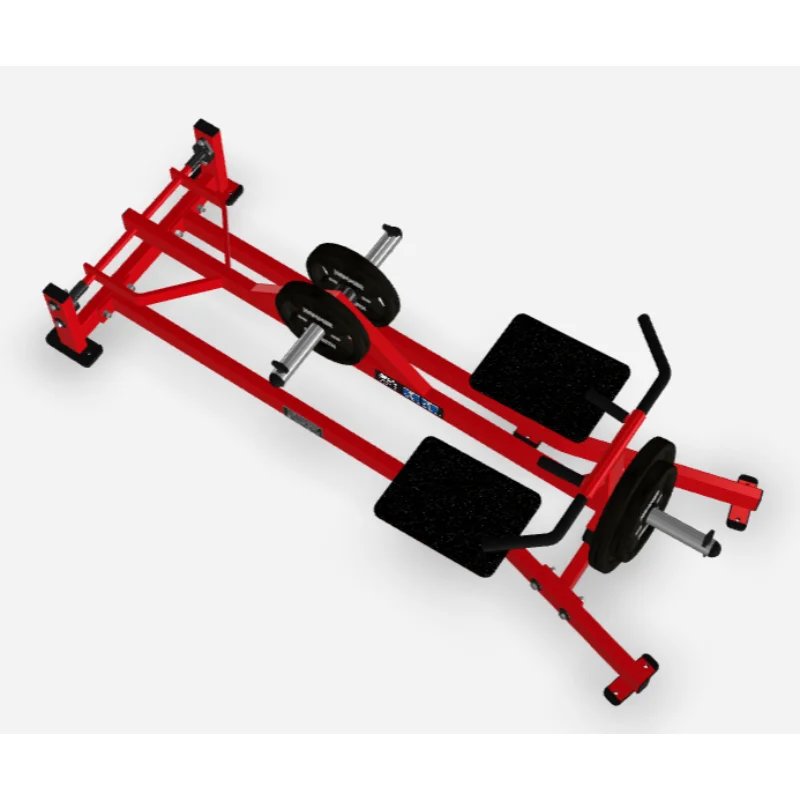
Commercial Core Conditioning — reinforced steel frame engineered for 10,000+ hours of continuous high-frequency use in demanding facility environments
Technical Specifications
| Parameter | Value |
|---|---|
| Designation | OS-H5074 |
| Product Type | Abdominal Work Station |
| Exercise Part | Abdominal |
| Frame Material | Steel |
| Main Frame Color | According to customer requirements |
| Cushion Color | According to customer requirements |
| Product Dimensions | 2165×1020×1815 mm |
| Net Weight | 98 kg |
| Max User Weight | 180 kg |
| OEM/ODM | Acceptable |
| Certification | ISO 9001, CE |
| HS Code | 950691190 |
| Transport Package | Plywood Box |
Application Suitability
| Deployment Scenario | Typical Use |
|---|---|
| International chain gym strength zone | High-frequency core conditioning during peak hours with minimal equipment rotation |
| Corporate wellness room | Mid-day abdominal training circuits for employee fitness programs |
| Sports performance training center | Athlete core stabilization work integrated into periodized programming |
| Community fitness center | Durable abdominal station accommodating diverse membership demographics |
| Hotel fitness center | Compact core equipment for 24-hour guest access areas |
What Frame Flex Under Repeated Load Reveals About Equipment Lifespan
Steel gauge and weld pattern determine whether an abdominal station survives its first year in a commercial facility.
When light-duty abdominal stations enter a high-traffic gym floor, the first sign of failure is not catastrophic — it is subtle frame flex during loaded repetitions. Members notice the wobble before the frame cracks. Facility managers receive complaints about discomfort and instability, and the station earns a reputation as the machine to skip [NEED_CITE: structural fatigue patterns in commercial strength equipment under continuous cyclic loading]. I have watched cushion padding compress into permanent deformation within months on stations that cut corners on foam density, leaving the back pad feeling like a plywood plank. The commercial abdominal work station OS-H5074 addresses this through a reinforced steel frame designed for the duty cycles of public facility environments, paired with commercial-grade cushioning intended to resist compression set over extended deployment.
Positioning Within a Commercial Strength Zone Layout
The OS-H5074 commercial abdominal work station occupies the dedicated core training section of a strength floor, complementing rotary torso machines, back extension benches, and cable-based functional trainers. It targets the rectus abdominis and obliques through a fixed movement path suitable for moderate-to-high repetition ranges. With a 180 kg maximum user capacity, it accommodates the broad demographic spread typical of chain gyms and community centers. The footprint fits standard strength equipment spacing grids, allowing placement along walls or within island configurations without disrupting member traffic flow.
Continuous Operation and Facility Environment Requirements
In a busy gym operating 16+ hours daily, an abdominal station sees repeated loading cycles from back-to-back users with minimal rest between sets. The steel frame must maintain dimensional stability across thousands of repetitions per week without developing play at the weld joints [NEED_CITE: EN 957 requirements for commercial strength equipment structural integrity]. Cushion materials must resist sweat absorption and microbial growth in humid environments. Floor mounting points require level concrete substrates to prevent frame stress concentration. Adequate spacing around the unit — typically 600 mm on each side — ensures safe ingress and egress during loaded movements.
Frame Gauge, Cushion Density, and Load Path Engineering
The 98 kg net weight reflects a steel frame substantial enough to resist deflection under the 180 kg maximum user load during dynamic abdominal flexion. Commercial abdominal stations transmit force through the pivot axis and the back pad mounting points, meaning weld quality at these junctions directly governs service life. The cushion specification calls for high-density foam that maintains its rebound characteristics across thousands of compression cycles — a property measured by indentation load deflection rather than simple thickness [NEED_CITE: foam compression testing standards for commercial fitness equipment padding]. OEM customization of frame and cushion colors allows facility operators to match existing equipment palettes without compromising structural specifications. The ISO 9001 manufacturing framework ensures consistent weld penetration and foam density across production batches.
The Hidden Cost of Specifying Below Commercial Grade
Facilities that install residential-grade abdominal stations in commercial environments encounter a predictable failure sequence. Cushion foam bottoms out within months, generating member complaints about back discomfort. Frame tubes with insufficient wall thickness develop visible flex, then hairline cracks at weld intersections. The station gets tagged out of service, and the replacement cycle begins — often with the same underspecified product because the purchase price looked attractive on the quote [NEED_CITE: total cost of ownership comparison between commercial and light-duty strength equipment]. Member attrition tied to uncomfortable or unreliable equipment rarely shows up in maintenance logs, but it appears in membership cancellation surveys.
Why This Product Line for Abdominal Training Deployments
Biketon Sport engineers this station within a complete commercial cardio and strength family, meaning facilities can source matching equipment from a single manufacturing source. The reinforced steel frame undergoes durability testing aligned with the 10,000-hour continuous operation standard applied across the product range. Full OEM and ODM capability extends to frame color, cushion color, and branding — allowing chain operators to maintain visual identity across locations. The free 3D layout service covers abdominal station placement within the broader strength zone, accounting for member flow, sightlines, and adjacent equipment clearance. Production under ISO 9001 certification with CE marking ensures documentation readiness for international deployment markets.
Documentation & Test Records
- CE declaration of conformity for the OS-H5074 abdominal station
- EN 957 structural and safety test report
- ISO 9001 quality management certificate
- Frame durability test record confirming commercial load cycles
- Cushion compression test data verifying long-term retention
- Spare parts list and assembly documentation
Installation, Commissioning & Maintenance
- Verify floor levelness before anchoring the 2165×1020 mm footprint to prevent frame torsion
- Maintain minimum 600 mm clearance on all sides for safe user access during loaded repetitions
- Inspect pivot axis bearings and fastener torque at quarterly intervals under high-frequency use
- Clean cushion surfaces with non-solvent disinfectant to preserve foam integrity and upholstery finish
- Touch up frame powder coating at any chip points to prevent corrosion in humid environments
- Confirm anchor bolt integrity on concrete substrates annually or after any seismic event
Planning Your Deployment Inquiry
Provide your strength zone square footage and current equipment list to receive a 3D layout incorporating the OS-H5074 with proper spacing and traffic flow analysis. Specify your facility’s daily operating hours so the frame duty cycle can be confirmed against expected usage volume. Indicate your target market and any facility branding requirements for OEM color and logo customization scoping.
Frequently Asked Questions
Q: What frame construction standards differentiate commercial abdominal stations from light-duty alternatives?
A: Commercial abdominal stations use thicker steel tubing with reinforced weld patterns at high-stress junctions such as the pivot axis and pad mounting points. These frames are engineered to resist deflection under repeated cyclic loading typical of public gym environments, whereas light-duty alternatives prioritize cost reduction through thinner wall thickness and simpler weld geometries that fatigue prematurely.
Q: How does cushion quality affect member experience and equipment replacement cycles?
A: High-density commercial cushion foam resists compression set, maintaining its rebound properties across thousands of use cycles. Low-density foam compresses permanently within months, creating a hard contact surface that generates member complaints about back discomfort. Facilities with poor cushion specifications often face complete pad replacement or full unit retirement well before the frame reaches end of service life.
Q: What OEM customization options exist for this abdominal station?
A: The OS-H5074 accepts custom frame colors and cushion colors to match existing facility design schemes or brand identity requirements. OEM and ODM customization extends to logo placement and branding elements. Minimum order quantities remain flexible to accommodate single-facility deployments as well as multi-location chain rollouts across international markets.
Q: What is the maximum user weight capacity and how does it serve diverse memberships?
A: The 180 kg maximum user weight accommodates the broad demographic range found in commercial gyms, corporate wellness centers, and community fitness facilities. This capacity ensures the frame and pivot mechanism operate safely across diverse user body types without structural compromise, reducing the need for facilities to maintain separate heavy-duty equipment sections.
![Commercial Vertical Leg Press OS-H5037 for Gym Use [WARN] draft identifier mismatch](https://bicksport.com/wp-content/uploads/2026/08/commercial-vertical-leg-press-os-h5037-for-gym-use-warn-draft-identifier-mismatch-3499a9.webp)