
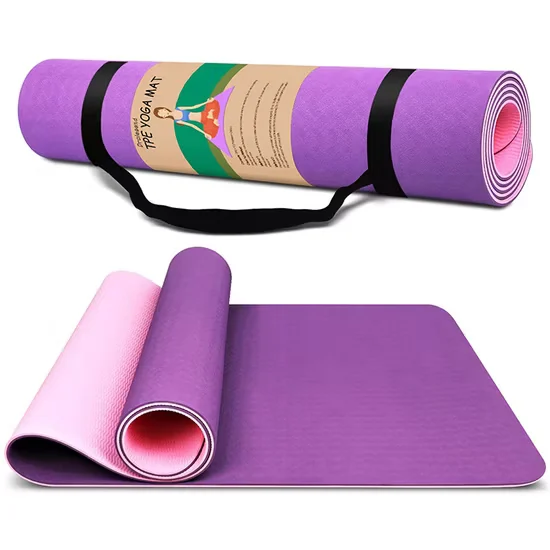
Acoustic Stability — Closed-cell TPE density maintains surface grip and structural integrity across continuous studio rotations without chemical off-gassing.
Technical Specifications
| Parameter | Value |
|---|---|
| Product Type | Yoga Mat |
| Material | TPE |
| Thickness | 6mm |
| Dimensions (L × W) | 1800mm × 610mm (1830mm × 610mm specification also listed) |
| Surface | Non-slip texture |
| Color | Solid Color, customization available |
| Logo | Custom branding permitted |
| Net Weight | 2 kg |
| Target User | Adult, Women |
| Production Capacity | 1000 PCS / Month |
Application Suitability
| Deployment Scenario | Typical Use |
|---|---|
| Hotel fitness center on guest room floors | In-room or shared wellness floor exercise, providing odor-free, low-profile cushioning for guest yoga and stretching routines |
| Boutique yoga and pilates studios | High-frequency class rotations requiring consistent grip under sweat and branded visual identity across all stations |
| Corporate wellness room | Employee stretching and guided mobility sessions during break hours, with surface materials that withstand daily cleaning protocols |
| High-end residential home gym | Personal training and daily practice where eco-friendly material composition and joint cushioning are prioritized |
| Community fitness facilities | Multi-user environments demanding durable closed-cell surfaces that resist moisture absorption between cleanings |
Why Grip Degradation Forces Facilities Into Premature Replacement Cycles
Surface integrity depends on material composition, not surface coatings that wear through.
Generic PVC mats deployed in hotel fitness centers and busy studios lose traction within months as plasticizers migrate to the surface and cleaning agents break down the top layer. Members report slipping during transitions, front desk logs fill with complaints, and operators end up replacing the entire inventory twice a year. A custom TPE yoga mat non slip commercial deployment avoids this cycle because TPE’s closed-cell structure resists moisture penetration, meaning sweat and cleaning solutions stay on the surface rather than degrading the material from within. [NEED_CITE: material degradation rates for PVC vs TPE in commercial fitness environments]
Positioning This Mat Within a Commercial Floor Plan
This mat covers bodyweight movement disciplines — yoga, pilates, guided stretching, and functional mobility work — that occupy the low-impact zone of any facility’s programming. In a cardio-heavy layout filled with treadmills and rowers, it defines the dedicated floor exercise area where members transition from machine-based work. The 6mm thickness balances joint cushioning for kneeling poses against stability for standing balance work. Deployed in rows with adequate spacing, the custom TPE yoga mat non slip commercial format accommodates users of varying body weights without bottoming out or creating an uneven base.
What Daily Class Rotations Demand From Material Density
A studio running six classes daily subjects each mat to repeated compression, sweat exposure, and chemical cleaning. The 6mm TPE core must recover its shape between sessions without developing permanent deformation zones under high-wear areas like hand and foot placements. Ventilation between stacked storage matters: trapped moisture on non-breathable surfaces accelerates microbial growth and odor. Facilities deploying these mats on upper hotel floors also benefit from the lightweight 2 kg profile, which reduces staff fatigue during daily setup and teardown. [NEED_CITE: compression recovery standards for commercial-grade fitness mats]
Closed-Cell TPE Versus Porous Alternatives
TPE’s closed-cell structure prevents liquid absorption at a molecular level, contrasting sharply with open-cell rubber or natural cork mats that trap sweat and require more aggressive sanitation. The non-slip texture on this mat is molded into the material rather than applied as a surface coating, so grip consistency holds across the mat’s entire lifespan rather than degrading as a top layer wears away. The 1800mm × 610mm footprint provides adequate coverage for most adult users performing supine and standing sequences. Customization of logo and color allows multi-site gym networks to maintain brand consistency without sacrificing material performance. [NEED_CITE: EN 957 requirements for fitness mat slip resistance testing]
The Hidden Cost of Specifying Mats Without Material Certifications
Facilities that procure mats based on thickness and price alone discover problems only after deployment. PVC mats off-gas in enclosed hotel fitness rooms, triggering guest complaints about chemical odor. Thin mats without adequate density cause wrist and knee discomfort, driving members to bring personal equipment or avoid floor exercise zones entirely. Mats without verified slip resistance create liability exposure when users lose footing during dynamic transitions. Each of these failures traces back to a specification sheet that omitted material composition verification. [NEED_CITE: indoor air quality standards for fitness equipment materials]
Why This Product Line Fits Facility Procurement
The closed-cell TPE composition addresses the odor and grip complaints that dominate post-installation feedback. Full OEM customization — logo, color, dimensions — means a chain gym outfitting twenty locations orders one SKU with consistent branding rather than sourcing from multiple vendors. The 6mm thickness serves both cushioning and stability requirements without forcing operators to choose between them. Production capacity of 1000 pieces per month supports large-scale rollouts with coordinated delivery schedules.
Documentation & Test Records
- CE declaration of conformity for fitness accessory material safety
- EN 957 slip resistance test report under dry and wet conditions
- ISO 9001 certificate covering production and quality control processes
- Material composition sheet confirming TPE formulation without PVC or phthalates
- Durability test record documenting surface integrity after repeated compression cycles
- Cleaning protocol compatibility guide for commercial sanitation agents
Installation, Commissioning & Maintenance
- Unroll and allow 24 hours for material acclimation to room temperature before first use
- Store flat or rolled with logo side out to prevent edge curling during deployment
- Clean with pH-neutral sanitizer after each user session in shared environments
- Avoid prolonged UV exposure which degrades TPE surface texture over time
- Inspect edges quarterly for delamination signals indicating replacement cycle
- Stack no more than 20 units vertically to prevent bottom-mat compression damage
Equipment Specification and Deployment Planning
Provide your floor exercise zone square footage and expected daily user count to receive a layout plan covering mat spacing, storage rack placement, and ventilation requirements. Specify whether mats will be deployed in enclosed hotel fitness rooms or ventilated studio spaces to confirm material suitability. Confirm target market cleaning protocols to verify chemical compatibility with the TPE surface. State whether custom branding requires logo placement on one end or full-surface color matching.
Frequently Asked Questions
Q: How does TPE compare to PVC for commercial fitness mat deployments?
A: TPE uses a closed-cell structure that blocks moisture absorption, preventing odor buildup in enclosed spaces like hotel fitness rooms. PVC mats often contain plasticizers that migrate to the surface over time, reducing grip and releasing chemical odors. TPE also avoids phthalates and latex, reducing allergen exposure in shared-use environments.
Q: What thickness works best for mixed yoga and functional training use?
A: The 6mm specification balances joint protection during kneeling poses with a stable base for standing balance work. Thicker mats tend to compress unevenly under weight shifts, while thinner options transfer too much floor impact to wrists and knees during sustained holds.
Q: What branding customization options are available for multi-site gym networks?
A: Logo placement, solid color selection, and dimension adjustments are available for facility-branded orders. This allows operators to deploy visually consistent mats across locations while maintaining the same material specification and grip performance at every site.
Q: How should shared-use mats be cleaned between users?
A: Wipe the non-slip surface with a pH-neutral commercial sanitizer after each session. Avoid bleach-based or highly acidic cleaners, which can degrade the TPE surface texture over repeated applications. Air dry before stacking or rolling for storage.

![Folding Maple Wood Pilates Reformer for Home Gym & Studio Fitness [WARN] draft identifier mismatch](https://bicksport.com/wp-content/uploads/2026/08/folding-maple-wood-pilates-reformer-for-home-gym-studio-fitness-warn-draft-identifier-mismatch-2adce9.webp)