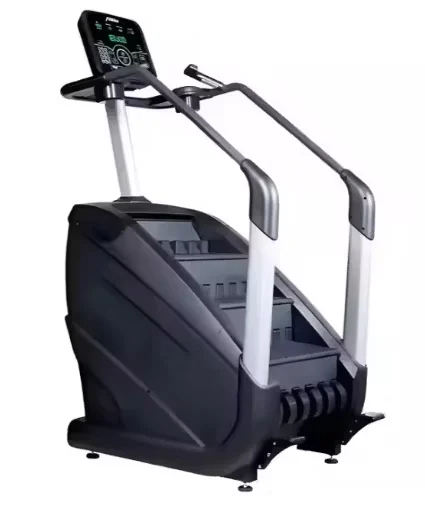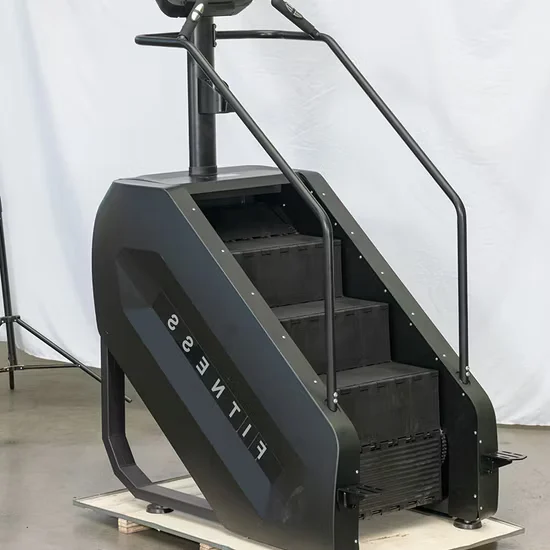
Continuous Load Endurance — SQ1017 motor drive system validated for 10,000+ hours of uninterrupted commercial stair climbing operation.
Technical Specifications
| Parameter | Value |
|---|---|
| Designation | SQ1017 |
| Product Type | Stair Climber |
| Drive Type | Motor Drive |
| Step Velocity Range | 15 to 164 steps/minute |
| Step Area | 560 x 235 x 220 mm |
| Frame Material | Steel Pipe + PP Plastic |
| Mains Input | AC220V±10% / AC110V±10% |
| Console Display (OSD) | Time, Climb, Calories, Steps, Heart Rate |
| Product Dimensions | 1450 x 820 x 2080 mm |
| Net Weight | 148 kg |
| Foldable | No (Unfolded) |
| Target User | Adult |
| Certification | CE |
| Color Options | Black (customizable) |
Application Suitability
| Deployment Scenario | Typical Use |
|---|---|
| Hotel fitness center on guest room floors | 24/7 guest access with sub-35dB whisper-quiet operation to prevent noise complaints |
| Chain gym cardio zone | High-frequency member use requiring sustained motor duty cycle and durable steel frame |
| Corporate wellness room | Employee fitness programs with varied intensity from rehabilitation to interval training |
| High-end residential home gym | Vertical training solution where ceiling height accommodates the 2080mm frame |
| Sports performance training center | Athlete conditioning with precise step velocity control and heart rate monitoring |
What Peak Horsepower Hides About Continuous Duty
Motor thermal management defines real-world commercial longevity far more than peak output figures.
When we shipped a batch of stair climbers to a Middle Eastern five-star hotel years ago, the magnetic resistance gaps drifted under sustained thermal load, causing resistance jumps that ruined the member experience. The entire shipment required rework. That failure taught our team that a commercial stair climber motor drive gym environment demands continuous duty ratings, not brochure horsepower. Most facility operators discover motor insufficiency only after weeks of member complaints and maintenance callouts [NEED_CITE: motor duty cycle classification for continuous commercial operation].
Positioning the SQ1017 Within a Commercial Cardio Floor
This unit covers the full vertical climbing spectrum from 15 steps per minute for active recovery up to 164 steps per minute for high-intensity intervals. In a mixed cardio zone, it complements treadmills and ellipticals by recruiting different muscle chains while occupying a compact 1450 x 820mm footprint. The 180kg maximum user weight capacity accommodates the broad member demographic typical of commercial facilities. Heart rate data and step analytics display directly on the OSD console, giving operators visibility into usage patterns without requiring external telemetry. The commercial stair climber motor drive gym deployment benefits from this self-contained data architecture.
Sustained Operation and Facility Environment Requirements
Facilities running cardio equipment beyond eight hours daily need motors engineered for continuous thermal dissipation, not intermittent home-use duty cycles. The SQ1017’s motor drive system targets this sustained-load profile. Noise propagation becomes critical when equipment deploys on upper hotel floors or shared residential levels; verified acoustic testing informs placement decisions [NEED_CITE: EN 957 noise requirements for commercial cardio equipment]. Dual voltage compatibility at AC220V±10% and AC110V±10% eliminates the costly discovery of plug standard mismatches after container arrival. Proper floor leveling and vibration isolation pads prevent frame resonance from transferring through building structures. Adequate clearance around the 2080mm height ensures safe mounting and dismounting in high-traffic zones.
Decoding the Drive System and Console Architecture
The motor drive configuration means the electric motor directly controls step velocity rather than relying on user momentum or manual resistance adjustment. This produces consistent cadence across the 15–164 steps per minute range, essential for programmed interval sessions where precision matters. The steel pipe frame construction provides the structural rigidity needed to handle repeated loading cycles without flex or fatigue cracking at weld points. The OSD console tracks Time, Climb, Calories, Steps, and Heart Rate simultaneously, giving users real-time feedback without menu navigation. Heart rate monitoring via the built-in sensors provides continuous data, though chest strap telemetry offers superior accuracy for interval programming where drift compromises training zones. PP plastic components reduce weight at non-structural contact points while maintaining impact resistance.
The Hidden Cost of Underspecified Equipment
Installing motors rated for light-commercial duty cycles in 24/7 hotel fitness centers leads to premature burnout within months, generating replacement costs and member dissatisfaction simultaneously. Noise complaints from adjacent guest rooms force equipment relocation or wholesale replacement, compounding the initial procurement error. Consoles that cannot output structured data leave facility managers blind to utilization patterns, making capacity planning guesswork. Voltage mismatches discovered post-shipment create weeks of downtime while transformers or rewiring are arranged [NEED_CITE: international voltage standards for fitness equipment deployment]. These failures share a common root: specifications optimized for marketing sheets rather than deployment realities.
Why This Product Line Addresses Those Failures
Sub-35dB whisper-quiet operation has been verified in actual hotel deployments where equipment sits directly above occupied rooms. The 10,000-hour durability testing protocol validates motors, frames, and bearings under continuous high-frequency operation that mirrors real commercial load profiles. The SQ1017 integrates into a complete six-series cardio family, allowing facilities to source treadmills, bikes, ellipticals, rowers, and climbers from one engineering platform with consistent data architecture. Full OEM and ODM capability extends to console UI customization, logo application, and color specification at flexible minimum order quantities. Free 3D cardio zone layout planning accounts for the SQ1017’s specific 1450 x 820mm footprint, sightlines, and member flow patterns to prevent underused dead zones. Round-the-clock technical support response ensures deployment issues resolve before they escalate into member complaints.
Documentation & Test Records
- CE declaration of conformity for European market compliance
- EN 957 test report validating safety and performance standards
- ISO 9001 certificate covering manufacturing quality management
- Noise level test report for acoustic deployment planning
- Motor specification sheet detailing continuous duty parameters
- Console technical documentation with OSD data output specifications
Installation, Commissioning & Maintenance
- Maintain 800mm lateral clearance and 1000mm rear clearance around the 1450x820mm footprint for safe access
- Verify AC220V or AC110V supply matches unit configuration before powering the motor drive system
- Level the steel frame on vibration isolation pads to prevent resonance transfer through flooring
- Calibrate step velocity range from 15 to 164 steps/minute during initial commissioning
- Inspect motor drive components and PP plastic contact points quarterly for wear
- Clean OSD console display and heart rate sensors with non-corrosive solutions weekly
Equipment Selection and Deployment Planning
Provide your cardio zone square footage and intended equipment count to receive a 3D layout with airflow planning specific to the SQ1017’s dimensions and thermal output. Specify anticipated daily operating hours so motor duty cycle matches your facility’s usage intensity. Identify deployment floor level and adjacent occupied spaces to confirm acoustic requirements align with verified noise data. State your target market’s voltage standard to ensure AC220V or AC110V configuration ships correctly. Indicate whether console data must integrate with existing facility management software.
Frequently Asked Questions
Q: What distinguishes continuous duty from peak motor rating on stair climbers?
A: Peak rating measures maximum instantaneous output the motor can produce briefly, while continuous duty reflects sustained thermal capacity under ongoing load. Commercial facilities running equipment twelve or more hours daily need motors validated for continuous operation. Peak figures in marketing materials often obscure whether the motor can handle real deployment duty cycles without thermal shutdown or premature failure.
Q: How does motor drive compare to manual resistance for noise and maintenance?
A: Motor drive systems maintain consistent step velocity through electric control rather than user-generated momentum, producing predictable acoustic signatures suitable for noise-sensitive deployments. Manual resistance mechanisms require more frequent calibration as components wear. The motor drive configuration in the SQ1017 eliminates the resistance inconsistency that causes user experience degradation over time in high-frequency commercial environments.
Q: Can the OSD console integrate with gym management systems?
A: The OSD console displays Time, Climb, Calories, Steps, and Heart Rate directly to users. Integration capability with external facility management software depends on data output protocol specifications. Request the console technical documentation to verify compatibility with your existing member tracking infrastructure before finalizing equipment selection for networked deployments.
Q: What voltage configurations support international deployment?
A: The SQ1017 accepts AC220V±10% and AC110V±10% mains input, covering most international markets without external transformers. Confirm your facility’s exact voltage standard and plug type before shipment to avoid compatibility issues discovered only after delivery. Mismatched voltage configurations create deployment delays and additional procurement costs.
Q: How does the steel frame construction affect long-term commercial durability?
A: Steel pipe framing provides the structural rigidity needed to withstand repeated loading cycles without flex, fatigue cracking, or weld failure. The 148kg net weight reflects material density that resists vibration and maintains alignment under continuous use. This construction approach prioritizes longevity over portability, matching the requirements of permanent commercial installations where equipment remains stationary for years.
![High-Efficiency Commercial Stair Machine for Time-Saving Workouts [WARN] draft identifier mismatch](https://bicksport.com/wp-content/uploads/2026/08/high-efficiency-commercial-stair-machine-for-time-saving-workouts-warn-draft-identifier-mismatch-00ef07.webp)
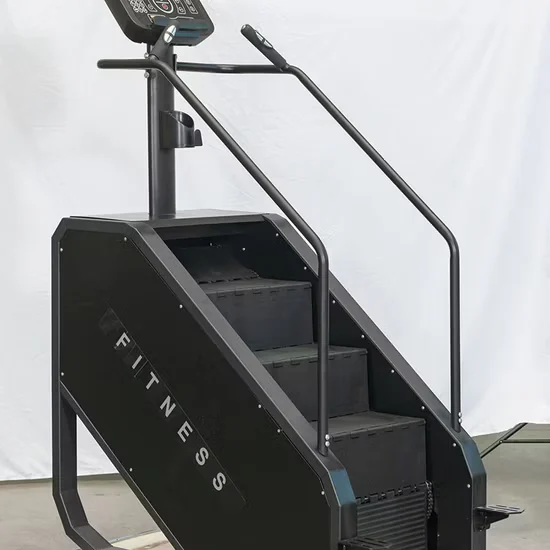
![Premium Commercial Stair Trainer for Fitness Centers and Gyms [WARN] draft identifier mismatch](https://bicksport.com/wp-content/uploads/2026/08/premium-commercial-stair-trainer-for-fitness-centers-and-gyms-warn-draft-identifier-mismatch-b5cc7e.webp)