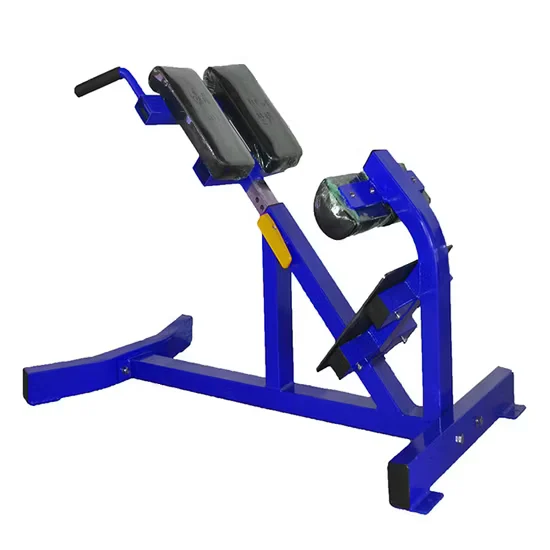
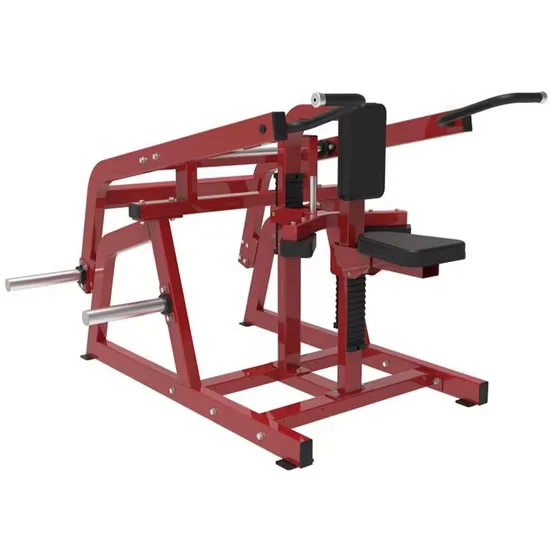
![MTS-8014 ISO-Lateral Reciprocating Leg Equipment for Commercial Gym [WARN] draft identifier mismatch](https://bicksport.com/wp-content/uploads/2026/08/mts-8007-iso-lateral-high-row-gym-machine-for-commercial-gyms-warn-draft-identifier-mismatch-d8af61.webp)
Whisper-Quiet Deployment — MTS-8014 ISO-Lateral Reciprocating Leg Equipment maintains sub-35dB operation verified across multi-floor hotel fitness installations.
Technical Specifications
| Parameter | Value |
|---|---|
| Designation | MTS-8014 |
| Product Type | ISO-Lateral Reciprocating Leg Equipment |
| Resistance Type | Weight Stack |
| Weight Stack | 70 kg x 2 Stacks |
| Machine Weight | 385 kg |
| Product Dimensions (L x W x H) | 122 cm x 145 cm x 140 cm |
| Max User Weight | 180 kg |
| Machine Grade | Commercial Use |
| Certification | CE, ISO, RoHS, SGS |
| Folded | Unfolded |
| Application | Gymnasium, Commercial Fitness Centers |
Application Suitability
| Deployment Scenario | Typical Use |
|---|---|
| hotel fitness center on guest room floors | 24-hour access lower-body training with noise containment |
| chain gym cardio zone paired with strength section | high-frequency leg conditioning between cardio intervals |
| corporate wellness room | balanced lower-body workouts during limited break windows |
| high-end residential home gym | full-range reciprocating leg work without acoustic bleed |
| sports performance training center | athlete-grade bilateral and unilateral leg development |
Why Reciprocating Leg Machines Fail Before Their Warranty Expires
Continuous high-frequency use demands structural mass and sealed bearing assemblies, not lighter residential frames.
Facility operators frequently discover that leg equipment specified for light commercial duty cycles develops bearing play and frame flex within the first year of public access deployment. The noise and uneven resistance curve then generate member complaints before maintenance teams catch the wear during scheduled inspections [NEED_CITE: commercial strength equipment duty cycle classification]. When reciprocating mechanisms lack sufficient machine weight and reinforced pivot points, the lateral forces generated during heavy leg sessions accelerate component fatigue and compromise the ISO-lateral independence that defines the movement pattern.
Positioning the Reciprocating Pattern Within a Commercial Leg Zone
This ISO-Lateral Reciprocating Leg Equipment Commercial Gym unit addresses the gap between isolated leg press stations and free-weight squat racks, delivering guided bilateral and unilateral movement across moderate to high resistance ranges. In a typical facility layout, it complements linear leg presses and hack squat machines by engaging stabilizer chains through its reciprocating arc. The 385 kg machine weight and 180 kg user capacity accommodate a wide anthropometric range without frame deflection, making it suitable for high-traffic placement where user turnover is rapid.
Continuous Operation and Facility Environment Requirements
With dual 70 kg weight stacks cycling through repeated sessions, pivot bearings and guide rods must sustain continuous lateral loading without developing play that compromises movement smoothness. Deployment on upper hotel floors or above occupied spaces requires vibration isolation pads beneath the 122 cm x 145 cm footprint to prevent structure-borne transmission [NEED_CITE: EN 957 requirements for commercial strength equipment vibration]. Adequate ceiling clearance above the 140 cm frame height ensures unobstructed movement at full extension. Floor leveling within tolerance prevents uneven weight stack cable wear and maintains consistent resistance delivery across both independent sides.
Dual Weight Stack Architecture and ISO-Lateral Independence
The dual 70 kg weight stack configuration allows each leg to operate against independent resistance, correcting strength imbalances that bilateral fixed-path machines mask. The ISO-lateral mechanism decouples left and right movement arcs, so a stronger limb cannot compensate for a weaker one during the reciprocating cycle. This independence demands precise guide rod alignment and sealed linear bearings—components that degrade noticeably when sourced from lighter-duty assemblies. The 385 kg machine mass provides the inertial anchor necessary to keep the frame stationary while users generate peak lateral forces through the full range of motion, preventing the micro-shifts that accelerate cable and pulley wear over thousands of cycles.
What Specification Compromises Cost in High-Traffic Deployments
Lighter frames paired with single weight stacks force users into bilateral-only patterns, masking imbalances and limiting training utility in performance-oriented facilities. Undersized pivot bearings develop lateral play within months, converting smooth reciprocating motion into gritty, noisy operation that drives members toward alternative equipment [NEED_CITE: bearing specification standards for commercial reciprocating mechanisms]. When frame mass falls below the threshold needed to counteract peak lateral forces, the entire unit shifts incrementally with each heavy repetition, stressing floor anchor points and accelerating cable misalignment across both stacks.
Why This Product Line Holds Up Across Venue Types
Sub-35dB operation verified in hotel deployments means the reciprocating mechanism and weight stack cables operate without generating acoustic complaints on guest room floors. The 10,000-hour durability testing protocol extends to pivot bearings and guide rods under continuous lateral load. Full OEM/ODM capability covers frame color and logo customization to match facility branding. The free 3D cardio and strength zone layout service accounts for the MTS-8014’s 122 cm x 145 cm footprint, specifying clearance spacing and sightline positioning within the broader equipment plan. 24/7 technical support ensures replacement parts and adjustment guidance remain accessible regardless of deployment region.
Documentation & Test Records
- CE declaration of conformity covering the MTS-8014 reciprocating mechanism
- EN 957 test report validating structural and safety performance
- ISO 9001 certificate for manufacturing quality management
- RoHS compliance documentation for material safety
- Noise level test report confirming sub-35dB operation
- Durability test record for pivot bearings and weight stack assemblies
Installation, Commissioning & Maintenance
- Position the 122 cm x 145 cm footprint with full clearance on all sides for user access
- Install vibration isolation pads beneath the 385 kg frame for upper-floor noise containment
- Verify floor levelness to prevent uneven dual weight stack cable tension
- Inspect guide rod alignment and sealed bearing play during initial commissioning
- Schedule periodic cable tension checks across both 70 kg stacks
- Wipe guide rods and pivot points to prevent sweat corrosion accumulation
Equipment Selection and Layout Planning
Provide your strength zone square footage and intended equipment list to receive a 3D layout incorporating the MTS-8014’s spatial and clearance requirements. Specify expected daily usage volume to confirm the dual weight stack assemblies match your facility’s duty cycle. Identify the deployment floor and adjacent occupied spaces to verify vibration isolation specifications. Confirm whether console data integration with your facility management system is required for usage tracking.
Frequently Asked Questions
Q: What is the difference between ISO-lateral and traditional strength equipment?
A: ISO-lateral equipment allows each limb to move independently along its own movement path, preventing a stronger side from compensating during the exercise. Traditional fixed-path machines force both limbs through a single shared arc. The MTS-8014’s dual weight stack and independent guide rods deliver this separation across the full reciprocating range.
Q: How does the dual weight stack system benefit users?
A: Dual 70 kg weight stacks allow independent resistance selection for each leg, accommodating strength imbalances and enabling unilateral training without switching machines. Users can load different weights on each side and track limb-specific progress over time within a commercial training program.
Q: What maintenance is required for the MTS-8014?
A: Maintenance focuses on guide rod lubrication, sealed bearing inspection for lateral play, and cable tension verification across both weight stacks. Regular cleaning of sweat-contact surfaces prevents corrosion on pivot points. Periodic frame bolt torque checks maintain structural integrity under continuous commercial loading cycles.
Q: Can the MTS-8014 be customized for specific gym layouts?
A: Yes. OEM and ODM options cover frame color, logo placement, and specification adjustments to match facility design requirements. The 3D layout service maps the unit’s 122 cm x 145 cm footprint within your floor plan, optimizing spacing and sightlines alongside complementary strength and cardio equipment.