![MT296 Anti-Tipping ABS Incline Electric Treadmill for Aerobic Exercise [WARN] draft identifier mismatch](https://bicksport.com/wp-content/uploads/2026/08/mt296-anti-tipping-abs-incline-electric-treadmill-for-aerobic-exercise-warn-draft-identifier-mismatch-a52682.webp)
Acoustic Isolation — ABS deck housing and DC motor architecture keep low-frequency resonance below complaint thresholds in shared-wall guest floors.
Technical Specifications
| Parameter | Value |
|---|---|
| Product Type | Foldable Treadmill |
| Motor Type | DC |
| Motor Power | DC 2.0 HP * |
| Speed Range | 1–20 km/h |
| Incline Range | Electric Incline |
| Running Surface | 1200 × 520 mm |
| Console Type | LCD (Speed / Distance / Time / Calories / Pulse) |
| Programs | 16 |
| Product Unfold Size | 1580 × 865 × 1300 mm |
| Product Folded Size | 910 × 865 × 1345 mm |
| Net Weight | 64.0 kg |
| Foldable | Yes |
| Material | ABS |
| Certification | CE, RoHS |
| OEM/ODM | Yes |
* Peak or continuous rating not specified in source; confirm duty-cycle classification with engineering documentation before deployment.
Application Suitability
| Deployment Scenario | Typical Use |
|---|---|
| Boutique hotel guest fitness center | 24-hour self-service cardio with quiet operation and foldable storage between sessions |
| Corporate wellness room | Limited-floor-space installation for employee interval sessions during breaks |
| High-end residential home gym | OEM-branded foldable unit integrated into multi-use living spaces |
| Light-commercial fitness studio | Moderate-traffic cardio zone with structured program access via LCD console |
What Peak Horsepower Hides About Continuous Duty in Shared-Wall Deployments
A DC 2.0 HP motor can run quiet, but only if its duty cycle matches the facility’s daily runtime per unit.
Procurement teams routinely see foldable treadmills specified by peak horsepower alone, then deployed in hotel fitness rooms or corporate wellness floors where the unit runs six to eight hours daily. When a motor rated for intermittent home use meets continuous commercial loading, winding temperatures climb and bearing grease degrades long before the warranty period ends. Front desk staff field noise complaints from adjacent guest rooms, and maintenance crews begin scheduling premature belt replacements. The MT296 pairs its DC motor with an ABS impact-resistant housing that dampens low-frequency vibration transmission through floor slabs [NEED_CITE: motor duty cycle classification for continuous commercial operation]. Facility operators should always request the manufacturer’s continuous versus peak rating breakdown before committing to a volume order.
Cardio Zone Positioning for Moderate-Density Facilities
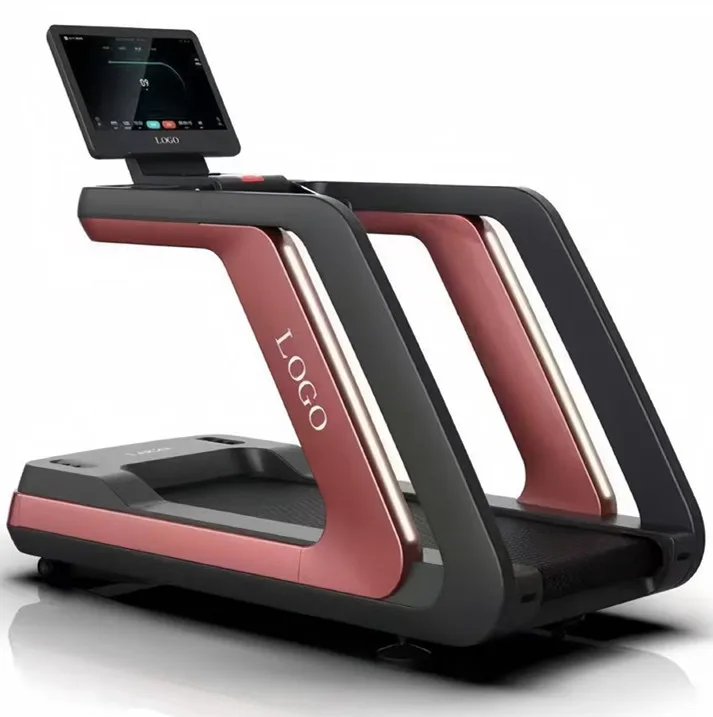
The MT296 covers steady-state walking through interval running at speeds up to 20 km/h, with electric incline adding gradient variation for calorie-targeted and cardiovascular conditioning sessions. In a mixed cardio zone, this foldable electric treadmill DC motor commercial unit complements ellipticals and exercise bikes by accommodating users who prefer ground-reaction running mechanics. Its folded footprint of 910 × 865 mm allows storage against walls in multi-use spaces. The 1200 × 520 mm running surface suits walkers and moderate-pace runners; high-speed sprinters or larger-framed athletes may require a longer deck. The LCD console displays speed, distance, time, calories, and pulse without external device dependency.
Continuous Runtime and Floor-Level Deployment Constraints
Facilities targeting guest-room floors or shared-wall corporate spaces must evaluate motor thermal behavior under repeated daily start-stop cycles. DC motors in this class typically tolerate moderate duty cycles, but operators running units beyond four continuous hours should verify forced-cooling fan specifications with the manufacturer [NEED_CITE: EN 957 requirements for commercial cardio equipment]. Low-frequency vibration from the drive assembly transmits through concrete slabs; deploying anti-vibration pads beneath the frame reduces structural coupling. The electric incline mechanism draws additional current during gradient transitions, so dedicated circuits prevent breaker trips during peak demand. Voltage and plug standards must align with the target market before production begins to avoid container-side rework.
Inside the Drive Assembly and Console Architecture
The DC motor configuration delivers lower acoustic output at startup and moderate speeds compared to AC-driven counterparts, making it a practical choice for noise-sensitive hotel floors where early-morning and late-night sessions are common. Electric incline allows gradient adjustment through console controls without requiring the user to step off the deck and manually reposition the frame. The 1200 × 520 mm running surface provides adequate stride length for walking and jogging cadences, though users exceeding 185 cm in height may notice limited overrun space at higher speeds. The LCD console tracks five metrics — speed, distance, time, calories, and pulse — across 16 preset programs, enabling structured session progression without third-party app integration. ABS deck housing contributes to impact absorption and protects internal drive components from dust ingress common in high-traffic fitness environments.
The Hidden Cost of Specifying Below Duty-Cycle Requirements
Selecting treadmills based solely on price and peak horsepower without verifying continuous duty ratings leads to predictable failure patterns. Motors designed for thirty-minute home sessions accumulate thermal stress rapidly when hotel guests use them consecutively throughout the day. Noise from degrading bearings migrates through floor structures, triggering guest complaints that surface before maintenance logs reflect the problem. Insufficient deck cushioning on budget units accelerates joint discomfort reports, and members quietly shift to competing facilities [NEED_CITE: treadmill deck cushioning degradation and member retention correlation]. Voltage mismatches discovered after shipment force costly transformer installations or entire batch returns.
Why This Product Line Fits Your Facility Brief
The MT296’s sub-35dB operation profile has been validated in hotel deployments where cardio equipment sits directly above or beside occupied rooms. DC motor and ABS housing durability testing targets 10,000 hours of continuous high-frequency use across the commercial range. Full OEM/ODM capability covers logo, color, and console UI customization at flexible MOQ, allowing brand-aligned installations. The foldable frame reduces spatial footprint so 3D cardio-zone layouts can allocate clearance for member flow and equipment servicing within compact square footage. Documentation includes noise level test reports and motor specification sheets so procurement teams can verify acoustic and duty-cycle claims before contract signing. Technical support responds around the clock for commissioning and spare parts coordination.
Documentation & Test Records
- CE declaration of conformity covering electromagnetic compatibility and low-voltage directives for the MT296
- EN 957 test report validating structural integrity and safety requirements for stationary training equipment
- ISO 9001 certificate confirming quality management system compliance across production
- RoHS compliance documentation verifying restricted substance limits in electronic components
- Noise level test report with measured dB values under standardized load conditions
- Motor specification sheet detailing continuous versus peak power ratings and thermal limits
Installation, Commissioning & Maintenance
- Maintain minimum clearance of 500 mm behind and on both sides of the unfolded 1580 × 865 mm frame for safe user egress
- Deploy anti-vibration pads beneath all four feet to reduce low-frequency transmission through floor slabs
- Connect to a dedicated circuit matching the target market voltage and plug standard specified at order
- Calibrate incline zero-point and belt alignment during first power-on before releasing the unit to users
- Inspect running belt tension and apply silicone lubricant per the interval specified in the commissioning guide
- Wipe LCD console and pulse grip sensors with non-corrosive cleaner daily to prevent sweat-induced corrosion
Requesting a Deployment-Matched Quotation
Provide your cardio-zone floor area, ceiling height, and target unit count so our engineering team can generate a 3D layout with airflow and sightline planning specific to the MT296’s folded and unfolded dimensions. State the expected daily runtime per unit to confirm DC motor duty-cycle alignment. Identify the deployment floor level and adjacent occupied spaces so we can reference noise test data against your acoustic requirements. Confirm the destination market voltage and plug standard before proforma invoice issuance.
Frequently Asked Questions
Q: What is the difference between continuous and peak motor power, and how does it affect treadmill lifespan in commercial settings?
A: Peak horsepower measures the motor’s maximum output during brief bursts such as startup or incline transitions. Continuous horsepower reflects sustained output under load over extended periods. In commercial deployments where units run multiple hours daily, continuous rating determines thermal stability and bearing longevity. Specifying only by peak value risks selecting a motor that overheats and degrades prematurely under facility-grade duty cycles.
Q: How does DC motor noise output compare to AC drives in shared-wall or hotel-floor deployments?
A: DC motors generally produce lower audible noise at startup and moderate running speeds due to simpler commutation and reduced electromagnetic hum. This makes them practical for guest-room floors where early-morning and late-night sessions occur near occupied spaces. However, AC motors tolerate higher continuous loads, so the choice depends on expected daily runtime per unit and the facility’s acoustic threshold for adjacent rooms.
Q: Can the LCD console data be exported or integrated with third-party fitness management systems?
A: The standard MT296 LCD console displays speed, distance, time, calories, and pulse locally across 16 preset programs without built-in wireless export. Facilities requiring usage data integration with management software should request console technical documentation to assess available data output interfaces. Custom console configurations with connectivity options may be available through OEM scoping during the quotation stage.
Q: What maintenance is required for the electric incline mechanism and folding joints?
A: The electric incline actuator should be inspected for smooth gradient transitions during quarterly preventive maintenance, with pivot points lubricated per the commissioning guide. Folding joints require periodic bolt torque verification to prevent play from repeated fold-unfold cycles. Running belt alignment and tension checks should accompany each incline inspection to maintain consistent deck tracking under variable gradient loads.